Whether a Mastiff Overheats on a Walk
It’s a scenario many Mastiff owners dread: a beautiful day, your gentle giant is eager for a walk, but in the back of your mind, a nagging worry whispers, “Are they getting too hot?” The truth is, while your Mastiff might adore a good stroll, their incredible size and unique physiology mean they are incredibly susceptible to overheating, even on days that feel mild to us. This guide will walk you through precisely why Mastiffs struggle with heat, how to spot the crucial warning signs, and most importantly, how to keep them safe and comfortable when the temperatures rise.
The Unique Physiology That Makes Mastiffs Heat-Sensitive
Mastiffs are magnificent, but their sheer mass, deep chests, and broad muzzles aren't just for show; they play a significant role in how these dogs handle heat. What makes other breeds able to romp for hours can quickly become a dangerous situation for a Mastiff. Understanding their built-in challenges is the first step to keeping them safe.
Bulk, Fur, and Body Surface Area
Imagine carrying around an extra 100 to 200 pounds of muscle and bone compared to a regular dog. That's essentially what a Mastiff's body has to deal with. This immense bulk generates a significant amount of internal heat as they move, even during light exercise. Their powerful muscles are constantly at work, and that work produces warmth.
Furthermore, while their coat might be short, it's surprisingly dense and provides a layer of insulation. Unlike breeds with thin, single coats that can more easily radiate heat, a Mastiff's fur, combined with their substantial body mass, means they have less surface area relative to their internal volume to effectively cool down. They are, in essence, compact heat generators with less efficient cooling systems compared to sleeker, lighter breeds. This is a critical factor when considering Why Bulk Makes a Mastiff Overheat. They simply don't have the same capacity to shed excess warmth into the air.
Their Breathing Apparatus and Heat Exchange
Panting is a dog's primary method of cooling down. As moisture evaporates from their tongue and respiratory tract, it takes heat away from the body. For Mastiffs, while not typically classified as true brachycephalic (short-nosed) breeds like Bulldogs or Pugs, their broad muzzles and deep, rather compact chests can sometimes make this process less efficient than in longer-snouted dogs.
Their respiratory passages might not be as streamlined as, say, a Greyhound's, meaning they have to work harder to move the same volume of air. This increased effort in breathing itself generates more heat, creating a vicious cycle. Add to this the fact that a large, deep chest offers a considerable internal volume that needs to be kept cool, and you can see why their system can get overwhelmed quickly. A Mastiff's panting might sound robust, but it might not be as effective in heat exchange as you'd assume.
Underlying Health Considerations
Beyond their general build, some Mastiffs may have subtle, underlying health conditions that are exacerbated by heat stress. Cardiac conditions, for instance, might be well-managed under normal circumstances, but demanding the heart to work harder to circulate blood and cool the body in high temperatures can push it past its limits. It’s always a good idea to know Whether a Mastiff Needs a Cardiac Exam as part of their routine health screenings.
Similarly, even mild respiratory issues, perhaps due to allergies or age, can make breathing harder, thus making panting less effective for cooling. Overweight Mastiffs are particularly at risk, as extra fat acts as an insulator and adds to the body's overall burden. What seems like a minor inconvenience on a cool day can become a serious medical emergency when heat is added to the equation. Knowing your individual Mastiff's health profile is paramount to understanding their heat tolerance.
Reading the Language of Heat Stress in Your Mastiff
It’s easy to assume your Mastiff is just being a bit lazy or stubborn on a walk, especially given their generally calm demeanor. However, their signs of heat stress can be subtle at first, quickly escalating if ignored. As responsible owners, we need to become fluent in their body language and recognize when a leisurely stroll is becoming a dangerous ordeal.
Subtle Clues Before Obvious Distress
Before your Mastiff is gasping for air, they’ll often give you more discreet signals that they're struggling with the heat. It might start with a slight change in their usual enthusiastic gait – perhaps they’re lagging a bit behind, or their powerful stride seems a little less confident. You might notice them actively seeking out patches of shade, even if it means altering your usual path, or trying to lie down more frequently.
Another common early sign is an increase in drooling, beyond their impressive daily slobber production. While Mastiffs are champions of drool, excessive, foamy, or stringy drool can indicate that their body is working overtime to cool down. Their gums might also appear darker pink than usual, though not yet the alarming bright red of severe distress. If your Mastiff is usually a puller, they might now be reluctant, or even plant their feet and refuse to move, a classic Mastiff "stall" that, in heat, is a clear warning. Pay attention to these nuanced changes in behavior and energy levels; they are your early warning system.
Recognizing the Red Flag Symptoms
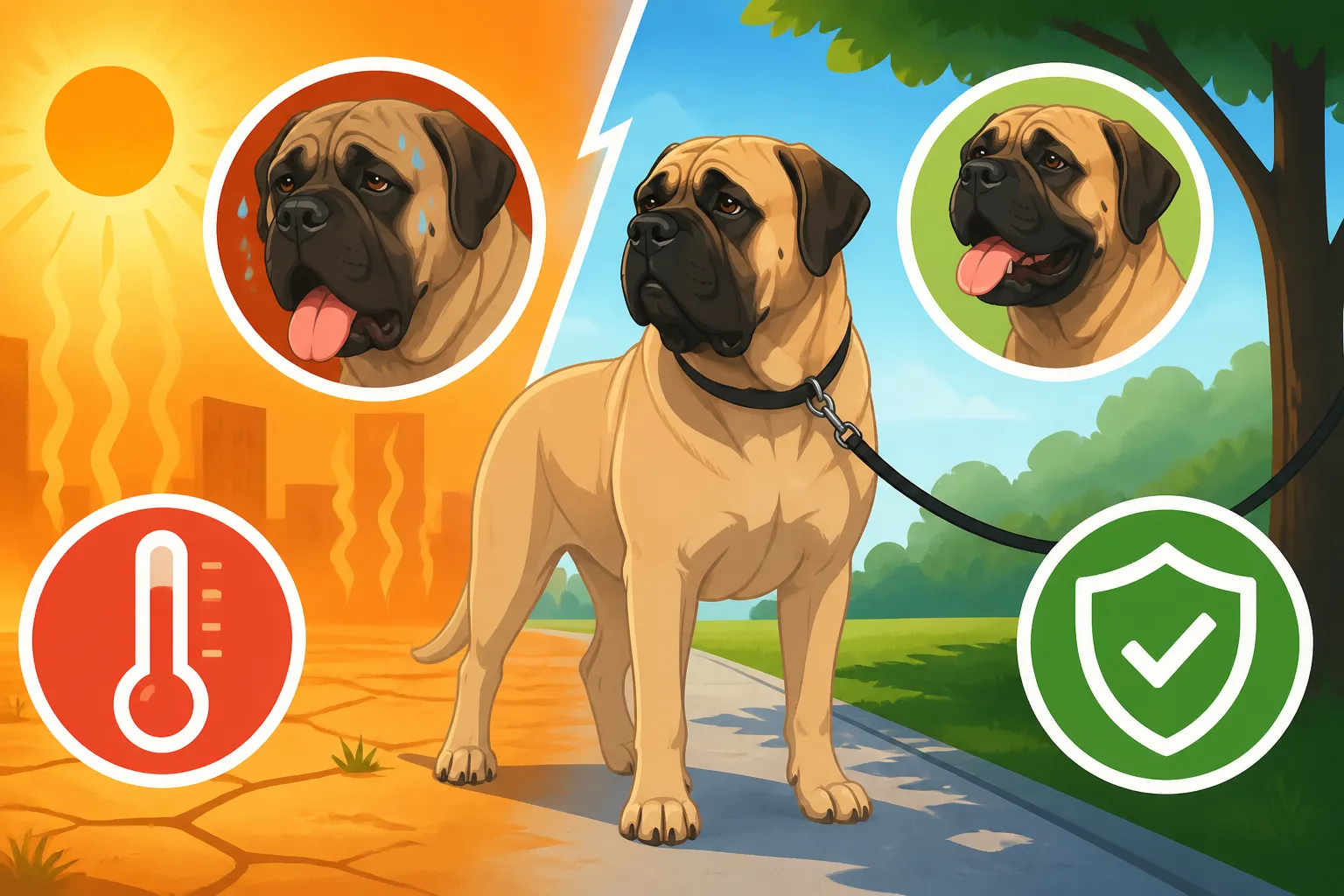
When the subtle clues are missed or ignored, heat stress quickly progresses to a dangerous level, often referred to as heatstroke. These are the red flag symptoms that demand immediate action and often veterinary intervention. The panting will become exaggerated, loud, and labored, almost frantic, and might be accompanied by grunting or unusual vocalizations. Their gums will likely turn a bright, brick red, indicating severe overheating, and pressing on them may show a very slow capillary refill time (the time it takes for the color to return after you press your finger on them).
You might also observe stumbling, a wobbly gait, or complete disorientation. Some Mastiffs may collapse. Vomiting and diarrhea are also common and serious signs, as the internal organs begin to suffer. Their body temperature, if you can take it rectally, will be significantly elevated, often well above 104°F (40°C). At this point, you're not just dealing with discomfort; you're dealing with a life-threatening emergency. Knowing The Minutes a Mastiff Has in a Warm Car highlights how quickly things can go south when a Mastiff is exposed to heat.
The Critical Difference Between Panting and Panicking
All dogs pant, especially after some exercise or on a warm day. It’s their equivalent of sweating. However, there’s a distinct difference between normal, healthy panting and the panicked, desperate breathing of a dog in heatstroke. Normal panting is typically controlled, rhythmic, and not excessively loud. The tongue might be out, but not usually drastically extended and flat. Your Mastiff might be warm, but they should still appear alert and responsive.
When a Mastiff is panicking from heat, their panting will be rapid, shallow, and often accompanied by a wide-eyed, distressed expression. Their chest might heave visibly, and you may hear wheezing or rattling noises. The tongue might be extremely broad and dark red, almost purple, indicating a lack of proper oxygenation and severe blood flow changes. They might be unresponsive or confused. This isn't just a dog trying to cool down; it's a dog whose body is actively failing to do so, and who needs help immediately.
Environmental Factors Turning a Pleasant Walk Into a Hazard
It's not just the temperature you feel on your skin that dictates whether a walk is safe for your Mastiff. Many environmental factors, some of which are easy to overlook, combine to create a perfect storm for overheating. Being aware of these elements allows you to make informed decisions about when and where to walk your gentle giant.
Temperature and Humidity: A Lethal Combination
The number on the thermometer is only part of the story. While high temperatures are obviously dangerous for a Mastiff, humidity often poses an even greater, yet often underestimated, threat. Dogs cool themselves primarily through evaporative cooling when they pant. As moisture evaporates from their respiratory tract, it carries heat away.
However, when the air is already saturated with moisture – in other words, when humidity is high – the evaporation process becomes far less efficient. The air simply can't absorb any more moisture from your dog's breath. This means your Mastiff might be panting hard, expending precious energy, but not actually cooling down effectively. A day that's 75°F (24°C) with 90% humidity can be far more dangerous than a dry 85°F (29°C) day. Always check the heat index, which accounts for both temperature and humidity, before heading out. The Temperature at Which a Mastiff Should Stay Indoors should definitely be adjusted for high humidity.
The Overlooked Danger of Hot Pavement and Surfaces
Have you ever walked barefoot on asphalt in the peak of summer? It's scorching, right? Your Mastiff's paw pads, while tougher than human feet, are still sensitive and can absorb a tremendous amount of heat from hot surfaces like asphalt, concrete, or even dark-colored gravel. This isn't just about burnt paw pads, though that's a serious concern.
The heat absorbed through their paws transfers directly into their body, significantly raising their core temperature. The ground itself can radiate heat upwards, creating a micro-environment close to the ground that is much hotter than the ambient air temperature you feel at your height. This is particularly dangerous for low-slung, heavy-bodied dogs like Mastiffs. A simple "five-second rule" applies: if you can't comfortably hold the back of your hand on the pavement for five seconds, it’s too hot for your Mastiff’s paws. Stick to grass or shaded trails.
Time of Day and Sun Exposure
The sun is a powerful force, and direct sunlight will rapidly increase your Mastiff's body temperature. Walking in open, unshaded areas during the sunniest parts of the day, even if the air temperature seems manageable, can quickly lead to overheating. Their dark pigment (often fawn or apricot with black masks) absorbs more solar radiation, and their bulk means they can't dissipate that heat quickly.
The best times for walks are typically early mornings, before 8 AM, and late evenings, after 7 PM, when the sun's intensity is much lower and the ground has had a chance to cool down. Cloudy days offer some relief, but even then, UV rays and heat can penetrate. Always prioritize shaded routes, such as tree-lined paths or areas with buildings that cast long shadows. A walk under a canopy of trees is significantly safer than one across an exposed park.
Proactive Planning for Cool and Comfortable Walks
Since Mastiffs are prone to overheating, responsible ownership means being incredibly proactive about walk planning. You can't just open the door and hope for the best. With a little forethought and the right approach, you can ensure your Mastiff enjoys their exercise without putting their health at risk.
Strategic Timing and Shaded Routes
The most effective way to prevent overheating is to control when and where your Mastiff walks. As mentioned, the coolest parts of the day are non-negotiable for these giants. Think dawn and dusk, or even later at night if your area is safe and well-lit. Avoid midday walks like the plague, even if it feels "just warm enough" to you. That hour between 10 AM and 4 PM is typically the riskiest.
Beyond timing, route selection is paramount. Prioritize paths that offer consistent shade – either from mature trees, tall buildings, or natural formations. Look for parks with wooded areas or neighborhoods with plenty of shade. If your typical route is exposed, it's time to find an alternative for warmer months. Consider doing shorter loops or multiple small walks if a long, fully shaded path isn't available. Remember, it's about quality and safety over duration or distance for your Mastiff's sake. How Much Yard a Mastiff Actually Uses is often more than enough for casual stretching when the weather isn't cooperating for a long walk.
Hydration and Cooling Aids
Water is your Mastiff's best friend in warm weather. Always, and I mean always, carry ample fresh water and a portable bowl. Offer water frequently throughout the walk, not just at the beginning or end. Even if they don't seem thirsty, a few sips can make a big difference in preventing dehydration. A collapsible silicone bowl, easily found on Amazon, is a fantastic investment and takes up minimal space.
For additional cooling, consider specialized gear. Cooling vests or bandanas, soaked in cold water, can help lower their core temperature. These work by providing evaporative cooling directly against their largest muscle groups or main arteries. Some owners even use a small spray bottle to mist their Mastiff’s belly and paw pads with cool water during a walk. Just ensure the cooling aids are always wet to be effective. However, these are aids, not solutions, and should never be used to extend a walk beyond safe limits. Which Cooling Gear Works on a Mastiff can make a real difference, but it's part of a larger strategy.
Listening to Your Mastiff and Shortening the Session
This is perhaps the most crucial advice: always listen to your Mastiff. They can't tell you in words when they're too hot, but their body language will speak volumes. If they start to lag, pull towards shady spots, refuse to move, or their panting seems to pick up in intensity, it's time to cut the walk short – immediately. Don't push them to "just get to the next block." Their stamina is not designed for heat, and their desire to please might override their own comfort until it's too late.
Even if you planned for a thirty-minute walk, if after ten minutes your Mastiff is showing signs of distress, turn back. It's not a failure on your part; it's being a responsible owner. On particularly hot days, a short potter in the yard for a potty break might be all they can handle. Remember The Walk Length That Damages a Mastiff Puppy isn't just about joints; it's about pushing their developing systems too hard in general. Prioritize their safety above all else, even if it means sacrificing your planned exercise routine for the day. Indoor mental stimulation or short, shaded training sessions are excellent alternatives. BAXTER & Bella offers some great online training resources that can provide engaging indoor activities for your Mastiff on those hot days.
Here’s a quick overview of safe vs. risky walking conditions:
| Factor | Safe Mastiff Walk Conditions | Risky Mastiff Walk Conditions |
|---|---|---|
| Air Temperature | Below 70°F (21°C) | Above 75°F (24°C), especially above 80°F (27°C) |
| Humidity | Low to Moderate (below 50%) | High (above 60-70%) |
| Pavement/Ground | Cool to the touch (can hold your hand on it for 5 sec) | Warm/Hot (cannot hold your hand on it for 5 seconds) |
| Time of Day | Early morning (before 8 AM), late evening (after 7 PM) | Midday (10 AM – 4 PM) |
| Sun Exposure | Primarily shaded route, cloudy sky | Direct sun, open areas, clear skies |
| Duration | Short, leisurely strolls (15-30 mins) | Prolonged, strenuous exercise (45+ mins or fast pace) |
| Activity Level | Gentle sniffing, slow pace | Brisk walking, playing, running |
Emergency Protocols: When Your Mastiff Overheats
Despite all the precautions, accidents can happen. Perhaps an unexpected temperature spike, a sudden burst of activity, or just a day where your Mastiff's individual tolerance is lower. Knowing exactly what to do when your Mastiff shows severe signs of overheating could literally save their life. This isn't a situation where you can afford to panic; swift, decisive action is critical.
Immediate Steps to Lower Body Temperature
If your Mastiff starts showing severe signs of heat stress (bright red gums, excessive panting, stumbling, disorientation, vomiting), the very first thing you need to do is get them out of the heat source. Move them to the coolest possible spot immediately – this could be air conditioning, a shaded area, or even a car with the AC blasting.
Next, focus on cooling their body. Crucially, do NOT use ice-cold water, as this can cause the blood vessels to constrict, trapping heat inside, and can lead to shock. Instead, use cool (tap water temperature) water. Soak towels or a shirt and apply them to the areas with large blood vessels close to the surface: their belly, inner thighs (groin area), armpits, and paw pads. You can also gently hose them down with cool water if you're near one, being careful not to spray directly into their nose or mouth. If you have a fan, direct it at them to help with evaporative cooling. Offer small sips of cool water, but don't force them to drink if they're disoriented or struggling to swallow.
Knowing When to Call the Vet or Emergency Clinic
While you are implementing immediate cooling measures, it is absolutely vital to contact your veterinarian or the nearest emergency veterinary clinic. Do not wait to see if your Mastiff improves. Heatstroke is a medical emergency that can quickly lead to organ damage, brain swelling, and death. Describe your Mastiff's symptoms, the temperature, and what steps you've already taken.
Calling ahead allows the veterinary staff to prepare for your arrival, ensuring they have IV fluids, cooling measures, and monitoring equipment ready. Time is of the essence. If your Mastiff is collapsing, unresponsive, or experiencing seizures, you need to get them to emergency care without delay. This kind of urgency is similar to understanding How Long a Bloating Mastiff Has Before Surgery, where every minute counts in preserving their life and well-being. Even if their initial symptoms seem to subside with your at-home cooling, a vet visit is crucial to check for any internal damage that may not be immediately obvious.
Post-Recovery Care and Prevention
Even after your Mastiff has been treated for heatstroke and seems to be recovering, the danger isn't entirely over. Your vet will likely want to monitor them closely for a period, as complications like kidney failure or disseminated intravascular coagulation (DIC), a severe bleeding disorder, can develop hours or even days later. Follow all veterinary instructions regarding medication, rest, and follow-up appointments.
Once your Mastiff is fully recovered, it's essential to critically review your heat management plan. What went wrong? Was it the time of day, the route, not enough water, or an overlooked health issue? Learn from the experience and implement stricter preventive measures. This might mean adjusting your schedule even more drastically, investing in more effective cooling gear, or simply recognizing that on some days, an outdoor walk is just not worth the risk. Prioritizing Caring for a Mastiff Past Five means an even higher level of vigilance against heat, as older dogs are often less tolerant. Your Mastiff's health and longevity depend on your unwavering commitment to their safety in all weather conditions.
Disclaimer
This article is for general informational purposes only and does not constitute professional advice. Laws, prices and regulations vary by location and change over time. Consult a qualified professional for guidance on your specific situation.