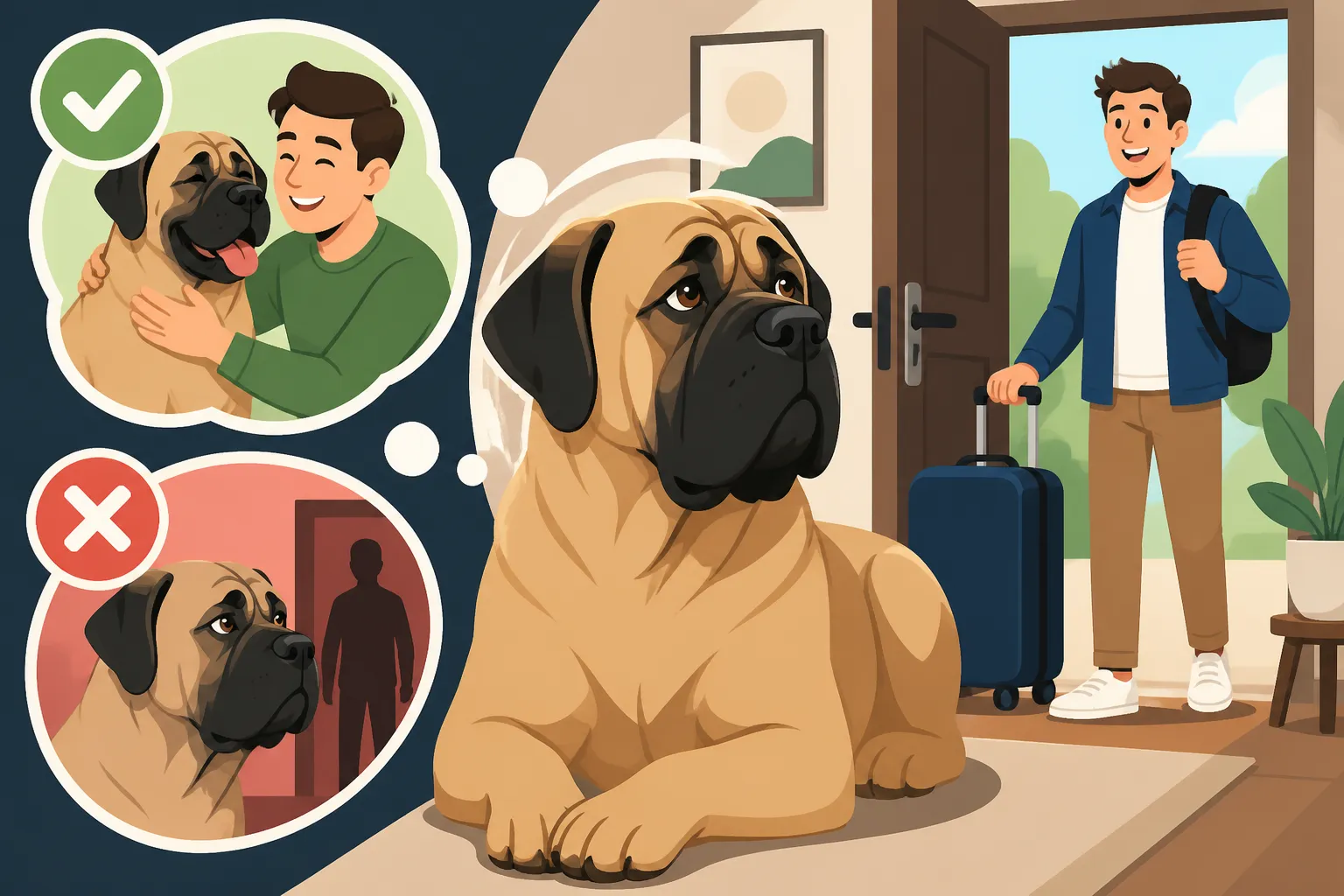
Whether a Mastiff Accepts a Houseguest Staying Over
Having houseguests when you share your home with a giant, majestic Mastiff can be a source of real anxiety for many owners. You adore your gentle giant, but you also know their immense size and inherent protective nature can be daunting for unfamiliar visitors, and you worry about everyone's comfort and safety. This guide aims to help you navigate those concerns, providing practical strategies to ensure a smooth, stress-free experience for your Mastiff, your guests, and yourself.
Understanding Your Mastiff's Instincts with Visitors
It's easy to assume that because a Mastiff is so large, they are automatically a formidable guard dog, always ready to spring into action. While they possess a deep-seated protective instinct, their approach to strangers and new situations is often far more nuanced and measured than people expect from a dog of their stature. They're not always looking for a fight; often, they're observing and assessing.
The Gentle Giant's Assessment Process
A Mastiff doesn't typically react impulsively. Instead, when a new person enters their territory – especially someone who intends to stay – they engage in a careful, almost silent evaluation process. They might stand between you and the guest, not in an aggressive posture, but rather like a massive, furry bodyguard making sure everyone is where they should be. They're trying to figure out if this newcomer is a threat, a friend, or just someone who will abide by the household rules. This deliberate nature is often misinterpreted as slowness or stubbornness, but it's genuinely their thinking process at work. The Stubbornness That Is Actually a Mastiff Thinking
Their size alone is a massive deterrent, often fulfilling their guarding role without them ever needing to bark or growl. A stranger sees a Mastiff and immediately understands that this is a formidable presence. However, this inherent visual deterrent doesn't mean they don't also have a watchful eye. They might follow guests with their gaze, position themselves in doorways, or even lean against you if they feel uncertain about the situation, seeking reassurance. Understanding this quiet observation period is key to managing introductions.
Protection Versus Socialization: Finding the Balance
Mastiffs are historically bred to protect, but a well-socialized Mastiff is not a liability. The challenge lies in honoring their protective instincts while also ensuring they are accepting of trusted individuals. It’s a tightrope walk because you don't want to suppress their natural inclination to be vigilant, but you absolutely need them to understand that you are in charge of who is welcome in your home. How a Mastiff Judges a Stranger at the Door
The crucial distinction is that a Mastiff should be a protector of the family and home, not a fearful or aggressive dog towards legitimate guests. Early and ongoing socialization is paramount for this. While they may not be the type to greet every visitor with tail wags and slobbery kisses, a properly trained Mastiff will generally acknowledge a guest's presence, observe them, and then settle down, relying on your cues. Their large bark can certainly be intimidating, but it's often used more as a warning or announcement rather than an immediate threat, and truly, How Rarely a Mastiff Barks is something many Mastiff owners appreciate.
Preparing Your Mastiff and Your Home for Houseguests
The key to a successful visit often lies in the preparation long before your guests even ring the doorbell. Thinking ahead about your Mastiff's needs and how they interact with strangers can prevent a lot of stress.
Pre-Arrival Communication with Guests
Before your guests pack their bags, have an honest and detailed conversation with them about your Mastiff. Don't sugarcoat the size or the protective nature. Explain that your dog is a Mastiff, a very large breed, and while generally gentle with family, they take time to warm up to strangers. Provide clear instructions on how to interact with your dog, or, more accurately, how not to interact initially.
Suggest that they ignore your Mastiff when they first arrive, allowing the dog to approach them on their own terms. Emphasize no sudden movements, no direct staring, and definitely no reaching over the dog's head to pet. For safety, it’s also wise to educate them on The Damage a Mastiff Does by Accident – a tail wag can clear a coffee table, and a sudden lean can send an unsuspecting person sprawling. If your Mastiff is a known leaner, tell your guests! Give them a heads-up about the drool factor, too, and perhaps suggest bringing old clothes or a dedicated "dog visiting" outfit if they're particularly sensitive to a little slobber.
Setting Up a Safe Space for Your Mastiff
Even the most well-adjusted Mastiff can benefit from having a designated "safe space" during a houseguest's visit. This could be a sturdy crate in a quiet room, a section of the house blocked off by a heavy-duty gate, or even just a particularly comfortable dog bed in an out-of-the-way corner. This space is not a punishment; it's a retreat where your Mastiff can go to decompress, sleep undisturbed, and escape the novelty of unfamiliar people.
Ensure this space is well-stocked with their favorite chew toys, a fresh water bowl, and a comfortable bed. Many owners find robust, metal crates work best for a Mastiff’s size and strength. Brands available on platforms like Amazon offer heavy-duty options designed for giant breeds. Introducing your Mastiff to this concept early, perhaps as part of their regular routine, makes it a positive place rather than a penalty box. Whether a Mastiff Should Be Crated When Guests Arrive can offer a good starting point for integrating crating into their routine.
Controlled Introductions and Leash Management
When your guests first arrive, manage the introduction carefully. Ideally, your Mastiff should be on a leash, even if they're typically well-behaved indoors. A sturdy harness, perhaps a front-clip style, can give you better control over such a powerful dog, as discussed in Whether a Mastiff Should Wear a Harness or a Collar. Have your Mastiff near you, but not directly in the path of the door. Allow your guests to enter and settle in before you bring your Mastiff for a proper introduction.
A "meet and greet" outside the home or in a neutral area, like your front yard, can sometimes be beneficial if your Mastiff is particularly territorial indoors. The key is to keep the initial interaction brief and positive. Have your guests ignore your Mastiff at first. Once your Mastiff seems calm, your guests can offer a treat (if your dog is food motivated) from an open palm, without direct eye contact or sudden movements. Keep the leash on for the first hour or so, allowing you to gently guide your Mastiff away if they get too pushy or appear uncomfortable.
Managing the Stay: Rules and Routines for a Harmonious Visit
Once the initial greetings are over, maintaining structure and clear boundaries is essential to ensure everyone coexists peacefully throughout the duration of the visit. Consistency is your best friend when it comes to Mastiffs.
Establishing Clear Guest Rules and Boundaries
This is where your pre-arrival communication pays off. Reiterate the rules to your guests upon their arrival. These might include:
- No Free Petting: Guests should always ask you before attempting to pet your Mastiff. Your dog needs to initiate contact and feel comfortable.
- Respect Designated Spaces: Explain where your Mastiff's "safe space" is and that it's off-limits for guests to disturb them there.
- Feeding Protocol: Guests should never feed your Mastiff anything without your explicit permission. This prevents upset stomachs and reinforces that you control food resources.
- Avoid Startling: No loud noises, running, or sudden movements around your Mastiff.
- Supervision: Emphasize that your Mastiff should never be left unsupervised with children, even if your dog is generally good with them. A Mastiff in a House With Small Children highlights the importance of constant vigilance due to their sheer size.
A simple, friendly reminder chart on the fridge can be a subtle way to reinforce these rules without constantly nagging your guests.
Maintaining Routine and Structure
Mastiffs thrive on routine. Deviating too much from their regular schedule for feeding, walks, and potty breaks can cause stress and behavioral issues. Even with guests present, try to stick to your Mastiff's normal daily rhythm as much as possible. If their mealtime is usually 6 PM, keep it at 6 PM. If their last potty break is typically before bed, make sure that still happens. This predictability offers a sense of security during an otherwise abnormal situation.
Incorporate training sessions into your day, even short ones. This reinforces your leadership and gives your Mastiff a job, which can be calming. A brief session with simple commands like "sit," "stay," and "down" can be a great way to bond with your dog and demonstrate their good manners to your guests. Online platforms like BAXTER & Bella offer excellent guidance and structured programs that can help you integrate training seamlessly into your daily life, even when things are a little hectic.
Gradual Integration and Supervision
While initially you might keep your Mastiff on a leash or in their safe space more often, as the visit progresses and both your dog and your guests become more comfortable, you can gradually allow more freedom. Always supervise interactions closely. Look for signs of discomfort from your Mastiff: yawning, lip-licking, turning their head away, stiff body language, or a low tail carriage. These are signals that they might be feeling overwhelmed or anxious, and it's time to intervene. The Sensitivity Nobody Expects in a Two Hundred Pound Mastiff is very real, and their subtle cues should be respected.
Encourage calm, quiet interactions. If your Mastiff chooses to approach a guest for a head scratch or to lean on them, that's a positive sign of acceptance. However, never force interaction. Remember, acceptance for a Mastiff might simply mean tolerating their presence peacefully, not necessarily demanding affection. Over time, as trust builds, you might find your Mastiff gradually warming up more, perhaps even seeking out a guest for a gentle nudge.
When Things Go Sideways: Troubleshooting and Advanced Strategies
Even with the best preparation, sometimes a Mastiff struggles with houseguests. It's important to have a plan for when things don't go as smoothly as you hoped.
Recognizing Signs of Stress and Overwhelm
A Mastiff who is struggling with houseguests might not show overt aggression right away. Their signs of stress can be subtle:
- Avoidance: Constantly moving away from guests, hiding in another room, or trying to go to their crate.
- Excessive Licking/Grooming: A dog repeatedly licking their lips, paws, or other body parts can indicate anxiety.
- Yawning or Lip Licking: Often out of context, these can be appeasement signals.
- Panting: If not related to heat or exertion, panting can be a sign of stress.
- Stiff Body Language: A rigid posture, tucked tail, or ears pinned back can indicate discomfort.
- Growling or Barking: While less common for a well-socialized Mastiff, this is a clear sign to create space immediately.
If you observe any of these signs, it's crucial to act immediately. Don't punish your Mastiff for expressing their discomfort. Instead, remove them from the stressful situation.
Retreat and Re-evaluation
If your Mastiff is showing signs of stress, the best course of action is to calmly lead them to their safe space. Give them a chew toy or a food puzzle to distract them and allow them to decompress. You might need to keep them in their designated area for longer periods, only bringing them out for short, supervised interactions when things are very quiet.
It's also a good time to re-evaluate your strategy. Are the guests respecting the rules? Is the house too chaotic? Does your Mastiff need more exercise or mental stimulation to burn off nervous energy? Sometimes, a long, quiet walk with just you can help them reset. Consider if the length of the visit is contributing to the stress; How Long a Mastiff Copes Alone might give you insight into their tolerance for novelty, though being alone and having strangers in their space are different challenges.
Professional Help and Long-Term Solutions
If your Mastiff consistently struggles with houseguests despite your best efforts, or if you observe any signs of true aggression, it's time to call in professional help. A certified professional dog trainer or a veterinary behaviorist can assess your Mastiff's specific triggers and develop a tailored behavior modification plan. They can help you address underlying anxieties and teach you advanced management techniques.
This might involve desensitization and counter-conditioning exercises, where your Mastiff gradually learns to associate guests with positive experiences. For some Mastiffs, especially those with significant anxiety, medication might even be considered by a vet to help them cope. Remember, addressing these issues proactively is always better than waiting for a serious incident. Whether a Mastiff Needs a Professional Trainer is a good resource if you feel overwhelmed by your Mastiff's behavior challenges.
| Aspect of Guest Interaction | Do's for Guests | Don'ts for Guests |
|---|---|---|
| Arrival & Greeting | Ignore the Mastiff at first. | Rush up to the Mastiff or make direct eye contact. |
| Interaction | Let the Mastiff approach you. Offer an open hand. | Pet the Mastiff without permission. Grab their head. |
| Feeding | Ask the owner before giving any food or treats. | Share human food or feed without owner's consent. |
| Movement | Move slowly and predictably around the Mastiff. | Run, shout, or make sudden movements near the dog. |
| Respecting Space | Respect the Mastiff's designated safe space. | Disturb the Mastiff when it is resting or in its crate. |
| Children | Always supervise children around the Mastiff. | Leave children unsupervised with the Mastiff. |
This article is for general informational purposes only and does not constitute professional advice. Laws, prices and regulations vary by location and change over time. Consult a qualified professional for guidance on your specific situation.