Whether a Mastiff’s Short Life Is Getting Shorter
Mastiff lifespan examines historical breeding practices, giant breed physiology, and modern veterinary medicine affecting their longevity.
Know what to watch for.
Breed-specific conditions, screening and DNA tests, what surgery actually costs, and the daily habits that stretch a healthy lifespan.

Mastiff lifespan examines historical breeding practices, giant breed physiology, and modern veterinary medicine affecting their longevity.

Untested Mastiff litters carry severe financial risks and hidden health problems that outweigh any lower initial puppy price.

Canine Health Information Center tests for Mastiff parents include required hip and elbow dysplasia screenings to reduce genetic diseases.

Elderly Mastiff end-of-life decisions involve assessing quality of life, recognizing declining health signs, and managing grief.
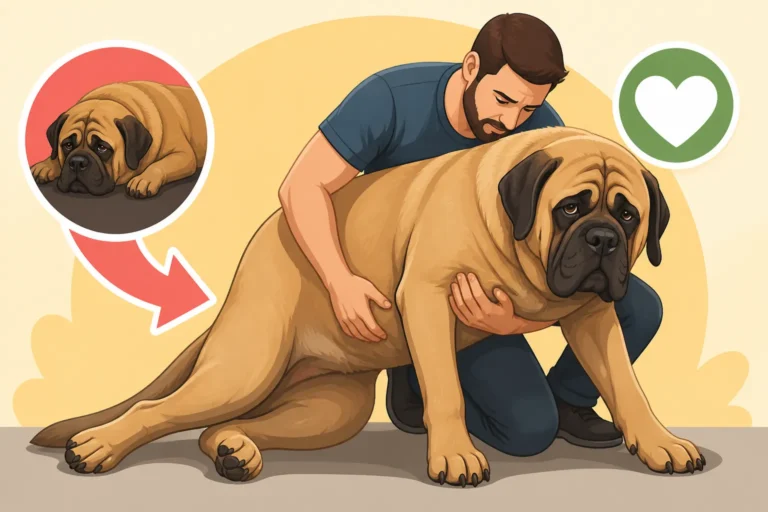
Lifting an aging Mastiff that cannot stand safely requires practical advice, proper tools, and understanding arthritis and mobility loss.
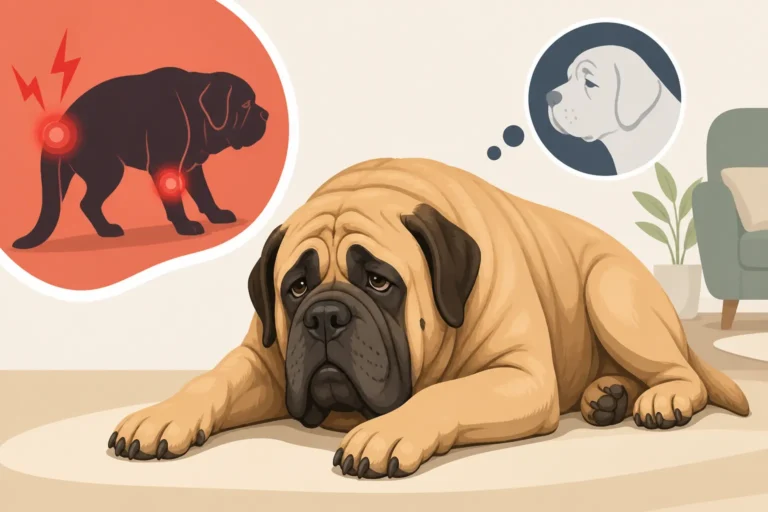
Aging Mastiff mobility loss results from arthritis, joint degeneration, and neurological conditions like degenerative myelopathy causing weakness.

Mastiff aging patterns show these giant dogs transition into senior status around five years old, bringing reduced mobility.

Keeping a lean body condition in a Mastiff reduces joint strain and organ overload, extending their lifespan by avoiding early arthritis and health problems.

Mastiff size variations and genetics examined to see if a moderate 120 pound to 170 pound build genuinely offers longer lives.

Mastiff life expectancy typically spans six to ten years, with biological factors explaining why giant breeds age rapidly.