The Walk Length That Damages a Mastiff Puppy
Bringing home a Mastiff puppy is an incredible joy, but many new owners, full of excitement and good intentions, unknowingly put their giant breed puppy at risk of serious long-term joint problems by misunderstanding appropriate exercise. This guide aims to thoroughly explain why their unique growth phase demands a carefully managed approach to activity, ensuring you can foster healthy development without inadvertently causing harm.
Understanding the Unique Growth of a Mastiff Puppy
Mastiffs are truly majestic, but their immense size comes with a unique set of developmental challenges. Unlike smaller breeds that reach maturity relatively quickly, Mastiffs grow at an astonishing rate, often doubling or tripling their weight in a matter of months. This rapid growth spurt, while impressive, leaves their skeletal system particularly vulnerable during their formative years. It’s a period where their bones are lengthening quickly, but their joints, cartilage, and soft tissues are struggling to keep pace, remaining relatively soft and susceptible to damage.
When you look at a Mastiff puppy, you see a sturdy little tank, but beneath that adorable exterior, their growth plates—the areas of cartilage where bone growth occurs—are still open and quite fragile. These growth plates are like the blueprints for their adult bones, and any undue stress or trauma during this critical phase can lead to malformations, inflammation, and degenerative conditions that will plague them throughout their lives. It's a cruel irony that the very qualities we admire in them as adults—their massive size and power—are what make them so delicate as puppies.
The Rapid, Yet Fragile, Bone Development
The sheer speed at which a Mastiff puppy gains weight and height is phenomenal, but this rapid expansion means their bones, ligaments, and tendons aren't fully calcified or strengthened. Imagine building a skyscraper quickly; the framework is up, but the supporting beams are still curing and easily stressed. That's essentially what's happening inside your Mastiff puppy. Their long bones are extending from these open growth plates, which are made of cartilage and are much softer than mature bone. High-impact activities or repetitive stress can injure these delicate growth plates, potentially leading to irreversible damage.
This vulnerability is a primary reason why conditions like hip and elbow dysplasia are so prevalent in giant breeds. When a puppy's joints are repeatedly stressed during this crucial growth period, the ball and socket of the hip, or the complex elbow joint, may not develop properly. This can result in loose joints, grinding cartilage, and eventually, crippling arthritis. Sometimes, owners might notice what appears to be "The Shifting Lameness of a Growing Mastiff," where the puppy seems to favor different legs on different days. This can often be an early, subtle sign that their joints are under stress, signaling that it’s time to re-evaluate their activity level and consult with your veterinarian. This kind of intermittent lameness is not normal and should never be ignored as just "growing pains."
Why Slow and Steady Wins the Race for Their Joints
Given their unique developmental trajectory, the mantra for Mastiff puppy exercise should always be "slow and steady." This isn't about preventing them from moving; it's about channeling their natural energy into appropriate, low-impact activities that support healthy growth rather than hinder it. Think short bursts of gentle play, supervised exploration in a secure yard, or very brief, controlled walks on soft surfaces. Structured, forced exercise, even seemingly benign activities like a daily mile-long walk, can be far too much for their developing bodies.
The problem with over-exercising a Mastiff puppy isn't just about acute injury; it's also about chronic inflammation and micro-trauma. Each jarring step on pavement, each leap, each long period of sustained movement, can contribute to tiny injuries within the joints. Over time, these small injuries accumulate, leading to inflammation that can disrupt proper joint formation and accelerate the onset of degenerative joint disease. While a Mastiff puppy might seem to be enjoying themselves, bouncing around with boundless energy, their enthusiasm often masks the subtle strain on their fragile skeletal system. It's our responsibility as their guardians to understand these limitations and provide an environment that promotes robust, healthy development rather than pushing them beyond their physical capabilities too soon.
Defining "Damaging" Walk Lengths and Activities
It’s easy to think a walk is a walk, but for a Mastiff puppy, the definition of a "damaging" walk is far broader than it is for a smaller, faster-maturing breed. What might be perfectly fine for a Beagle or a Labrador can be severely detrimental to a Mastiff puppy due to their rapid growth, heavy body weight, and still-developing joints. The key is to understand that any sustained, repetitive, or high-impact activity can contribute to long-term issues, even if the puppy seems to be enjoying themselves in the moment.
Many well-meaning owners believe that more exercise equals a healthier, better-behaved dog. While this is true for adult dogs, it's a dangerous misconception for Mastiff puppies. Their skeletal structure simply isn't ready for the kind of physical demands that other breeds might handle with ease. Pushing them too hard during these early months can set them up for a lifetime of pain and expensive veterinary care, often involving orthopedic specialists. This is also where having a robust pet insurance policy like Healthy Paws can be incredibly helpful, as early orthopedic issues can quickly lead to substantial bills.
The Dangers of Over-Exercising a Young Mastiff
Let's get specific about what constitutes "too much" exercise for a Mastiff puppy. Long walks, especially on hard surfaces like pavement, concrete, or asphalt, are incredibly damaging. The repetitive impact of their heavy bodies hitting unforgiving surfaces puts immense strain on their still-soft growth plates, cartilage, and ligaments. This isn't just about a single long walk; it’s about the cumulative effect. Daily jogs, extensive games of fetch with sudden stops and starts, or encouraging them to jump repeatedly are all high-risk activities. Even off-leash romps with other dogs can be problematic if they involve too much roughhousing, quick direction changes, or long periods of running.
A common pitfall is observing the puppy's apparent boundless energy and assuming they are capable of more. A Mastiff puppy's exuberance can often override their physical discomfort or fatigue. They might push themselves to keep up with you or other dogs, only for the consequences to manifest later as stiffness, limping, or even permanent joint damage. Remember, their bones are still forming, and the cartilage that cushions their joints is not yet mature. Every jarring impact or excessive twisting motion can lead to microfractures, inflammation, and the improper development of joint surfaces. This is why a guide like "Why a Mastiff Puppy Must Not Be Exercised Hard" is so crucial for new owners. The temporary joy of a long run is simply not worth the potential for lifelong pain and compromised mobility for your gentle giant.
Identifying the Right Amount of Daily Activity
So, if long walks are out, what is the right amount? A widely accepted guideline for giant breed puppies like Mastiffs is the "five-minute rule" per month of age. This means a three-month-old puppy should have about 15 minutes of structured exercise per day, a four-month-old, 20 minutes, and so on, up to twice a day. This includes leash walks, not just free play. The key here is structured and controlled. These shouldn't be forced marches, but gentle strolls on soft, even surfaces like grass. Breaking these short periods into multiple outings throughout the day is far better than one continuous stretch.
For instance, a four-month-old Mastiff puppy could have two 10-minute leash walks on the lawn, perhaps with some gentle playtime in between, rather than a single 20-minute power walk. The quality of the activity is paramount. Mental stimulation is an excellent, low-impact alternative to physical exertion. Puzzle toys, short training sessions, or gentle scent games indoors can tire a puppy out just as effectively without stressing their joints. As a puppy owner, understanding "The Age a Mastiff Puppy's Elbows Are First Filmed" can also help you appreciate the ongoing development and fragility of their joints even into adolescence. Always prioritize activities that encourage natural movement without excessive impact, and remember that even small amounts of sustained exertion can be too much for their developing bodies.
Practical Guidelines for Safe Mastiff Puppy Walks
Navigating the world of Mastiff puppy exercise requires a delicate balance. You want your puppy to be well-socialized and have sufficient mental and physical enrichment, but not at the expense of their long-term orthopedic health. It’s about being intentional with every walk and play session, always keeping their fragile growth plates in mind. This means actively managing their environment and understanding how different terrains and durations impact their developing bodies.
One common challenge new owners face is resisting the urge to take their eager puppy everywhere. While early socialization is vital, it must be done carefully. Carrying your puppy in appropriate settings, or taking them to places where they can observe calmly without excessive walking or jumping, is a much safer approach than long walks around the block. Remember that every step counts when you're dealing with a rapidly growing, heavy-boned puppy.
Age-Appropriate Exercise Schedules
To make things a little clearer, here's a general guideline for how long you can safely walk your Mastiff puppy, keeping the "five-minute rule" in mind. These are starting points, and you should always adjust based on your puppy's individual energy levels, conformation, and the advice of your veterinarian.
| Age of Mastiff Puppy | Recommended Daily Structured Walk Time (Total) | Example Walk Schedule | Preferred Terrain |
|---|---|---|---|
| 8-12 Weeks | 10-15 minutes | 2-3 short, 5-min sessions | Soft grass, carpet |
| 3-4 Months | 15-20 minutes | 2-3 short, 5-10 min sessions | Soft grass, uneven ground to build muscles |
| 5-6 Months | 25-30 minutes | 2-3 moderate, 10-15 min sessions | Grass, gentle trails |
| 7-9 Months | 35-45 minutes | 2-3 moderate, 15-20 min sessions | Grass, varied natural terrain |
| 10-12 Months | 50-60 minutes | 2-3 longer, 20-30 min sessions | Varied terrain, avoiding excessive hard surfaces |
| 12-18 Months | 60-90 minutes, increasing gradually | Longer walks, no forced running | Varied terrain, still mindful of hard surfaces |
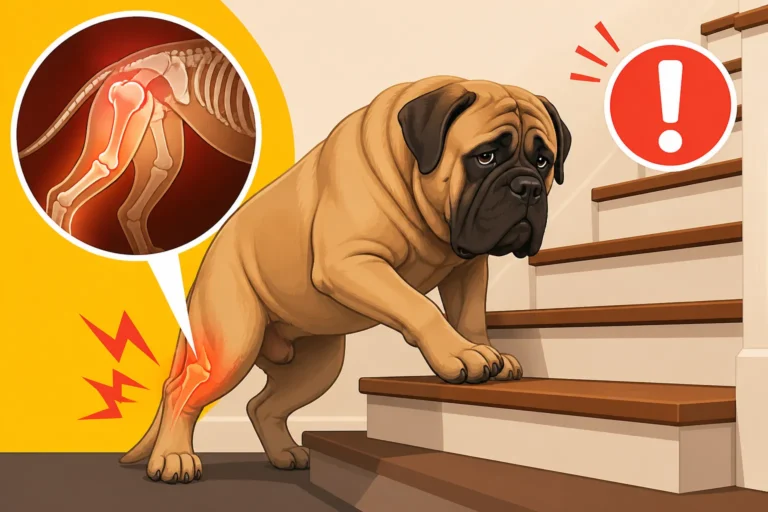
Beyond these guidelines, always prioritize soft, yielding surfaces over hard pavement. Grass, dirt trails, or even thick carpet inside your home are much kinder to developing joints. Avoid stairs whenever possible, especially during the first year, as going up and down stairs puts significant stress on a Mastiff puppy’s hips, elbows, and spine. This is why "Why Stairs Are Worse for a Mastiff Than Any Breed" is a critical read for any Mastiff owner. Pay close attention to your puppy’s cues: if they lag behind, sit down, or start limping, it's an immediate sign to stop. Their body is telling you it's had enough.
Recognizing Signs of Over-Exertion or Pain
Even with the best intentions and careful adherence to guidelines, sometimes puppies overdo it, or an underlying issue can manifest. It's vital to be vigilant and know the signs of over-exertion or joint pain in your Mastiff puppy. They can't tell you in words that they hurt, so you must learn to read their body language and observe their movement patterns closely. Early detection can make a significant difference in preventing long-term damage and allowing for timely veterinary intervention.
Look for subtle changes like a slight limp, a reluctance to bear weight on a particular leg, or stiffness after resting. If your puppy struggles to get up after a nap, seems hesitant to jump (even a small step), or simply doesn't want to walk as far as usual, these are red flags. Excessive panting, drooling, or lagging behind during a short walk can also indicate they're pushing their limits. Don’t dismiss these signs as mere laziness; for a Mastiff puppy, they are often indicators of physical discomfort or potential injury. If you notice any persistent or concerning symptoms, contact your veterinarian immediately. Early diagnosis of conditions like hip or elbow dysplasia is crucial, and having pet insurance, such as through Healthy Paws, can help alleviate the financial stress of diagnostic imaging and potential treatments. While you might be focusing on puppy health now, understanding issues like "Arthritis in a Mastiff at Four" can remind you why protecting their joints in puppyhood is so important for their future comfort.
Beyond the Walk: Holistic Puppy Care for Joint Health
Protecting your Mastiff puppy's joints isn't just about managing walk lengths; it's a holistic endeavor that encompasses nutrition, weight management, and creating a safe home environment. Every aspect of their care during these formative months plays a crucial role in preventing orthopedic issues and ensuring they grow into robust, healthy adults. Ignoring any of these factors can undermine even the most carefully managed exercise routine.
Think of it as building a house: the foundation (genetics, nutrition) needs to be solid, the framework (controlled exercise) needs to be carefully constructed, and the environment (safe home) needs to support the structure. If any part is compromised, the entire building is at risk. For a Mastiff, whose sheer size already predisposes them to joint problems, paying extra attention to these details is not just beneficial, it's absolutely essential for their quality of life.
The Role of Nutrition and Weight Management
Perhaps one of the most critical, yet often misunderstood, aspects of Mastiff puppy care is nutrition. It might seem counterintuitive, but feeding a Mastiff puppy too much or food that promotes too rapid growth can be just as damaging, if not more so, than over-exercising them. The goal with a giant breed puppy is slow, steady growth, not maximal growth. Overfeeding leads to excessive weight gain, which puts undue stress on their developing joints. It’s a double whammy: the extra weight acts as a constant, heavy load on their fragile growth plates, increasing the risk of conditions like osteochondritis dissecans (OCD), hip, and elbow dysplasia.
You want your Mastiff puppy to be lean, not skinny, but you should be able to easily feel their ribs without seeing them prominently. Consult your breeder and veterinarian for specific feeding guidelines, but generally, a high-quality large breed puppy food designed for slow growth (often with lower protein and controlled calcium levels) is recommended. "Why a Mastiff Puppy Must Grow Slowly" is not just a suggestion; it's a vital principle for their joint health. Be particularly mindful of calcium intake, as "What Excess Calcium Does to a Mastiff's Elbows" can lead to skeletal deformities. Free-feeding is generally discouraged; instead, feed measured meals to ensure precise caloric control. A healthy diet, coupled with appropriate exercise, lays the groundwork for a lifetime of mobility, and having pet insurance like Healthy Paws in place early can provide peace of mind for those unexpected health bumps related to growth.
Creating a Joint-Friendly Home Environment
Your home environment plays a much larger role in your Mastiff puppy's joint health than you might initially realize. Think about where your puppy spends most of their time and how they navigate their living space. Slippery floors, like hardwood, tile, or laminate, are a major hazard for giant breed puppies. Their large, heavy bodies can easily lose traction, leading to slips, falls, and potentially severe injuries to their developing hips and legs. "What Bare Floors Do to a Growing Mastiff" can range from acute sprains to chronic issues from repeated micro-trauma.
Invest in rugs, carpet runners, or anti-slip mats, especially in high-traffic areas where your puppy walks, plays, and rests. These provide much-needed traction and cushioning. Adequate, supportive bedding is also crucial. A Mastiff puppy needs a thick, orthopedic bed that distributes their weight evenly and cushions their joints, not just a thin mat on the floor. Provide several comfortable resting spots throughout the house to encourage them to lie down in appropriate places. Lastly, consider how your puppy gets into and out of vehicles. Lifting a heavy Mastiff puppy is challenging and risky for both of you; instead, invest in a sturdy ramp. This is why it’s always recommended to understand "Why a Mastiff Puppy Must Be Lifted Into a Car" or provided with a safe alternative. Remember, good breeding is the foundation, but a supportive environment, informed by insights like "The CHIC Four Plus the DNA Stack Behind a Mastiff's Price," is what truly allows that genetic potential to flourish.
Disclaimer
This article is intended for informational purposes only and does not constitute veterinary advice. Always consult with a qualified veterinarian for any health concerns or before making any decisions about your Mastiff's care, diet, or exercise regimen.