Teaching a Mastiff to Use a Ramp
Having a magnificent Mastiff means grappling with their sheer size, which, while awe-inspiring, presents unique challenges, especially when it comes to navigating everyday obstacles like vehicles, high beds, or even a few steps. It's not just about convenience; it's about protecting those precious joints and ensuring their comfort and safety – and yours too! This guide is all about mastering the art of teaching your gentle giant to use a ramp, making life easier and healthier for everyone.
Why a Ramp Is an Absolute Must-Have for Your Mastiff
Let's be honest, living with a Mastiff is a unique experience. They are enormous, powerful, and deeply loving. But that very size, while part of their charm, also comes with significant responsibilities, particularly concerning their physical well-being. Repeated jumping, even seemingly small ones, can cause immense strain on their joints over time. A ramp isn't just a luxury; it's a vital piece of equipment for every Mastiff owner.
Protecting Fragile Joints from Puppyhood On
From the moment you bring home your Mastiff puppy, you're tasked with safeguarding their rapidly growing body. Those growth plates are incredibly vulnerable, and the massive weight your puppy will eventually carry puts immense pressure on developing joints. Even innocent jumps off a porch or out of a car can contribute to future problems like hip and elbow dysplasia, conditions that plague many large breeds. Think about the cumulative impact of hundreds, if not thousands, of jarring landings over their lifetime. It’s far better to proactively protect their joints from day one than to try and mitigate pain later on. We talk more about this in Why a Mastiff Puppy Must Not Be Exercised Hard.
A ramp allows your Mastiff to ascend and descend smoothly, distributing their weight evenly and eliminating the high-impact stress of jumping. This is crucial for puppies during their critical growth phases, preventing microscopic damage that can compound into serious issues. It also means you won't have to worry about the specific walk length that damages a Mastiff puppy. Even once they're fully grown, those heavy joints still appreciate the gentle incline over a hard jump. Prevention truly is the best medicine when it comes to a Mastiff's orthopedic health.
Avoiding Injury to Both Dog and Owner
Picture this: your two hundred-pound Mastiff needs to get into the back of your SUV, and they're just not keen on the leap. What do you do? Many owners instinctively try to lift their dog, and I can tell you from personal experience, that's a recipe for disaster. Lifting a dog of this size is not only incredibly difficult but also dangerous for both you and your Mastiff. One wrong twist, one slip, and you could be facing a serious back injury, a pulled muscle, or worse. It’s a sad fact that many owners suffer debilitating injuries trying to assist their large dogs.
Beyond the owner's risk, attempting to lift a struggling or reluctant Mastiff can also lead to them panicking, potentially falling, and injuring themselves. A fall from even a moderate height can cause fractures, sprains, or soft tissue damage that is complex and expensive to treat. Consider What Hip Surgery Costs on a Mastiff or Whether a Mastiff Recovers From Elbow Surgery – these are not minor procedures. A sturdy ramp eliminates this risk entirely, providing a safe, predictable path for your Mastiff to follow, giving you peace of mind and saving your back.
Maintaining Independence for an Aging Mastiff
As our beloved Mastiffs enter their golden years, typically around five years old, their bodies inevitably start to slow down. Arthritis becomes more common, muscles weaken, and conditions like degenerative myelopathy can make mobility a real struggle. Suddenly, getting onto the sofa, climbing a few steps, or entering a car becomes a painful, daunting task. This is when a ramp truly becomes indispensable for their quality of life. We discuss Arthritis in a Mastiff at Four and The Age a Mastiff Starts to Slow in other posts.
A ramp allows your senior Mastiff to maintain a sense of independence and dignity, giving them continued access to their favorite spots and activities without relying on your physical assistance. It helps prevent falls that can be devastating for older dogs and reduces the strain on their already compromised joints. Imagine the joy of your old friend still being able to join you for car rides to the park or snuggle on the bed, all thanks to a simple ramp. Without one, Lifting an Old Mastiff That Cannot Get Up becomes a daily, heartbreaking challenge.
Choosing the Right Ramp for Your Giant
Selecting the perfect ramp for your Mastiff isn't a one-size-fits-all situation. Their sheer size and weight demand careful consideration of several factors to ensure safety, durability, and ease of use. You don't want to invest in something that feels flimsy or proves too steep for your big dog.
Material, Length, and Weight Capacity Considerations
When you're looking for a ramp, these are the non-negotiables. First, material. You'll typically find ramps made from aluminum or heavy-duty plastic. Aluminum tends to be lighter while offering excellent strength, making it a popular choice for portable ramps. Plastic ramps can also be very sturdy but might be heavier or bulkier. Regardless of the material, the surface must be non-slip. Look for high-traction surfaces like sandpaper-like textures, rubberized mats, or ribbed patterns to give your Mastiff confident footing, especially in wet weather.
Next, length is crucial. A longer ramp provides a gentler incline, which is essential for a Mastiff's joints. A steeper incline is harder to navigate, puts more strain on their legs, and can be intimidating. As a rule of thumb, for a car or SUV, aim for a ramp that's at least 6-8 feet long. This ensures a manageable slope. If it's too short, the angle will be too sharp, and your Mastiff might refuse it or slip. You should also check What a Ramp Rated for a Mastiff Costs when budgeting.
Finally, and perhaps most importantly, weight capacity. Your Mastiff is a heavy dog, easily exceeding 200 pounds. You need a ramp that can comfortably support their full weight, plus a little extra for safety or if they lean heavily. Never skimp on this. Always check the manufacturer's stated weight limit and choose one well above your Mastiff's current and anticipated adult weight. Ramps designed for smaller dogs simply won't cut it. You can find a wide variety of sturdy ramps on platforms like Amazon, but always double-check the weight capacity and customer reviews for real-world feedback from other large dog owners.
Stationary vs. Portable Ramps: What Suits Your Lifestyle?
Your lifestyle and your Mastiff's specific needs will dictate whether a stationary or portable ramp is the better fit.
Stationary ramps are typically heavier, often wider, and designed for fixed locations. These are ideal for permanent installations like accessing a raised deck, navigating a few steps into the house, or for a particularly high bed that your Mastiff loves to share. They might be built from wood or heavy-duty composite materials. The benefit is their stability; once in place, they don't move. They offer a consistent, reliable path. If your Mastiff primarily needs help with one specific obstacle in your home, a stationary ramp is a fantastic solution.
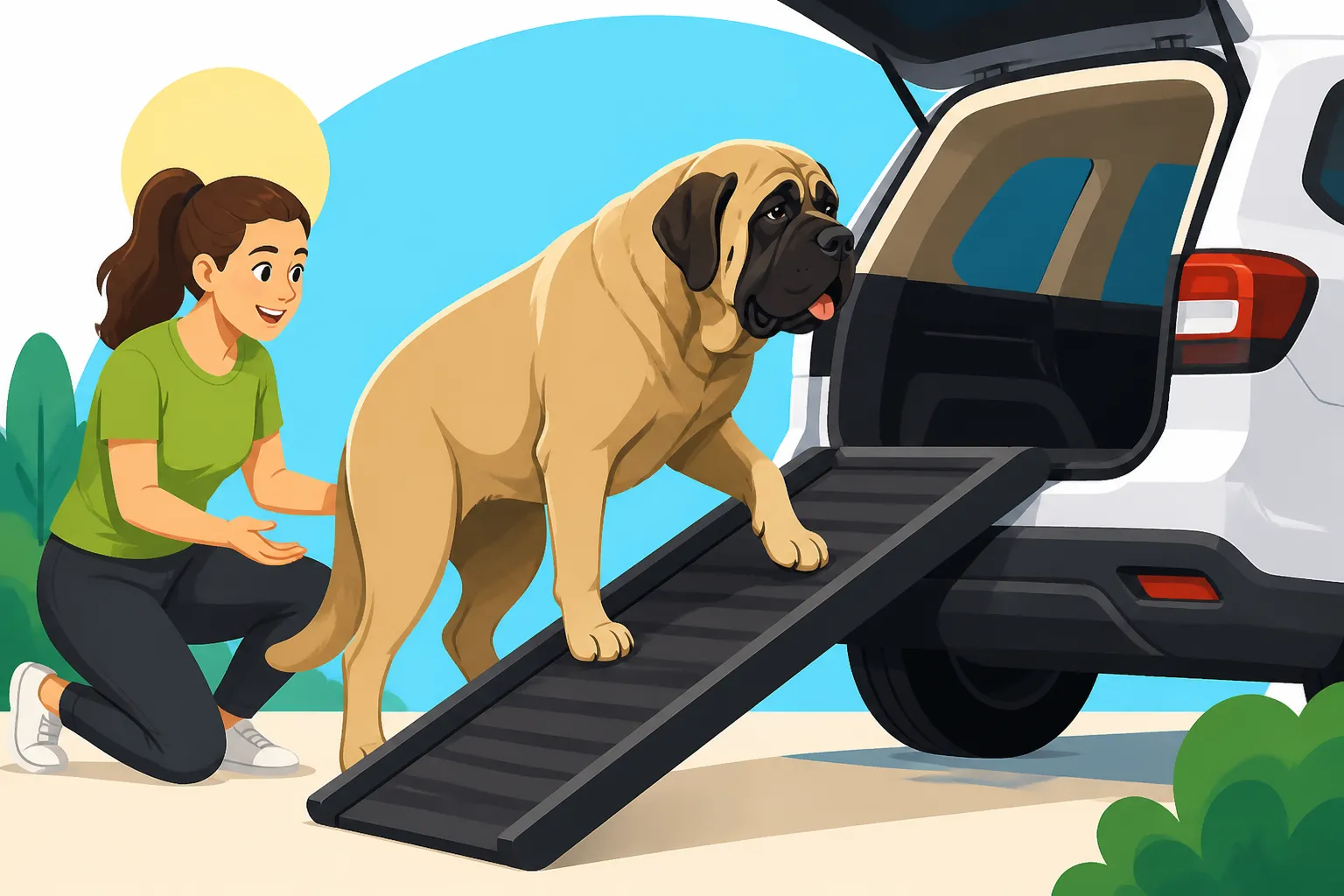
Portable ramps, on the other hand, are designed for versatility. These often fold in half, telescope, or collapse into a more compact form, making them easy to store and transport. They're perfect for car travel, vet visits, or when you visit friends or family whose homes might present accessibility challenges. Aluminum portable ramps are popular because they offer strength without excessive weight. If your Mastiff needs help getting into your vehicle frequently – as discussed in Why a Mastiff Puppy Must Be Lifted Into a Car – a portable ramp is a necessity. The trade-off is that they might require a bit more setup time each time you use them, and you need to ensure they are securely placed before your Mastiff steps on. Consider having both: a stationary ramp for home, and a portable one for adventures.
The Step-by-Step Guide to Ramp Training
Teaching a Mastiff to use a ramp requires patience, positive reinforcement, and understanding their sometimes-hesitant nature. Remember, they are sensitive souls, despite their formidable appearance! The key is to make it a positive, rewarding experience every single time. If you're feeling stuck, online training resources like BAXTER & Bella offer excellent guidance on positive reinforcement techniques for large breeds.
Introducing the Ramp: No Pressure, Just Curiosity
Your Mastiff is smart, but they're also cautious. Their first encounter with the ramp should be neutral and curiosity-driven, not intimidating.
- Lay it Flat: Start by laying the ramp completely flat on the ground, or with a very minimal incline if possible. This removes the height factor and makes it seem less daunting. Let your Mastiff sniff it, walk around it, and explore it on their own terms. Don't push them onto it.
- Make it a Fun Zone: Place high-value treats (think tiny pieces of cooked chicken, cheese, or hot dogs) directly on the ramp. Let them eat the treats off the ramp's surface. The goal here is to create a positive association: "Ramp = yummy things!"
- Noises and Textures: Some ramps might make a slight noise or have an unfamiliar texture. Allow your Mastiff to get used to these sensations without any pressure. If they seem wary, just sit calmly with them near the ramp, offering praise and treats. A calm, relaxed owner makes for a calm, relaxed Mastiff.
The absolute golden rule here is no force. Never pull your Mastiff onto the ramp, physically push them, or scold them for being hesitant. This will only create a negative association and make training much harder down the line.
Luring and Guiding: Positive Reinforcement Is Key
Once your Mastiff is comfortable walking on the flat ramp, you can start introducing a slight incline and guiding them.
- Start Small: Elevate one end of the ramp just a few inches. This might be placing it on a low step or the bumper of a small car if you're practicing with a vehicle ramp. The incline should be barely noticeable at first.
- Lure with Treats: Hold a high-value treat right at their nose level, guiding them up the ramp. Use a cheerful, encouraging voice. As soon as they take a step or two up, praise enthusiastically ("Good ramp!") and give them the treat.
- Small Increments: Work in very short training sessions, maybe 5-10 minutes a few times a day. If they successfully walk up the ramp, celebrate! If they hesitate, go back a step. You can also have another person at the top with treats and praise, making it a two-person job initially.
- "Go On" or "Ramp Up" Cue: As they start to understand, introduce a verbal cue like "Ramp Up" or "Go On." Say the cue just as they begin to ascend, then immediately reward. Consistency with the cue will help them understand what you're asking. Don't forget to practice going down the ramp too, as this can sometimes feel scarier for them. Lure them down just as you lured them up, treating every successful step.
Remember, Mastiffs are notoriously deliberate. They aren't going to zoom up the ramp like a Border Collie. They'll assess, they'll think, and then they'll move. Give them the time and space they need.
Practice Makes Perfect: Consistency and Patience
Mastiffs learn through repetition and positive experiences. Don't expect them to be ramp pros after one session.
- Gradual Increase in Incline: Slowly, over several days or weeks, increase the incline of the ramp until it reaches the height you need (e.g., the full height of your SUV or bed). Always ensure the ramp is stable and secure at the elevated end.
- Consistency is King: Practice regularly, but keep sessions short and positive. End on a good note, even if it's just one successful step. If your Mastiff starts to get frustrated or shows signs of fear, stop for the day and try again later with a less challenging setup.
- Vary Locations: Once they're comfortable with one ramp, try introducing them to others in different locations if possible. This helps generalize the skill. For example, if they master the car ramp, try a ramp for the porch or a different vehicle.
- Reward, Reward, Reward: Every successful ascent and descent should be met with praise, treats, and maybe a favorite toy. Make it the best experience of their day. Over time, the reward can become less frequent, but initial training thrives on high reinforcement. This builds their confidence and ensures they see the ramp as a good thing.
Common Challenges and Troubleshooting
Even with the best intentions, training a Mastiff can come with its own unique set of challenges. Their size, cautious nature, and sometimes stubborn streak mean you might encounter a few bumps in the road.
Fear or Hesitation: Building Confidence Slowly
It's completely normal for a Mastiff to be apprehensive about a new object, especially one that moves or feels unstable under their considerable weight. If your Mastiff is showing fear (backing away, low tail, refusing to make eye contact with the ramp):
- Go Back to Basics: If you've pushed too fast, dial it way back. Re-introduce the ramp flat on the ground.
- Change the Environment: Sometimes, a new environment or even different lighting can make a difference. Try practicing in a quiet, familiar space first.
- Lure, Don't Force: Revisit the luring technique, making the path of treats so irresistible that they can't help but take a step.
- Desensitize: Just have the ramp out and visible, but not actively training. Let them get used to its presence. Sit near it yourself, perhaps reading a book, and occasionally toss a treat onto the ramp without asking them to do anything. This subtle desensitization can be very effective.
- Be a Calm Leader: Your calm demeanor will tell your Mastiff that there's nothing to fear. If you're anxious or frustrated, they'll pick up on it.
The "But I Just Don't Want To" Stubbornness
Ah, the classic Mastiff "plant." They can be incredibly strong-willed, and when they decide they're not going to do something, moving them is like trying to shift a mountain. This isn't usually fear; it's just a Mastiff thinking it's not worth their effort, or they just don't feel like it right now.
- Find Their Ultimate Motivation: What is your Mastiff's absolute favorite thing? Is it a particular treat, a squeaky toy, or a specific type of praise? Use that! Make the reward for using the ramp so high-value that it outweighs their desire to be a furry, immovable object.
- Make it Their Idea (Sort Of): Instead of direct commands, try to make them feel like they're choosing to go. For example, if you have a second person, one can stand at the top with the treat, gently encouraging, while you stand near the bottom, not pushing, but making it clear that the only way to the treat is up the ramp.
- Patience, Again: You cannot rush a Mastiff. If they're being stubborn, a prolonged argument will achieve nothing. Take a break, come back later, and try a different approach or a higher value reward. Sometimes, simply walking away and then reappearing with a particularly irresistible treat can reset their mindset.
- Short and Sweet: If they manage even one step up the ramp, celebrate wildly and end the session. Build on small successes.
Safety First: Preventing Slips and Falls
The last thing you want is for your Mastiff to have a bad experience on the ramp, which can set back training significantly.
- Secure the Ramp: Before every use, double-check that the ramp is securely positioned against the car or elevated surface. Many portable ramps come with a lip that hooks over a bumper; ensure it's firmly in place.
- Check the Surface: Is the non-slip surface still effective? Is it clean? Mud, wet leaves, or ice can compromise traction.
- Leash Control: Always have your Mastiff on a leash when training and using the ramp. This allows you to guide them gently and provides a safety measure if they slip or hesitate. Don't pull them, but use the leash for steady, subtle guidance.
- No Running: Teach your Mastiff to walk slowly and deliberately on the ramp. Running or bounding can lead to slips and falls.
- Footing Check: Ensure their nails are trimmed to a good length, as overgrown nails can reduce traction and make walking on any surface more difficult.
By addressing these challenges with understanding and positive reinforcement, you can help your Mastiff become a confident and happy ramp user, making life easier and safer for both of you.
| Ramp Feature | Description | Pros | Cons |
|---|---|---|---|
| Material | Aluminum, Heavy-Duty Plastic, Wood | Durable, strong, often lighter (aluminum) | Can be heavy (wood/some plastic), price varies |
| Length | Short (3-4 ft), Medium (5-6 ft), Long (7-8+ ft) | Shorter for small lifts, longer for gentle inclines | Too short means steep incline; too long can be bulky |
| Weight Capacity | Range from 100 lbs to 400+ lbs | Essential for safety with a Mastiff | Under-rated ramps are dangerous and prone to breakage |
| Surface | High-traction sandpaper, rubberized tread, ribbed plastic | Prevents slips, provides grip for paws | Can wear down over time, may need cleaning |
| Portability | Folding, Telescoping, Solid/Stationary | Easy storage & transport (folding/telescoping) | Can require setup time; solid ramps are not portable |
| Common Use | Vehicle access, elevated beds, steps, grooming tables | Versatile for different needs | Specific designs may not suit all situations |
Disclaimer
This article is for general informational purposes only and does not constitute professional advice. Laws, prices and regulations vary by location and change over time. Consult a qualified professional for guidance on your specific situation.