How Long a Mastiff Copes Alone
It's a common worry for any dog owner, but when your beloved companion weighs as much as a small human, the question of how long they can comfortably and safely be left alone takes on a whole new dimension. The sheer size, profound loyalty, and often unexpected sensitivity of a Mastiff means that leaving them home alone isn't a decision to be taken lightly, or without careful preparation. This comprehensive guide will delve into the unique needs of the Mastiff when it comes to solitude, exploring their social nature, what factors influence their ability to cope, and practical strategies to ensure their well-being when you can't be by their side.
Understanding the Mastiff's Social Nature
Mastiffs are not solitary creatures. They were bred for centuries to be guardians and companions, deeply intertwined with human families and estates. This history has ingrained in them a profound need for connection and a remarkable sensitivity to their environment and the people within it.
The Deep Bond with Their Family
Anyone who has shared their home with a Mastiff knows the incredible depth of their affection and loyalty. These gentle giants form incredibly strong bonds with their human family members, often viewing themselves as integral parts of the household unit. They thrive on companionship and derive comfort from the presence of their people, even if they're just quietly napping in the same room. Their ancestral role wasn't to patrol a vast, empty territory alone, but to protect their human charges, often working alongside them. This means they are inherently social beings who prefer to be part of the action, or at least in the vicinity of it.
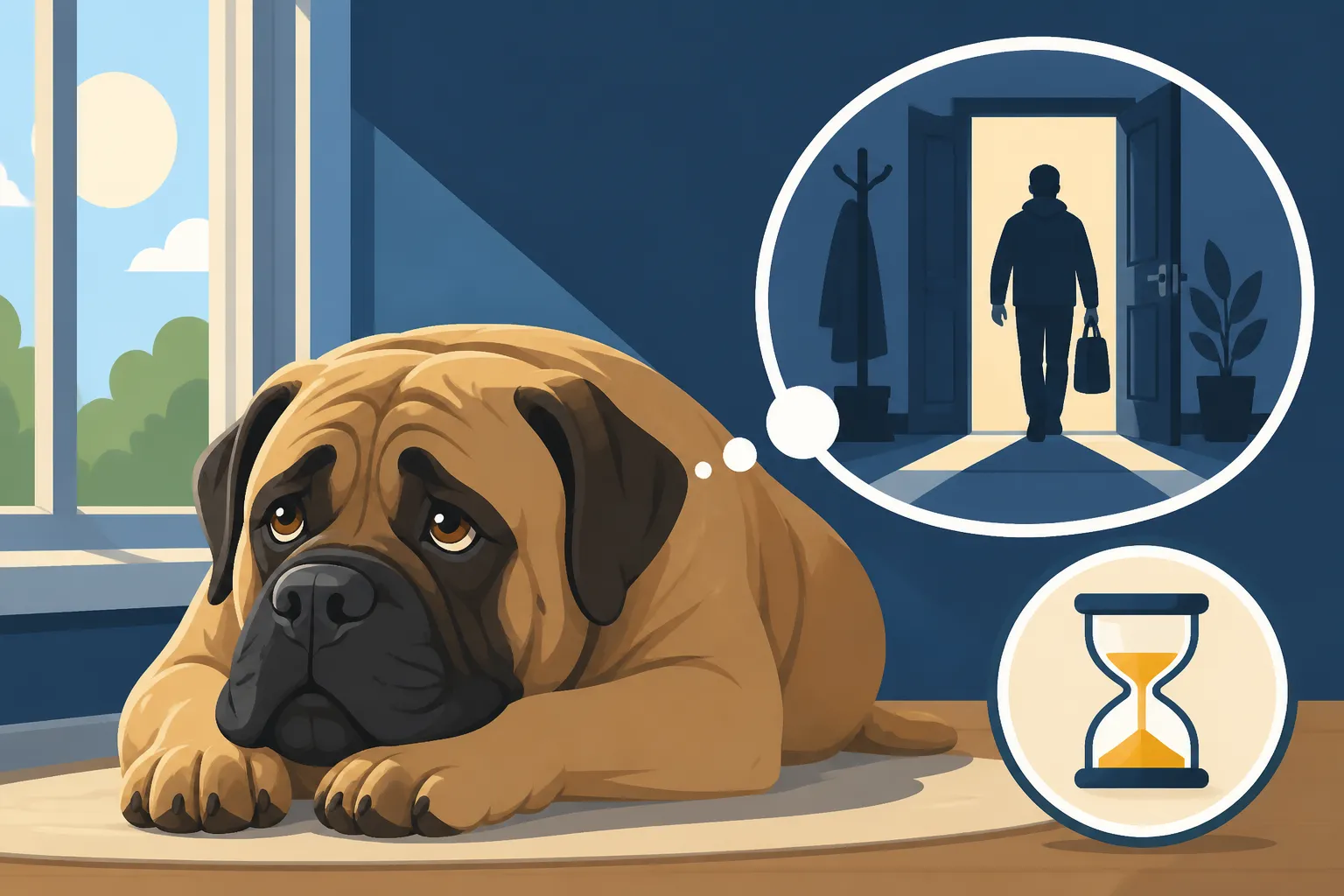
When you leave a Mastiff alone, they aren't just missing a dog owner; they're missing their person, the anchor of their world. This deep attachment is what makes the prospect of extended solitude particularly challenging for them. They're not aloof or independent; they are loving, devoted, and often quite emotionally transparent, making it clear when they're feeling lonely or unsettled. Understanding this inherent need for connection is the first step in addressing how they cope with being left alone.
Sensitivity to Changes and Absence
Despite their imposing physical presence, Mastiffs possess a surprising emotional sensitivity. They are keenly attuned to routines, household dynamics, and the moods of their family. A sudden change in schedule or an unexpected departure can be unsettling for them, often more so than for other breeds. They may not express distress in overt, destructive ways every time, but their calm demeanor can often mask internal anxiety. Their size can sometimes make people assume they are robust in every way, but their hearts are often as tender as their soft jowls.
This sensitivity means that while a quick trip to the grocery store might pass without incident, longer or more frequent absences can chip away at their sense of security. They pick up on pre-departure cues – keys jingling, shoes going on, bags being packed – and can begin to associate these with your impending absence. It's crucial to remember that a Mastiff's response to being left alone isn't always about malice or misbehavior; it's often a manifestation of their deep bond and their sensitive nature reacting to perceived abandonment. This unique blend of size and profound emotional depth is something The Sensitivity Nobody Expects in a Two Hundred Pound Mastiff explores further.
Factors Influencing a Mastiff's Tolerance for Solitude
No two Mastiffs are exactly alike, and their ability to cope with being left alone is influenced by a variety of factors, from their age and training to their individual temperament and the environment you create for them.
Age and Training
A Mastiff's age plays a significant role in how long they can realistically be left unsupervised. A young Mastiff puppy, for instance, has very limited bladder control and an insatiable curiosity that can quickly lead to destructive behaviors if left alone for too long. They require frequent potty breaks, consistent supervision, and structured training to learn appropriate behavior. Leaving a puppy for extended periods is not only unfair but can also lead to house-training setbacks and the development of undesirable habits. The growth rate of these giants means that problems escalate quickly, a topic explored in The First Year With a Mastiff Puppy That Doubles in Size.
As they mature into adulthood, typically around two to three years of age – a journey detailed in The Age a Mastiff Finally Matures – Mastiffs can often handle longer periods of solitude, provided they've been properly trained and gradually accustomed to it. An adult Mastiff with a solid foundation in obedience and a routine that includes ample exercise before your departure will generally cope better. Senior Mastiffs, on the other hand, may experience a resurgence of needs similar to puppies, including more frequent potty breaks, discomfort from arthritis, or cognitive decline that makes them more anxious when alone. Their comfort and peace of mind become paramount, requiring adjustments to their alone time.
Individual Personality and History
Just like people, every Mastiff has a unique personality. Some are naturally more independent and may be content to nap the day away, while others are incredibly clingy and prone to developing Separation Anxiety in a Mastiff. This individuality is often shaped by their early experiences and genetics. A Mastiff who was well-socialized as a puppy and exposed to short, positive periods of solitude may have an easier time adjusting than one who had a more turbulent past.
Rescue Mastiffs, in particular, may come with a history that makes them more susceptible to anxiety when left alone. They might have experienced abandonment or neglect, making them deeply fearful of being left behind again. For these dogs, rebuilding trust and slowly introducing alone time is a crucial process. Settling a Rehomed Adult Mastiff offers valuable insights into helping these dogs adjust. Understanding your Mastiff's individual quirks, past experiences, and general disposition is key to gauging their tolerance for solitude and tailoring your approach.
Enrichment and Environment
The environment your Mastiff is left in, and the mental and physical enrichment they receive before you leave, profoundly impact their ability to cope. A Mastiff who hasn't had adequate exercise or mental stimulation is far more likely to become bored, anxious, and potentially destructive when left alone. A good, solid walk or a stimulating play session before your departure can help burn off excess energy and leave them ready for a long nap. Remember, even though they're huge, a solid hour of appropriate activity is usually sufficient for these powerful dogs, as discussed in Why One Hour a Day Is Enough for a Mastiff.
Beyond physical exertion, mental enrichment is vital. Puzzle toys, durable chews, or even a radio left on softly can provide stimulation and comfort. The space they are left in also matters. A safe, dog-proofed area where they can't get into trouble, feel trapped, or accidentally injure themselves is essential. This might be a spacious crate, a designated room, or a section of the house. The goal is to create an "alone zone" that feels secure and comfortable, not like a punishment.
Practical Guidelines for Leaving a Mastiff Alone
Deciding how long is too long for a Mastiff to be left alone requires careful consideration of their age, temperament, and daily needs. There's no one-size-fits-all answer, but here are some general guidelines.
Short Absences (1-4 Hours)
For most adult Mastiffs, an absence of 1 to 4 hours is generally manageable, provided they are accustomed to it and have a consistent routine. Before you leave, ensure your Mastiff has had a good potty break and some physical and mental exercise. A tired dog is a good dog, and a well-exercised Mastiff is more likely to settle down for a nap than pace anxiously.
Provide them with appropriate, durable chew toys or a puzzle toy stuffed with treats to keep them occupied. Things like a frozen Kong, readily available on Amazon, can keep them engaged for a significant portion of your absence. This short period is often necessary for errands, appointments, or a quick dinner out. It's a good benchmark for what Mastiffs can typically handle without significant stress, assuming they aren't suffering from separation anxiety. Keep your departures and arrivals calm and low-key to avoid escalating their excitement or anxiety.
Moderate Absences (4-6 Hours)
Venturing into the 4-6 hour range requires a bit more planning and a clear understanding of your individual Mastiff. While some adult Mastiffs may tolerate this occasionally, it shouldn't be a daily expectation without a mid-day break. If you're out of the house for this duration regularly, arranging for a trusted friend, family member, or professional dog walker to come in for a potty break, a quick stretch, and some interaction is highly recommended. This breaks up their day, prevents accidents, and offers much-needed companionship.
Remember that their large size also means larger bladders, but also more significant messes if they can't hold it. They are also prone to certain health issues that require monitoring, even in middle age. The financial implications of needing regular pet care add up quickly, a reality for owners of these majestic dogs. Considering if your work schedule allows for this kind of support is crucial when asking Whether a Mastiff Suits a Full Time Worker.
Extended Absences (6-8 Hours or More)
Leaving a Mastiff alone for 6-8 hours or longer on a regular basis is generally not advisable and pushes the boundaries of their natural social needs and physical capabilities. While an emergency might necessitate it, it should not be part of a daily routine. For working individuals, this kind of schedule demands substantial outside support.
If extended absences are unavoidable, you absolutely need a robust support system. This might include a professional dog walker visiting multiple times a day, or even a reputable doggy daycare that is experienced with giant breeds. However, not all daycares are equipped for the unique needs and size of a Mastiff, as discussed in Whether Any Daycare Will Take a Mastiff. Their sheer size can be overwhelming to other dogs, and some Mastiffs prefer their own space. It's truly a scenario where careful planning, financial commitment, and a deep understanding of your dog's specific tolerance for solitude are paramount. Pushing these limits frequently can lead to significant stress, behavioral issues, and health problems for your Mastiff. The article How Many Hours a Mastiff Can Be Left offers further perspective on this.
Recognizing and Addressing Separation Anxiety
Separation anxiety is a real and debilitating condition for many dogs, and Mastiffs, with their deep bonds and sensitive nature, are not immune. It's not about being "naughty"; it's a panic attack.
Signs of Distress
Recognizing the signs of separation anxiety is crucial. These are not merely indicators of boredom but genuine distress. Common symptoms include destructive chewing, particularly around exit points like doors and windows, or items that smell like you. You might also find inappropriate urination or defecation inside the house, even from a perfectly house-trained dog. Excessive barking, howling, or whining, often reported by neighbors, is another classic sign.
Other, more subtle indicators can include pacing, excessive drooling, or panting even when it's not hot, and frantic attempts to escape their confinement. Given a Mastiff's size, destructive behaviors can be particularly damaging to your home, and an anxious Mastiff can injure themselves in their attempts to escape or chew. If you notice a consistent pattern of these behaviors when you're away, it's highly likely your Mastiff is experiencing genuine anxiety, not just mischievousness. These signs should never be ignored, as they point to a serious emotional struggle for your dog.
Strategies for Management
Managing Separation Anxiety in a Mastiff requires a multi-faceted and often patient approach. The core strategy is often desensitization and counter-conditioning. This involves gradually accustoming your Mastiff to your absence, starting with very short periods (seconds, then minutes) and associating your departure with something positive, like a special, high-value chew toy that they only get when you leave. You might practice "fake" departures, picking up your keys and then sitting back down, to break the association of pre-departure cues with panic.
Creating a calm pre-departure routine, avoiding overly emotional goodbyes and hellos, can also help. Calming aids, such as pheromone diffusers or certain supplements, can be useful in conjunction with training, but they are not standalone solutions. In many cases, professional help is invaluable. A certified dog trainer or veterinary behaviorist can provide tailored strategies and support. Training resources like those offered by BAXTER & Bella, which focus on positive reinforcement and building confidence, can be a great starting point for establishing good habits and addressing anxieties through structured learning. Sometimes, medication prescribed by a vet might be necessary in severe cases to help reduce anxiety to a level where training can be effective. Whether a Mastiff Needs a Professional Trainer is a question many owners face when dealing with these complex issues.
Creating a Safe and Stimulating "Alone Zone"
Providing a safe, comfortable, and engaging space for your Mastiff when you're not home is paramount to their well-being and the integrity of your belongings.
Crates vs. Dog-Proofed Rooms
For many Mastiff owners, the choice comes down to a large crate or a dedicated dog-proofed room. A properly sized crate can offer a secure den-like space, providing a sense of security and preventing destructive behaviors. However, it's critical that the crate is large enough for your Mastiff to stand up, turn around, and lie down comfortably. A crate that's too small can cause physical discomfort and increase anxiety. Finding a crate big enough can be a challenge, a point highlighted in Whether a Mastiff's Crate Fits Through Your Doorway. Crates should only be used if your Mastiff is fully crate-trained and views it as a positive space, not a punishment.
Alternatively, a dog-proofed room can offer more freedom while still limiting access to potentially dangerous or valuable items. This means removing anything breakable, toxic, or tempting to chew. Ensure there are no loose wires, small objects that could be swallowed, or furniture they could damage. This space should ideally be a calm, quiet area of the house where they feel relaxed. Whichever option you choose, ensure it's a positive, safe, and comfortable environment for your Mastiff.
Enrichment Toys and Activities
Simply leaving your Mastiff alone in an empty room or crate with nothing to do is a recipe for boredom and potential trouble. Providing appropriate enrichment toys is crucial. These should be durable, size-appropriate, and mentally stimulating. Heavy-duty chew toys made from rubber or hard nylon (brands like Nylabone or Benebone, often found on Amazon, are popular for powerful chewers) can satisfy their natural urge to chew, redirecting it from your furniture.
Puzzle toys that dispense kibble or treats as your Mastiff interacts with them can provide prolonged mental engagement. Scent work, even simple hide-and-seek with treats around their designated area, can tap into their natural instincts and tire them out mentally. Rotating these toys can keep things fresh and exciting. Consider leaving a radio or classical music on softly to provide background noise and mask outside sounds that might trigger anxiety. The goal is to provide activities that keep their minds and bodies gently engaged, preventing boredom from spiraling into anxiety or destruction. After all, a Mastiff does have a "job" that it truly wants, even if that job is just chewing on something appropriate while you're away, a concept explored in The Job a Mastiff Actually Wants.
Support Systems for the Mastiff Owner
Owning a Mastiff is a commitment, and ensuring they cope well when alone often requires a village. Building a network of support can make all the difference for both you and your giant companion.
Professional Pet Care
For those with demanding schedules or when extended absences are unavoidable, professional pet care is an invaluable resource. A qualified dog walker can provide a mid-day break, complete with a potty outing, some fresh air, and a dose of human interaction. This is especially vital for Mastiffs, who benefit from breaking up long stretches of solitude. When choosing a dog walker, ensure they have experience with giant breeds and are comfortable handling a dog of your Mastiff's size and strength. Similarly, a professional pet sitter who comes to your home can be an excellent option for longer trips, allowing your Mastiff to stay in their familiar environment.
Many pet care services are accustomed to the needs of large dogs and can offer customized care plans. Don't hesitate to interview several candidates, ask for references, and ensure they are bonded and insured. Investing in professional care can significantly improve your Mastiff's quality of life and give you peace of mind.
Technology for Monitoring
Modern technology offers fantastic tools for keeping an eye on your Mastiff when you're away. Pet cameras, many of which are easily found on Amazon, allow you to remotely monitor your dog's behavior. Many models offer two-way audio, so you can speak to your Mastiff, offering comfort or redirecting unwanted behavior. Some even dispense treats! While not a substitute for human interaction, these cameras can provide valuable insights into how your Mastiff is truly coping.
Monitoring allows you to catch signs of distress early, identify triggers, and confirm whether your current strategies are working. It can also offer peace of mind, letting you see your Mastiff calmly napping, rather than worrying about what might be happening. This visual confirmation is especially helpful when you're trying to gauge their tolerance for new routines or longer alone times.
Building a Community Network
Beyond paid services, cultivating a local community network can be a lifesaver. This includes trusted friends, family members, or neighbors who might be willing to lend a hand occasionally. Perhaps a neighbor who works from home could pop in for a quick potty break, or a family member could cover an evening out. Having a reliable emergency contact who knows your Mastiff and your routine is also crucial.
Connecting with other Mastiff owners, either online or in local groups, can also provide a support network. They understand the unique challenges and rewards of owning these gentle giants and can offer advice, recommendations for local services, or even occasional help. Building this kind of community can lighten the load and ensure your Mastiff always has a loving presence, even when you can't be there yourself.
Alone Time Considerations for Your Mastiff
| Factor | Puppy (under 6 months) | Adolescent (6 months – 2 years) | Adult (2-5 years) | Senior (5+ years) |
|---|---|---|---|---|
| Bladder Control | Very limited, frequent potty breaks needed | Improving, but still needs regular breaks | Generally good, but 6+ hours is a stretch | May decline, needs more frequent breaks |
| Energy Levels | High, easily bored, prone to destruction | Moderate to high, needs mental stimulation | Moderate, content to nap after exercise | Low, prefers comfort and quiet |
| Mental Maturity | Learning basic rules, needs supervision | Testing boundaries, prone to "teenage" angst | Generally settled, understands routines | May experience cognitive decline, anxiety can increase |
| Max Alone Time | 1-2 hours (absolute max, with exceptions) | 3-4 hours (with exercise and enrichment) | 4-6 hours (with mid-day check-in preferred) | 2-4 hours (with mid-day breaks essential) |
| Key Needs | Frequent potty breaks, crate training, chew toys | Structured exercise, puzzle toys, supervision | Consistent routine, mental enrichment, dog walker for longer periods | Extra comfort, easy access to potty, quiet environment, vet check-ups for pain |
Disclaimer
This article is for general informational purposes only and does not constitute professional advice. Laws, prices and regulations vary by location and change over time. Consult a qualified professional for guidance on your specific situation.