Whether a Female Mastiff Is Much Smaller
It's a common thought when considering a giant breed like the Mastiff: if you're worried about the sheer size of a male, maybe a female would be significantly smaller and more manageable. While it's true that female Mastiffs are typically smaller than their male counterparts, the notion that they are "much" smaller often leads to unrealistic expectations. This guide will explore the actual size differences between male and female Mastiffs, delve into their growth patterns, and discuss the practical implications of living with either sex, helping you understand what to truly expect from these magnificent dogs.
The Official Word: Understanding the Mastiff Breed Standard
When we talk about what a Mastiff "should" be, we often look to the breed standard. This document, put forth by organizations like the American Kennel Club (AKC), describes the ideal characteristics of the breed, including their size and build. It gives us a framework, but real-world dogs, even purebred ones, don't always fit neatly into boxes.
Minimums vs. Reality in Size
The Mastiff breed standard doesn't typically list maximum weights or heights, but it does specify minimums. For males, this minimum height is usually around 30 inches at the shoulder, while for females, it's about 27.5 inches. These are just the starting points, meaning a dog falling below these measurements might be faulted in the show ring, but certainly doesn't mean a female will stop growing at 28 inches. In reality, most Mastiffs, both male and female, will well exceed these minimums.
What this means for prospective owners is that even a female Mastiff, while potentially on the lower end of the weight scale compared to a male, is still going to be a substantial dog. We're not talking about a difference akin to a male Labrador versus a female Toy Poodle. The breed standard emphasizes a powerful, massive, and symmetrical build, which applies to both sexes. You're still looking at a very large animal that will command presence and space in your home, regardless of whether it's a boy or a girl. The standard guides breeders towards preserving the essential "Mastiffness," which is synonymous with impressive size and substance.
The Importance of Proportion, Not Just Pounds
Beyond just height and weight, the breed standard places a huge emphasis on proportion and overall balance. A Mastiff should be massive, powerful, symmetrical, and well-knit. This means a female isn't just a shrunken version of a male; she should still embody the same impressive scale and solid build, just within her own sex's typical range. The standard values a harmonious, well-muscled physique that conveys both dignity and strength.
Think of it like this: a female Mastiff should still possess that deep chest, broad skull, and heavy bone that makes the breed so distinctive. You wouldn't want a lanky, delicate female, as that would be considered out of type. Her overall impression should still be one of grandeur and power. While she might be a few inches shorter and many pounds lighter than a mature male, her proportions should ensure she still looks every bit the Mastiff. This focus on proportion often means that while the raw numbers differ, the feeling of a Mastiff's size remains consistent across both sexes—it's always impressive. Understanding The Mastiff That Stood Over Sir Piers Legh at Agincourt helps contextualize this historical appreciation for massive size.
Unpacking the Numbers: Typical Size and Weight Differences
Let's get down to the brass tacks: what do male and female Mastiffs actually weigh and how tall do they stand? The truth is, there can be a considerable overlap, but generally, the males are indeed the heavier, taller dogs.
Male Mastiffs: The True Giants of the Breed
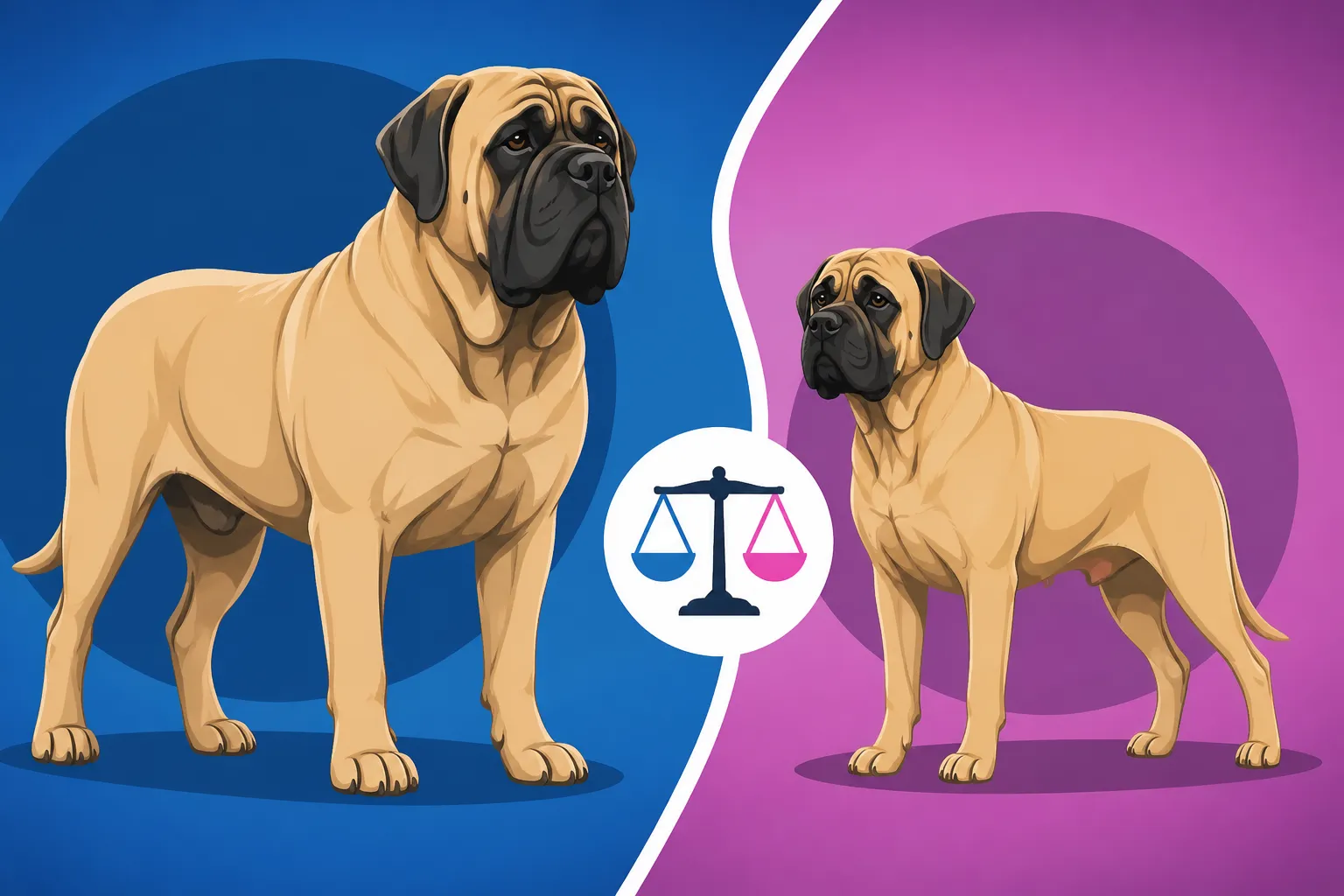
A mature male Mastiff typically stands between 30 to 36 inches at the shoulder, with some individuals even exceeding that. Their weight range is where things really diverge. It's not uncommon for a healthy adult male Mastiff to weigh anywhere from 160 to 230 pounds, and sometimes even more. These are truly massive animals, capable of taking up an entire sofa by themselves. Their heads are usually broader, their bone structure heavier, and their overall musculature more pronounced.
Living with a male Mastiff means acknowledging this immense physical presence. Everything from their food consumption—imagine How Much an Adult Mastiff Eats by Weight Each Day—to their need for specialized equipment reflects their size. A male Mastiff's sheer bulk impacts how they move, how much space they require, and even how quickly they can overheat. When they lean on you, which they love to do, it's a significant amount of weight! Their size can be a deterrent to strangers by mere presence, embodying the ancient guardian role they once held. When considering The Weight Range a Male Mastiff Should Hold, remember that maintaining a lean, healthy weight is crucial to their long-term well-being, as excessive bulk puts undue stress on their joints.
Female Mastiffs: Still Impressive, But Noticeably Smaller
Female Mastiffs, while smaller than males, are by no means "small" dogs. They typically stand between 27.5 to 33 inches at the shoulder. Their weight usually falls in the range of 120 to 180 pounds, though some may be a bit lighter or heavier. While this is a significant difference from males, it's crucial to remember that a 150-pound dog is still a very large animal that requires a specific living situation and careful handling.
The perception of a female being "much" smaller might come from comparing the top end of a male's weight (200+ lbs) to the lower end of a female's (120 lbs). However, a well-grown female can easily outweigh many male dogs of other large breeds. Her frame will still be substantial, her head impressive, and her presence undeniable. She'll still need large beds, big food bowls, and a substantial vehicle for transport. When considering The Weight Range a Female Mastiff Should Hold, remember the importance of preventing obesity, which can exacerbate joint issues in these already heavy dogs. It's easy to think a difference of 40-50 pounds makes them dramatically more manageable, but for a breed of this magnitude, it's often more about nuances in handling and strength than a fundamental shift in their "giant" status.
| Characteristic | Male Mastiff (Typical Range) | Female Mastiff (Typical Range) |
|---|---|---|
| Height (at shoulder) | 30-36 inches | 27.5-33 inches |
| Weight | 160-230+ pounds | 120-180 pounds |
| Build | More massive, heavier bone, broader skull, more muscular | Substantial, heavy bone, still broad skull, slightly more refined |
| Overall Impression | True giant, imposing, powerful | Still giant, dignified, powerful, but with a touch more elegance |
Growth Trajectories: How Males and Females Develop
The journey from a tiny Mastiff puppy to a colossal adult is a fascinating one, but it's also a period fraught with potential issues if not managed correctly. Both sexes grow rapidly, but their timelines and the factors influencing their development can differ slightly.
The Extended Puppyhood of a Mastiff
Mastiffs are famously slow to mature, often not reaching their full physical and mental maturity until they are two to three years old. This "extended puppyhood" means they are growing rapidly for a much longer period than smaller breeds. For both males and females, this rapid growth phase means their bones, joints, and ligaments are incredibly vulnerable. Over-nutrition or excessive exercise during this critical time can lead to serious developmental orthopedic diseases like hip and elbow dysplasia. This is why it's so critical to restrict a Why a Mastiff Puppy Must Not Be Exercised Hard and focus on slow, steady growth.
For females, while they might reach their adult height and fill out a bit sooner than males, they still undergo this prolonged growth. Breeders and owners must be vigilant about feeding an appropriate large or giant breed puppy food, avoiding excessive calories, and monitoring their weight closely. The goal isn't to make them grow as fast as possible, but as healthily as possible. This commitment to slow growth is one of the biggest responsibilities of a Mastiff owner, crucial for protecting their developing skeletal system. Even something as simple as allowing a puppy to navigate Why Stairs Are Worse for a Mastiff Than Any Breed can have long-term consequences.
Hormonal Influences on Growth Plates and Bone Density
Hormones play a significant role in how both male and female Mastiffs grow, particularly concerning the closure of their growth plates. Sex hormones, such as estrogen and testosterone, are responsible for signaling these plates to close, which happens at different rates and times depending on the sex and individual dog. Early spaying or neutering, before the growth plates have naturally closed, can lead to prolonged bone growth, resulting in dogs that are taller and sometimes have lighter bone density than their intact counterparts.
In males, testosterone contributes to their eventual bulk and musculature. In females, estrogen plays a role in growth plate closure. If a female is spayed before her growth plates have closed, she may grow taller and lankier, potentially affecting her joint angles and increasing the risk of orthopedic issues later in life. This is why many reputable breeders and veterinarians now recommend delaying spay/neuter until a Mastiff is fully mature, often around 18-24 months of age, to allow for proper bone development. Understanding Why Neutering Age Matters More in a Male Mastiff delves into similar considerations. This decision is not just about preventing unwanted litters; it's a critical factor in supporting the healthy development of such a large and heavy breed.
Day-to-Day Realities: Living with a Male vs. Female Mastiff
Beyond the numbers, how do the size differences actually impact daily life? The reality is that both sexes present unique challenges and joys, but the sheer physical presence of a large male can amplify certain aspects.
Physical Presence and Strength Considerations
While a female Mastiff is still incredibly strong, a male Mastiff's additional 40-70 pounds, combined with broader shoulders and a lower center of gravity, can make him feel significantly more powerful to handle. This is particularly relevant during walks. Even a well-trained Mastiff can decide to suddenly investigate an interesting scent, and trying to redirect a 200-pound dog who has decided to "plant" himself can be an exercise in futility. A Mastiff Does Not Pull You Over, It Simply Stops – or it might simply keep moving if it wants to. The strength difference is palpable, meaning that walking a male Mastiff often requires more physical effort and the right equipment, like a sturdy front-clip harness, to maintain control.
For owners who might be older, less physically robust, or have mobility issues, the size and strength of a male Mastiff can be a legitimate concern. While a female still requires a strong hand and consistent training, her slightly smaller stature might offer a margin of comfort. Things like getting into a car, navigating tight spaces, or simply moving them when they've decided to lie in an inconvenient spot become more physically demanding with a larger male. Imagine trying to lift or coax Lifting an Old Mastiff That Cannot Get Up if it's a 230-pound male versus a 150-pound female – the difference is considerable.
Practicalities for Home and Vehicle
The slight size difference between male and female Mastiffs can have real implications for your home and vehicle. A male Mastiff, especially one on the larger end of the spectrum, will take up more floor space, require a larger crate (if used), and quite possibly a larger orthopedic bed. Finding a dog bed big enough and durable enough for a 200+ pound Mastiff can be a challenge, requiring careful shopping on sites like Chewy for extra-large options that stand up to their bulk and weight.
When it comes to vehicles, the difference can be critical. While a female Mastiff might comfortably fit in the back of a large SUV, a larger male might stretch the limits of even the biggest vehicle. Whether a Mastiff Fits in a Sedan is almost universally a "no," but even wagons or smaller SUVs can be a tight squeeze for a truly giant male. You might find yourself needing a full-size SUV or even a van to comfortably and safely transport a very large male Mastiff, especially for longer trips. Beyond space, their weight can impact household furniture, potentially leaving deeper indentations on cushions or requiring more robust dog beds to prevent them from "flattening" too quickly.
Health and Lifespan: Are There Size-Related Differences?
It's a sad truth that giant breeds like the Mastiff often have shorter lifespans than smaller dogs, and their size contributes significantly to their unique health challenges. Do males and females experience these challenges differently due to their size disparity?
Joint Stress and Weight Management
One of the most pressing health concerns for Mastiffs, regardless of sex, is joint health. Hip and elbow dysplasia are unfortunately common, and the sheer weight these dogs carry puts immense stress on their developing and aging joints. While both sexes are susceptible, a heavier male Mastiff might experience more pronounced symptoms or a faster progression of degenerative joint disease simply due to the increased load on his skeletal system. Arthritis in a Mastiff at Four is a heartbreaking reality for many, and managing weight is paramount to mitigating its severity.
Maintaining a lean body condition is critical for both males and females, but it can be particularly challenging with males who tend to carry more bulk naturally. Every extra pound on a Mastiff translates to significant additional stress on their hips, elbows, and spine. This means careful diet management and appropriate, low-impact exercise are non-negotiable. Owners often need to be proactive with joint supplements and regular veterinary check-ups to monitor joint health from a young age. Finding palatable supplements in large enough quantities for a giant breed means looking for bulk options, perhaps from online retailers like Chewy.
Anesthetic Dosing and Veterinary Care
The sheer size and unique physiology of a Mastiff can make veterinary care more complex and, frankly, more expensive. This is an area where the weight difference between males and females can truly matter. Anesthesia, for example, is inherently riskier for giant breeds, and dosages are often calculated based on lean body weight. A 200-pound male will require a significantly larger dose of anesthetic and potentially more intensive post-operative monitoring than a 140-pound female. How Much Anesthetic a Two Hundred Pound Mastiff Takes highlights this critical difference.
Furthermore, moving a sedated or unconscious Mastiff around a veterinary clinic requires specialized equipment and often multiple staff members. A heavier male can be much more challenging to transport, lift onto examination tables, or position for X-rays. This can impact the types of procedures available at a general practice versus a specialty hospital, and certainly affects the cost of care. While both sexes incur "giant breed" surcharges for many services, a heavier male's care often sits at the very top end of that spectrum. This includes everything from routine preventatives to emergency surgeries, underscoring What a Mastiff's Weight Does to Every Line on the Vet Invoice.
The Impact of Genetics and Breeding Choices on Size
While we've discussed typical ranges, it's vital to remember that individual Mastiffs can vary. Genetics play a massive role, and responsible breeding practices are key to understanding what size to expect from a puppy.
Understanding Parentage and Pedigrees
A Mastiff puppy's potential adult size is heavily influenced by the size of its parents and grandparents. Reputable breeders will be transparent about the weights and heights of their breeding stock, and often have pictures or even older dogs on site for you to see. If a breeder consistently produces smaller males or larger females, it's likely that tendency runs in their lines. It's not just about the absolute numbers, but also about the overall build, bone, and substance of the parent dogs.
Looking at a puppy's pedigree can also give you clues. If a litter comes from a line known for producing very large, substantial dogs, you can expect the puppies to follow suit, regardless of sex, albeit with the male-female size differential still present. Conversely, if the parent dogs are on the lighter side of the breed standard, their offspring are likely to reflect that. Always ask a breeder about the typical adult weights of dogs from their previous litters, and don't hesitate to inquire about their breeding goals regarding size and conformation. A good breeder prioritizes health, temperament, and adherence to the breed standard, ensuring a dog that is impressively built but not exaggerated to the point of compromising its well-being. This is part of The CHIC Four Plus the DNA Stack Behind a Mastiff's Price.
Responsible Breeding vs. Exaggerated Size Trends
There's sometimes a misguided push to breed for "bigger is better" in giant breeds, leading to dogs that are excessively large and often unhealthy. Responsible breeders understand that healthy size is not just about weight and height, but about sound structure, correct proportion, and functional ability. Exaggerated size, especially extreme weight, puts undue strain on a Mastiff's body, contributing to earlier onset of joint problems, cardiac issues, and a shortened lifespan. How Inbreeding Shortened the Mastiff's Life also speaks to the importance of responsible breeding.
While a male Mastiff will naturally be larger, a responsible breeder aims for a dog that fits within the healthy parameters of the breed standard, rather than chasing world record weights. The goal is a dog that is massive and powerful but can move freely and live a relatively comfortable life. If you encounter a breeder boasting about "record-breaking" sizes, especially with guarantees of extreme weights, it's a red flag. These dogs are often prone to more health issues and may not live as long or as comfortably. Ultimately, a well-bred female Mastiff, while smaller than her male relatives, is still a majestic and formidable dog, representing the grandeur of the breed in her own right.
Disclaimer
This article is for general informational purposes only and does not constitute professional advice. Laws, prices and regulations vary by location and change over time. Consult a qualified professional for guidance on your specific situation.