Whether a Mastiff Fills Out After Two
A two-year-old Mastiff can look enormous and still seem a little unfinished: narrow through the chest, loose in the frame, or not yet filled out like the adults you see at shows. That can be normal. This guide explains what “filling out” means, how long it may continue, and how to tell healthy development from excess weight or a growth concern.
What “filling out” means in a Mastiff
Height and body shape do not mature on the same schedule
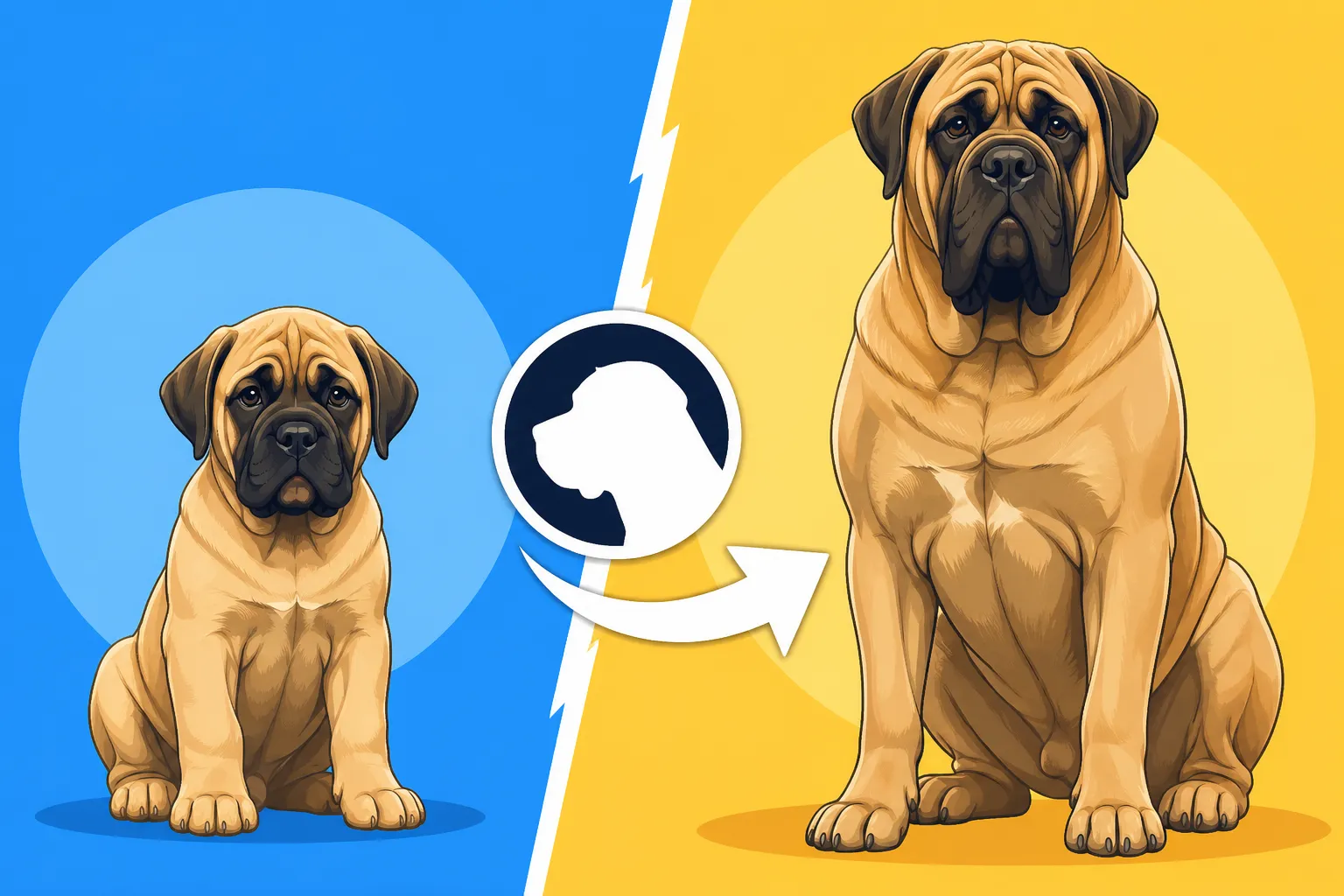
A Mastiff’s height may be close to its adult height by around two years, but that does not mean the dog’s whole body has finished developing. Height is only one part of growth. Chest depth, muscle, bone, and overall body proportions can continue to change as a young adult matures.
That difference is easy to miss. A two-year-old may already be tall enough to reach the kitchen counter, yet still look lean or slightly rangy beside a mature Mastiff. The older dog may have a broader chest and more developed muscle, making the younger one seem as if it has a lot of growing left to do.
The phrase “fills out” usually refers to changes in body condition and shape rather than a sudden increase in height. A Mastiff may gradually gain muscle and look more substantial over the next year or so. Timing varies, though. Genetics, sex, activity, health, and the dog’s individual growth pattern all matter.
For a closer look at the difference between height and adult development, see The Age a Mastiff Stops Growing and Whether a Mastiff Fills Out Until Three.
A mature-looking Mastiff is not necessarily a heavier Mastiff
Filling out should not mean simply putting on more pounds. Healthy development is about the dog becoming more mature in proportion—not about reaching a particular number on the scale or matching the biggest Mastiff you have seen.
Two dogs of the same age can have very different builds. One may be naturally broader, while another stays leaner. A male and a female can also differ in size and shape. Even within a litter, siblings may mature at different rates. Comparing your dog’s weight with a photograph, a neighbor’s Mastiff, or a social-media post can create unnecessary worry.
If you are trying to understand what is typical for your dog’s sex and frame, How Much a Male Mastiff Weighs and How Much a Female Mastiff Weighs offer useful context. Treat any general size range as a reference, not a target your dog must reach. Your veterinarian can help interpret weight alongside body condition, growth history, and overall health.
How a Mastiff may change after age two
Slow, gradual changes are more typical than a sudden growth spurt
After two, many Mastiffs continue to look more mature over time. You may notice a deeper chest, a sturdier outline, or more muscle in the shoulders and hindquarters. The changes can be subtle enough that you only notice them when comparing photos taken months apart.
A dog’s daily routine can affect how its body looks, too. A healthy young adult that walks regularly and has opportunities for suitable play may develop a different amount of muscle from a dog with a very sedentary routine. That does not mean you should add strenuous exercise to make the dog look bigger. Mastiffs are heavy dogs, and exercise should suit the individual dog’s age, joints, fitness, and veterinary advice.
Keep an eye on the pattern rather than expecting a particular milestone. If your Mastiff is steadily developing, eating normally, moving comfortably, and maintaining a healthy body condition, a leaner appearance at two is not automatically a problem. If growth seems to stop alongside illness, poor appetite, low energy, or other changes, ask your veterinarian rather than trying to solve it with extra food.
Breed, sex, health, and genetics all shape the timeline
There is no single age when every Mastiff reaches its final adult outline. Some look substantial relatively early; others take longer to develop their adult proportions. Family traits are important, so asking the breeder about the parents and close relatives can give you a more useful comparison than looking at an unrelated dog.
Sex can influence the overall build, but individual variation remains wide. A smaller-framed male may be lighter than a broad female, for example, without either dog being unhealthy. Health matters as well: ongoing digestive problems, parasites, chronic illness, or other issues can affect appetite and growth. A veterinarian can decide whether testing or a closer examination is appropriate.
A useful record can make gradual changes easier to interpret. Note your dog’s weight at routine visits, take occasional side and overhead photos in similar positions, and write down any changes in appetite, activity, or mobility. If you order the same food through Chewy or another retailer, keeping the product and feeding instructions consistent can make it easier to track whether a change in diet coincided with a change in body condition.
How to tell healthy development from excess weight
Check body condition, not just the scale
A scale tells you how much your Mastiff weighs, but not whether that weight is healthy for that dog. Body condition offers a more practical clue. In a dog at a healthy condition, you should generally be able to feel the ribs beneath a modest layer of tissue, even if they are not sharply visible. From above, there should usually be some waist behind the ribs; from the side, the belly should not hang in a way that suggests excess fat.
Mastiffs have substantial frames, loose skin, and heavy coats, so visual judgment can be tricky. A dog may look big while still being lean, or appear merely “solid” while carrying extra fat. Use your hands as well as your eyes, and ask your veterinarian to show you how to assess your own dog’s body condition.
The articles How to Tell a Heavy Mastiff From a Fat One and Feeling for a Mastiff's Ribs Under Its Bulk can help you understand what to look for. If you are unsure, bring the question to a regular appointment. A vet who can examine the dog in person can interpret its frame more reliably than a general weight chart can.
| What you notice | What it may mean | A sensible next step |
|---|---|---|
| The dog looks lean but eats well and moves comfortably | It may simply have a lighter build or still be maturing | Track weight and body condition; ask at the next routine visit |
| The ribs are difficult to feel and the waist is disappearing | The dog may be carrying excess weight | Ask your veterinarian to assess body condition and feeding |
| Weight is changing quickly without a clear reason | Diet, health, or activity may have changed | Record the change and contact your veterinarian |
| The dog is reluctant to move or seems painful | This is not just a question of “filling out” | Arrange a veterinary assessment |
| The dog eats poorly or seems unwell while losing weight | A health issue may be involved | Contact your veterinarian promptly |
Do not use extra food to chase a bigger adult look
It can be tempting to increase portions when a young Mastiff looks narrower than expected. But adding food to make the dog appear larger can lead to excess fat rather than healthy muscle or mature structure. Extra weight places more load on a giant dog’s joints, and it does not speed up normal development.
Feed according to the food’s guidance and your veterinarian’s recommendations, then adjust based on the dog’s body condition and growth pattern. Follow measured portions rather than relying on a bowl that is continually topped up. Treats count too, especially when several family members are offering them throughout the day.
If you buy food through Chewy, or pick it up from a local shop, check the feeding guidance on the exact formula you use and discuss portion changes with your veterinarian. Food labels can help you start, but they cannot account for every Mastiff’s activity level, build, or health needs.
Supporting a Mastiff’s development after two
Keep exercise appropriate and consistent
Regular, manageable activity helps a Mastiff stay fit and supports muscle development. That does not mean the dog needs long, forced runs or high-impact exercise. A steady walk, gentle play, and routine movement suited to the dog’s comfort are generally more useful than trying to tire the dog out with intense sessions.
Watch how your Mastiff moves during and after activity. Stiffness, limping, reluctance to rise, or a sudden change in enthusiasm deserves attention, particularly in a large dog. Avoid assuming that every mobility change is simply part of getting older or carrying a large frame. A veterinarian can help distinguish normal variation from pain or an orthopedic problem.
For a young Mastiff, slow growth and sensible activity matter well before the second birthday, too. Why a Mastiff Puppy Must Grow Slowly and Whether Overfeeding a Mastiff Puppy Ruins Its Elbows explain why trying to make a puppy grow faster is not a safe shortcut to an impressive adult build.
Make changes based on your dog, not a calendar
You do not need to wait until a particular birthday to ask whether your Mastiff is developing normally. Bring the question up during a wellness visit, especially if you have noticed a change in appetite, weight, energy, or movement. A veterinarian can assess body condition, review the dog’s growth history, and decide whether the pattern calls for further investigation.
If the dog is healthy but seems slower to mature, patience is usually more helpful than changing food or exercise dramatically. Take periodic photos, record weights at sensible intervals, and keep the feeding routine consistent unless your veterinarian recommends an adjustment. If you use a recurring food order through Chewy, remember that the amount your dog needs can change as its activity and body condition change; recheck portions rather than assuming the same serving stays right indefinitely.
In practical terms, many Mastiffs continue to develop their adult shape after two, sometimes into the next year or beyond. That does not mean every dog will get noticeably heavier, and it does not mean a lean two-year-old is automatically behind. Focus on steady health, comfortable movement, and appropriate body condition—not a particular weight or a comparison with another dog.
Disclaimer
This article is for general informational purposes only and does not constitute professional advice. Laws, prices and regulations vary by location and change over time. Consult a qualified professional for guidance on your specific situation.