How Much an Adult Mastiff Eats by Weight Each Day
One of the biggest questions that keeps Mastiff owners up at night, right after "Did I leave the gate open?" and "Is that a new lump?", is undoubtedly, "Am I feeding my giant dog enough? Or too much?" It’s a constant tightrope walk, isn't it? You want your majestic companion to thrive, but with their sheer size, getting the daily meal portion right feels less like feeding a dog and more like fueling a small horse. This guide aims to pull back the curtain on how much an adult Mastiff truly needs to eat each day, focusing on the practicalities of feeding by weight rather than just a vague scoop-count.
Understanding the Basics of Mastiff Nutrition Requirements
Feeding a Mastiff isn't like feeding a terrier. Their needs are monumental, and getting it wrong can lead to serious health issues down the line, from joint strain to metabolic problems. It's a responsibility that weighs heavily on every Mastiff owner's mind, and rightly so.
Why "By Weight" is Crucial for Mastiffs
When you're dealing with a dog that can easily tip the scales at 150 to over 200 pounds, a generic "feed X cups for large breeds" on a kibble bag just doesn't cut it. The sheer variability in a Mastiff's individual size, metabolism, and activity level means that a precise approach is paramount. Simply put, a 150-pound female Mastiff has different caloric needs than a 220-pound male, even if they're both "adult Mastiffs."
What's more, the caloric density of dog foods can vary wildly. One brand's "cup" might contain 350 calories, while another's might pack in 450 calories. If you're just scooping out a set number of cups without considering the actual nutritional content per cup, you could be significantly over or underfeeding your gentle giant. Thinking in terms of calories per pound of body weight or calories per kilogram provides a much more accurate and adaptable framework, helping you avoid the common pitfalls of guesswork. It’s about fueling their massive frame efficiently, ensuring they maintain a healthy weight without putting undue stress on their developing or aging joints. Why a Mastiff Is Dosed by Lean Weight and Not Scale Weight becomes critical here, as an overweight Mastiff can exacerbate many health conditions.
Factors Influencing a Mastiff's Daily Food Intake
It would be wonderful if there were a single, definitive answer for all Mastiffs, but our big dogs are as individual as we are. Several key factors play a significant role in determining their specific daily caloric requirements:
- Activity Level: This is perhaps the most obvious one. A Mastiff who enjoys several moderate walks a day and active playtime will naturally burn more calories than a true couch potato whose main exertion is moving from the sofa to the water bowl. While Mastiffs aren't marathon runners, even their [One Hour a Day] of activity can influence their needs.
- Age: A young, growing adult Mastiff (say, between 1 and 3 years old) might still be filling out and have a slightly higher metabolic rate than a senior Mastiff. As our Mastiffs age, their metabolism often slows down, and their activity levels naturally decrease, meaning their caloric needs will shift. Caring for a Mastiff Past Five often involves adjusting their diet.
- Metabolism: Just like people, dogs have individual metabolic rates. Some Mastiffs can eat what seems like a lot and remain lean, while others put on weight easily. This inherent difference in how their bodies process food is a big piece of the puzzle.
- Health Status: Any underlying health conditions can impact appetite, digestion, and energy needs. A dog recovering from illness or managing a chronic condition may have altered dietary requirements, making a vet's input invaluable.
- Reproductive Status: Intact males and females, especially pregnant or lactating females, will have significantly higher energy demands than spayed or neutered dogs.
Understanding these variables helps you move beyond a rigid feeding chart and embrace a more dynamic, responsive feeding strategy for your Mastiff.
General Guidelines for Feeding an Adult Mastiff
Alright, so we know it's not a one-size-fits-all scenario. But where do you even begin? Let's talk about some general benchmarks and how to translate them into actual food portions for your Mastiff.
The "Rule of Thumb" for Dry Kibble
For a general starting point, many adult Mastiffs will consume anywhere from 6 to 10 cups of high-quality dry kibble per day, though this can vary wildly based on the factors we just discussed and, crucially, the specific food's caloric density. A better rule of thumb is to calculate their caloric needs.
A typical adult dog requires roughly 20-30 calories per pound of body weight per day to maintain their weight. For a giant breed like a Mastiff, it's often wiser to start at the lower end of this range, especially if they are not highly active, to avoid rapid weight gain.
Let's do a quick, hypothetical calculation:
- Your Mastiff's Target Weight: Let's say your adult male Mastiff should ideally weigh a lean 180 pounds.
- Estimated Daily Calories: 180 pounds * 25 calories/pound = 4500 calories per day.
- Your Dog Food's Calories Per Cup: Check the bag! Let's assume your chosen kibble has 400 calories per cup.
- Daily Cups: 4500 calories / 400 calories/cup = 11.25 cups per day.
Now, this is an example. If your female Mastiff is 140 pounds and less active, her needs will be lower. If your male is a working dog (rare for Mastiffs, but sometimes they do light carting!) at 200 pounds, his needs might be higher. This is why always checking the specific caloric content on your food bag is absolutely non-negotiable. Don't just scoop blindly; do the math first! Many high-quality large breed formulas are readily available from retailers like Chewy, which often list the caloric content clearly.
Adjusting for Weight Management and Activity
Once you have your starting point, it's all about observation and adjustment. Your Mastiff's body condition is your best guide. You want them to be lean and muscular, not round and heavy.
- If your Mastiff is too thin: You should be able to easily feel their ribs, but not see them prominently. If their ribs are very visible or their hip bones are sticking out, gradually increase their daily food intake by about 10-15% for a few weeks and re-evaluate.
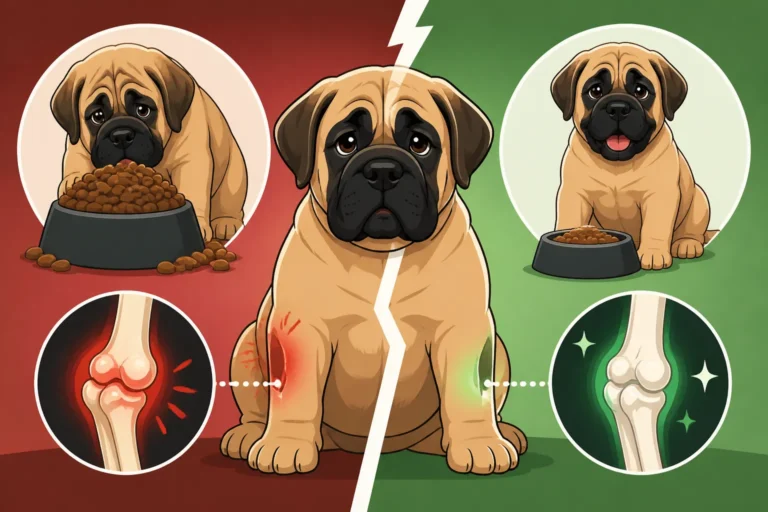
- If your Mastiff is too heavy: This is a common issue for Mastiffs, and one we try to prevent. You should be able to feel their ribs without pressing hard, and they should have a discernible waist when viewed from above. If you can't feel their ribs or they look like a solid block, it's time to reduce their food. Decrease their daily intake by 10-15% and monitor. Remember, Keeping a Mastiff Lean on Purpose is one of the best things you can do for their longevity and joint health.
Always make gradual changes to avoid upsetting their digestive system. Small adjustments over time are far more effective and safer than drastic cuts or increases. If you're struggling with weight management, or if your Mastiff seems lethargic or unwell, a trip to the vet is always the right call. They can rule out any underlying medical conditions and help tailor a precise feeding plan.
Beyond Kibble: Other Food Types and Considerations
While dry kibble is a staple for many Mastiffs due to its convenience and cost-effectiveness, it's certainly not the only option. Many owners explore other food types, each with its own set of considerations for our giant friends.
Wet, Fresh, and Raw Food Considerations
When you move away from traditional dry kibble, the volume of food needed can change dramatically, even if the caloric intake remains the same.
- Wet Food: Canned foods typically have a much higher moisture content, meaning they are less calorically dense by volume. While palatable, feeding enough wet food to meet a Mastiff's caloric needs can become incredibly expensive and create a monumental amount of waste. You'd be going through dozens of cans a day!
- Fresh Food (Cooked Diets): Services offering pre-portioned, cooked fresh food are gaining popularity. These diets often use human-grade ingredients and can be highly digestible. However, their moisture content is higher than kibble, and the sheer volume required for a Mastiff means these can be very costly. If you're considering a fresh food plan, be prepared for a substantial commitment in terms of budget and storage space. Services like Ollie, for example, can customize meal plans, but the cost at Mastiff volumes can be eye-watering. Why Fresh Food Is Impractical at Mastiff Volumes is a reality many discover.
- Raw Food (BARF – Biologically Appropriate Raw Food): Raw feeding involves feeding raw meat, bones, and organs. Proponents believe it offers superior nutrition, but it requires meticulous attention to balance and safety to avoid nutritional deficiencies or bacterial contamination. Similar to fresh food, the logistics and cost of sourcing and storing the vast quantities of raw ingredients needed for a Mastiff can be daunting. You'll need significant freezer space! Whether Raw Feeding Is Practical at Mastiff Volume is a serious question for any owner considering it.
Regardless of the type of food you choose, the principle remains: understand the caloric density of that specific food and match it to your Mastiff's daily caloric needs based on their target weight, age, and activity level.
The Importance of a High-Quality, Large-Breed Formula
No matter the format, the quality of the food you provide is paramount for a Mastiff. These are not dogs that can thrive on cheap, filler-laden diets. Their massive bodies, especially their joints, rely heavily on proper nutrition.
A high-quality large-breed formula is designed with the unique needs of giant dogs in mind. This typically means:
- Appropriate Protein Levels: Sufficient protein is crucial for maintaining their large muscle mass.
- Controlled Fat Content: Enough fat for energy and a healthy coat, but not so much that it leads to rapid weight gain.
- Balanced Calcium and Phosphorus: Especially critical for growing puppies to prevent orthopedic issues, but still important in adults for bone health.
- Joint Support Supplements: Many formulas include glucosamine and chondroitin to support cartilage health. Joint Supplements for a Mastiff are often considered a staple.
- DHA: An omega-3 fatty acid important for brain and vision development, and overall inflammatory response.
Always read ingredient labels carefully. Look for whole meat as the first ingredient, and avoid excessive fillers, artificial colors, and preservatives. Investing in a premium large-breed specific food, even if it seems more expensive upfront, can save you significant vet bills down the line by supporting their long-term health. These specialized foods are widely available from online retailers such as Amazon and Chewy, making it easier to compare options and find the right fit for your Mastiff.
Monitoring and Fine-Tuning Your Mastiff's Diet
Feeding your Mastiff isn't a set-it-and-forget-it task. It requires ongoing observation and adjustments as your dog ages, their activity levels change, or as their health evolves. Think of yourself as their personal nutritionist, constantly fine-tuning their intake.
How to Assess Your Mastiff's Body Condition
This is arguably the most important part of managing your Mastiff's diet. Forget the number on the scale for a moment; how your dog looks and feels is the real indicator of their health.
Here's how to do a quick body condition check:
- The Rib Test: Gently run your hands along your Mastiff's sides. You should be able to feel their ribs easily, but not see them protruding. If you have to press hard to feel them, your dog is likely overweight. If you can see individual ribs without even touching, they might be too thin.
- The Waistline: Stand above your Mastiff and look down. You should see a slight tuck-in or "waist" just behind their ribs. From the side, their abdomen should tuck up slightly, not hang low. A Mastiff with no discernible waist or a sagging belly is carrying too much weight.
- Overall Musculature: Your Mastiff should have well-defined muscle mass, particularly over their hindquarters. Fat deposits often accumulate around the base of the tail and over the hips.
Remember, Mastiffs are massive, but they shouldn't be fat. An ideal Mastiff is lean and powerful. An overweight Mastiff puts immense strain on their joints, heart, and other organs, dramatically increasing their risk for various health issues and potentially shortening their already brief lifespan. How to Tell a Heavy Mastiff From a Fat One is a learned skill that pays dividends.
The Role of Your Veterinarian and Regular Check-ups
While you are the primary caregiver, your veterinarian is your indispensable partner in your Mastiff's nutritional journey. They have a professional, objective eye and the medical knowledge to provide tailored advice.
- Initial Assessment: When you first get your Mastiff puppy or adopt an adult, have your vet assess their body condition and help you establish an appropriate feeding plan.
- Regular Check-ups: During yearly wellness exams, your vet will monitor your Mastiff's weight and body condition, often providing guidance on adjusting their diet as needed.
- Health Concerns: If your Mastiff develops any health issues, especially those related to digestion, allergies, or joint problems, your vet can recommend specialized therapeutic diets.
- Aging Dogs: As your Mastiff enters their senior years, their nutritional needs will change. Your vet can advise on transitioning to a senior-specific formula or making other dietary modifications to support their aging body. Caring for a Mastiff Past Five means proactive changes to diet and exercise.
Never hesitate to discuss your Mastiff's diet with your vet. They are a valuable resource in helping your big dog live their best, healthiest life.
Hydration and Meal Frequency
Beyond what and how much your Mastiff eats, how they eat is also crucial, especially for a giant breed prone to certain conditions.
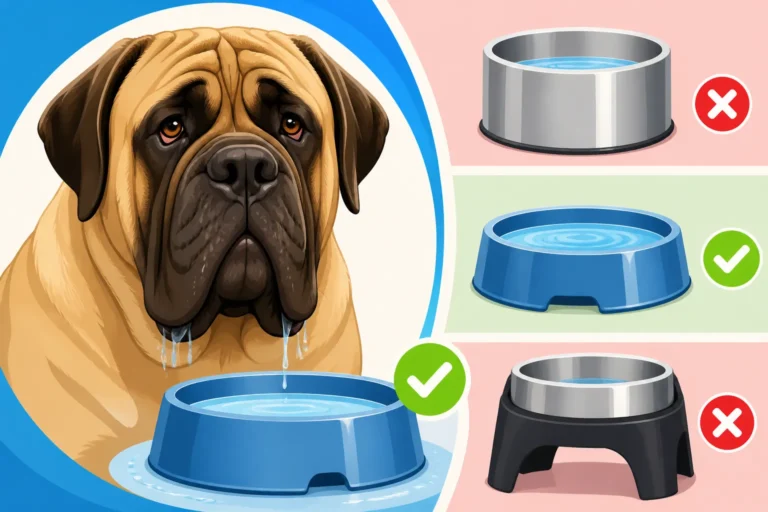
- Hydration: Water is just as vital as food. Ensure your Mastiff always has access to fresh, clean water. This is particularly important if you're feeding a dry kibble diet, as they'll need extra water to help process it. Good hydration supports kidney function, digestion, and overall health.
- Meal Frequency: For Mastiffs, feeding two to three smaller meals a day is generally recommended over one large meal. This can help prevent issues like bloat (Gastric Dilatation-Volvulus), a life-threatening condition common in deep-chested breeds. Spreading out their caloric intake also aids digestion and can help stabilize blood sugar. Whether Two Meals a Day Lower a Mastiff's Bloat Risk is a question many owners consider, and the answer is usually yes.
By breaking their daily food allowance into multiple portions, you reduce the risk of them eating too quickly or consuming a large volume that could lead to stomach upset or, worse, a twisted stomach. Using slow feeder bowls can also be beneficial in these situations.
Daily Feeding Guide for an Adult Mastiff (Example)
Please remember, the table below provides example daily caloric ranges and corresponding kibble cup estimates. Your Mastiff's exact needs will depend on the specific caloric density of their food and their individual metabolism and activity level. Always consult your veterinarian for personalized advice.
| Mastiff Weight (approx.) | Activity Level | Estimated Daily Calories (Kcal) | Example Kibble Cups (at 375 Kcal/cup) |
|---|---|---|---|
| 130-150 lbs | Low | 2600 – 3000 | 7.0 – 8.0 cups |
| 130-150 lbs | Moderate | 3000 – 3750 | 8.0 – 10.0 cups |
| 160-180 lbs | Low | 3200 – 3600 | 8.5 – 9.5 cups |
| 160-180 lbs | Moderate | 3600 – 4500 | 9.5 – 12.0 cups |
| 190-220 lbs | Low | 3800 – 4400 | 10.0 – 11.75 cups |
| 190-220 lbs | Moderate | 4400 – 5500 | 11.75 – 14.75 cups |
Note: 1 cup is approximately 3.7 oz / 105 grams of dry kibble. Caloric density of kibble varies significantly. Always check your specific dog food bag.
Disclaimer
This article is for general informational purposes only and does not constitute professional advice. Laws, prices and regulations vary by location and change over time. Consult a qualified professional for guidance on your specific situation.