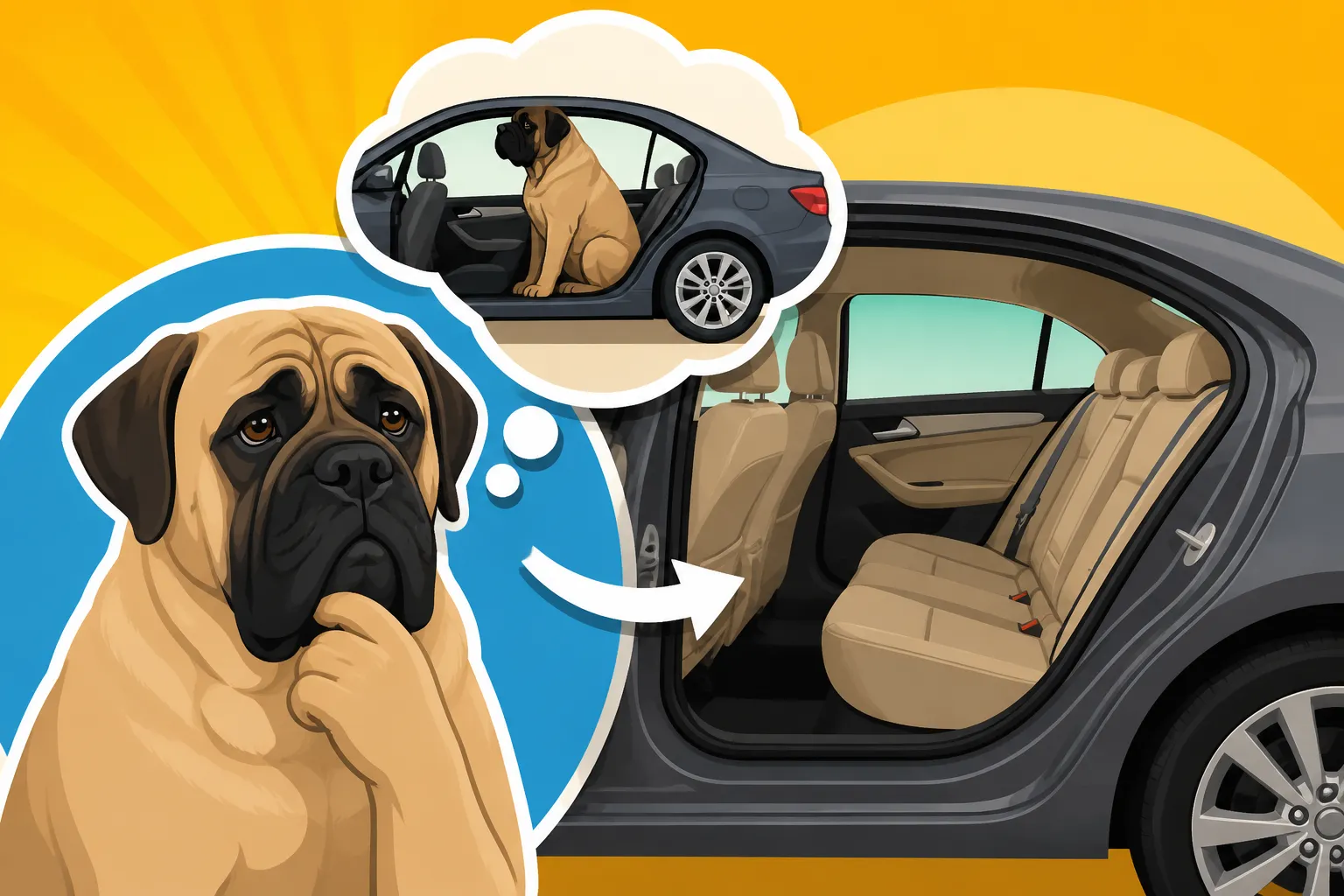
Whether a Mastiff Fits in a Sedan
Oh, the eternal dance of looking at your majestic Mastiff, then glancing at your trusty sedan, and wondering, "Is this even going to work?" It’s a common moment of pure, unadulterated reality for anyone who loves these gentle giants, because the truth is, while your heart might be big enough for a Mastiff, your car's back seat might not be. This guide dives deep into the logistical challenges of fitting a massive Mastiff into a standard sedan, exploring the practicalities, potential dangers, and what it really means for your daily errands and longer trips.
The Sheer Reality of Mastiff Size
Let's face it, a Mastiff isn't just a big dog; it's a force of nature wrapped in a velvet coat. We're talking about a creature that, even when perfectly still, commands an incredible amount of physical space. It’s not just their weight, which can easily top 150-200 pounds for a male and often 120-170 for a female; it's their sheer length, height, and robust build that creates a unique challenge for anything smaller than a small car.
Understanding Mastiff Dimensions Beyond Weight
When we think about a dog's size, weight is usually the first thing that comes to mind. But with a Mastiff, you need to consider the whole package. Picture this: your adult Mastiff, standing at attention, can easily reach 27-30 inches at the shoulder. That's nearly two and a half feet! Now, imagine them lying down. From nose to tail, they can stretch well over six feet, sometimes even seven. This isn't a dog you can just "tuck in." Their broad chest and substantial skull add to their overall bulk, making them incredibly wide. Trying to squeeze that much dog into a space designed for human legs and backsides is like trying to fit a king-sized mattress into a twin bed frame. It simply doesn't compute.
Their turning radius, when they're trying to adjust in a confined space, is also considerable. They can't just fold themselves in half. Every shift, every adjustment they make, requires a fair amount of room, which is often in short supply in a sedan. This isn't just about comfort; it's about physics and the sheer physical presence of a dog who fills every inch of space around them. You might be accustomed to How Much a Male Mastiff Weighs and thinking about that, but it's the 3D volume they occupy that really matters.
The Impact of Their Bulk on Confined Spaces
When a Mastiff settles, they settle. Their bulk is undeniable. A dog weighing upwards of 150 pounds brings a certain density to any space they inhabit. In a sedan, this means their weight isn't just distributed; it's often concentrated into pressure points. Their elbows, hips, and shoulders might press against hard surfaces, or their head might be jammed against the ceiling or the back of the front seat. This isn't just uncomfortable; it can be actively detrimental to their joint health, especially if they’re spending a lot of time crammed into such a small area. We're always trying to keep these gentle giants healthy, and proper support for their massive frames is key, especially given their predisposition to joint issues like hip and elbow dysplasia.
Consider also the simple act of breathing. A Mastiff has a deep chest, and when they're panting, they need good airflow and space for their lungs to expand. A cramped space, especially in warm weather, can quickly become stifling and even dangerous for a brachycephalic (short-nosed) breed, or even just a very large dog that struggles to dissipate heat. Their bulk already makes them prone to overheating, so stuffing them into a small, enclosed space amplifies that risk.
Sedan Constraints: Where the Space Runs Out
Sedans, by their very design, prioritize passenger comfort and cargo space in the trunk, not cavernous areas for a giant breed dog. While some sedans are larger than others, they all share fundamental architectural limitations that make them challenging, if not impossible, for a Mastiff.
Back Seat Dimensions: Legroom, Headroom, and Width
The back seat of a sedan is typically engineered for two or three adult humans, not a behemoth like a Mastiff. Let's break down the limitations:
- Legroom: This is often the biggest hurdle. The space between the back of the front seats and the front of the back seat cushion is designed for human legs, bent at the knee. A Mastiff, even lying down, needs to stretch out. Their long bodies and powerful legs require significant space to extend comfortably. In a sedan, their legs might be perpetually bent or awkwardly splayed, leading to discomfort and potential strain. Imagine trying to sleep in a fetal position for hours; that's what it can feel like for your Mastiff.
- Headroom: While Mastiffs aren't typically standing in a car, their head and neck still need clearance. If they want to sit up and look out the window, their head could hit the roof. More commonly, if they lie down, their head might be forced into an unnatural angle, or they might be unable to lift it without hitting something. This can lead to neck stiffness or simply make them very unhappy.
- Width: The width of the back seat is another major constraint. While your Mastiff might theoretically fit on the seat cushion, their sheer width means they will likely take up the entire width of the back seat, from door to door. This leaves no room for any other passengers, nor for any substantial crate or containment system. This isn't just about their body; it's about their big, wagging tail, which needs space too!
Even if your sedan boasts a "spacious" back seat, it's still fundamentally different from the open cargo area of an SUV or minivan. The contoured seats, seat belt buckles, and armrests are all designed for human ergonomics, not canine dimensions.
Trunk Space and Other Inadequate Areas
Now, let's talk about the trunk. It might seem like a large, enclosed space, but it is unequivocally not suitable for transporting any dog, especially a Mastiff. Trunks are designed for luggage, not living beings. They lack proper ventilation, can become extremely hot or cold, and offer no way for you to monitor your dog. Plus, the risk of carbon monoxide poisoning is very real. It's simply not an option, and should never be considered.
What about the front passenger seat? Also a firm no. A Mastiff, even a small one, cannot safely sit in the front seat. They pose a severe distraction risk to the driver, and in the event of an airbag deployment, the force would be catastrophic for a dog of any size, let alone a Mastiff. Their sheer weight and size would make them a projectile in an accident, a danger to themselves and anyone else in the car.
For anyone who's ever navigated the challenges of a growing Mastiff Puppy You Are Not Allowed to Exercise, you know how important safe transport is even from a young age. As they get older, these challenges only multiply.
Practicality and Safety: Getting a Mastiff In and Out
Beyond simply fitting, the practicalities of safely loading and unloading a Mastiff from a sedan are significant. It's not just about getting them in; it's about doing so without injury to them or to you, and ensuring their safety during transit.
The Struggle of Entry and Exit
Imagine trying to coax or lift a 150-pound, often stubborn, creature through a relatively small door opening and into a cramped back seat. It's a logistical nightmare waiting to happen. For a growing Mastiff puppy, you might be able to lift them initially, but they grow incredibly fast. Why a Mastiff Puppy Must Be Lifted Into a Car is crucial for their developing joints, but what happens when they hit 80 pounds at six months? And then 150 pounds at a year? The physical strain on you is immense, risking back injuries.
For the Mastiff, it can be a terrifying and uncomfortable experience. They might balk at the confined space, resist getting in, or awkwardly scrape their hips and shoulders on the doorframe. Repeatedly forcing them into an uncomfortable situation can create negative associations with car rides, turning a potentially enjoyable outing into a stressful ordeal for everyone. You want your Mastiff to associate car rides with positive experiences, not being jammed into a space too small for their dignity.
Safety Concerns: Restraints and Airbags
When transporting any dog, safety restraints are paramount. An unrestrained dog, regardless of size, becomes a dangerous projectile in a sudden stop or accident. For a Mastiff, the kinetic energy involved is staggering. A dog harness that attaches to a seatbelt is the ideal solution, but finding one that fits a Mastiff comfortably in a sedan's back seat, where they might already be pressed against the doors, is tough. More importantly, the tether needs enough slack for them to be comfortable but not so much that they can launch forward. In a sedan, finding that balance with a Mastiff's bulk is nearly impossible.
- Crates: Crating is often the safest way to transport a dog, offering a protective barrier. However, a crate large enough for an adult Mastiff is absolutely enormous. We're talking about crates that can be four to five feet long, three feet wide, and over three feet tall. There is simply no way a crate of this size will fit into the back seat of a sedan, nor into the trunk. Even if you manage to fold down the back seats, the dimensions of most sedans won't accommodate a Mastiff-sized crate. For larger items, some owners might consider shopping on sites like Chewy for specialized large-dog gear, but even then, a sedan will be a hard limit.
- Airbags: While back seats typically don't have front-facing airbags, side airbags are common. If your Mastiff is pressed up against the door and a side airbag deploys, it could cause severe injury or even death. This is a critical safety consideration that often goes overlooked.
The implications of an accident are severe. Not only for your beloved Mastiff but also for anyone else in the vehicle. The phrase "the weight a Mastiff's body does to every line on the vet invoice" comes to mind if an injury occurs during transport.
Temperature Control and Comfort During Travel
A Mastiff's sheer size and deep chest make them particularly susceptible to overheating. In a sedan, especially without powerful air conditioning or good airflow, the back seat can become a hotbox very quickly. Even on a moderately warm day, the temperature can climb to dangerous levels, leading to heatstroke. Their limited ability to shift and get comfortable exacerbates this issue, as they can't easily move to a cooler spot or stretch out. This is a serious concern, especially if you live in a warmer climate or plan to take your Mastiff on longer journeys.
Consider this table outlining the typical space requirements versus sedan realities:
| Feature | Mastiff Minimum Requirement (Approximate) | Standard Sedan Back Seat (Approximate) | Compatibility |
|---|---|---|---|
| Length (lying) | 6-7 feet | 3-4 feet (legroom area) | Poor |
| Height (seated) | 2.5-3 feet (head clearance) | 2.5-3 feet | Borderline |
| Width | 1.5-2 feet (shoulder/hip span) | 4.5-5 feet (total seat width) | Poor (fills all) |
| Crate Size | 48-54 inches long | Does not fit | Impossible |
| Turning Space | Needs room to reposition | Very limited | Poor |
This visual comparison clearly highlights the mismatch.
Alternative Vehicle Considerations for Your Mastiff
So, if a sedan is largely out of the question for comfortable and safe Mastiff transport, what are your options? The answer, for most Mastiff owners, involves a bigger vehicle. This isn't just a suggestion; it's often a necessity that profoundly impacts The Furniture, Vehicle and Doors a Mastiff Changes in your home and life.
SUVs and Minivans: The Obvious Upgrades
When you commit to a Mastiff, you're often committing to a larger vehicle as well. SUVs (Sport Utility Vehicles) and minivans offer the kind of open cargo space and generous headroom that a Mastiff truly needs.
- SUVs: Many SUVs, particularly mid-size to full-size models, offer ample cargo areas when the rear seats are folded down. This creates a flat, expansive space where a Mastiff can lie down comfortably, stretch out, and even turn around. This space is also conducive to installing a large dog crate, which, as discussed, is the safest way to travel. The higher ride height can be a bit of a challenge for older or less agile Mastiffs, but ramps are an excellent solution. If you're considering a new vehicle, think about What an SUV Upgrade Costs a Mastiff Owner in the long run versus the cost of dealing with an injured dog.
- Minivans: Often overlooked for their "cool factor," minivans are arguably the most Mastiff-friendly vehicles on the market. Their low floor, wide sliding doors, and vast, flat cargo area (with seats removed or stowed) provide unparalleled ease of access and space. A large crate fits easily, and even an unrestrained Mastiff (though not recommended for safety) would have plenty of room to move and lie down. The lower entry height is also a huge plus for aging Mastiffs or those with joint issues.
These vehicles typically have better climate control for the rear cargo area, and often feature tie-down points that can secure a crate or a sturdy dog safety harness.
Trucks: A Niche but Viable Option
For some Mastiff owners, a truck might be a viable option, though it comes with its own set of considerations.
- Crew Cab/Extended Cab: If your truck has a spacious back seat (a crew cab or extended cab), it might offer more legroom and width than a sedan. However, headroom can still be an issue, and the seat configuration is still designed for humans. Again, a large crate is unlikely to fit unless you have an exceptionally roomy cab.
- Truck Bed with Shell/Canopy: Transporting a Mastiff in the open bed of a truck is absolutely unacceptable due to the risk of them being thrown out, extreme weather exposure, and flying debris. However, if the truck bed is fitted with a secure, well-ventilated, and temperature-controlled shell or canopy, it can function much like the cargo area of an SUV. This setup allows for large crates and plenty of space, but requires careful attention to ventilation and temperature, as truck beds can heat up or cool down rapidly. This is a very specific setup and not for everyone.
Regardless of the vehicle, investing in good quality, large-breed appropriate bedding, like those available from Chewy, can make the journey more comfortable. And remember that for Mastiffs, diet is important for long-term health, so ensuring they have access to their usual food, whether it's traditional kibble or fresh food services like Ollie, is part of a holistic care plan, especially when traveling.
Prioritizing Your Mastiff's Comfort and Health
Ultimately, the decision of what vehicle to use for your Mastiff isn't just about whether they can physically fit, but whether they can fit safely and comfortably. For a breed prone to joint issues and sensitive to discomfort, forcing them into a small space for regular travel is not a kindness. It can exacerbate existing conditions, create new ones, and make them dread car rides.
Many Mastiff owners find that their dog's needs dictate their vehicle choices. It's an investment in their well-being and a testament to the special considerations these magnificent dogs require. From puppyhood, when you're navigating The Shifting Lameness of a Growing Mastiff, to their senior years, when ease of movement is paramount, your vehicle choice will profoundly impact their quality of life. Thinking ahead about features like Whether a Mastiff Needs a Ramp Into the House or for your car is an important part of responsible Mastiff ownership.
Disclaimer
This article is for general informational purposes only and does not constitute professional advice. Laws, prices and regulations vary by location and change over time. Consult a qualified professional for guidance on your specific situation.