How Much Anesthetic a Two Hundred Pound Mastiff Takes
Bringing a magnificent 200-pound Mastiff to the vet for a procedure requiring anesthesia can feel incredibly daunting. You're not just worried about the procedure itself, but the sheer size of your gentle giant makes you question how safe it truly is, especially when it comes to the medications needed. This comprehensive guide is here to shed light on the unique considerations for anesthetizing a Mastiff, focusing on why their size, metabolism, and breed-specific traits mean a very different approach than for smaller dogs, and what you can expect from a responsible veterinary team.
The Unique Anesthetic Challenges of a Giant Breed
When you look at your two hundred pound Mastiff, it’s clear they're not just a big dog; they're an entirely different league. This immense size, while majestic, brings with it a set of distinct physiological challenges when it comes to anesthesia. It's not simply a matter of scaling up the dosage from a Chihuahua; a Mastiff's body processes and reacts to anesthetic agents in ways that demand specialized knowledge and careful consideration from your veterinary team.
Why Size Isn't the Only Factor for Mastiff Anesthesia
It's tempting to think that a 200-pound Mastiff just needs "more" of everything a smaller dog gets. However, this couldn't be further from the truth. The sheer volume of tissue means that drugs distribute differently throughout their body, but it's not just about weight on the scale. A Mastiff's body composition plays a huge role. These dogs are prone to carrying more fat, even when they appear lean, and fat tissue has a much lower blood supply than muscle. This means that fat doesn't absorb and release anesthetic drugs in the same way, which can lead to drugs accumulating and lingering in the system, causing prolonged sedation and slower recovery.
Beyond just fat and muscle, the internal organs of a Mastiff, particularly the liver and kidneys which metabolize and excrete drugs, can operate at a different pace than those of smaller breeds. Their large lung capacity needs appropriate ventilation strategies, and their cardiovascular system has to work harder to perfuse such a large mass. These are complex factors that a skilled veterinary team must assess individually for each Mastiff.
Breed-Specific Sensitivities and Drug Metabolism
Mastiffs, like many giant breeds, can have specific sensitivities to certain anesthetic drugs. For instance, some giant breeds might be more prone to issues with certain sedatives or pain medications, potentially experiencing more profound respiratory depression or prolonged recovery. Their metabolism can be slower, meaning drugs take longer to break down and exit their system, which further contributes to extended recovery times.
Additionally, conditions prevalent in Mastiffs, such as potential underlying cardiac issues, or joint problems like Elbow Dysplasia Affects One Mastiff in Seven, can influence anesthetic protocols. A veterinarian needs to choose drugs that are not only effective but also gentle on these systems. For example, certain opioids or sedatives might be excellent for pain control but require careful monitoring due to their potential to lower blood pressure or depress respiration, which is already a concern with a large chest cavity. The goal is always to create a tailored anesthetic plan that minimizes risks while ensuring your Mastiff is comfortable and pain-free during and after their procedure.
Dosing Principles: Lean Weight vs. Scale Weight in Mastiffs
This is perhaps the single most critical factor in safely anesthetizing a Mastiff, and it's where much of the confusion (and potential danger) lies for pet owners. Simply taking the number on the scale and plugging it into a standard dosage calculator designed for an average dog breed is a recipe for disaster. The "how much" isn't a fixed quantity; it's a careful calculation based on biology.
The Critical Difference in Dosing
For a 200-pound Mastiff, a veterinarian almost never doses anesthetic medications based on their full scale weight. Instead, the focus is on their lean body mass. This refers to the weight of everything in the dog's body except for fat – primarily muscle, bone, and organs. Why is this distinction so crucial? Anesthetic drugs, particularly those that are lipid-soluble, are primarily distributed into and metabolized by lean tissues. Fat tissue, as mentioned before, is poorly perfused with blood and has a limited metabolic capacity.
If a Mastiff is dosed according to its total scale weight, especially if they carry a significant amount of excess body fat, they will be severely overdosed. This overdose can lead to profound and dangerous sedation, extremely slow recovery, severe drops in blood pressure, respiratory arrest, and cardiac complications. It's a fine line to walk, as under-dosing also has risks, but the dangers of overdosing a giant breed based on total weight are substantial. This is exactly Why a Mastiff Is Dosed by Lean Weight and Not Scale Weight, a principle that cannot be overstated when it comes to their safety.
How Vets Estimate Lean Body Mass
Estimating lean body mass isn't an exact science, but experienced veterinarians who work with giant breeds like Mastiffs become incredibly skilled at it. They use a combination of techniques:
- Body Condition Scoring (BCS): This visual and tactile assessment helps determine if a dog is underweight, ideal weight, or overweight. A Mastiff at an ideal BCS would have easily palpable ribs (without being visibly bony), a discernible waist, and abdominal tuck.
- Palpation: The vet will physically examine your Mastiff, feeling for muscle mass over bony prominences like hips, shoulders, and spine, and assessing the thickness of fat layers.
- Visual Assessment: Simply looking at the dog's overall build, taking into account the breed standard, helps a vet gauge how much of their weight is likely lean mass versus fat.
- Breed-Specific Knowledge: Knowing that a healthy 200-pound Mastiff might realistically have a lean body mass closer to 160-180 pounds (depending on individual build, sex, and age) is critical. This intrinsic understanding comes from years of working with these magnificent dogs.
This expertise allows the vet to calculate a dosage that is appropriate for the active metabolic tissue, rather than the inert fat, ensuring a safer anesthetic plane and a smoother recovery.
Here’s a simplified look at how dramatically dosing can change:
| Dosing Method | Estimated Lean Body Mass (LBM) | Hypothetical Drug Dose (mg/kg) | Total Drug Administered (mg) for 200lb (90.7kg) Mastiff | Potential Outcome if Using Scale Weight Incorrectly |
|---|---|---|---|---|
| By Scale Weight | N/A (Assumes 90.7kg) | 0.5 mg/kg | 45.35 mg | Severe overdose, profound sedation, dangerous side effects |
| By Lean Body Mass | 80kg (approx 176 lbs) | 0.5 mg/kg | 40 mg | Safe and effective sedation, smoother recovery |
Note: These numbers are purely hypothetical for illustrative purposes and do not represent actual dosages. Veterinary professionals make precise calculations based on specific drugs, individual patient health, and the procedure.
Pre-Anesthetic Protocols: Minimizing Risk for Your Mastiff
Administering anesthesia to a Mastiff isn't just about the drugs; it's about a comprehensive, multi-step protocol designed to maximize safety. Every decision, from initial assessment to recovery, is geared towards protecting your giant companion.
The Importance of Pre-Anesthetic Bloodwork
Before any Mastiff goes under anesthesia, a thorough physical exam and comprehensive pre-anesthetic bloodwork are absolutely non-negotiable. This isn't an upsell; it's a critical diagnostic step that can literally be life-saving. For a massive dog like a Mastiff, knowing the full picture of their internal health is paramount.
Bloodwork provides vital information about the function of key organs like the liver and kidneys, which are responsible for processing and eliminating anesthetic drugs from the body. If these organs aren't functioning optimally, certain drugs might accumulate to toxic levels or take an dangerously long time to clear, leading to extended recovery times or even organ damage. Blood tests also check red and white blood cell counts, ensuring your Mastiff can carry oxygen effectively and fight off infection. They can reveal underlying conditions that might complicate anesthesia, such as anemia, electrolyte imbalances, or occult infections. Asking Whether a Mastiff Needs Pre Anesthetic Bloodwork is like asking if a pilot needs to check their plane before takeoff – it's fundamental to safety.
Tailored Anesthetic Plans and Monitoring
Once the pre-anesthetic diagnostics are complete, your veterinary team will formulate a tailored anesthetic plan. This involves carefully selecting the specific drugs, dosages, and administration routes to suit your Mastiff's individual health profile, the nature of the procedure, and their estimated lean body mass.
Key components of this plan typically include:
- IV Catheter and Fluids: An intravenous (IV) catheter is always placed to allow for immediate drug administration (including emergency medications) and continuous IV fluid support. Fluids help maintain blood pressure, support organ function, and aid in flushing anesthetic drugs from the system.
- Pre-medication: A combination of sedatives and pain medication is usually given before induction. This reduces anxiety, allows for a smoother induction, lowers the total amount of anesthetic gas needed, and provides pre-emptive pain relief.
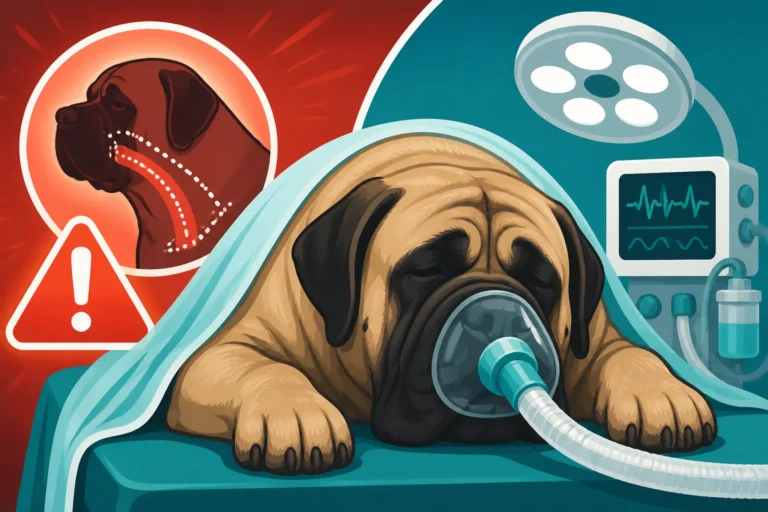
- Induction and Maintenance: A fast-acting IV anesthetic agent induces unconsciousness, after which an endotracheal tube is placed into the windpipe to maintain an open airway and deliver anesthetic gas mixed with oxygen.
- Advanced Monitoring: This is where the magic (and science) happens. A dedicated veterinary technician will continuously monitor your Mastiff throughout the entire procedure and into recovery. This includes:
- Heart Rate and Rhythm (ECG): Checks for arrhythmias or dangerously low/high heart rates.
- Blood Pressure: Crucial for ensuring vital organs are adequately perfused. Maintaining good blood pressure is especially important for Caring for a Mastiff Past Five, as older dogs may have underlying heart conditions.
- Oxygen Saturation (Pulse Oximetry): Measures how much oxygen is in the blood.
- Carbon Dioxide Levels (Capnography): Monitors breathing quality and efficiency.
- Temperature: Giant breeds are prone to hypothermia under anesthesia due to their large surface area and reduced metabolic rate, so active warming measures (like circulating warm water blankets) are often used.
- Respiratory Rate and Depth: Manual assessment of breathing.
This continuous, vigilant monitoring allows the veterinary team to make real-time adjustments to anesthetic depth, fluid rates, and medication, ensuring your Mastiff remains stable and safe. It's an intensive process, and understanding What Post Surgical Monitoring Costs on a Mastiff can give you an idea of the resources dedicated to this critical phase. Reputable pet insurance providers like Healthy Paws can be a huge help here, often covering a significant portion of these essential pre-anesthetic diagnostics and monitoring costs, easing the financial burden on pet owners and ensuring your Mastiff gets the best care.
Post-Anesthetic Care and Recovery: What to Expect
The journey doesn't end when the surgery is over. For a Mastiff, the recovery phase is just as critical and requires careful attention, often taking longer than for smaller dogs.
Slow and Steady: The Mastiff's Recovery Pace
Given their size and slower metabolism, Mastiffs generally take longer to wake up and fully recover from anesthesia. It’s not uncommon for them to be drowsy, wobbly, and a little disoriented for several hours, or even into the next day. The veterinary team will typically keep them in a warm, quiet, supervised recovery area until they are fully awake and able to stand on their own.
During this time, continued monitoring is essential to ensure their body temperature returns to normal, their breathing is strong, and any pain is well-managed. Hypothermia, or a dangerously low body temperature, is a particular concern for giant breeds during recovery, as it can slow drug metabolism even further and prolong waking up. The staff will continue to use blankets and other warming devices as needed.
Home Care and Watching for Complications
Once your Mastiff is cleared to go home, your role in their recovery becomes paramount. Here's what you can expect and how to help:
- Create a Safe, Quiet Space: Designate a comfortable, warm, easily accessible area with soft bedding where your Mastiff can rest undisturbed. Remember, after any surgery that might require anesthesia, you should consider Whether a Practice Has a Table That Holds a Mastiff to ensure they can be examined safely.
- Limited Activity: Restrict strenuous activity for the period recommended by your vet. This means no jumping, running, or excessive stair climbing. For procedures related to something like Bloat in the Deepest Chest of Any Breed: the Mastiff, activity restriction is particularly vital.
- Food and Water: Offer small amounts of water frequently once they are fully awake and not nauseous. Follow your vet’s instructions for when to offer food, usually a small, bland meal.
- Medication: Administer all prescribed pain medications and antibiotics exactly as directed. Pain management is crucial for a comfortable and speedy recovery.
- Watch for Complications: Keep a close eye on your Mastiff for any signs of concern, such as:
- Excessive lethargy or difficulty waking up
- Persistent vomiting or diarrhea
- Difficulty breathing, loud breathing, or blue/pale gums
- Swelling, redness, or discharge at the incision site
- Inability to urinate or defecate
- Sudden collapse or severe weakness
If you observe any of these symptoms, contact your veterinarian immediately. It’s always better to be overly cautious when dealing with a giant breed post-anesthesia. Having pet insurance, like a policy from Healthy Paws, can provide peace of mind in these situations, helping to cover the costs of unexpected complications or follow-up visits. The commitment to their care, from initial consultation to full recovery, is part of why What a Mastiff's Weight Does to Every Line on the Vet Invoice is often higher, but it’s an investment in their well-being.
Disclaimer
The information provided in this guide is intended for educational purposes only and should not be considered a substitute for professional veterinary advice. Always consult with a qualified veterinarian for any health concerns or before making any decisions about your Mastiff's medical care, especially concerning anesthesia.