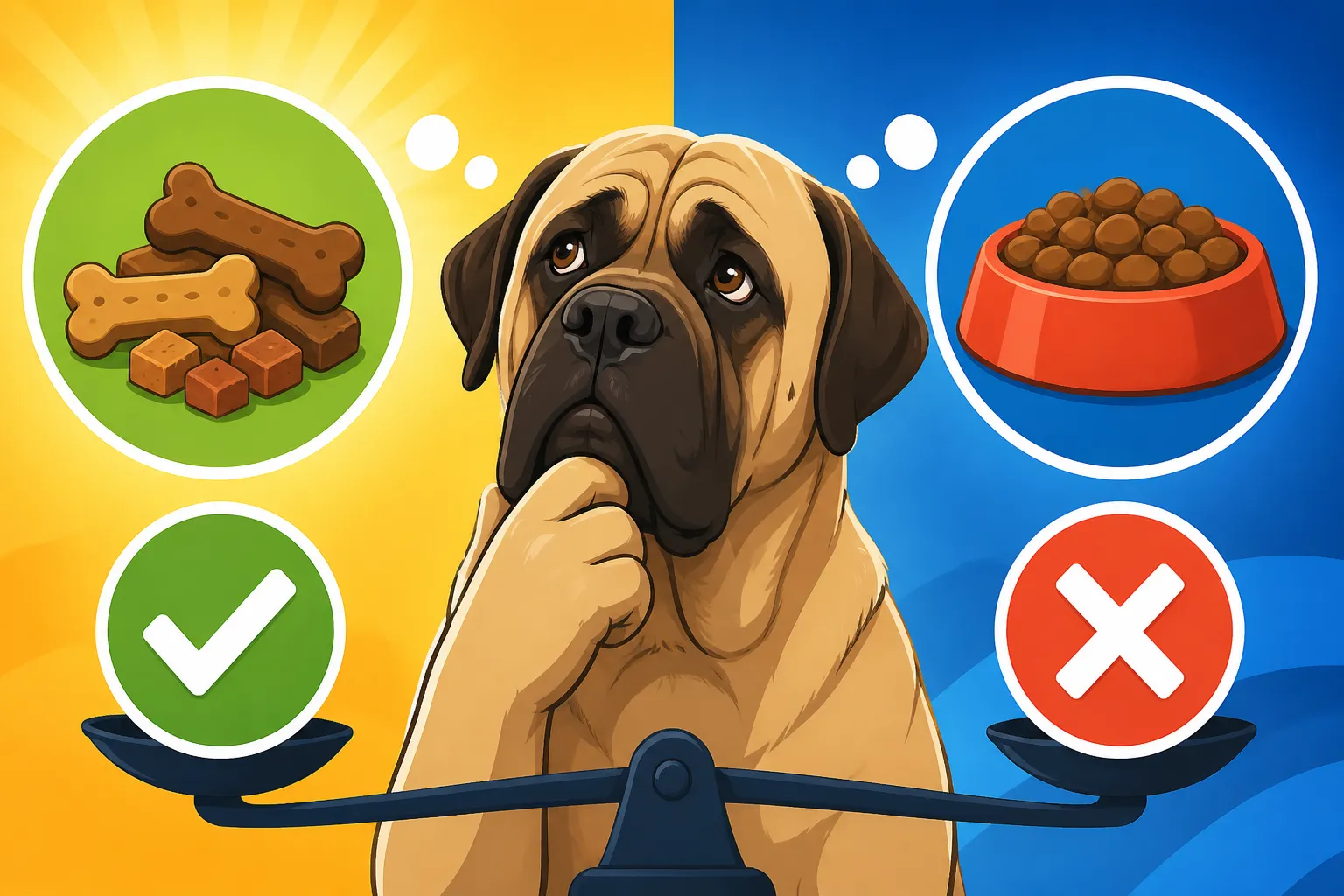
Whether Training Treats Count Against a Mastiff’s Calories
It’s a common dilemma, isn't it? You’re trying your absolute best to train your magnificent Mastiff, showering them with praise and those irresistible little treats, but in the back of your mind, you’re constantly wondering if all those delicious rewards are quietly adding up to a bigger waistline. This guide is here to help you navigate the tricky waters of training treat calories, ensuring your gentle giant stays motivated, healthy, and perfectly proportioned without sacrificing their valuable training.
The Non-Negotiable Reality of Mastiff Calories and Weight
Let's be brutally honest for a moment: managing a Mastiff's weight isn't just about aesthetics; it's a critical component of their overall health and longevity. These magnificent dogs are already prone to certain health challenges, and adding extra pounds to their massive frames can exacerbate nearly every single one. Ignoring the caloric impact of even small training treats can lead to significant issues down the road, and nobody wants that for their beloved companion.
Why Every Calorie Counts for a Giant Breed
A Mastiff is already a heavy dog by design, carrying an immense amount of weight on its joints and frame. Every single extra pound your Mastiff carries puts additional, unnecessary stress on their hips, elbows, and spine. This constant strain can accelerate the onset and severity of conditions like arthritis and hip or elbow dysplasia, which are already far too common in giant breeds. Imagine trying to carry an extra 20-pound backpack all day, every day – it would wear you down quickly. For a Mastiff, that extra weight impacts their ability to move comfortably, reduces their energy, and ultimately, shortens their precious time with you. It’s a sad truth that How Weight Shortens a Mastiff's Life is a very real concern for us Mastiff owners, and calorie control plays a huge role in mitigating this.
Beyond the musculoskeletal system, excess weight puts a significant burden on their cardiovascular system. A larger body mass requires the heart to work harder to pump blood, which can contribute to heart disease over time. It can also worsen respiratory issues, especially in breeds like Mastiffs who might already have slightly shorter muzzles or more pronounced jowls. Keeping your Mastiff lean on purpose isn't about deprivation; it's about providing them with the best possible foundation for a comfortable, healthy life, extending the active years of their already Six to Ten Years Is What a Mastiff Gets.
Understanding Your Mastiff's Basal Metabolic Rate
Your Mastiff, despite its impressive size, isn't burning calories at an astronomical rate just by existing. Like all dogs, they have a basal metabolic rate (BMR), which is the number of calories their body needs to perform basic functions at rest – breathing, circulating blood, maintaining body temperature, and so on. Their overall daily caloric needs depend on their age, activity level, whether they are spayed or neutered, and their current weight. A young, intact male Mastiff who gets moderate exercise will naturally require more calories than an older, spayed female who spends most of her day napping.
The crucial point here is that every calorie consumed, whether from their main meal or a tiny training treat, contributes to their total daily intake. If the total caloric intake consistently exceeds their daily needs, those extra calories are stored as fat, leading to weight gain. It’s not enough to just feed a "giant breed formula"; you have to be mindful of the overall caloric density. Many owners underestimate how quickly treat calories can add up, especially when training frequently. This is why paying attention to How Much an Adult Mastiff Eats by Weight Each Day is crucial, and it’s equally important for treats.
Integrating Training Treats into the Daily Diet: A Balancing Act
The good news is that you don't have to give up training treats entirely! They are an incredibly effective tool for motivation and teaching new behaviors, especially with a breed as thoughtful (and sometimes as stubborn) as a Mastiff. The secret lies in treating them as part of the daily diet, rather than an extra bonus. This means making conscious choices about what treats you use and how you account for their calories.
The Math Behind Treat Calories
This is where many of us fall short, myself included sometimes! It's easy to grab a handful of treats and not think twice, but those calories absolutely count. The first step to smart treat usage is to become a label reader. Most commercial dog treats will have a caloric content listed, usually in "kcals per treat" or "kcals per gram." Don't be fooled by small numbers; if you're giving 50 treats in a training session, those "small" numbers multiply quickly.
Here’s a simplified approach:
- Find the caloric value: Check the treat packaging for calories per treat or calories per unit weight.
- Estimate daily treat intake: Keep a rough tally of how many treats you're giving during training sessions throughout the day.
- Calculate total treat calories: Multiply the number of treats by their caloric value.
- Subtract from daily meal allowance: Deduct these treat calories from the amount of kibble (or other food) you feed at regular mealtimes.
For example, if your Mastiff normally eats 1,800 calories a day and you give 20 treats that are 15 calories each, that's 300 treat calories. That means your Mastiff should only be getting 1,500 calories from their regular food for the day. This might sound meticulous, but it's the most effective way to prevent unintended weight gain. Ignoring this math can easily lead to your Mastiff exceeding The Weight Range a Male Mastiff Should Hold or The Weight Range a Female Mastiff Should Hold, setting them up for joint problems like Arthritis in a Mastiff at Four far too early.
Choosing Lower Calorie, High-Value Options
Not all treats are created equal. When selecting training treats for your Mastiff, especially for frequent training sessions, prioritize low-calorie, high-value options. "High-value" simply means something your dog loves and is highly motivated by. This doesn't necessarily mean it has to be packed with fat and calories.
Consider these options:
- Commercial Low-Calorie Treats: Many brands offer treats specifically formulated to be lower in calories. Look for treats with "light" or "weight management" on the label. Brands available through places like Chewy often have comprehensive nutritional information, making it easier to compare options. Always read the ingredient list to ensure they are healthy and free from excessive fillers.
- Fresh Vegetable & Fruit Pieces: Many Mastiffs adore small pieces of carrots, green beans, cucumber, or apple (seeds removed!). These are naturally low in calories and packed with nutrients. Always introduce new foods slowly and in small amounts to ensure your dog tolerates them well. Avoid grapes, raisins, onions, and anything else known to be toxic to dogs.
- Plain Cooked Meat: Tiny bits of boiled chicken breast or lean ground beef can be incredibly high-value and you control the ingredients. Cut them into pea-sized pieces to stretch them further.
- Your Dog's Regular Kibble: For less challenging training or maintenance of known behaviors, sometimes using a few pieces of their regular kibble can work perfectly! This ensures all calories are accounted for and it's something they're already used to.
When to Use Treats and When to Use Life Rewards
Training treats are fantastic for teaching new commands, shaping complex behaviors, or working through distracting environments. They provide immediate, tangible reinforcement that helps your Mastiff understand exactly what you want. However, they shouldn't be the only form of reward. Once your Mastiff has mastered a behavior, you can start to fade the food reward and incorporate "life rewards."
Life rewards are anything your Mastiff naturally enjoys that isn't food. This could be:
- Praise and Affection: A happy "Good boy!" and a gentle head scratch.
- Play: A quick tug game with a favorite toy, or a toss of a soft ball.
- Access to Resources: Letting them outside, opening a door, or allowing them to sniff a particularly interesting patch of grass.
- Walks: A few minutes of leisurely sniffing during a walk can be a huge reward.
By varying your rewards, you keep training interesting and prevent your Mastiff from becoming solely reliant on food. This also helps reduce overall caloric intake from treats. Remember, a Mastiff is sensitive; The Sensitivity Nobody Expects in a Two Hundred Pound Mastiff means that sincere praise and gentle interaction can be just as powerful as a treat.
Practical Strategies for Calorie-Conscious Training
Training a Mastiff effectively means being smart about your methods. They are big dogs, and while they can be surprisingly agile, their sheer size means that mistakes in training or health management can have amplified consequences. These practical strategies will help you keep training positive and effective while maintaining a vigilant eye on their caloric intake and overall well-being.
Breaking Down Treats for Maximum Impact
This is perhaps the simplest yet most overlooked tip: make your treats tiny. For a Mastiff, a pea-sized crumb of chicken or a sliver of carrot often carries the same motivational punch as a much larger piece, especially when you're giving it frequently. Their sense of smell is paramount, and even a minuscule morsel offers that rewarding taste and texture.
Think about it: if you're doing a session with 20 repetitions of "sit" and "stay," using tiny treats means you can reinforce more often without dumping a huge amount of calories into their system. You get more "bang for your buck" from each treat, extending your supply and reducing the caloric load. This strategy is particularly vital when you’re still working on Teaching a Mastiff Before It Outweighs You and doing many short, frequent sessions.
Consider the following table for a visual comparison of treat sizes and their caloric impact:
| Treat Type | Original Size/Weight | Approx. Calories Per Unit | Tiny Training Piece | Approx. Calories Per Piece | Repetitions for 100 Calories |
|---|---|---|---|---|---|
| Standard Commercial Treat | 1 piece (~5g) | 25 kcal | 1/4 piece (~1.25g) | 6.25 kcal | 16 |
| Boiled Chicken Breast | 1 cubic inch (~15g) | 25 kcal | Pea-sized (~1.5g) | 2.5 kcal | 40 |
| Green Bean | 1 whole (~10g) | 3 kcal | 1/2 inch segment (~2g) | 0.6 kcal | 166 |
| Cheese Stick | 1 inch piece (~8g) | 30 kcal | Crumble/Shred (~0.5g) | 1.8 kcal | 55 |
As you can see, breaking down a single standard commercial treat into four smaller pieces drastically reduces the calories per reward, allowing you to give more reinforcements for the same caloric cost.
Adjusting Meal Portions Based on Treat Intake
As mentioned earlier, once you start calculating the calories from your training treats, the next logical step is to adjust your Mastiff’s main meals accordingly. This isn't about guesswork; it's about precision. If you’ve fed 200 calories in treats during the day, reduce their dinner portion by 200 calories.
This requires you to know how many calories are in their regular food. Most kibble bags list calories per cup or per gram. Use a kitchen scale to measure their kibble accurately; a measuring cup can be notoriously inaccurate, varying by as much as 20% depending on how tightly packed the kibble is. For those who use fresh food services, companies like Ollie provide precisely portioned meals, which can make it even easier to subtract treat calories from their daily allocation. This careful adjustment helps ensure you are Keeping a Mastiff Lean on Purpose, which is paramount for their joint health. Remember that Whether a Mastiff Puppy Grows Too Fast on Rich Food is a concern, and calories play a huge role in proper growth.
The Role of Regular Weight Monitoring
Even with the best intentions and careful caloric calculations, regular weight monitoring is essential for a Mastiff. These dogs can put on weight deceptively quickly, and a small gain can have big consequences. A healthy Mastiff should have a discernible waist when viewed from above, and you should be able to feel their ribs easily without seeing them protruding.
How often should you check? For growing puppies, weekly checks are ideal to ensure they are on The Feeding Chart a Mastiff Puppy Should Follow and not growing too rapidly, which can lead to issues like What Excess Calcium Does to a Mastiff's Elbows. For adult Mastiffs, a monthly weigh-in at the vet or on a large-animal scale, combined with regular body condition scoring at home, is a good practice. If you notice an upward trend or that their body condition is changing for the worse, it’s time to re-evaluate their entire diet, including treats and exercise. Staying vigilant can save you from potential health problems that could lead to significant veterinary expenses, even with a robust pet insurance plan like those offered by Healthy Paws. Prevention is always the best medicine, and it helps you avoid the scenario where What a Mastiff's Weight Does to Every Line on the Vet Invoice due to preventable issues.
Disclaimer
This article is for general informational purposes only and does not constitute professional advice. Laws, prices and regulations vary by location and change over time. Consult a qualified professional for guidance on your specific situation.