What Excess Calcium Does to a Mastiff’s Elbows
One of the biggest worries for new Mastiff puppy parents is ensuring their gentle giant grows up strong and healthy. We all want the best for our pups, and it’s natural to think that more of a good thing – like calcium for strong bones – must be even better, right? Well, with a Mastiff, that thinking can actually lead to serious, lifelong joint problems, especially in those big, developing elbows. This guide is all about understanding why too much calcium, far from being helpful, can be a silent saboteur of your Mastiff's future soundness.
The Delicate Balance of Mastiff Puppy Growth
Raising a Mastiff puppy isn't like raising a Labrador or a Beagle. These aren't just big dogs; they're giant dogs, and their growth plates, bones, and cartilage are under immense pressure from the moment they're born. Their sheer size and rapid development mean their nutritional needs are uniquely precise. It's a tightrope walk where balance is everything, and even slight missteps can have profound consequences.
Why Rapid Growth Is a Red Flag
Imagine building a skyscraper. You wouldn't rush the foundation, would you? You'd ensure every beam and every concrete pour was perfectly set before adding more weight. A Mastiff puppy is much the same. Their bones, joints, and soft tissues are forming at an incredible rate, and if they grow too quickly, their skeletal structure simply can't keep up. Rapid growth, often fueled by excess calories or an imbalanced diet, puts undue stress on immature joints. This stress can exacerbate developmental orthopedic diseases that might otherwise remain subclinical or less severe. We're talking about a puppy that can put on several pounds a week, sometimes reaching well over a hundred pounds before their first birthday. That's a lot of weight for still-developing joints to manage, and if their internal "scaffolding" isn't built correctly, problems are almost inevitable. Why a Mastiff Puppy Must Not Be Exercised Hard touches on how careful we need to be with their physical development.
The Role of Calcium in Bone Development
Calcium is absolutely essential for strong bones and teeth, nerve transmission, and muscle function. There's no denying its importance. However, in large and giant breed puppies like Mastiffs, the body’s ability to regulate calcium absorption is different from smaller breeds. Smaller breeds have more controlled calcium absorption, adjusting what they take in based on their needs. Giant breed puppies, on the other hand, tend to absorb almost all the calcium they're given, regardless of whether they actually need it. This means that if there's an excess in the diet, they'll absorb it all, and that's where the trouble begins. It's not a matter of simply getting enough; it's about getting exactly the right amount.
The Dangers of Excess Calcium on Elbows
When a Mastiff puppy ingests too much calcium, the body’s delicate system for bone and cartilage formation goes awry. It’s like trying to build a wall with too much cement – the mixture becomes too rigid, cracking under pressure, or not setting properly, leading to structural weaknesses. For those massive, hardworking elbow joints, this can be catastrophic.
Osteochondrosis (OCD) and Elbow Dysplasia
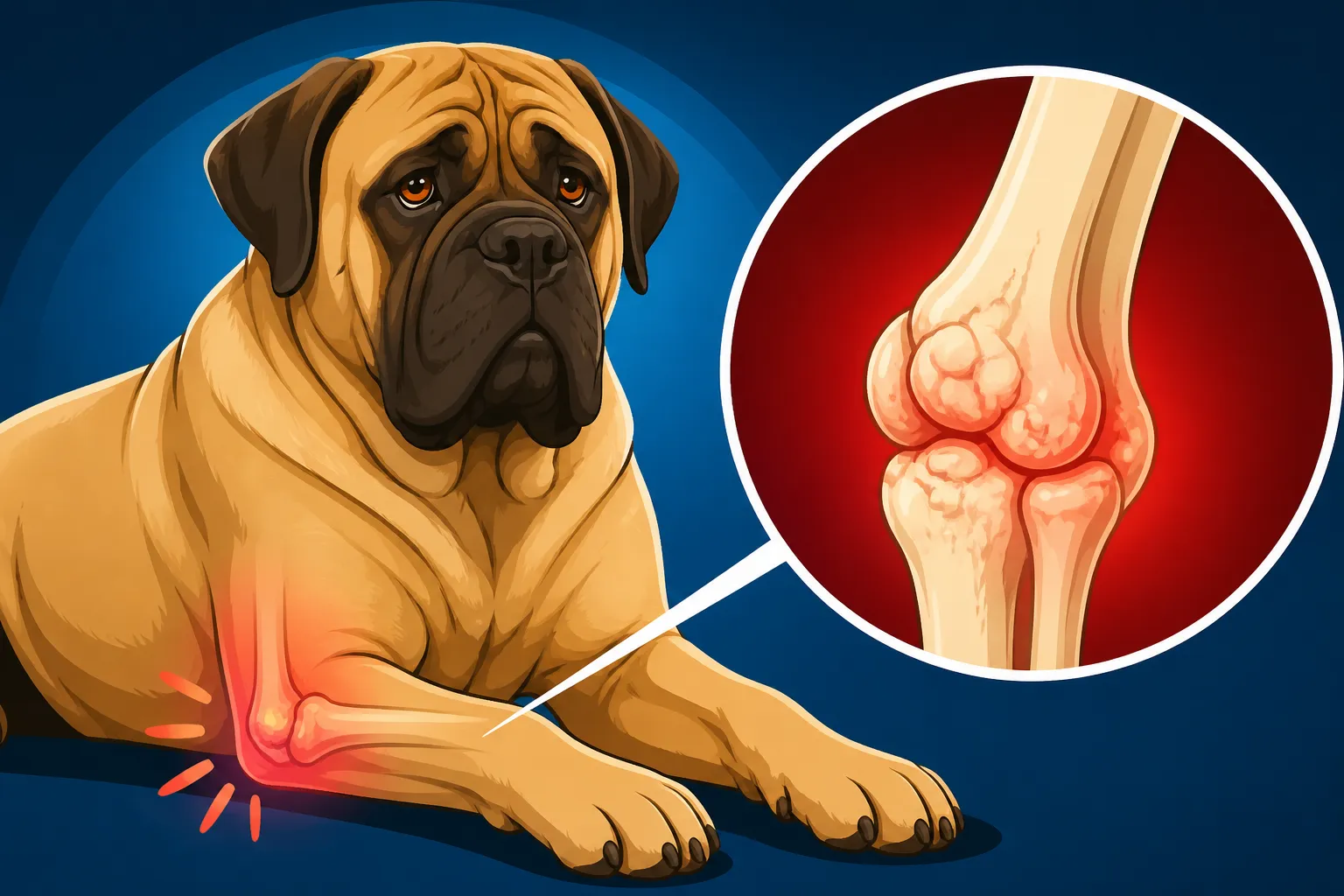
Excess calcium is a well-documented contributing factor to several serious orthopedic conditions in giant breeds, particularly elbow dysplasia. Elbow dysplasia isn't a single disease; it's a general term covering several developmental abnormalities of the elbow joint, including:
- Fragmented Coronoid Process (FCP): A small piece of bone breaks off one of the ulna's coronoid processes.
- Osteochondrosis Dissecans (OCD): A flap of cartilage separates from the bone, often due to improper cartilage development.
- Ununited Anconeal Process (UAP): A bone process on the ulna fails to fuse properly.
- Elbow Incongruity: The bones of the joint (radius and ulna) don't fit together perfectly.
All these conditions can lead to pain, lameness, and debilitating arthritis, often requiring complex and costly surgeries. Excess dietary calcium contributes by interfering with the normal process of endochondral ossification – the process where cartilage is replaced by bone. This disruption can lead to defects in the cartilage, making it more prone to injury and improper development. It's a silent killer of joint health, often not showing obvious signs until significant damage has been done. If you're wondering how prevalent this can be, Why One Mastiff in Seven Fails Its Elbow Grade offers a sobering perspective.
Disrupting Cartilage Formation
Think of cartilage as the smooth, protective padding at the ends of bones within a joint. In a growing puppy, this cartilage is constantly being remodeled and eventually replaced by bone. This is a highly coordinated biological dance. When there's too much calcium available, this dance gets thrown off. Instead of orderly cartilage development that gradually ossifies (turns into bone), the cartilage can thicken abnormally, become weak, or fail to mineralize properly.
This improper mineralization means that the cartilage is not strong enough to handle the stresses of a growing, active Mastiff puppy. It can develop lesions, cracks, or even separate from the underlying bone, as seen in OCD. The consequence is an unstable, painful joint that will prematurely develop arthritis. The foundation for a lifetime of mobility is laid during puppyhood, and excess calcium fundamentally weakens that foundation.
The Unseen Damage in a Growing Giant
One of the most insidious aspects of calcium overload is that the damage isn't always immediately obvious. A Mastiff puppy might seem perfectly fine, romping and playing, while microscopic changes are already occurring within their joints. Owners might notice a slight, intermittent lameness that resolves quickly, or a subtle stiffness after rest, dismissing it as normal puppy growing pains. This can be a huge mistake.
By the time clear, persistent lameness appears, the damage to the cartilage and bone is often significant and irreversible. This delayed recognition means that what could have been a manageable nutritional adjustment becomes a chronic orthopedic condition, potentially requiring surgery and lifelong pain management. Understanding this "unseen damage" highlights the critical importance of a carefully balanced diet from day one. The Shifting Lameness of a Growing Mastiff discusses how some signs might manifest.
| Factor | Optimal for Mastiff Puppies | Potentially Harmful for Mastiff Puppies |
|---|---|---|
| Growth Rate | Slow, steady growth | Rapid, accelerated growth |
| Dietary Calcium | Controlled, appropriate levels for giant breeds | Excess calcium, high calcium supplements |
| Protein Levels | Moderate, high-quality protein | Extremely high protein (often linked to higher calories) |
| Phosphorus | Balanced with calcium (Ca:P ratio 1.1:1 to 1.3:1) | Imbalanced Ca:P ratio (too much of either) |
| Energy (Calories) | Moderate, to prevent obesity | High energy, leading to fast weight gain |
| Exercise | Controlled, low-impact, short durations | Strenuous, high-impact, prolonged activity |
| Weight | Lean body condition, ribs easily felt | Overweight or obese body condition |
Avoiding Calcium Overload in Your Mastiff Puppy's Diet
Preventing calcium overload is paramount for a Mastiff puppy's long-term joint health. It's about being diligent and informed, rather than assuming more is always better.
Choosing the Right Food
The single most impactful decision you can make is selecting the correct commercial diet. Look for foods specifically formulated for "large breed puppies" or, even better, "giant breed puppies." These formulas are intentionally designed with lower calcium levels and carefully balanced calcium-to-phosphorus ratios to support slower, healthier growth.
When reading labels, don't just glance at the front of the bag. Turn it over and look for the AAFCO (Association of American Feed Control Officials) statement. It should explicitly state that the food is formulated to meet the nutritional levels established by the AAFCO Dog Food Nutrient Profiles for "growth of large size dogs (70 lbs or more as an adult)." This designation is crucial. If it just says "for all life stages" or "for growth," it might have calcium levels too high for a Mastiff puppy.
Brands available through reputable retailers like Chewy or on Amazon often offer a good selection of these specialized large breed puppy formulas. Do your homework, compare nutrient profiles, and always prioritize quality over marketing hype. Remember, the goal isn't to restrict nutrients, but to provide them in appropriate, balanced amounts. How Much a Mastiff Puppy Should Eat dives deeper into feeding guidelines.
Steering Clear of Supplements (Unless Directed)
This cannot be stressed enough: do not add calcium supplements, bone meal, dairy products (like cottage cheese or yogurt), or raw bones to your Mastiff puppy's diet without explicit instruction and supervision from your veterinarian. Most commercial large breed puppy foods are already nutritionally complete and balanced. Adding extra calcium in any form, even seemingly benign treats or table scraps, can push your puppy's intake into the dangerous zone of excess.
Many well-meaning owners believe that feeding raw bones is natural and healthy. While raw bones can offer some benefits for adult dogs in moderation, for a growing Mastiff puppy, they pose a significant risk of calcium and phosphorus imbalance, not to mention potential dental damage or internal obstruction. Similarly, home-cooked or fresh food diets, while potentially excellent, must be formulated by a veterinary nutritionist to ensure they are complete and balanced for a giant breed puppy's specific needs. Simply throwing together ingredients, even healthy ones, can lead to dangerous nutrient excesses or deficiencies. While brands like Ollie offer carefully formulated fresh food, always double-check their specific large breed puppy guidelines and consult your vet if you're considering a non-kibble diet.
Monitoring Growth and Body Condition
Beyond the food bowl, actively monitor your Mastiff puppy's growth rate and body condition. A Mastiff puppy should grow steadily, but not rapidly. You should be able to feel their ribs easily with gentle pressure, but not see them prominently. Their waist should be evident when viewed from above, and there should be a tuck-up from their chest to their abdomen when viewed from the side.
Regular weigh-ins and body condition scoring can help you stay on track. If your puppy seems to be gaining weight very quickly, or looks pudgy, it's a sign that their caloric intake (and potentially calcium intake) might be too high. A leaner puppy is a healthier puppy, especially during their critical growth phases. Adjusting food intake based on body condition, rather than simply following package recommendations, is key. Those recommendations are often a starting point and need customization for each individual puppy. How Ribby a Mastiff Puppy Should Look offers visual guidance.
What to Do If You Suspect Calcium Imbalance
Even with the best intentions, things can sometimes go awry. If you have concerns about your Mastiff puppy's growth or suspect a potential calcium imbalance, swift action is important.
Consulting Your Veterinarian
Your veterinarian is your primary partner in your Mastiff's health journey. If you notice any signs of lameness, stiffness, reluctance to play, or unusual gait, schedule an appointment immediately. Don't wait. Be prepared to discuss your puppy's exact diet, including brand, quantity, and any supplements or treats given. Your vet may recommend diagnostic imaging, such as X-rays, to assess the condition of your puppy's joints. They can also provide guidance on blood tests if there are concerns about metabolic bone disease. Early intervention can make a significant difference in the prognosis for many orthopedic conditions. How Common Hip Dysplasia Is in Mastiffs also emphasizes the role of vet checks.
Dietary Adjustments and Management
If a calcium imbalance or an orthopedic developmental disease is diagnosed, your vet will guide you through appropriate dietary adjustments. This might involve switching to a different large breed puppy food with even more tightly controlled calcium levels, or, in some cases, recommending a prescription diet. They might also advise on specific joint supplements, but these will be chosen carefully and integrated into the overall dietary plan, not just added indiscriminately.
Beyond diet, managing your puppy's activity level will be crucial. Controlled exercise, avoiding high-impact activities, and ensuring adequate rest on supportive bedding are all part of the holistic approach to managing developing joints. The goal is to support healthy growth and minimize further stress on the affected areas, giving your Mastiff the best possible chance at a comfortable, active life.
Disclaimer
This article is for general informational purposes only and does not constitute professional advice. Laws, prices and regulations vary by location and change over time. Consult a qualified professional for guidance on your specific situation.