How Weight Shortens a Mastiff’s Life
A Mastiff’s size is part of its appeal, but extra body fat adds strain to joints, the heart, and the systems that already work hard to support a giant dog. The challenge is telling healthy substance from excess weight when there is so much dog to assess. This guide explains how weight can affect a Mastiff’s health and what you can do to help yours stay lean and comfortable.
Why extra weight can matter so much to a Mastiff
A big frame is not the same as a healthy body
Mastiffs are naturally large, and healthy dogs can look imposing without being overweight. Their height, bone structure, muscle, sex, and family lines all affect what they weigh. A number on the scale can be useful for tracking change, but it cannot tell you on its own whether a particular dog is carrying too much fat.
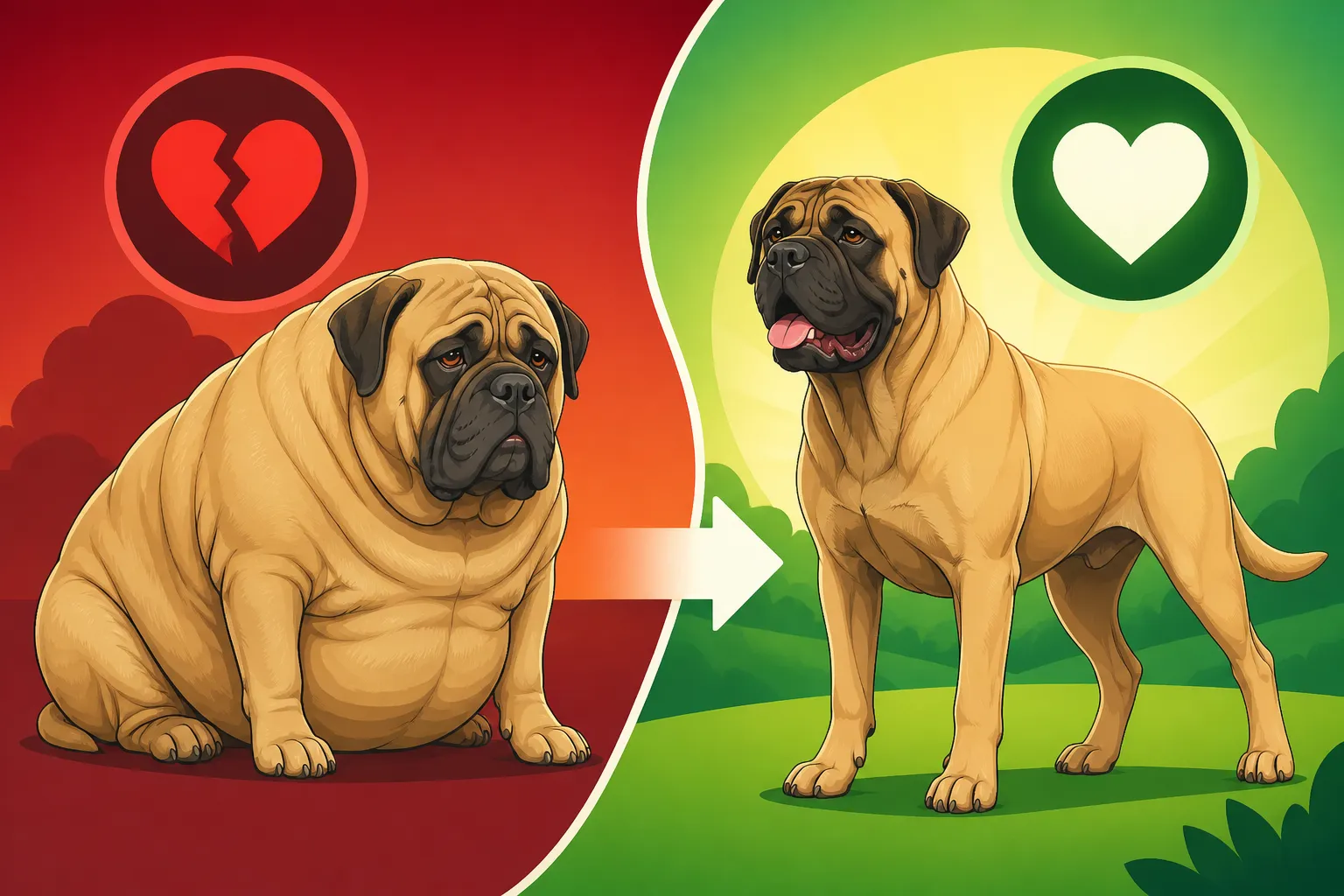
Body condition is a better starting point. Ideally, you should be able to feel your Mastiff’s ribs beneath a light layer of tissue without pressing hard, and see a modest waist when looking down from above. From the side, the abdomen should generally tuck up behind the rib cage rather than hang in a straight line. A heavy coat, loose skin, and a broad chest can make these details harder to judge, so ask your veterinarian to assess body condition during routine visits.
This distinction matters because a naturally substantial Mastiff should not be put on a restrictive diet simply to match an arbitrary number. Likewise, a dog that looks “about right” at a glance may still be carrying excess fat. If you are unsure, your vet can help establish a healthy target based on your dog’s build, age, and health history. For more context on normal variation, see What a Mastiff Actually Weighs.
Extra pounds increase the load on joints and movement
Every extra pound is additional weight for a Mastiff’s hips, elbows, knees, and feet to move and support. That can make getting up from a bed, climbing a step, or walking on a slippery floor more demanding. A dog may still seem cheerful and eager to eat while quietly moving less, taking longer to rise, or avoiding play it used to enjoy.
The effect can become a cycle. A dog feels stiff, so it moves less; moving less means it uses fewer calories; and if meals and treats stay the same, weight may gradually increase. Owners often notice the problem only after the dog has become reluctant to walk or has trouble standing. Changes in movement deserve attention rather than being dismissed as ordinary “Mastiff laziness,” especially if they are new or worsening.
Weight is not the only cause of joint trouble. Genetics, growth, injury, age, and other health conditions matter too. But keeping a Mastiff lean can reduce avoidable strain and may make everyday movement more comfortable. If your dog is already showing stiffness or lameness, a vet can distinguish weight-related strain from conditions such as elbow or hip disease. Related reading includes Why a Mastiff's Hips Fail Under Its Own Weight and Arthritis in a Mastiff at Four.
Body fat can make heat and exertion harder to manage
Mastiffs have a lot of body mass, and excess fat can add to the effort of movement and make it harder to stay comfortable in warm conditions. A heavier dog may tire sooner during a walk, pant more, or take longer to settle after activity. Heat risk is influenced by more than weight—including temperature, humidity, health, age, and exercise intensity—so a lean dog still needs sensible precautions.
Pay attention to the conditions around your dog rather than relying on a fixed exercise target. Choose cooler parts of the day, offer water, and let your Mastiff set a comfortable pace. Stop and seek veterinary help if you see signs of serious overheating, such as collapse, severe weakness, confusion, or persistent distress. For more on warm-weather care, see Why Bulk Makes a Mastiff Overheat.
How to tell whether your Mastiff is carrying too much
Use more than the scale
A scale is useful when you compare measurements over time, but a single weigh-in is only one piece of the picture. Weigh your dog under reasonably consistent conditions when practical, and record the date and result. If a full-size dog cannot safely be weighed at home, ask your veterinary clinic about weighing during appointments. You can also note practical changes, such as whether the collar or harness fits differently, but those observations are not a substitute for a body-condition check.
Use your hands as well as your eyes. Feel along the ribs, spine, and hips with gentle pressure. You should be able to locate the ribs without digging through a thick layer of padding. Look for a waist from above and an abdominal tuck from the side. If the ribs are difficult to feel, the waist has disappeared, or the abdomen looks rounded rather than tucked, ask your vet whether weight reduction is appropriate.
| What you notice | What it may suggest | A sensible next step |
|---|---|---|
| Ribs are easy to feel, with a visible waist | Your Mastiff may be near a healthy condition | Keep monitoring and confirm at routine visits |
| Ribs are difficult to feel and the waist is less distinct | Extra body fat may be building | Ask your veterinarian to assess body condition |
| Your dog is gaining weight or moving less comfortably | Weight change or another health issue may be involved | Arrange a veterinary check rather than simply cutting food sharply |
| Weight is falling without a planned diet | Illness or another problem may be possible | Contact your veterinarian |
Notice gradual changes before they become obvious
Weight gain in a giant breed can be easy to miss because the change is spread across a large body. A little extra food in the bowl, a few treats during training, leftovers from family members, or reduced activity during a wet winter can add up over time. It may not look like a dramatic difference from one week to the next.
A simple household log can make patterns clearer. Write down your dog’s weight when available, the daily food amount, treats, activity, and any changes in mobility. If several people feed the dog, agree on who measures meals and how treats are counted. This prevents well-meaning family members from unknowingly doubling up. When comparing food options, including products sold through Chewy, check the feeding directions as a starting point—not as a personalized prescription—and confirm portions with your veterinarian.
It is also worth checking whether weight gain has a medical contributor. Changes in appetite, energy, thirst, or mobility can have causes beyond feeding habits. A vet can review medications and health conditions and advise whether testing is appropriate. Avoid assuming that every heavier Mastiff simply needs less food.
Puppies need careful growth, not weight loss
A growing Mastiff should not be managed like an overweight adult. Giant-breed puppies need controlled, steady growth, and aggressive restriction can be harmful. The aim is not to make a puppy as large as possible as quickly as possible; it is to support gradual development with an appropriate diet and sensible portions.
Discuss your puppy’s food and growth with the breeder and veterinarian, and use regular checkups to track development. Do not add supplements or change calcium intake without veterinary guidance. If a puppy seems to be gaining unusually fast, or looks too thin or too heavy, ask for an individual assessment rather than relying on online charts alone. Helpful related topics include Why a Mastiff Puppy Must Grow Slowly and Whether Overfeeding a Mastiff Puppy Ruins Its Elbows.
Helping a Mastiff reach and maintain a healthy weight
Make food portions measurable
Start by measuring meals with a consistent scoop or, more accurately, a kitchen scale. “One bowl” can mean very different amounts depending on the bowl, the person serving it, and how full it looks. Use the food label as a baseline, then adjust with your veterinarian based on body condition, activity, age, and health.
Include treats, chews, training rewards, and table scraps in the overall food picture. If your Mastiff earns treats throughout the day, set aside part of its regular food allowance for training or choose small rewards. Keeping a simple tally for a week can reveal where extra calories are coming from. If you order food through Chewy or another retailer, check that the product and feeding instructions match what your veterinarian recommended; packaging and availability can change, so read the current label when you buy.
A weight-loss plan should be gradual and supervised, particularly for a giant dog or one with other health concerns. Do not suddenly cut meals in half, skip meals, or switch to a very restrictive diet without professional advice. The goal is a sustainable routine that preserves muscle and keeps your Mastiff satisfied while body condition improves.
Build movement around comfort and safety
Regular, moderate activity helps support fitness, but a Mastiff does not need exhausting workouts to benefit. Calm walks, sniffing time, and gentle play can provide movement without turning exercise into a contest. Keep sessions appropriate to the dog’s age and condition, and avoid forcing a tired, sore, or overheated dog to continue.
A few practical changes can make activity easier. Use rugs or runners where your dog tends to slip, choose routes with manageable footing, and avoid repeated jumping in and out of vehicles. If your Mastiff has pain or significant mobility limits, ask your veterinarian what movement is safe before increasing exercise. For a puppy, protect developing joints by avoiding hard, repetitive exercise; The Walk Length That Damages a Mastiff Puppy offers related guidance.
Keep the plan consistent across the household
Weight management often fails for ordinary reasons: one person measures meals while another tops up the bowl, or everyone gives “just one” treat. A shared feeding plan helps. Write down the daily portion, identify who is responsible for each meal, and agree on which treats are acceptable. Store food and rewards in a place where family members can see the plan.
If food delivery is part of your routine, Chewy may make it easier to keep a chosen food on hand, but convenience does not replace portion control or veterinary guidance. The important thing is having a consistent, appropriate food available and serving a measured amount. Revisit the plan with your vet if your dog’s weight, activity, appetite, or health changes.
What weight can and cannot tell you about lifespan
Weight is one influence among many
It is reasonable to worry that extra weight could shorten a Mastiff’s life, especially when the breed already has a relatively short lifespan compared with many smaller dogs. Excess body fat can contribute to strain on joints and may complicate health and mobility. But no scale reading can predict how long an individual Mastiff will live, and weight is only one part of the picture.
Genetics, inherited disease, cancer, heart health, injuries, preventive care, and chance all play roles. A lean dog can still become seriously ill, and a dog that has carried extra weight is not automatically destined for a poor outcome. The practical aim is to reduce risks you can influence while making daily life comfortable and enjoyable.
For a broader look at longevity, see Six to Ten Years Is What a Mastiff Gets and Whether a Lean Mastiff Lives Longer. These topics can help frame expectations without treating weight as a guarantee or a countdown.
Ask for a realistic, individualized target
When you speak with your veterinarian, bring your dog’s food details, treat habits, activity level, and any changes you have noticed. Ask what body condition score the vet thinks is appropriate, what a reasonable weight goal would be for your dog’s structure, and how often progress should be checked. If weight loss is recommended, ask how to monitor progress and what signs would mean the plan needs adjustment.
This is especially important for older Mastiffs, dogs with arthritis, or dogs taking medication. Their needs may change as activity declines or medical conditions develop. A carefully planned adjustment can be safer and more useful than repeatedly changing food on your own. For practical senior-care considerations, see Caring for a Mastiff Past Five.
The most helpful measure of success is not reaching a dramatic number on the scale. It is a Mastiff who maintains healthy body condition, moves as comfortably as possible, and can take part in ordinary daily life. Small, steady habits—measured meals, thoughtful treats, regular check-ins, and activity suited to the dog—are more sustainable than a crash diet.
Disclaimer
This article is for general informational purposes only and does not constitute professional advice. Laws, prices and regulations vary by location and change over time. Consult a qualified professional for guidance on your specific situation.