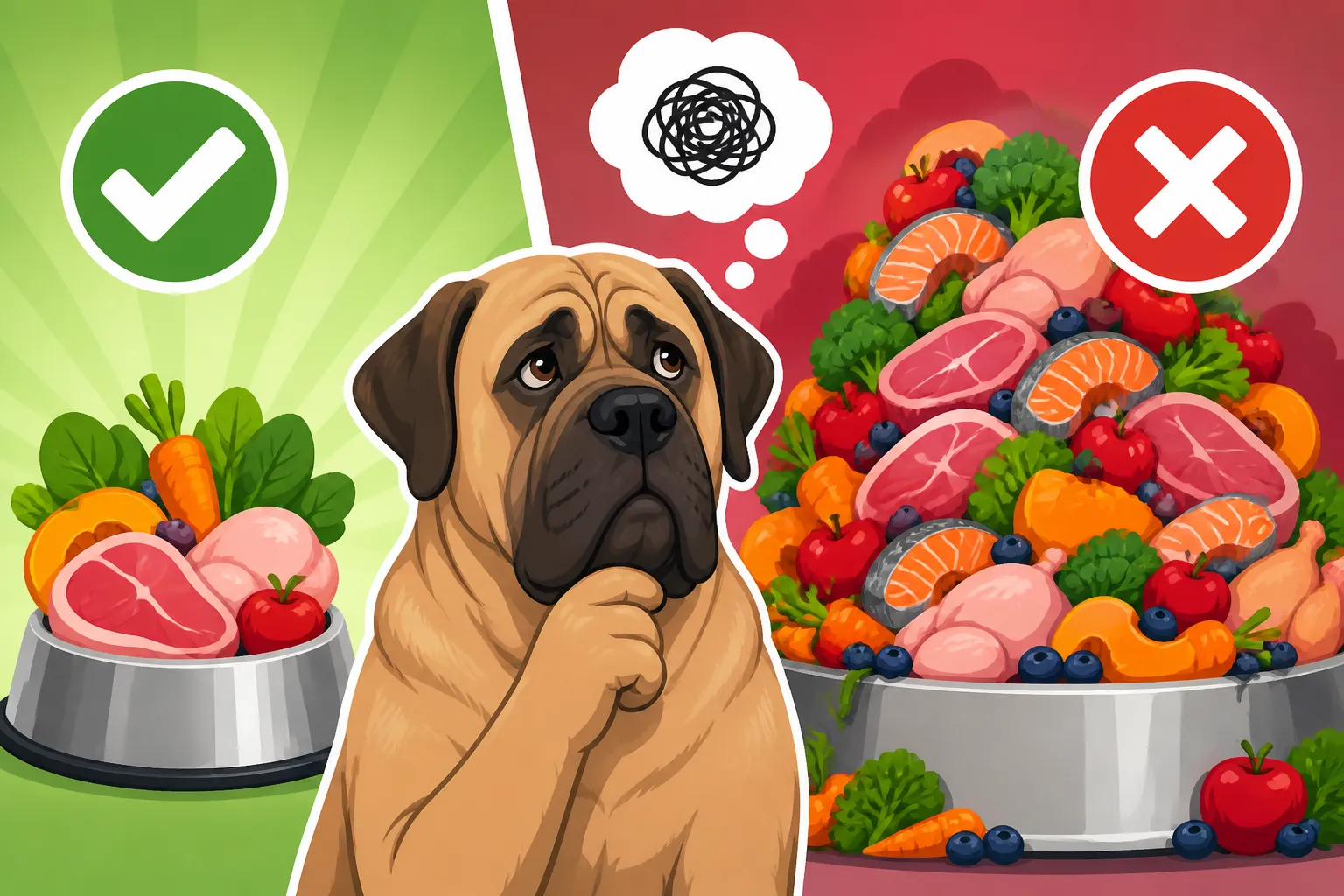
Why Fresh Food Is Impractical at Mastiff Volumes
Many Mastiff owners dream of providing their beloved giants with the absolute best, and often, that vision includes a diet of fresh, whole foods. It sounds ideal, doesn't it? Serving up perfectly prepared meals, knowing exactly what goes into their magnificent bodies. But then reality sets in, usually with the first trip to the grocery store or the realization of just how much a two-hundred-pound dog actually eats. The truth is, while the intent is wonderful, feeding a Mastiff a full fresh food diet quickly becomes an overwhelming logistical and financial challenge that most households simply can't sustain long-term. This guide will delve into why this seemingly simple approach becomes so incredibly impractical for our big, beautiful Mastiffs.
The Sheer Scale of a Mastiff's Diet
Let's not beat around the bush: Mastiffs are enormous. And enormous dogs eat enormous amounts of food. What might be a reasonable fresh food budget and preparation schedule for a smaller breed turns into a mountain of ingredients and a bottomless pit of expense when you're feeding a dog that can easily outweigh an adult human.
Understanding Daily Caloric Requirements
A Mastiff's caloric needs are substantial, varying based on age, activity level, and whether they're still growing. A rapidly growing Mastiff puppy, for instance, needs a carefully controlled diet to support its monumental growth without over-nutrition, which can lead to serious orthopedic issues. An adult Mastiff, even one with a relatively low activity level, still requires a significant caloric intake just to maintain its immense body mass. You can imagine the sheer volume this translates to when we're talking about fresh, often less calorie-dense ingredients compared to concentrated kibble.
Consider an average adult Mastiff, perhaps a male weighing in at around 200 pounds. While exact figures vary greatly, they might need anywhere from 2,500 to over 4,000 calories per day, depending on how active they are. If you’re trying to meet these caloric needs with fresh chicken, beef, vegetables, and grains, you’re not just serving a bowl; you’re serving a small mountain of food at each meal. This isn't just a few scoops; it's multiple pounds of ingredients daily. Thinking about How Much an Adult Mastiff Eats by Weight Each Day really puts it into perspective, highlighting how quickly the volume adds up.
For puppies, the calculation is even more delicate. A Mastiff puppy can gain several pounds a week, and their diet needs to support this without accelerating growth too quickly, which is detrimental to their developing joints. This means precise portion control and a diet that provides adequate, but not excessive, energy and nutrients. Trying to manage this delicate balance with variable fresh ingredients, while dealing with the sheer quantity, is a constant tightrope walk. You'll quickly see that The Feeding Chart a Mastiff Puppy Should Follow is very particular for good reason.
The Logistics of Storage
Beyond the daily consumption, there’s the monumental task of storage. Where do you put all that fresh food? If you're buying in bulk to save money (which you'll inevitably try to do), you're looking at pounds and pounds of meat, dozens of eggs, and vast quantities of vegetables.
Most standard home refrigerators and freezers simply aren't designed to hold a week's or even a few days' worth of a Mastiff's fresh food. You'd likely need a dedicated chest freezer, possibly two, and a significant portion of your refrigerator space would be taken up just by dog food. Imagine trying to keep five to seven pounds of raw ground beef, a dozen chicken thighs, several pounds of vegetables, and maybe some cooked grains fresh for daily meals. This isn't just an inconvenience; it's a household infrastructure challenge. The thought of Where a Mastiff Owner Stores a Month of Food becomes a very real concern for those considering this path.
Then there's the preparation itself. Even if you cook in large batches, those batches need to be cooled quickly and portioned out into massive containers. This demands a lot of counter space, large pots, and an array of food storage solutions. If you envision a pristine, organized kitchen, imagine it with a dedicated 'Mastiff meal prep zone' that rivals a small restaurant's staging area.
Cost: The Elephant in the Room (and the Fridge)
Let's be brutally honest: feeding a Mastiff is expensive, regardless of the diet. But moving to a fresh food diet magnifies that expense exponentially, often pushing it into the realm of luxury dining for your dog.
The Price Tag of Quality Ingredients
Human-grade, fresh ingredients, especially good quality meats and organic vegetables, come with a premium price. When you're buying these in the quantities a Mastiff requires, your grocery bill will skyrocket. Compare the cost per pound of a high-quality kibble to the cost per pound of chicken breast or lean ground beef. You'll quickly find that while kibble might seem pricey, it offers an incredible cost-per-calorie value that fresh ingredients simply cannot match.
For example, a bag of premium kibble might cost you a certain amount and last a few weeks. To get the equivalent nutritional value and caloric intake from fresh meat, organs, and vegetables, you could easily spend that same amount daily or every few days. When you look at What a Mastiff's Food Bill Comes to Over Eight Years, the difference between kibble and fresh food becomes astronomical. This isn't just about feeding them well; it's about whether you can afford to feed yourself and your family after buying your dog's meals.
Many owners try to cut costs by buying cheaper cuts or less varied ingredients, but this can lead to nutritional imbalances, defeating the purpose of a "fresh" diet. The reality is that sustaining a truly balanced and high-quality fresh diet for a Mastiff means allocating a significant portion of your monthly budget, often far exceeding what most people spend on their own groceries. How a Mastiff's Food Bill Compares With a Labrador's is a stark reminder of the scale we're talking about for a giant breed.
Subscription Services vs. DIY
For those who lean into the fresh food trend, there are often two main routes: subscription services or preparing everything yourself. Both come with their own distinct set of cost implications for a Mastiff.
Commercial fresh food subscription services, like Ollie, have gained popularity for their convenience, delivering pre-portioned, balanced meals right to your door. This certainly solves the "time" and "nutritional balance" problems to a degree, but the cost for a Mastiff is prohibitive for most. These services price based on caloric needs and weight, so a dog like a Mastiff is always in the highest price bracket. You might find yourself looking at hundreds of dollars a week, not monthly, to keep your Mastiff fed this way. While these services offer fantastic quality, for a giant breed, they often become a luxury that's simply out of reach for the average household budget.
| Feeding Method | Pros | Cons | Typical Cost for a Mastiff (Relative) |
|---|---|---|---|
| Premium Kibble | Convenient, nutritionally complete, cost-effective, easy storage | Less "fresh" appeal, some ingredients may be processed | Low-Medium |
| Kibble + Toppers | Adds fresh appeal and nutrients, more budget-friendly than full fresh | Requires some prep, must ensure overall balance is maintained | Medium |
| DIY Fresh Food | Full control over ingredients, fresh, potential for high palatability | Extremely time-consuming, difficult to balance nutritionally, high cost | High |
| Fresh Food Service | Convenient, nutritionally balanced (usually), human-grade ingredients | Very high cost, still requires freezer space | Very High |
On the other hand, the DIY approach, while potentially less expensive than a subscription, still demands a massive financial output for ingredients, not to mention your time. Sourcing large quantities of human-grade meat, organs, bones, and a variety of vegetables and fruits can mean frequent, expensive trips to multiple grocery stores, butcher shops, or even online retailers like Chewy for bulk pet-specific ingredients or supplements. It's not just about the raw cost of food; it's also the gas, the wear and tear on your vehicle, and the sheer mental load of planning and shopping for such a volume of food. When you factor in the time spent, your own labor becomes an unpaid expense. The idea of Whether Raw Feeding Is Practical at Mastiff Volume really comes into sharp focus here.
Nutritional Balance and Preparation Challenges
It's not just about throwing meat and veggies in a bowl. Ensuring a Mastiff, especially a growing puppy, receives all the necessary nutrients in the correct ratios is a scientific endeavor, not just a cooking project. Without proper balance, you risk significant health problems.
Achieving Complete and Balanced Nutrition
One of the biggest pitfalls of a homemade fresh food diet is the difficulty in making it truly complete and balanced. Dogs, especially giant breeds, have specific dietary needs that go beyond just protein and fat. They require a precise balance of vitamins, minerals (like calcium and phosphorus in specific ratios), trace elements, and amino acids. An imbalance, particularly in growing puppies, can have devastating consequences, leading to bone deformities and joint issues that are already a concern for Mastiffs. For instance, too much or too little calcium can be equally damaging to developing bones.
This isn't something you can eyeball. It requires a deep understanding of canine nutrition or the consultation of a board-certified veterinary nutritionist. This often means complex recipes, careful weighing of every ingredient, and potentially the addition of specific supplements to fill any gaps. Many well-meaning owners who transition to homemade diets without expert guidance inadvertently create deficiencies or excesses that harm their dog in the long run. This is a crucial point, particularly when thinking about The Protein and Calcium Ceiling for a Mastiff Puppy and ensuring healthy growth.
It's a common misconception that if a diet is good for humans, it's automatically good for dogs. Dogs have different metabolic needs and sensitivities. What might be a healthy meal for you could be nutritionally incomplete or even harmful to your Mastiff. Their bodies process nutrients differently, and simply feeding them your leftovers, even healthy ones, is rarely a path to long-term health.
The Time Commitment for Homemade Meals
Let’s be real, life is busy. Most of us juggle work, family, errands, and maybe even a little bit of leisure time (if we’re lucky). Adding several hours of dog food preparation to that schedule is often the straw that breaks the camel’s back.
Imagine dedicating your precious weekend hours to sourcing, washing, chopping, cooking (if you’re not doing raw), weighing, and portioning out 30-40 pounds of food for your Mastiff for the week. This isn't a quick task. It's a significant time investment that competes with your other responsibilities and personal time. For busy families, this quickly becomes unsustainable, leading to shortcuts or, sadly, abandonment of the fresh food effort altogether.
Even if you’re dedicated, the daily routine adds up. Retrieving giant containers, warming food, and cleaning extra bowls and prep surfaces are all time sinks. This is where the convenience of a high-quality kibble really shines. It's designed to be a grab-and-go complete meal, saving you hours each week. While we all want the best for our dogs, sometimes the "best" also has to be realistic for our lifestyles. Why Fresh Food Is Impractical at Mastiff Volumes isn't just about money; it's about the hours in your day.
Practical Alternatives for Mastiff Owners
So, if a full fresh food diet isn't feasible, does that mean you can't offer your Mastiff excellent nutrition? Absolutely not! There are many ways to provide a high-quality diet that is both beneficial for your dog and manageable for your life and budget.
High-Quality Kibble and Supplementation
For most Mastiff owners, a premium, giant-breed-specific kibble remains the most practical and nutritionally sound foundation for their dog's diet. These formulas are specifically designed to meet the unique needs of large and giant breeds, offering controlled growth for puppies and appropriate nutrient density for adults. They often contain joint support ingredients and are formulated with the correct calcium-to-phosphorus ratios crucial for Mastiffs. When selecting a kibble, look for reputable brands with transparent ingredient lists and a history of research and quality control. You might find that Whether Giant Breed Kibble Is Worth Its Premium for a Mastiff is a resounding yes in terms of health benefits.
Beyond a solid kibble, strategic supplementation can further enhance your Mastiff's health. Discussing this with your veterinarian is crucial, as they can recommend appropriate supplements based on your dog's age, health status, and any predispositions. Common supplements for Mastiffs include:
- Joint Support: Glucosamine, chondroitin, and MSM are often recommended from a young age to support joint health in a breed prone to orthopedic issues. Whether a Mastiff Needs Joint Supplements From a Year is a question many owners consider.
- Omega-3 Fatty Acids: Fish oil is excellent for skin and coat health, and also has anti-inflammatory properties that can benefit joints and overall wellness. Whether Fish Oil Helps a Mastiff's Joints is a common area of interest for Mastiff owners.
- Probiotics: These can help maintain a healthy gut microbiome, which is vital for digestion and immunity.
You can often find these high-quality kibbles and supplements easily through trusted online retailers like Chewy, making bulk purchases convenient and often more affordable.
Incorporating Fresh Elements Responsibly
Even if a full fresh food diet isn't practical, you can still incorporate fresh elements into your Mastiff's diet as healthy toppers or treats. This gives them the benefit of fresh ingredients without the overwhelming cost, time commitment, or nutritional complexity of a completely homemade diet.
Think of it as adding a little extra goodness. Here are some ideas for safe and healthy fresh additions:
- Cooked Lean Meats: Small amounts of cooked, unseasoned chicken, turkey, or lean beef can be a delicious and protein-rich topper for their kibble. Always cook thoroughly and avoid bones, as cooked bones can splinter.
- Plain Vegetables: Steamed or raw (finely chopped) vegetables like carrots, green beans, peas, pumpkin, or sweet potato can add fiber, vitamins, and minerals. Introduce new vegetables slowly to avoid stomach upset.
- Small Amounts of Fruit: Slices of apple (without seeds), blueberries, or banana can be a healthy, sweet treat. Remember, everything in moderation.
- Plain Yogurt or Cottage Cheese: A spoonful can add probiotics and calcium. Ensure it's plain and unsweetened.
The key here is moderation and variety. These additions should complement, not replace, their primary balanced diet. They add extra moisture, flavor, and some additional nutrients, making mealtime more exciting for your Mastiff. This approach offers a realistic middle ground for owners who want to provide fresh nutrition without the impracticalities of a full homemade diet, answering the spirit of Whether Fresh Food Is Realistic for a Mastiff in a way that works for most people. Just remember to account for these additions in their overall daily calorie intake to prevent unintended weight gain.
Disclaimer
This article is for general informational purposes only and does not constitute professional advice. Laws, prices and regulations vary by location and change over time. Consult a qualified professional for guidance on your specific situation.