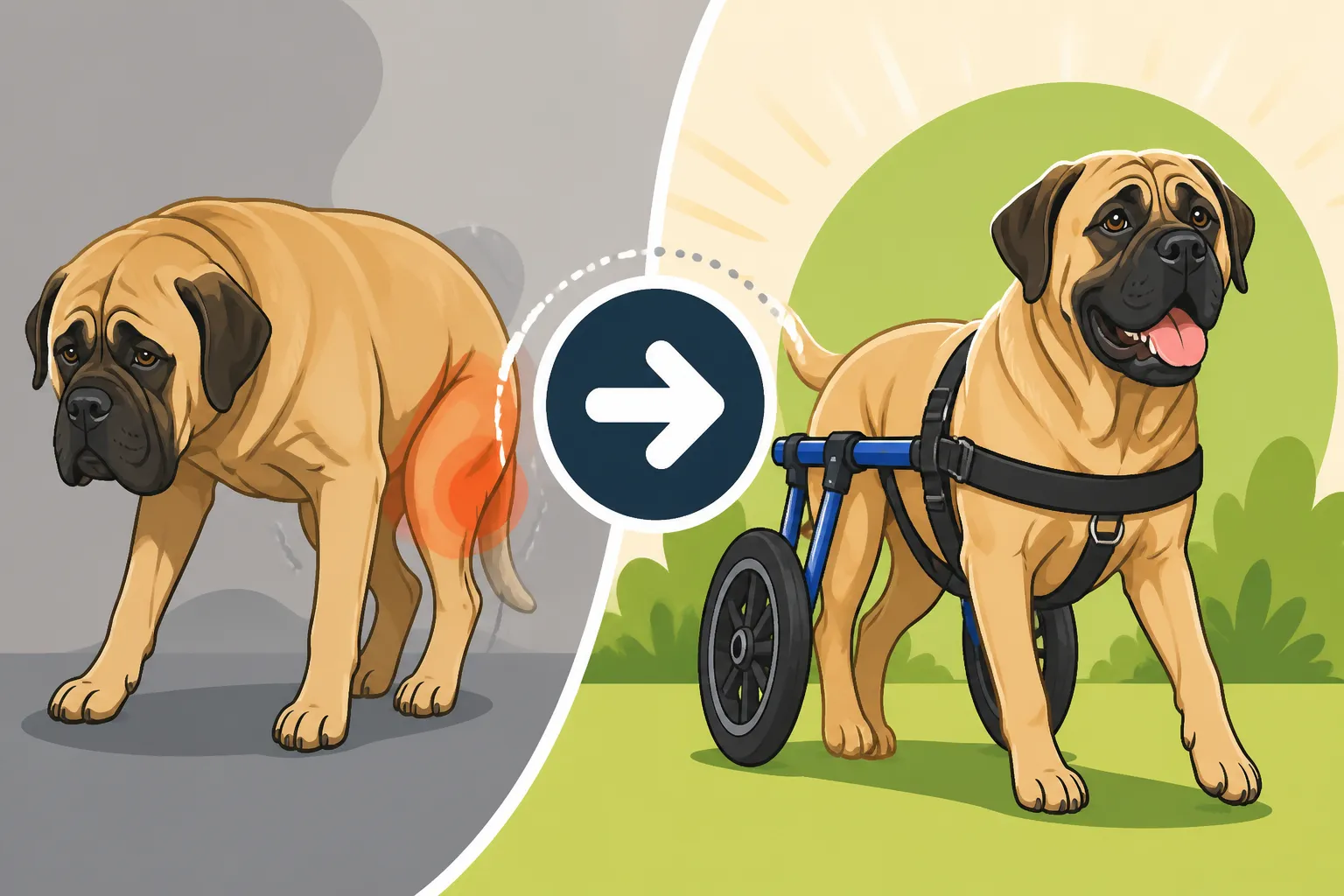
Whether a Mastiff With DM Can Be Fitted With a Cart
Watching your magnificent Mastiff, once a picture of strength and steady grace, begin to falter in their hindquarters due to Degenerative Myelopathy (DM) is truly heartbreaking. It’s a cruel progression that robs them of their cherished mobility, leaving many owners wondering what options remain to maintain their beloved companion's quality of life. This comprehensive guide will explore the feasibility and practicalities of fitting a Mastiff with a mobility cart, helping you navigate this challenging journey and empower your gentle giant to move with purpose once more.
Understanding Degenerative Myelopathy in Mastiffs
Degenerative Myelopathy is a progressive neurological disease that affects the spinal cord, slowly taking away a dog's ability to walk. It's an insidious condition because, unlike many other ailments that cause mobility issues, DM itself isn't painful. This makes it all the more frustrating for owners, as their dog's mind remains sharp and engaged, even as their body fails them.
The Progression of DM and Its Impact on Mobility
DM begins subtly, often presenting as a slight weakness or "wobbliness" in the hind limbs. You might notice your Mastiff dragging their paws, scuffing their nails, or struggling a bit to get up from a lying position. As the disease advances, this weakness progresses to ataxia, meaning a lack of coordination, and eventually leads to complete paralysis of the hindquarters. The nerve fibers in the spinal cord that carry commands from the brain to the limbs, and sensory information back to the brain, gradually break down.
It’s important to understand that this is a slow, relentless process. Typically, symptoms might begin between the ages of 8 and 14 years, though some dogs may show signs earlier. For more detailed information, you can read about What Degenerative Myelopathy Does to a Mastiff and The Age Degenerative Myelopathy Starts in a Mastiff. This condition is primarily genetic, with a specific mutation in the SOD1 gene being identified as a risk factor. While not all dogs with two copies of the gene mutation will develop DM, it's a significant indicator. Knowing this genetic predisposition, especially in a breed like the Mastiff, can help owners prepare for potential challenges down the line.
The Emotional Toll on Owners and Dogs
Caring for a Mastiff with progressive mobility loss is an immense challenge, both physically and emotionally. These are massive dogs, often weighing well over 150 pounds, and trying to support their weight as they struggle to stand or walk is physically demanding. You’re watching a majestic animal, who once moved with such powerful grace, lose its independence. It's easy to feel overwhelmed, seeing your loyal companion become frustrated, bumping into things, or even having accidents because they can't control their bladder or bowels as effectively.
The emotional impact on the dog itself cannot be understated. While they aren't in pain from the DM, the loss of autonomy and the inability to engage in their usual activities can lead to anxiety, depression, and a decline in overall quality of life. This is precisely where mobility aids, particularly a well-fitted cart, can become a game-changer, offering a renewed sense of freedom and purpose.
Can a Mastiff Really Use a Mobility Cart?
The sheer size and weight of a Mastiff often lead owners to question whether a mobility cart is even a viable option. It's a valid concern, as these aren't small dogs that can be easily lifted into a generic contraption. However, the answer is a resounding yes – with the right equipment and approach, a Mastiff can absolutely use a mobility cart to regain significant independence.
Addressing the Size and Weight Challenge
When you think of a dog wheelchair, you might picture something for a smaller breed, lightweight and easily maneuverable. For a Mastiff, we're talking about a completely different beast of engineering. A standard off-the-shelf cart simply won't cut it. Carts for Mastiffs, and other giant breeds, must be custom-built or at least highly customizable to accommodate their immense size and weight. These aren't flimsy structures; they are robustly constructed with strong, lightweight aluminum frames that can support upwards of 200-300 pounds.
Specialized manufacturers understand the unique needs of giant breeds. They design carts with larger, more durable wheels that can handle various terrains, from indoor floors to outdoor trails, and reinforced harnesses that distribute weight evenly without causing pressure points or chafing. The key is precise measurement and a tailored fit, ensuring the cart perfectly supports your Mastiff's body without hindering their front leg movement or causing discomfort. This often involves working with companies that specialize in large dog mobility, like Walkin' Pets or Eddie's Wheels, who have experience with these gentle giants. Trying to lift a debilitated Mastiff can be incredibly difficult, as detailed in Lifting an Old Mastiff That Cannot Get Up, making a cart a much safer and more dignified solution.
Assessing Temperament and Adaptation
One of the most wonderful things about Mastiffs is their generally calm, patient, and adaptable temperament. This characteristic makes them surprisingly good candidates for mobility carts, even given their size. They tend to be less reactive and more willing to accept new things, especially if introduced positively and patiently.
Introducing a cart should always be a gradual, positive experience. Start with short sessions, perhaps just a few minutes at a time, inside a familiar, quiet space. Use plenty of high-value treats and praise to create a positive association. Let them sniff the cart, wear just the harness, and then eventually step into the frame. Many Mastiffs, once they realize the cart helps them move and explore again, adapt remarkably quickly. The psychological boost they receive from regaining their independence is often profound. They might wag their tail more, show more interest in their surroundings, and generally appear happier. It's about empowering them, not hindering them.
Here's a quick look at some general pros and cons of using a cart for a Mastiff:
| Aspect | Pros | Cons |
|---|---|---|
| Mobility & Freedom | Restores ability to walk, play, and explore; greatly improves quality of life. | Initial adaptation period can be challenging; not suitable for all terrains. |
| Physical Health | Prevents muscle atrophy in front limbs; promotes circulation; helps with bladder/bowel function. | Can exacerbate existing arthritis in front limbs if not properly managed. |
| Mental Well-being | Reduces frustration and depression; boosts confidence and engagement. | Some dogs may resist or find it stressful initially. |
| Owner Assistance | Reduces physical strain on owners; offers a safer way to exercise a large dog. | Requires significant initial investment and potential home modifications. |
| Hygiene | Can help dogs maintain more natural toileting positions. | Requires regular cleaning and maintenance of the cart itself. |
Practical Considerations for Mastiff Cart Use
Once you’ve decided a mobility cart is the right path for your Mastiff, there are several practical considerations to ensure a smooth transition and long-term success. This isn't just about strapping them into a device; it's about integrating the cart into their daily life and your home environment.
Choosing and Fitting the Right Cart
The process of selecting and fitting a cart for a Mastiff needs careful attention. For DM, which typically affects the hindquarters first, a rear-support cart is often the initial choice. This type of cart supports the rear legs while allowing the front legs to move freely. However, if the DM progresses and affects the front legs or core stability, a full-support (quad) cart might become necessary.
- Measurements are paramount: Every manufacturer will provide detailed instructions for measuring your dog. You’ll need precise measurements of hip height, length from armpit to rump, and width across the chest and hips. Do not rush this step. An ill-fitting cart can cause sores, discomfort, and may even discourage your Mastiff from using it.
- Materials and Construction: Look for carts made from aviation-grade aluminum – it’s strong enough to support your Mastiff’s weight but lightweight enough to be manageable. The harness system should be comfortable, padded, and adjustable to prevent chafing.
- Wheel Selection: Consider where your Mastiff will be using the cart most often. Larger, all-terrain wheels are excellent for outdoor adventures, while smaller, smooth wheels might be better for indoor use or navigating tighter spaces. Some carts offer interchangeable wheel options.
The initial investment for a high-quality, custom-fitted cart for a giant breed like a Mastiff can be substantial, often ranging from $800 to $1,500 or more. This is where a robust pet insurance policy, like those offered by Healthy Paws, can be incredibly beneficial. If you have pet insurance in place before a DM diagnosis, many plans will cover a significant portion of the cost of mobility aids recommended by a veterinarian, including carts, making this vital equipment more accessible. Beyond the cart, remember that physical therapy can also help manage DM progression, as explored in Physical Therapy Slows a Mastiff's DM.
Living with a Cart: Home Modifications and Routine
Bringing a carted Mastiff into your daily routine requires some adjustments to your home and lifestyle. These changes are well worth the effort for the quality of life they afford your dog.
- Home Accessibility: Think about your doorways. Are they wide enough for your Mastiff and their cart? You might need to temporarily remove a door or invest in a wider gate. Ramps are incredibly useful, not just for getting in and out of the house, but also for vehicles.
- Outdoor Adventures: With their cart, your Mastiff can once again enjoy walks around the neighborhood, trips to the park, or supervised time in the yard. This renewed ability to engage with the outside world is crucial for their mental and physical well-being.
- Hygiene Management: One common challenge with DM is managing incontinence. A cart can help a Mastiff assume a more natural squatting position for urination and defecation, making it easier for them to relieve themselves. You'll still need to be diligent with cleaning and potentially use washable wraps or doggy diapers to keep them clean.
- Exercise and Care: While the cart provides mobility, it’s still important to maintain a routine of care. This includes ensuring their front legs and shoulders remain strong through controlled exercise. Regular check-ups with your vet are vital, as is continued attention to comfort and hygiene. For general guidance on senior Mastiff care, our guide on Caring for a Mastiff Past Five offers many helpful tips that extend to dogs with DM. It’s also important to continually assess their ability to get up and down, as discussed in Why an Old Mastiff Cannot Get Up.
Maximizing Quality of Life for a Mastiff with DM
A mobility cart is an incredible tool, but it's just one part of a comprehensive approach to ensuring your Mastiff with DM lives their best possible life. A holistic strategy encompassing nutrition, comfort, mental stimulation, and a strong support system will make all the difference.
Beyond the Cart: Holistic Care
Even with a cart, your Mastiff's overall health and comfort are paramount. Every aspect of their care contributes to their well-being.
- Nutrition and Weight Management: Keeping your Mastiff at a lean, healthy weight is critical. Excess weight puts additional strain on their already compromised limbs and makes it harder for them to move, even with a cart. Work with your vet to establish an appropriate diet. Our guide, Whether a Lean Mastiff Lives Longer, provides further insights into the benefits of maintaining a healthy weight.
- Supplements and Medication: While DM is neurological, supportive supplements can still be beneficial. Omega-3 fatty acids, like those found in fish oil, have anti-inflammatory properties and can support overall neurological health. Joint supplements, such as glucosamine and chondroitin, are often recommended, particularly for the front limbs which will bear more weight. You can learn more about Joint Supplements for a Mastiff in our dedicated article. Your vet may also recommend medications to manage any secondary pain from compensatory movements or underlying arthritis.
- Comfort and Environment: Ensure your Mastiff has access to comfortable, orthopedic bedding in several locations around the house. These beds reduce pressure points and support their large joints. Keep your home’s temperature comfortable, and consider non-slip rugs or runners on hard floors to prevent slips when they are out of their cart.
- Mental Stimulation: Don't forget their minds! Even if their body is failing, their cognitive abilities remain. Engage them with puzzle toys, scent games, or short "sniffaris" in the yard with their cart, allowing them to explore and use their senses. This prevents boredom and keeps them engaged with life.
Financial Realities and Support Systems
There's no sugarcoating it: owning a Mastiff, especially one with a chronic condition like DM, comes with significant financial responsibility. As our article The Mastiff's Short Life Buys the Biggest Bills clearly outlines, these gentle giants incur substantial costs.
- Cost of Carts: As mentioned, a well-made, custom cart for a giant breed can cost anywhere from several hundred to well over a thousand dollars. This is a one-time investment that pays dividends in quality of life.
- Ongoing Veterinary Care: Regular vet visits are essential to monitor your Mastiff’s condition, adjust medications, and address any secondary issues that may arise. Physical therapy, hydrotherapy, or acupuncture might also be recommended, adding to the costs.
- Pet Insurance: This is where comprehensive pet insurance, like a policy from Healthy Paws, becomes invaluable. If purchased before a DM diagnosis, it can cover a substantial portion of veterinary bills, medications, and mobility aids. It’s a peace of mind investment that can make difficult decisions much easier. Always review policy details carefully to understand what is covered.
- Support Groups and Resources: You are not alone in this journey. Many online forums and local support groups exist for owners of dogs with DM. These communities offer invaluable emotional support, practical tips, and shared experiences. Organizations like the Old English Mastiff Club of America also provide resources and guidance. Making the decision about an elderly or ailing Mastiff is incredibly tough, and resources like What Ends a Mastiff at Eight can offer perspective on their shorter lifespans and the challenges involved.
Being able to provide your Mastiff with the gift of continued mobility through a cart, even as DM progresses, is one of the most profound acts of love and care you can offer. It extends their active years and allows them to enjoy life with dignity, reminding us that every Mastiff, regardless of their physical limitations, deserves every chance to thrive.
Disclaimer
The information provided in this article is for general informational purposes only and does not constitute veterinary advice. Always consult with a qualified veterinarian for any health concerns or before making any decisions about your Mastiff's care, diet, or treatment.