Whether Physical Therapy Slows a Mastiff’s DM
Watching your majestic Mastiff, once so powerful and agile, begin to struggle with its hindquarters can be utterly heartbreaking. Degenerative Myelopathy (DM) is a progressive neurological disease that slowly robs these gentle giants of their mobility, and finding ways to support them through this challenging journey is every owner's priority. This guide delves into whether physical therapy can indeed slow the progression of DM in Mastiffs, offering insights into its benefits, methods, and what realistic expectations you should hold.
Understanding Degenerative Myelopathy in Mastiffs
Degenerative Myelopathy (DM) is a formidable opponent for any dog owner, especially when it affects a breed as large and beloved as the Mastiff. It's a disease that attacks the very essence of their movement and coordination, making daily life increasingly difficult.
The Cruel Reality of DM in Giant Breeds
DM is a debilitating disease of the spinal cord, often likened to Amyotrophic Lateral Sclerosis (ALS) in humans. It primarily affects older dogs, typically starting after the age of eight, though some Mastiffs can show signs earlier. It's not a painful disease in itself, which can be a strange comfort amidst the heartache, but the progressive loss of motor function is utterly devastating. The early signs can be subtle: a slight wobble in the hindquarters, some dragging of the paws, or difficulty getting up. These initial symptoms might easily be mistaken for arthritis or general old age, which makes early diagnosis challenging. Understanding What Degenerative Myelopathy Does to a Mastiff is crucial for early intervention.
As the disease progresses, it attacks the white matter of the spinal cord, leading to a breakdown of the myelin sheath that insulates nerve fibers. This means the signals from the brain to the limbs can't travel efficiently, resulting in weakness, incoordination, and eventually, paralysis. For a Mastiff, a breed known for its immense size and weight, this loss of hindquarter function can quickly become unmanageable. The sheer mass they carry puts immense strain on their already weakening limbs, accelerating the visible effects of the disease.
While there's a strong genetic component – a mutation in the SOD1 gene – it's important to remember that not all dogs with the genetic marker will develop DM. However, Mastiffs with two copies of the gene are at a significantly higher risk. There's currently no cure for DM, and its progression is relentless. The focus for owners then shifts to managing symptoms, maintaining comfort, and supporting mobility for as long as possible. The disease typically progresses from hind limb weakness to paralysis, eventually affecting the forelimbs and even breathing in very advanced stages.
Recognizing Early Signs and Seeking Diagnosis
Early detection is paramount, even if there's no cure, because it allows for proactive management to begin sooner. Keep a close eye on your Mastiff as they age, especially once they are past five or six years old, as this is when subtle changes might begin to manifest. Look for signs like scuffing of the nails on walks, particularly the middle two toes, which can indicate proprioceptive deficits – meaning they don't know exactly where their feet are in space. They might struggle more to stand after lying down, or their hindquarters might sway slightly when they walk, especially on uneven terrain.
Your veterinarian will likely perform a thorough neurological exam, checking reflexes, proprioception, and muscle mass. They'll rule out other conditions like disc disease, severe arthritis, or even tumors through diagnostic imaging such as X-rays, MRIs, or CT scans. A definitive diagnosis of DM can often only be made post-mortem by examining spinal cord tissue, but a presumptive diagnosis is made based on clinical signs, breed predisposition, age, and a comprehensive process of ruling out other treatable causes. A DNA test can identify if your Mastiff carries the genetic mutation, which strongly supports a presumptive diagnosis. Knowing The Age Degenerative Myelopathy Starts in a Mastiff can help you be vigilant and proactive.
Once DM is suspected, discussions with your vet should immediately turn to supportive care and management strategies. This is where physical therapy often comes into play, not as a cure, but as a vital tool to maintain function and improve quality of life. Don't wait until the disease is advanced to explore these options; early intervention can genuinely make a difference in slowing the functional decline and preserving your Mastiff's comfort and mobility for a longer period.
The Role of Physical Therapy in Managing Mastiff DM
When facing a diagnosis of DM, many owners understandably wonder if physical therapy is truly worth the effort. While it doesn't offer a miraculous cure, its benefits are profound and far-reaching for these gentle giants.
Can Physical Therapy Truly Slow DM Progression?
This is the million-dollar question, isn't it? The frustrating truth is that physical therapy cannot halt the underlying neurological degeneration of DM. The disease will progress. However, and this is a big "however," physical therapy absolutely can slow the functional decline and significantly improve the quality of life for a Mastiff with DM. Think of it less about stopping the disease and more about maximizing the use of the function they still have. It's about keeping muscles strong, maintaining range of motion, and preventing debilitating secondary issues that can arise from disuse.
Without physical intervention, a Mastiff's muscles will atrophy rapidly as they use their hindquarters less due to weakness and incoordination. Joints can become stiff and painful, and the compensatory movements they adopt to cope can lead to strain, pain, or injury in other parts of the body, particularly the front limbs and spine. Physical therapy actively combats these secondary effects. By engaging muscles, improving balance, and encouraging controlled, supported movement, PT helps preserve muscle mass, maintain existing nerve pathways, and improve overall body condition. It keeps the lines of communication between the brain and muscles active for longer, even if the "wires" are gradually fraying due to the disease.
Anecdotal evidence from countless owners and veterinary rehabilitation specialists strongly suggests that dogs receiving consistent physical therapy maintain better mobility for longer than those who don't. It's not a miracle cure, but it's a powerful tool in your arsenal against the debilitating effects of DM. The goal is to maximize comfortable mobility, maintain strength, and ensure your Mastiff can enjoy their life for as long as possible, not necessarily to reverse or stop the disease itself.
Preventing Secondary Complications and Maintaining Comfort
One of the most critical benefits of consistent physical therapy is its role in preventing secondary complications. When a large breed like a Mastiff starts to lose hindquarter strength, they naturally shift their weight forward to compensate. This puts immense, unnatural strain on their front limbs, shoulders, and neck, which can quickly lead to new aches, pains, and even injuries that exacerbate their existing challenges. PT works to strengthen all muscle groups, including the core and forelimbs, ensuring a more balanced distribution of weight and reducing the risk of these secondary issues.
DM itself is generally not painful, but the associated muscle atrophy, joint stiffness from lack of movement, and the uncomfortable compensatory movements can lead to significant discomfort and pain. Regular physical therapy, which includes gentle stretches, therapeutic exercises, and massage, can alleviate this stiffness and improve circulation, making your Mastiff much more comfortable day-to-day. It also helps prevent issues like bedsores or pressure sores, especially as mobility decreases and they spend more time lying down. For such a heavy dog, pressure sores can become a very serious problem, often leading to infections. You might wonder Whether Degenerative Myelopathy Is Painful for a Mastiff, and while the disease itself isn't, its consequences certainly can be.
Moreover, consistent movement and mental stimulation through physical therapy can have a profoundly positive impact on your Mastiff's mental well-being. Keeping them engaged and active, even with modified exercises, reduces the frustration and boredom that can accompany decreased mobility. It provides a routine, a sense of purpose, and an opportunity for positive interaction with you, contributing significantly to their overall happiness and mental health during a challenging time.
Types of Physical Therapy for Mastiffs with DM
Navigating the world of canine physical therapy can feel overwhelming, but understanding the different modalities available can help you make informed decisions for your Mastiff.
Professional Veterinary Rehabilitation Options
When first considering physical therapy, seeking out a certified canine rehabilitation therapist (CCRT) or a veterinary physical therapist is the ideal first step. These professionals have specialized training, often with human physical therapy backgrounds adapted for animals, and access to advanced equipment to accurately assess your Mastiff's specific needs and design a tailored program. They can identify subtle weaknesses and compensations that might be missed by an untrained eye.
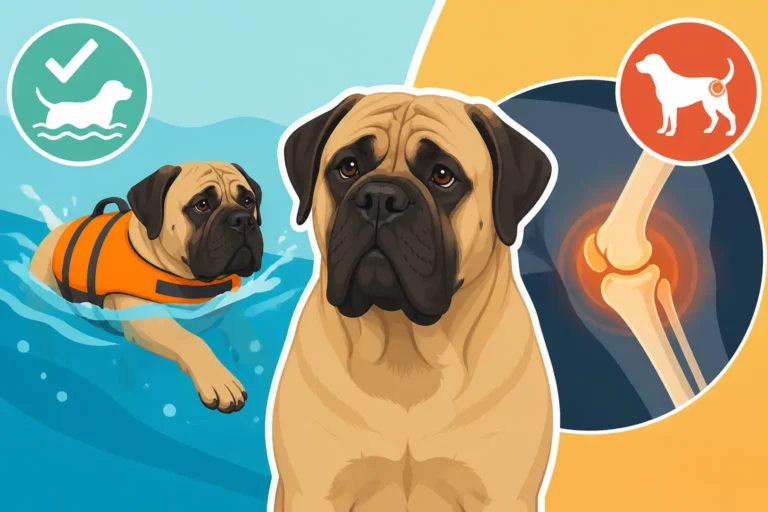
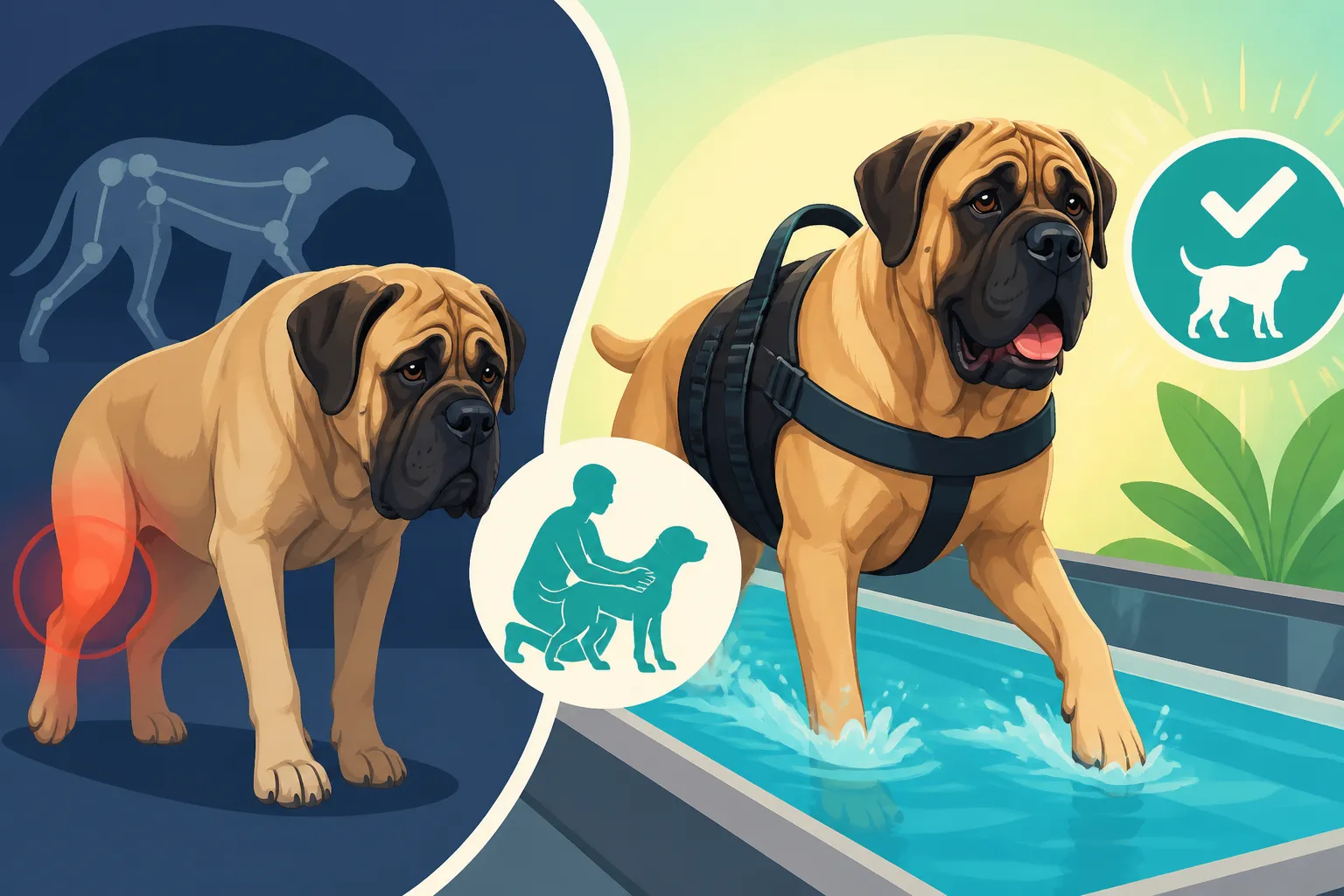
Common professional therapies include hydrotherapy, particularly the underwater treadmill. This modality is incredibly beneficial because it reduces the impact on joints while allowing for a full range of motion and muscle engagement. For a massive dog like a Mastiff, this is a game-changer as it allows them to move freely and build strength without bearing their full weight, which can be difficult and painful on land. Therapeutic exercises on land, such as navigating balance boards, weaving through cavaletti poles, and targeted strength training with resistance bands, are also crucial for improving proprioception and muscle strength. Electrical stimulation (e-stim) can help maintain muscle mass and nerve function in weakening limbs, and therapeutic ultrasound can assist with pain management and tissue healing in strained areas. You can learn more about managing an aging giant breed in Caring for a Mastiff Past Five.
A professional will also teach you how to safely and effectively perform many of these exercises at home, providing you with a structured program to continue between visits. They can also advise on appropriate mobility aids like slings, supportive harnesses, and even custom-fitted carts when the time comes, ensuring they are properly measured and used to prevent further injury. Some pet insurance providers, like Healthy Paws, recognize the importance of these specialized therapies and may offer coverage for rehabilitation services, which can significantly ease the financial burden of ongoing treatment for your Mastiff.
Practical Home Exercises and Environmental Modifications
While professional therapy is invaluable, much of the ongoing work and maintenance will happen right in your home. A good home program, designed in close consultation with your veterinarian or rehabilitation therapist, focuses on maintaining strength, flexibility, and balance. Simple exercises like passive range of motion (PROM) – gently moving your Mastiff's joints through their natural range of flexion and extension – can prevent stiffness and maintain joint health. Assisted standing exercises, where you support their hindquarters with a sturdy towel sling or a dedicated supportive harness, can help them bear weight and engage their weakening muscles.
Walking on varied surfaces, like grass, dirt trails, or short carpet, can help with proprioception and balance by providing different sensory input. However, avoid slippery floors at all costs. For a Mastiff that already struggles with hind end weakness, bare hardwood, tile, or linoleum floors are extremely dangerous and can lead to falls, splaying injuries, and increased fear of movement. Consider strategically placing runners or non-slip mats throughout your home, especially in high-traffic areas. You should also ensure your Mastiff has an orthopedic bed to provide proper support for their joints and prevent pressure sores, given A Mastiff Lying Two Hundred Pounds on One Elbow All Day.
Environmental modifications are just as crucial as the exercises themselves. Providing ramps for getting into cars or up small steps, ensuring easy access to water and food bowls (perhaps raised bowls to reduce strain on the neck), and using assistive devices around the house can make a huge difference in their daily comfort and independence. Regular, short walks, tailored strictly to your Mastiff's current ability and stamina, are far better than one long, exhausting excursion. Even a dedicated handler might find Whether a Mastiff Can Be Walked by One Person challenging as the disease progresses, so plan for assistance if needed. Always prioritize safety and comfort over pushing too hard; gentle consistency is key.
Setting Up a Home Physical Therapy Program for Your Mastiff
Once you've consulted with a professional, setting up an effective and safe home physical therapy program is the next step. This ongoing commitment is where you can make a huge difference in your Mastiff's daily life.
Essential Equipment and Safety Considerations
Before you start any home physical therapy, gather the right equipment to ensure both your Mastiff's safety and your own. A sturdy bath towel or, even better, a dedicated hind-end support sling is indispensable for assisting your Mastiff in standing, walking, and even going to the bathroom. Brands like Help 'Em Up Harness or GingerLead offer excellent options that are designed to distribute weight comfortably across their torso, reducing pressure points. Non-slip mats, yoga mats, or even carpet remnants can be used for controlled exercise sessions, providing vital traction. Remember, for a heavy breed like a Mastiff, Traction: Why a Mastiff Cannot Live on Bare Hardwood is non-negotiable for preventing falls and injuries.
Safety is paramount during all therapy sessions. Always ensure you have a firm grip and proper footing when assisting your Mastiff, especially if they are large and unstable. Never force a movement or exercise if it causes any signs of pain, discomfort, or fear. If your Mastiff shows any signs of distress – whining, struggling, panting excessively, or trying to get away – stop immediately and consult your vet or physical therapist. While consistency is important, overdoing it can lead to injury or make your dog resistant and fearful of therapy, which defeats the purpose.
Consider the physical layout of your home. Can you easily move your Mastiff to different areas for exercise? Are there stairs that need to be navigated, and do you have a safe plan for them, perhaps a ramp or a strong partner for assistance? As your Mastiff's mobility declines, their sheer weight will become increasingly challenging to manage alone. Having a strong, calm partner to assist during exercises or even for daily tasks like getting them up can be a lifesaver, making the process safer and less stressful for everyone involved.
Sample Home Exercise Routine
Here's a sample routine that incorporates common physical therapy techniques, but remember, this should always be personalized and approved by a professional for your specific Mastiff's condition and stage of DM. Every Mastiff is different, and what works for one might be too much or too little for another.
- Warm-up (5 minutes): Begin with gentle petting and massage, especially over the hindquarters, hips, and lower back, to increase blood flow to the muscles and help them relax. This also serves as a positive, calming start to the session.
- Passive Range of Motion (PROM) (5-10 minutes): While your Mastiff is lying down comfortably, gently flex and extend each joint in their hind limbs (hips, knees, ankles, and even toes). Move the joint slowly and smoothly through its natural range of motion, holding each stretch for 10-15 seconds. Repeat this 5-10 times per joint, ensuring you never push past resistance or cause pain.
- Assisted Standing (5 minutes): Using your towel sling or supportive harness, lift your Mastiff's hindquarters slightly to encourage them to bear weight on their back legs. Hold them in a standing position for 30-60 seconds, repeating 3-5 times. This helps strengthen their core and hind limb muscles, and improves their confidence in weight-bearing.
- Controlled Walks (5-10 minutes): Take short, slow walks on a non-slip surface, still using the sling if needed for support. Focus on controlled, deliberate steps rather than speed. Encourage them to place their feet properly, perhaps even gently guiding a foot if they scuff or knuckle over.
- Balance Exercises (3-5 minutes): If appropriate for their stage of DM, have them stand on a slightly wobbly surface (like an inflatable balance disc, an air mattress, or even a folded blanket) while you provide gentle support. This helps engage core and stabilizing muscles. Always prioritize safety and prevent falls.
- Cool-down (5 minutes): Finish with more gentle massage and petting to relax the muscles after the session and reinforce the positive experience.
Aim for 2-3 short sessions per day, if your Mastiff tolerates it, keeping each session relatively short (15-20 minutes total) to avoid exhaustion. Remember that Joint Supplements for a Mastiff can also play a supportive role alongside physical therapy, helping to maintain joint health and comfort during this demanding period. Discuss appropriate dosages and types with your vet, as well as Why a Mastiff Is Dosed by Lean Weight and Not Scale Weight for any medications.
| Exercise Type | Description | Benefits for DM Mastiffs | Frequency/Duration (Consult Vet) |
|---|---|---|---|
| Passive Range of Motion | Gently moving joints through their natural range of motion. | Prevents joint stiffness, maintains flexibility, improves circulation. | 2-3 times/day, 5-10 min |
| Assisted Standing | Using a sling to support hindquarters, encouraging weight-bearing. | Strengthens hind limb muscles, improves balance and proprioception. | 2-3 times/day, 5 min (3-5 reps) |
| Controlled Walks | Slow, deliberate walks with support on non-slip surfaces. | Maintains muscle memory, improves coordination, builds endurance. | 2-3 times/day, 5-10 min |
| Balance Exercises | Standing on unstable surfaces (e.g., balance disc) with assistance. | Engages core muscles, enhances stability, improves body awareness. | 1-2 times/day, 3-5 min |
| Therapeutic Massage | Gentle kneading and rubbing of muscles. | Relieves muscle tension, improves blood flow, promotes comfort and relaxation. | Daily, 5-10 min |
Realistic Expectations and Quality of Life
Living with a Mastiff diagnosed with Degenerative Myelopathy is a journey filled with love, challenge, and ultimately, difficult decisions. It’s vital to manage your expectations while prioritizing your beloved companion’s comfort and well-being.
Managing Expectations and Emotional Toll
It's important to approach physical therapy for DM with realistic expectations. As much as we wish it could, physical therapy will not cure your Mastiff. The disease is progressive and incurable, and there will inevitably be good days and bad days. The true goal of physical therapy is to extend the period of comfortable mobility and enhance their quality of life for as long as possible. Don't be discouraged if you don't see immediate dramatic improvements; the benefits are often about slowing decline, maintaining functionality, and preventing secondary complications that can worsen their condition.
The journey with a Mastiff suffering from DM can be emotionally exhausting. Watching their majestic form gradually lose its strength and coordination is incredibly tough, and the physical demands of caring for a large, mobility-compromised dog are immense. Allow yourself to feel these emotions – frustration, sadness, and even anger are all valid. Seek support from your veterinarian, rehabilitation therapist, and even online communities of owners facing similar challenges. Remember to celebrate the small victories – a day with less stumbling, a slightly stronger walk, or just a happy wagging tail that shows they are still enjoying life.
As the disease progresses, there will come a point where even the most dedicated physical therapy may not be enough to maintain an acceptable quality of life. This is where you'll need to have honest, often heartbreaking, conversations with your vet about your Mastiff's overall well-being. Understanding How a Mastiff's Hind End Fails With DM can help you recognize key milestones in the progression and make informed decisions about their comfort and care. Organizations like Healthy Paws, or other pet insurance providers, can also offer resources for managing end-of-life care costs, which can become substantial, compounding the emotional stress.
Adapting as DM Progresses and Future Considerations
DM will unfortunately continue its relentless march. As your Mastiff's hindquarters weaken further, you'll need to continuously adapt their physical therapy program and daily routine. This might mean increasing the frequency of assisted standing, transitioning to a full-support harness for all walks, or considering a dog wheelchair (often called a cart). For a Mastiff, a cart offers incredible freedom, allowing them to remain active, engaged, and even enjoy outdoor adventures long after losing full functional use of their hind legs. You can explore Whether a Mastiff With DM Can Be Fitted With a Cart for more details on this invaluable mobility aid.
The long-term care of a Mastiff with DM is a significant commitment of time, effort, and financial resources. Consider the financial implications, which can be substantial, encompassing vet visits, specialized equipment, medications, and rehabilitation. Even with pet insurance like Healthy Paws, some specialized equipment or ongoing therapies might have co-pays or limits, so planning ahead for these costs is wise. What Insuring a Mastiff for Its Six to Ten Years Costs can give you a clearer picture of potential expenses.
Ultimately, physical therapy is a loving commitment to your Mastiff's well-being. It's a proactive way to actively participate in their care, keeping them as mobile, comfortable, and happy as possible for every precious day they have left. It empowers you as an owner to provide meaningful support against a disease that offers no cure, ensuring your gentle giant retains as much dignity and joy as possible, even as their body struggles. Despite the immense challenges, the bond you share will only deepen through this journey, reinforcing why you chose a Mastiff in the first place.
Disclaimer
This article provides general information and advice based on current veterinary understanding. It is not a substitute for professional veterinary medical advice, diagnosis, or treatment. Always seek the advice of your veterinarian or other qualified health provider with any questions you may have regarding a medical condition or treatment for your Mastiff.