Whether a Mastiff Follows You Room to Room
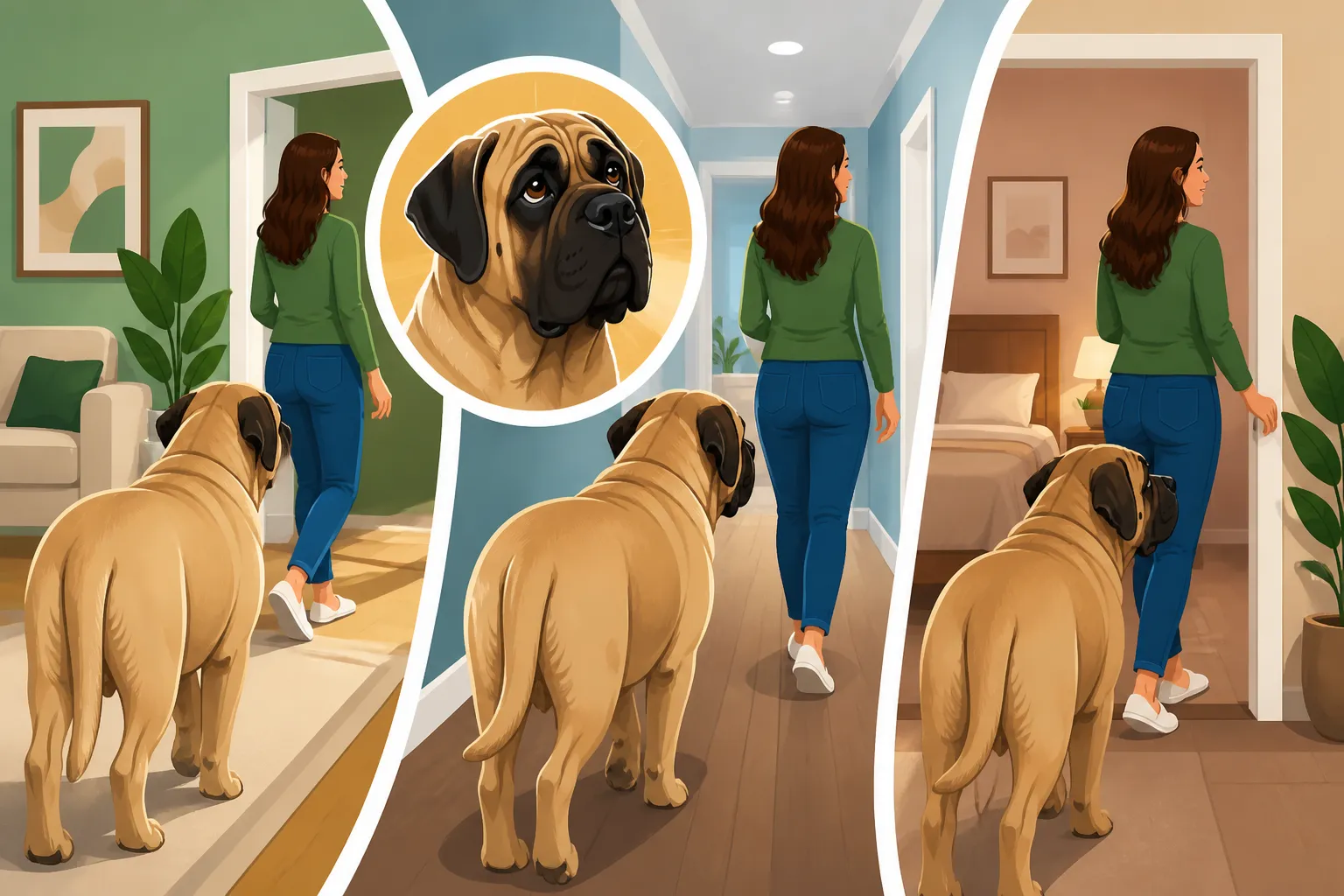
It's a common scenario for Mastiff owners: you stand up from the sofa to grab a snack, and your giant, furry shadow slowly rises and pads after you. You walk into the bathroom, and there they are, noses pressed against the door jamb, or maybe even nudging the door open with their massive heads. This constant companionship can be endearing, sometimes comical, and occasionally a little bit much. This guide will delve into why your Mastiff might be following you room to room, exploring the deep bonds they form, offering practical tips for navigating this unique aspect of living with a giant breed, and helping you differentiate between loving devotion and potential over-attachment.
The Mastiff's Deep-Seated Need for Proximity
Mastiffs, despite their imposing size, are often described as "velcro dogs." They develop incredibly strong bonds with their human families and typically prefer to be wherever you are, whenever you are there. This isn't just a quirky habit; it's rooted in their history and inherent breed characteristics.
A Breed Built for Family Bonds
Historically, Mastiffs were bred as guardians and protectors. Their job was to watch over estates, livestock, and most importantly, their families. While modern Mastiffs are far removed from their ancient ancestors who faced bears and lions, that protective instinct has beautifully translated into a profound sense of companionship. They view their family as their pack, and they feel most secure and content when they are physically close to you. This isn't a breed that enjoys being aloof or independent for long stretches. They thrive on being integrated into your daily life, observing your movements, and simply existing in your orbit. It's why many Mastiff owners report a deep, almost empathetic connection with their dogs; these giants are finely tuned to your presence and mood. You'll often find them leaning their impressive weight against your legs, a subtle but unmistakable gesture of affection and belonging. Why a Mastiff Leans Its Weight on People
Why Your Mastiff Is Your Shadow
The reasons behind a Mastiff's shadowing behavior are multi-faceted, stemming from their fundamental nature as companion guardians:
- Protective Instinct: Even within the confines of your home, your Mastiff might feel an inherent need to "guard" you. By keeping you in sight, they can be aware of your safety and respond if they perceive any threat – whether it's the mail carrier or a rogue dust bunny. It's a subtle, ingrained behavior that might not manifest as overt guarding, but rather as a quiet, ever-present watchfulness. They are simply ensuring their charge, you, is safe.
- Affection and Attention: Let's be honest, Mastiffs are big softies who adore their people. Following you is often a direct expression of their love and desire for connection. Every movement you make presents a potential opportunity for a head scratch, a belly rub, or a quiet word of reassurance. They simply enjoy your company and find comfort in your presence. They might not jump up on visitors, but they certainly want to be near you. Whether a Mastiff Jumps Up on Visitors
- Curiosity and FOMO (Fear Of Missing Out): Who doesn't want to know what's happening? Your Mastiff is no different. Every time you move, there's a chance something interesting is about to occur – a trip to the kitchen (food!), a visit to the backyard (potty break? play time?), or even just a change of scenery. They don't want to miss out on any potential excitement, especially if it involves treats or a chance to participate. It's their way of staying engaged with the family dynamic.
- Pack Mentality: In a dog's world, you are the leader of their pack. It's natural for a pack member to follow and stay close to the leader. This instinct ensures cohesion and safety within the group. For a Mastiff, your movements dictate the flow of their day, and by sticking close, they remain connected to the central figure of their existence. It's a deep-seated behavioral pattern that speaks to their desire for social structure and belonging.
Navigating Life with a Giant Shadow
Living with a Mastiff who wants to be by your side constantly can be a truly wonderful experience, but it also comes with its own set of considerations. Understanding how to manage this behavior ensures both you and your gentle giant are happy and comfortable.
The Joys and Quirks of Constant Companionship
There's something incredibly reassuring about having a devoted Mastiff following your every move. It's a testament to the strong bond you share and their trusting nature. You're never truly alone, and their silent presence can be a great comfort. This constant proximity often means they are deeply in tune with your emotions, sometimes even sensing when you need a comforting nudge. The Sensitivity Nobody Expects in a Two Hundred Pound Mastiff Many Mastiff owners cherish this "velcro" quality, finding it one of the most endearing traits of the breed. They love to be near, to rest a huge head on your lap, or simply to take up half the hallway with their sprawling form, just because you're there.
However, it also means adapting your home and routines. Trips to the bathroom might include a large, breathing rug outside the door. Cooking dinner might involve carefully stepping around a sleeping behemoth. You quickly learn to anticipate their presence and adjust your movements accordingly.
Practical Strategies for Managing the Proximity
While you might cherish the companionship, there will be times when you need a little personal space, or when teaching your Mastiff to be comfortable out of your immediate sight is important for their own development and confidence.
- Designated "Place" or "Mat" Training: Teaching your Mastiff a "place" command is invaluable. This involves training them to go to a specific spot – like a dog bed or a mat – and stay there until released. This isn't about punishment; it's about providing them with a clear instruction and a comfortable spot to settle, even if you're in the same room. A large, well-cushioned orthopedic bed is crucial for these heavy dogs, not just for comfort but for joint health. Products found on Amazon, like oversized memory foam beds, can provide a perfect designated spot. How Thick a Bed a Mastiff Needs Consistent training with positive reinforcement helps them understand and accept these boundaries.
- Clear Boundaries and Expectations: It's okay to teach your Mastiff that sometimes you'll be in a different room for a short period. Start small. If you're going into the kitchen, ask them to "stay" on their bed in the living room for a minute or two, then return and reward them. Gradually increase the duration. This helps them understand that your absence is temporary and not a cause for alarm. This kind of nuanced training helps build their confidence and trust that you will always return. Whether a Mastiff Learns to Wait at a Threshold
- Enrichment in Designated Areas: To make their designated "place" more appealing, provide engaging chew toys or puzzle feeders. A stuffed Kong or a durable chew toy can keep them happily occupied for a while, redirecting their focus from following you to an enjoyable activity. This reinforces the idea that staying put can be rewarding.
Many online training programs, like those offered by BAXTER & Bella, provide structured lessons on commands like "place" and "stay," which can be incredibly helpful for giant breed owners. These resources often break down complex behaviors into manageable steps, making it easier to train a Mastiff who might be "slow or deliberate" rather than inherently difficult to train. Whether a Mastiff Is Slow or Deliberate
When Following Becomes More Than Just Affection
While a Mastiff's tendency to follow you is often a sign of a healthy bond, there are instances where it can escalate into an unhealthy dependency or even separation anxiety. Recognizing the difference is key to addressing any underlying issues.
Identifying Potential Issues: Separation Anxiety or Over-attachment
Normal shadowing behavior usually means your Mastiff calmly follows you, settles near you, and perhaps watches your movements. They might get up when you do, but they're not panicking if you briefly step into another room. They might whine once or twice, but then they'll lie down and wait.
However, if your Mastiff's following behavior is accompanied by signs of distress when you're out of sight, even for a moment, it could indicate a more serious issue:
- Excessive Vocalization: Whining, barking, or howling persistently the moment you leave their line of sight.
- Destructive Behavior: Chewing on doorframes, scratching at doors, or damaging furniture specifically when you are not present.
- House-soiling: Urinating or defecating indoors, despite being house-trained, only when left alone or out of sight.
- Pacing and Restlessness: Inability to settle down when you move to another room.
- Frantic Greetings: Over-the-top, prolonged excitement and relief when you return, even after a very short absence.
These behaviors, especially when they occur when you're just a room away, suggest over-attachment or even the early stages of Separation Anxiety in a Mastiff. It's a stressful experience for them and can be challenging for you.
Addressing Problematic Following
If you suspect your Mastiff's shadowing is more than just affection, proactive steps are necessary:
- Gradual Desensitization: This is the cornerstone of addressing over-attachment. Start by stepping out of the room for just a second or two, then immediately returning before your Mastiff can show signs of distress. Reward their calm behavior. Gradually increase the duration of your absence. The goal is to teach them that your leaving is not a threat and that you always return. Don't make a big deal out of leaving or returning; keep it low-key.
- High-Value, Distracting Enrichment: Before you step out of sight, give your Mastiff a high-value, long-lasting chew or a complicated puzzle toy. This diverts their attention and associates your brief absence with something positive and engaging. Make sure the toy is safe for them to have unsupervised.
- Structured Alone Time: Intentionally create short periods where your Mastiff is separated from you, even while you are home. For example, if you go to read in a spare bedroom, ensure your Mastiff stays in the living room with a chew toy. This teaches them that they don't need to be in your direct line of sight to be safe and content.
- Professional Guidance: If the behavior is severe or you're struggling to make progress, don't hesitate to seek help from a certified professional dog trainer or a veterinary behaviorist. They can assess the specific situation and develop a tailored plan. When a Mastiff Owner Should Hire Training Help This is particularly important with a giant breed, as anxiety-driven destructive behaviors can be far more damaging (and dangerous) than with smaller dogs.
Fostering Healthy Independence in Your Mastiff
While their desire to be close is charming, encouraging a degree of independence is crucial for your Mastiff's well-being. A dog that can comfortably settle alone, even if you're just in another room, is a more confident and less stressed companion.
Creating a "Safe Space"
Every Mastiff should have a designated "safe space" where they can retreat and feel secure. This might be a comfortable bed in a quiet corner of a main room, or even a large, appropriately sized crate if they are crate-trained. Whether a Mastiff Puppy Should Be Crated This space should be consistently available and associated with positive experiences.
| Aspect of "Safe Space" | Description | Benefit for Mastiff |
|---|---|---|
| Location | Quiet corner, away from high traffic, but still near family activity. | Sense of security, still connected to family. |
| Comfort | Orthopedic bed, soft blankets, durable. | Protects joints, encourages rest. What a Bed That Holds a Mastiff Costs |
| Positive Association | Treats, favorite toys, praise for resting there. | View it as a desirable sanctuary, not a punishment. |
| Consistency | Always available, not moved frequently. | Predictability, sense of control. |
Make this space a positive retreat, not a place for time-outs. Encourage them to go there to chew a toy, nap, or simply relax. This gives them an alternative to always following you, a place where they can choose to be comfortable on their own terms.
Structured Alone Time
Incorporating structured periods of alone time, even when you are home, is vital. This doesn't mean banishing them to a separate room for hours. It means intentionally stepping away for short, predictable intervals. For example:
- Closed Doors: Go into a room and close the door behind you for 5-10 minutes. While you're in there, engage in a quiet activity like reading or making a phone call.
- "Go To Your Bed": Use your "place" command, and then sit quietly nearby, not interacting with them. This teaches them that you can be present without constantly engaging.
- Varied Locations: Don't always leave them in the same spot. Sometimes they might be in the living room while you're in the kitchen; other times, you might be upstairs while they're downstairs. This prevents them from forming an unhealthy association with one specific location.
The goal is to teach your Mastiff that they can be relaxed and content even when you're not in their immediate line of sight. This builds resilience and helps prevent future issues like separation anxiety. How Long a Mastiff Copes Alone
Engaging Independent Play and Mental Stimulation
Providing toys that your Mastiff can enjoy independently is also important. These can include:
- Interactive Puzzle Toys: Toys that dispense treats as your dog manipulates them can keep their minds busy and their bodies still.
- Durable Chew Toys: For a breed with such powerful jaws, indestructible chew toys are a must. These provide an outlet for natural chewing instincts and can be a great way to unwind.
- "Snuffle Mats": These fabric mats with hidden pockets for kibble encourage sniffing and problem-solving, engaging your Mastiff's brain without requiring your direct involvement.
Rotate these toys regularly to keep them novel and exciting. If they have something genuinely interesting to do on their own, they'll be less inclined to follow you out of sheer boredom or a need for constant engagement. Ultimately, fostering this healthy independence ensures that your Mastiff's devotion is a joyful bond, not a burdensome attachment, allowing both of you to enjoy a well-balanced life together. The Job a Mastiff Actually Wants
Disclaimer
This article is for general informational purposes only and does not constitute professional advice. Laws, prices and regulations vary by location and change over time. Consult a qualified professional for guidance on your specific situation.