Separation Anxiety in a Mastiff
One of the most heartbreaking issues a Mastiff owner can face is separation anxiety. It's not just a little whining; it can be a full-blown panic attack for your giant companion, leading to destructive behaviors, incessant vocalization, and even self-harm. This guide will walk you through understanding why your Mastiff might be struggling, what to look for, and actionable steps to help your beloved dog cope when you can't be by their side every moment.
Understanding What Separation Anxiety Looks Like in a Mastiff
It’s easy to dismiss some behaviors as just "being a dog," but with a Mastiff, the scale of their reactions can be truly alarming. When a dog who weighs as much as a small person starts to panic, the damage, and the risk to themselves, can be substantial. Separation anxiety isn’t boredom, though it can sometimes mimic it. It’s a genuine state of distress that occurs specifically when the dog is separated from their primary attachment figure, often you.
Destructive Chewing and Digging
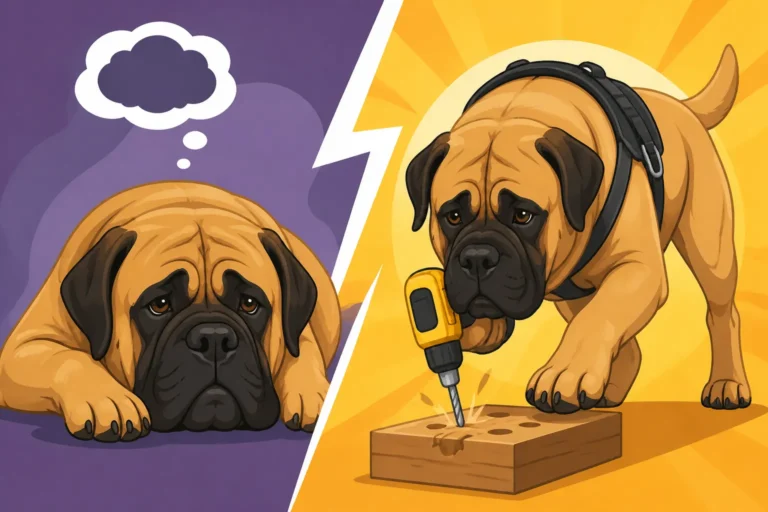
One of the most common and often devastating signs of separation anxiety in a Mastiff is destructive chewing. We're not talking about a chewed slipper here; we're talking about shredded door frames, demolished furniture, or gouged-out sections of drywall. Your Mastiff isn’t doing this out of spite or malice. When they’re in a panic, chewing can be a self-soothing mechanism, an attempt to relieve the intense stress and anxiety they’re feeling. It’s an instinctive behavior, but one that can cause immense damage and put them at risk of ingesting harmful materials.
Imagine coming home to find your favorite armchair disemboweled, stuffing strewn everywhere, and your gentle giant looking utterly exhausted and guilty. It’s a gut-wrenching sight, both for the loss of the item and for the clear sign of your dog’s distress. They might chew on anything, from pillows to baseboards, driven by an overwhelming need to release pent-up energy and anxiety. This isn't just a puppy exploring its world; this is a desperate attempt to cope with emotional pain.
Excessive Vocalization
A Mastiff's bark is a powerful thing, and when used excessively due to separation anxiety, it can be a major issue, especially if you live in close quarters with neighbors. This vocalization isn't just a few barks at the mailman; it’s often prolonged howling, incessant barking, or mournful whining that can last for hours. It’s a distress call, a plea for you to return, and it comes from a place of deep fear and loneliness.
Sometimes, neighbors might alert you to the problem, perhaps leaving a note or even calling you. This can be embarrassing and frustrating, but it’s crucial to understand it’s a symptom, not a behavioral choice. Your Mastiff is literally crying out for help, trapped in a state of fear. For such a typically quiet and stoic breed, this level of sustained vocalization is a strong indicator of profound emotional discomfort.
House Soiling and Inappropriate Urination
It’s incredibly frustrating to deal with house soiling, especially when you know your Mastiff is usually perfectly housetrained. Finding urine puddles or piles of feces indoors after you’ve left, even shortly after they’ve been outside, is another classic sign of separation anxiety. This isn’t about defiance or forgetting their training; it’s a physiological response to extreme stress. When a dog is truly panicked, they can lose control of their bladder and bowels, just like a human might in a moment of intense fear.
This can be particularly disheartening because it feels like a step backward in training, but it’s vital to approach it with empathy. Punishing a Mastiff for this behavior will only heighten their anxiety and erode your bond. They’re not trying to be "bad"; their body is simply reacting to an overwhelming emotional state. It's often worse if it's not simply an accident but a large amount, suggesting they held it as long as possible before the stress took over.
Why Mastiffs Are Particularly Prone to Separation Anxiety
Mastiffs, despite their formidable size and ancient guarding instincts, are often gentle giants with incredibly deep emotional bonds to their families. This very trait, while endearing, can make them more susceptible to separation anxiety. Their entire purpose, for centuries, has been to be a watchful, protective companion, often by their owner's side.
Their Deep Bond and Need for Companionship
Mastiffs are renowned for their loyalty and their profound attachment to their human families. They are truly "velcro dogs," often following you from room to room, just wanting to be near. This deep emotional connection, while a cornerstone of the breed's appeal, can be a double-edged sword. For them, separation isn't just inconvenient; it can feel like a profound loss or abandonment. They thrive on companionship and physical presence, and the absence of their people can leave a gaping hole in their world.
Think about The Sensitivity Nobody Expects in a Two Hundred Pound Mastiff; these dogs feel things deeply. A Mastiff isn't just a pet; they often become a central part of the family fabric, and their human companions become their entire universe. When that universe suddenly disappears behind a closed door, the ensuing panic can be intense. They are not naturally independent solitary creatures.
Size Challenges for Daycare and Sitters
One practical challenge that Mastiff owners face, which can inadvertently contribute to separation anxiety, is the sheer difficulty in finding suitable care for such a large dog. Many standard dog daycares simply aren't equipped to handle a two-hundred-pound Mastiff, either due to space constraints, staff-to-dog ratios, or concerns about play dynamics with smaller breeds. This limits options for socialisation and supervised care when you need to be away.
Similarly, finding a dog sitter who is comfortable and capable of managing a Mastiff can be tough. It's one thing to watch a Labrador; it's another entirely to handle a giant who might not listen perfectly or who could accidentally knock someone over. This often means Mastiffs end up spending more time alone than other breeds might, inadvertently conditioning them to experience heightened anxiety when their owners leave. It’s a cycle: they show anxiety, it’s harder to find care, so they spend more time alone, increasing anxiety.
Breed Temperament and Guarding Instincts
While Mastiffs are known for their calm demeanor, their underlying guarding instincts can also play a role in their predisposition to anxiety. They are inherently protective of their home and family. When left alone, they might feel an intense, overwhelming responsibility to "guard" even in your absence, yet they are unable to perform this duty effectively without you there. This conflict between their instinct to protect and their inability to act when alone can manifest as anxiety.
It's not about being aggressive; it's about a deep-seated vigilance that can turn into worry when their primary figures are gone. This is distinct from a dog that might just be bored; a Mastiff with separation anxiety is truly suffering an emotional crisis. Understanding this temperament helps us approach their anxiety with the patience and specific training methods they need.
Distinguishing Between Mild Distress and Full-Blown Anxiety
It’s important to understand that not every whine or chewed toy means your Mastiff has full-blown separation anxiety. There's a spectrum of reactions, and identifying where your dog falls can guide your intervention.
Pre-Departure Cues and Early Warning Signs
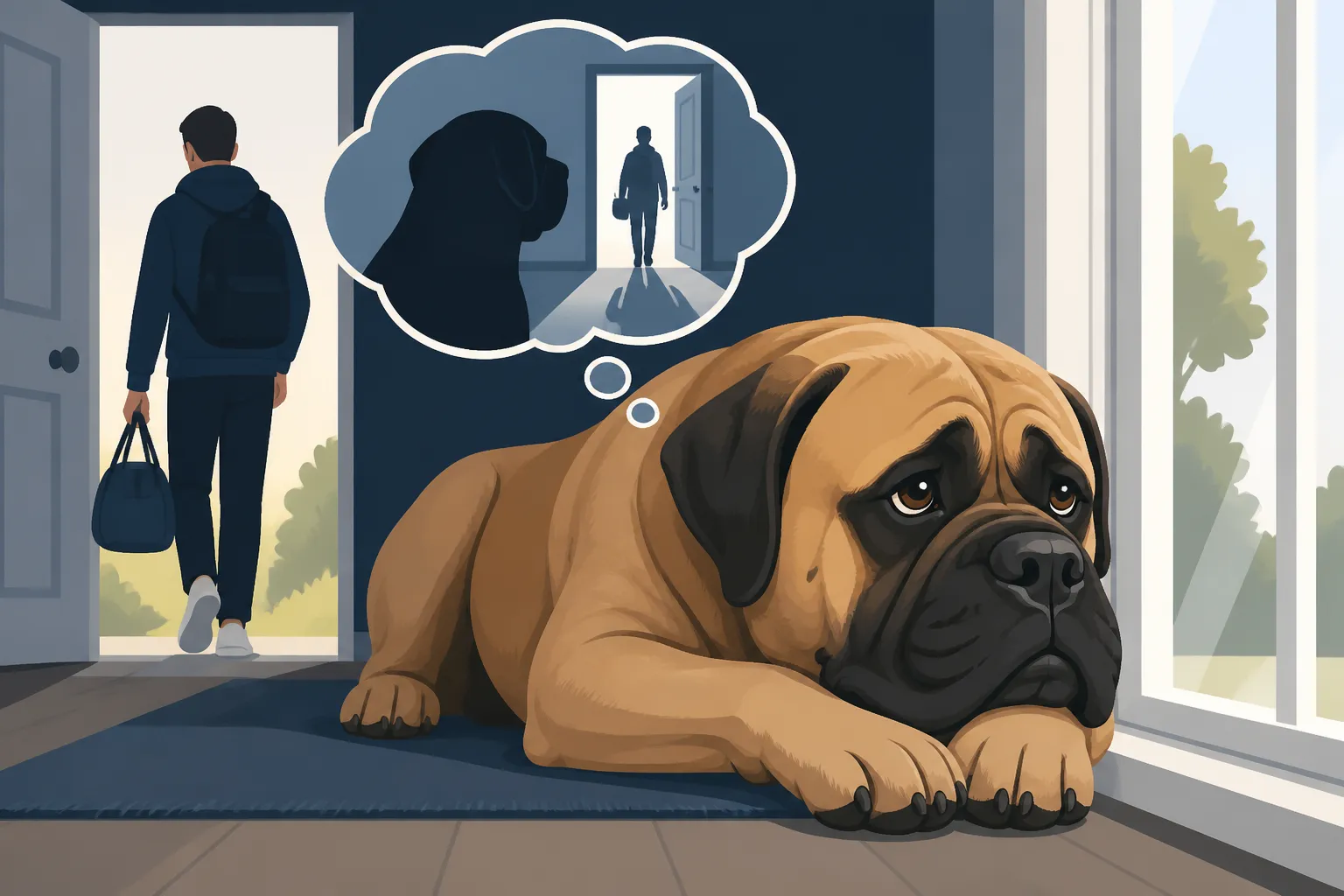
One key way to gauge your Mastiff's emotional state is to observe their behavior before you even walk out the door. Dogs are masters at picking up on our routines. Do they start to pace, pant, or tremble when you pick up your keys or put on your shoes? Do they block doorways, try to prevent you from leaving, or cling to you excessively as you prepare? These are classic pre-departure cues.
A mildly distressed Mastiff might just sigh or follow you to the door with a sad look. A dog developing separation anxiety will show more intense reactions: their breathing might quicken, they might refuse treats they normally adore, or they could become agitated and vocal as you go through your leaving ritual. Paying close attention to these early warning signs allows for intervention before the anxiety escalates into a full-blown panic attack. Think about How Long a Mastiff Copes Alone – even a few minutes can feel like an eternity if they’re already anxious.
Actual Damage and Self-Harm Indicators
The real hallmark of severe separation anxiety often manifests in the physical aftermath of your departure. This isn't just a bored dog chewing a single item; it's widespread destruction, often focused on exit points like doors and windows. You might find claw marks on the door frame, chewed-through blinds, or even teeth marks on windowsills as they try desperately to get to you.
Beyond property damage, look for signs of self-harm. Some Mastiffs will chew on their paws until they are raw or bloody, rub their noses raw trying to push under doors, or even ingest items that cause internal injury. Excessive drooling, to the point of leaving large puddles or soaking their fur, is also a common sign of acute stress. If your Mastiff is typically tidy, but you return to a massive drool slick and a dog panting heavily, it’s a clear cry for help.
| Symptom Category | Mild Distress (Boredom/Mild Loneliness) | Severe Separation Anxiety (Panic) |
|---|---|---|
| Vocalization | Occasional bark/whine, settles quickly | Prolonged howling, incessant barking, high-pitched cries |
| Destructive Behavior | Chews familiar toys, perhaps one minor item | Chews door frames, furniture, walls; damages exit points |
| House Soiling | Rare accident, possibly due to holding it too long | Frequent urination/defecation shortly after owner leaves; not related to bladder control |
| Pre-Departure | Follows owner, maybe a sad look, but no panic | Pacing, panting, trembling, clinging, blocking exits, refusal to eat |
| Self-Harm | None | Licking/chewing paws raw, rubbing nose, attempting to escape |
| Post-Arrival | Happy to see you, quickly calms | Overly frantic greeting, takes long time to settle, hyper-arousal |
Setting Up Your Home for a Mastiff with Separation Anxiety
Creating a supportive and secure environment is paramount when dealing with a Mastiff’s separation anxiety. Their size means that safety and containment are even more critical, both for them and your home. Thoughtful preparation can make a huge difference in their ability to cope.
Creating a Safe, Secure Space
Your Mastiff needs a den, a sanctuary where they feel safe and contained, not trapped. For a giant breed, this often means a very large, sturdy crate or a designated, dog-proof room. The space should be large enough for them to stand, turn around, and stretch out comfortably. Line it with a durable, comfortable What a Bed That Holds a Mastiff Costs that’s easy to clean, ideally something they can’t easily destroy. Placing a worn t-shirt or blanket with your scent in the crate can provide comfort.
The key here is to associate this space with positive experiences, never punishment. Feed them meals in there, give them high-value treats only when they are in their safe space, and encourage them to relax there even when you are home. A robust, wire crate from a brand like MidWest Homes for Pets (available on Amazon) can be a good option, ensuring it's heavy-duty enough for a Mastiff who might try to push their way out. The goal is for them to see this area not as where they are abandoned, but as their personal haven.
Enrichment Toys and Comfort Items
Leaving a Mastiff alone, even for short periods, without mental stimulation can exacerbate anxiety. Enrichment toys are vital. These aren’t just any toys; they are puzzle feeders, durable chew toys, and items that require mental engagement. A frozen Kong stuffed with peanut butter or plain yogurt can keep them occupied for a good chunk of time. LickiMats spread with wet food or pumpkin can provide prolonged, calming activity.
Consider interactive toys that dispense treats slowly. Brands like KONG or PetSafe offer robust options suitable for strong chewers. You can find a huge variety of these types of items on Amazon. The idea is to give them something to do that is rewarding and distracting from your absence. Also, a comfortable blanket or bed that smells like you can be a surprisingly effective comfort item, particularly for sensitive breeds like the Mastiff.
Monitoring and Environmental Adjustments
Investing in a pet camera can be a game-changer. These cameras, many of which are available on Amazon, allow you to monitor your Mastiff’s behavior while you’re away, giving you invaluable insights into how their anxiety manifests. You can see when they start pacing, how long they vocalize, and what triggers their distress. Some cameras even allow two-way audio, so you can speak to your Mastiff, though this should be used cautiously as it can sometimes intensify their anticipation.
Beyond monitoring, consider environmental adjustments. Playing calm, classical music or a white noise machine can help mask outside sounds that might trigger anxiety. Drawing curtains or blinds can reduce visual stimuli from passersby or other dogs, which might otherwise make your Mastiff feel more anxious or responsible for guarding. These small changes help create a more predictable and less stimulating environment for them to relax in.
Training Strategies for Managing and Preventing Separation Anxiety
Managing separation anxiety requires a multifaceted approach, heavily reliant on patience, consistency, and positive reinforcement. Because a Mastiff can be The Stubbornness That Is Actually a Mastiff Thinking, you need strategies that work with their deep loyalty, not against it.
Gradual Departures and Desensitization
This is the cornerstone of separation anxiety training. The goal is to slowly, incrementally desensitize your Mastiff to your departure cues and eventually to your absence. Start small: simply pick up your keys, walk to the door, open it, then close it and sit back down. Don't leave. Repeat this many times a day, every day, until your Mastiff barely reacts. Then, step outside for a second, come back in. Gradually increase the duration of your absence by mere seconds, then minutes.
The critical part is to never leave for a duration that causes your Mastiff to panic. You want them to experience calm, successful departures. This might mean starting with a minute, then two, then five, and so on. This process takes immense patience and commitment. The BAXTER & Bella online puppy school offers excellent modules on desensitization and managing alone time, which can be adapted for older dogs too. It emphasizes positive, gradual steps that can be invaluable for a breed that responds so well to gentle guidance.
Counter-Conditioning Alone Time
Pairing your absence with something incredibly positive is called counter-conditioning. Before you leave, provide your Mastiff with a high-value, long-lasting treat or a favorite puzzle toy, something they only get when you leave. This helps change their emotional association with your departure from fear to anticipation of a reward. A frozen Kong or a chew that takes a long time to finish can be perfect here.
Ensure the treat is high-value enough to hold their interest for at least some of your absence. This isn’t a quick fix, but it’s a powerful tool in shifting their mindset. When they associate your leaving with something wonderful happening (like getting that special, irresistible treat), it begins to mitigate the panic response. Remember to always make your departure and return low-key and calm – no big goodbyes or overly enthusiastic hellos, as these can heighten anxiety.
Establishing a Predictable Routine
Dogs thrive on routine, and Mastiffs are no exception. A predictable daily schedule can provide a sense of security and reduce overall anxiety. This includes consistent feeding times, potty breaks, and exercise. Knowing what to expect throughout the day can help your Mastiff feel more in control and less anxious about unexpected changes, like your sudden absence.
Ensure your Mastiff gets adequate exercise and mental stimulation before you leave. A tired dog is often a calmer dog. A good, calm walk (nothing too strenuous for their joints, especially when young, as discussed in Why a Mastiff Puppy Must Not Be Exercised Hard) or a structured play session can help burn off excess energy. For a Mastiff, sometimes even a brief obedience session, working on familiar commands, can provide mental stimulation without over-exertion. Consistency in all aspects of their day helps build a foundation of security that reduces general anxiety, making them more resilient to alone time.
When to Seek Professional Help
Sometimes, despite your best efforts, separation anxiety can be too severe to manage on your own. It's not a sign of failure but a recognition that your Mastiff needs more specialized support.
Consulting Your Veterinarian
The very first step if you suspect severe separation anxiety is a visit to your veterinarian. It’s crucial to rule out any underlying medical conditions that might be contributing to the behavior. Pain, discomfort, or other health issues can manifest as anxiety or exacerbate existing behavioral problems. Your vet can perform a thorough examination and may recommend blood tests or other diagnostics.
Your veterinarian can also discuss behavioral medication options. While not a cure, certain medications can help reduce your Mastiff’s anxiety levels, making them more receptive to behavioral modification training. This is a tool to facilitate training, not a standalone solution. It’s important to understand the potential side effects and commitment involved, and your vet can guide you through this process. Don't be afraid to ask about Why Anesthesia Is Riskier in a Mastiff if any procedures are suggested, as this breed requires special considerations.
Working with a Certified Professional Dog Trainer or Behaviorist
For severe cases, working with a certified professional dog trainer or a veterinary behaviorist is highly recommended. These professionals have specialized knowledge and experience in treating complex behavioral issues like separation anxiety. They can help you develop a customized training plan, identify specific triggers, and teach you advanced techniques for desensitization and counter-conditioning.
Look for a behaviorist or trainer who uses positive, force-free methods. Harsh corrections or punishment will only worsen anxiety in a sensitive breed like a Mastiff. A good professional will guide you step-by-step, offering practical advice and moral support. They can also help you understand the nuances of your Mastiff’s body language and emotional state, which is vital for effective intervention. For many, this becomes an essential investment, as highlighted in Whether a Mastiff Needs a Professional Trainer.
The Role of Medication in Treatment
As mentioned, medication for separation anxiety is not a magic bullet, but it can be a vital component of a comprehensive treatment plan, especially for Mastiffs experiencing extreme panic. Anti-anxiety medications, prescribed by your vet, can help lower your dog's overall stress response, allowing them to be calm enough to learn new coping mechanisms through behavioral training. Without medication, some Mastiffs are simply too overwhelmed by fear to respond to any training efforts.
This usually involves a combination of daily medication and possibly situational medication for short absences. It's a temporary aid to help them through the re-training process, not a lifelong dependency in most cases. Your vet will monitor your Mastiff closely for efficacy and any side effects. Remember, medication works best when combined with a robust behavioral modification plan, giving your Mastiff the best chance to overcome their anxieties and live a happier, more relaxed life.
Disclaimer
This article is for general informational purposes only and does not constitute professional advice. Laws, prices and regulations vary by location and change over time. Consult a qualified professional for guidance on your specific situation.