Whether a Mastiff Learns to Wait at a Threshold
It’s a familiar scene in a Mastiff household: you’re trying to navigate out the front door, or simply move from the kitchen to the living room, and your massive companion is either body-blocking the way or attempting to barge through ahead of you. This isn't just an annoyance; with a dog that can easily outweigh an adult human, it's a genuine safety concern, a potential trip hazard, and a sign of a lack of clear boundaries. This guide is dedicated to tackling that very problem, offering you the strategies and patience needed to teach your Mastiff to respectfully wait at any threshold, transforming chaos into calm.
Understanding the Mastiff Mindset at Thresholds
When your two-hundred-pound Mastiff barrels through a doorway, it's rarely out of malice or deliberate defiance. More often, it's a combination of their immense size, natural enthusiasm, and simply not understanding the subtle rules we humans live by. They don't grasp the concept of "personal space" in a doorway or the potential for injury if they steamroll you.
Why Your Mastiff Rushes the Door
Think about it from their perspective. A doorway often leads to something exciting: a walk outside, a visitor, dinner, or simply joining you in another room. For a Mastiff, who often forms incredibly strong bonds with their people, being separated from you, even by a simple door, can trigger a desire to be with you immediately. Their sheer bulk means they don't have to put much effort into pushing through; their momentum does most of the work. They are driven by curiosity, by the desire for connection, and sometimes, by a simple lack of impulse control that hasn't been adequately addressed through training.
It’s easy to get frustrated, especially when you’re wrestling with a dog the size of a small pony. You might find yourself bracing for impact every time you approach a door. However, understanding that it's not a personal affront, but rather a behavioral gap, is the first step toward a patient and effective training approach. Their size means these behaviors have higher stakes, but their deep desire to please their family means they are often very receptive to clear, consistent guidance.
The Impact of Size on Threshold Manners
The sheer physical presence of a Mastiff means that a small lapse in manners at a doorway can have significant consequences. A little terrier politely nudging past your leg is one thing; a Mastiff doing it can knock you off balance, especially if you're carrying something or have limited mobility. This is particularly critical with external doors. An uncontrolled dash through an open gate or front door can put your Mastiff in immediate danger from traffic or simply lead to a frantic chase through the neighborhood.
This is why teaching proper threshold manners isn't just about politeness; it's about safety for both you and your giant companion. A Mastiff who has learned to wait calmly demonstrates excellent impulse control, a vital skill for a large breed living in a human world. It shows they respect boundaries, even when their natural inclination is to follow you or explore.
The Foundation: Early Training and Consistency
Teaching a Mastiff to wait at a threshold isn't a quick fix; it's a marathon, not a sprint, built on a foundation of consistent early training. Starting when they are a manageable puppy, before they truly [outweigh you], is paramount. This initial period is when you establish the behavioral patterns that will serve you both well for their entire life.
Starting Young and Building Good Habits
The moment your Mastiff puppy comes home, you can begin laying the groundwork for good threshold manners. Even a small puppy can learn to pause. Use a cheerful tone and clear body language to encourage them to sit or stand back from the door. Don't let them barrel through, even if it's "cute" when they're small. Every time you allow it, you reinforce the unwanted behavior.
Start with simple internal doorways first, where the stakes are lower. When you approach a door, pause. If your puppy rushes forward, gently block their path with your body. Wait until they take even a tiny step back or offer a moment of calm. Mark that moment with a verbal "yes!" or a clicker, then open the door and invite them through. This teaches them that calm behavior, not rushing, is what opens the door to desired outcomes. Repetition, consistency, and a calm demeanor on your part are the keys to success during these early stages. Remember, a Mastiff is sensitive and will pick up on your frustration, so keep it positive.
The Power of Positive Reinforcement and Clear Cues
Mastiffs respond beautifully to positive reinforcement. They want to please you and will learn quickly when good behavior is rewarded. Keep high-value treats handy, especially in the initial stages of training. When your Mastiff offers the desired behavior—a calm sit, a step back, or waiting patiently—immediately reward them. This creates a strong positive association.
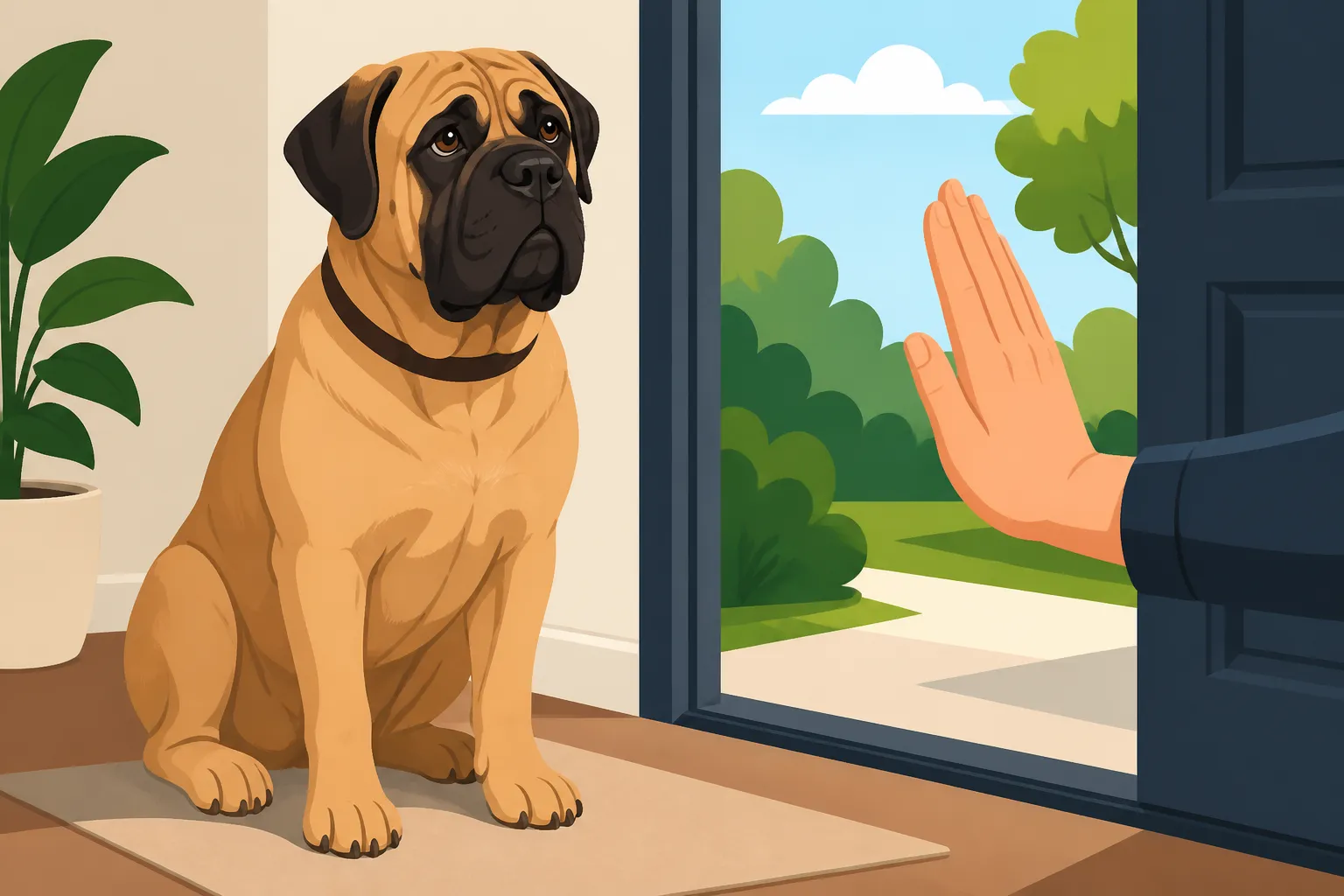
Use a consistent verbal cue like "wait" or "stay" before you open any door. Pair this with a hand signal, such as an open palm facing them. This multi-modal approach helps your Mastiff understand exactly what you're asking. Many Mastiff owners find that resources like BAXTER & Bella offer excellent online programs that emphasize positive reinforcement and clear communication, which can be invaluable for navigating the unique training challenges of a giant breed. They provide structured lessons that can help you implement these strategies effectively from the comfort of your home.
It's also crucial that everyone in the household follows the same rules. If one person allows the Mastiff to rush and another requires a wait, it creates confusion and undermines the training. Consistency across all interactions, with all family members, is non-negotiable for success.
Step-by-Step Training for Threshold Patience
Now that we understand the 'why' and the foundational 'how,' let's dive into the practical steps for teaching your Mastiff to wait patiently at any threshold. This systematic approach breaks down a complex behavior into manageable pieces, ensuring your Mastiff builds confidence and understanding along the way.
"Sit-Stay" and "Wait" as Core Commands
Before tackling doorways directly, ensure your Mastiff has a solid understanding of "sit-stay" and a general "wait" command in various environments, even with distractions. These are the bedrock skills. Start in a quiet room, practicing long durations and distances with their "stay." Once they can hold a stay for a minute or two with you moving a few steps away, you're ready to integrate it with doorways.
The "wait" command is particularly useful for thresholds because it implies a temporary pause, allowing you to control the release. While "stay" often means remaining in a specific position, "wait" means pausing until released, regardless of their exact body posture, making it ideal for the fluid situations around doorways. Practice this by simply having them wait for a few seconds before you give them their meal or before they get a toy. This reinforces the idea that good things come to those who wait, a powerful motivator for a Mastiff.
Practical Steps for Doorway Training
Let's walk through the actual process for an interior door:
- Approach the Door: With your Mastiff on a leash, approach the door. If they surge forward, stop immediately. Do not proceed until they ease the tension on the leash.
- Give the "Wait" Command: Once they are calm, ask them to "wait" (or "sit-stay"). Use your hand signal.
- Reach for the Handle: If they remain in position, reward them. Then, reach for the doorknob. If they move, immediately withdraw your hand, re-establish the "wait," and only try again when they are still.
- Open the Door Slightly: Once they hold position as you touch the handle, slowly open the door a crack. If they move, immediately close the door gently, re-establish the "wait," and try again. The door only opens when they are calm.
- Open the Door Fully: Gradually open the door wider, always ready to close it if they try to rush. Reward heavily for maintaining their "wait."
- Release Command: Once the door is fully open and they are calm, give your release cue, such as "okay!" or "free!", and allow them to pass through. You might even go through first, then invite them.
This process can be slow at first, especially with a large, eager Mastiff, but consistency is key. Never let them "win" by rushing through. Every time they rush, the door should close or the activity stops.
For exterior doors, the process is similar but with even higher stakes. Always use a leash initially, even if you trust your Mastiff's off-leash obedience inside. You might also find a sturdy baby gate, easily found on Amazon, helpful to create a secondary barrier at a high-traffic doorway while you practice. This offers a safety net, especially when you have guests or are managing other distractions.
Dealing with Different Thresholds and Distractions
Once your Mastiff masters waiting at a simple internal door, start generalizing the behavior to other thresholds:
- Front Door: Crucial for safety and managing visitors.
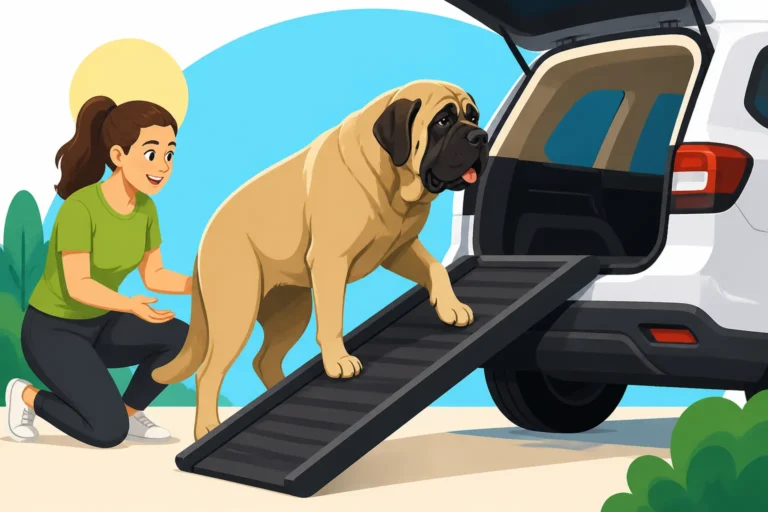
- Car Door: Prevents them from leaping out prematurely.
- Crate Door: Teaches them to enter and exit calmly.
- Gates: Whether a garden gate or a fence gate, the same rules apply.
Introduce distractions gradually. Start with an empty hallway, then someone walking past, then a friend arriving. Each new distraction is an opportunity to reinforce the "wait" command. This is particularly important for Mastiffs, who can be very social but also have a strong guardian instinct. When a visitor arrives, their excitement or protective instincts might override their training if it's not rock solid. Teaching them to wait calmly helps manage their initial reaction to guests. How a Mastiff Judges a Stranger at the Door often starts with their initial greeting, and a calm approach is always best.
The table below summarizes key training cues and their application at thresholds:
| Command | Purpose | Application at Threshold | Common Mistake |
|---|---|---|---|
| Sit | Basic calm posture | Ask for a sit before approaching or opening door | Only asking for sit once; not waiting for compliance |
| Stay | Hold position | Used for longer durations or when you need to step away | Releasing too early; not building duration/distance |
| Wait | Temporary pause | Signals a pause before proceeding, regardless of posture | Rushing the dog through after "wait" without release |
| Release | End of command | Clearly signals the dog can now move through the threshold | Not using a consistent release cue; dog anticipates |
| Look | Attention focus | Helps re-engage dog's focus if distracted by the door | Forgetting to reward for eye contact in high-distraction |
| Off | Stop jumping | Crucial if dog jumps up in excitement at the door | Only addressing jumping after it occurs, not proactively |
Common Challenges and Troubleshooting
Even with the best intentions and consistent training, you might encounter bumps in the road when teaching your Mastiff threshold manners. Their immense size, coupled with their inherent personalities, can present unique challenges. But don’t despair – these are often opportunities to refine your approach and deepen your dog's understanding.
When Your Mastiff "Forgets" or Gets Overly Excited
It's going to happen. You've had weeks of perfect door manners, and then suddenly, your Mastiff barrels past you as if all training has vanished. This "forgetting" is often due to an overload of excitement, a new distraction, or perhaps a moment where you weren't as consistent as usual. It's not a sign of failure; it's a sign that you need to go back to basics, even if just for a day or two.
When this happens, don't get angry. Simply re-establish the boundary. If they rush, close the door or block their path. Wait for even a micro-second of calm, then try again. Sometimes, if the excitement is too high, it's better to step away from the door entirely, let your Mastiff calm down, and then restart the exercise in a less stimulating environment. Think of it like a human toddler having a tantrum; sometimes a reset is the best approach. You might even consider going back to using a leash inside the house temporarily to regain control and guide them more firmly, especially if they have a tendency to [pull on a leash] in general.
Another common scenario is when guests arrive. The doorbell rings, and your Mastiff, who usually waits, becomes a furry battering ram. In these instances, proactive management is key. Before guests arrive, put your Mastiff on a leash and have them settled in a "stay" a safe distance from the door. Have treats ready to reward calm behavior as your guests enter. This prevents the opportunity for them to rush, making it easier to reinforce the desired behavior. Over time, as their impulse control grows, you can reduce the need for the leash. This also ties into how they might react to strangers in general; a well-managed first impression is always best. Whether a Mastiff Jumps Up on Visitors is another behavior that often happens at thresholds, so addressing both simultaneously can be very effective.
Dealing with Stubbornness or Refusal to Move
Mastiffs are known for their deliberate nature, and sometimes this can manifest as what appears to be stubbornness. You ask them to wait, and they simply lie down and refuse to budge, or stand rooted to the spot, making it impossible for you to move through. This isn't always defiance; it can be confusion, a reluctance to move from a comfortable spot, or just plain thinking. Remember, the stubbornness that is actually a Mastiff thinking.
If your Mastiff plants themselves and won't move when asked to wait, it might mean they don't fully understand why they should move, or what the alternative is. Instead of trying to pull them, which can be frustrating and even dangerous with their size, gently lure them with a high-value treat back into the desired position. If they resist moving forward, try luring them sideways or backward a step. Make it a game, not a battle of wills.
Another angle to consider is if they are genuinely uncomfortable or unsure. A loud noise, a strange person on the other side of the door, or even a slippery floor surface could make them hesitant. Check for environmental factors. If it's pure stubbornness, going back to very short, highly rewarded "waits" at simple thresholds can help rebuild their willingness to cooperate. Always end on a positive note, even if it's just for a two-second wait.
Sometimes, a Mastiff might just be testing boundaries. If you usually give in after a few moments of refusal, they learn that persistence pays off. This is where your own consistency and patience become paramount. If they truly [plant themselves and will not move], and you physically cannot encourage them without force, retreat, reset, and try again in a different context or with a different motivator. Remember that they are incredibly sensitive creatures, and harsh corrections can set them back significantly, so keep your approach gentle but firm.
Advanced Strategies for Busy Households or Multiple Dogs
For homes with multiple Mastiffs or a bustling family life, threshold training needs to be even more robust.
- Individual Training: Even in a multi-dog home, dedicate time to training each Mastiff individually. This ensures each dog understands the expectation without relying on the others.
- Sequential Release: Teach your dogs to wait and then release them one at a time. For example, "Zeus, wait," then "Hera, wait." Once both are calm, "Zeus, okay!" followed by "Hera, okay!" This prevents a stampede.
- Barrier Use: Utilize baby gates (like those available on Amazon) or even internal doors to manage access. This allows you to control which dog goes through a threshold at what time, especially if one is more prone to rushing.
- Higher Value Rewards: In busy or exciting situations, your standard kibble might not cut it. Bring out the cheese, cooked meat, or special training treats to ensure your Mastiff stays motivated and focused on you amidst the distractions.
It's a continuous process, and the goal is to develop a Mastiff who is not only well-behaved but also confident and calm in all situations, especially around the many thresholds they'll encounter throughout their life. The first year with a Mastiff puppy that doubles in size is a critical time to implement these habits, as they become exponentially harder to manage as they grow.
Disclaimer
This article is for general informational purposes only and does not constitute professional advice. Laws, prices and regulations vary by location and change over time. Consult a qualified professional for guidance on your specific situation.