A Mastiff in a House With Small Children
Bringing a magnificent Mastiff into a home with small children can feel like a grand adventure, but many families quickly discover that managing the sheer size and surprising sensitivities of such a large dog alongside the unpredictable energy of little ones presents unique challenges. This guide is here to walk you through the realities, offering practical advice and empathetic understanding to help ensure a harmonious, safe, and loving environment for every member of your extraordinary household.
The Gentle Giant Myth Versus Reality
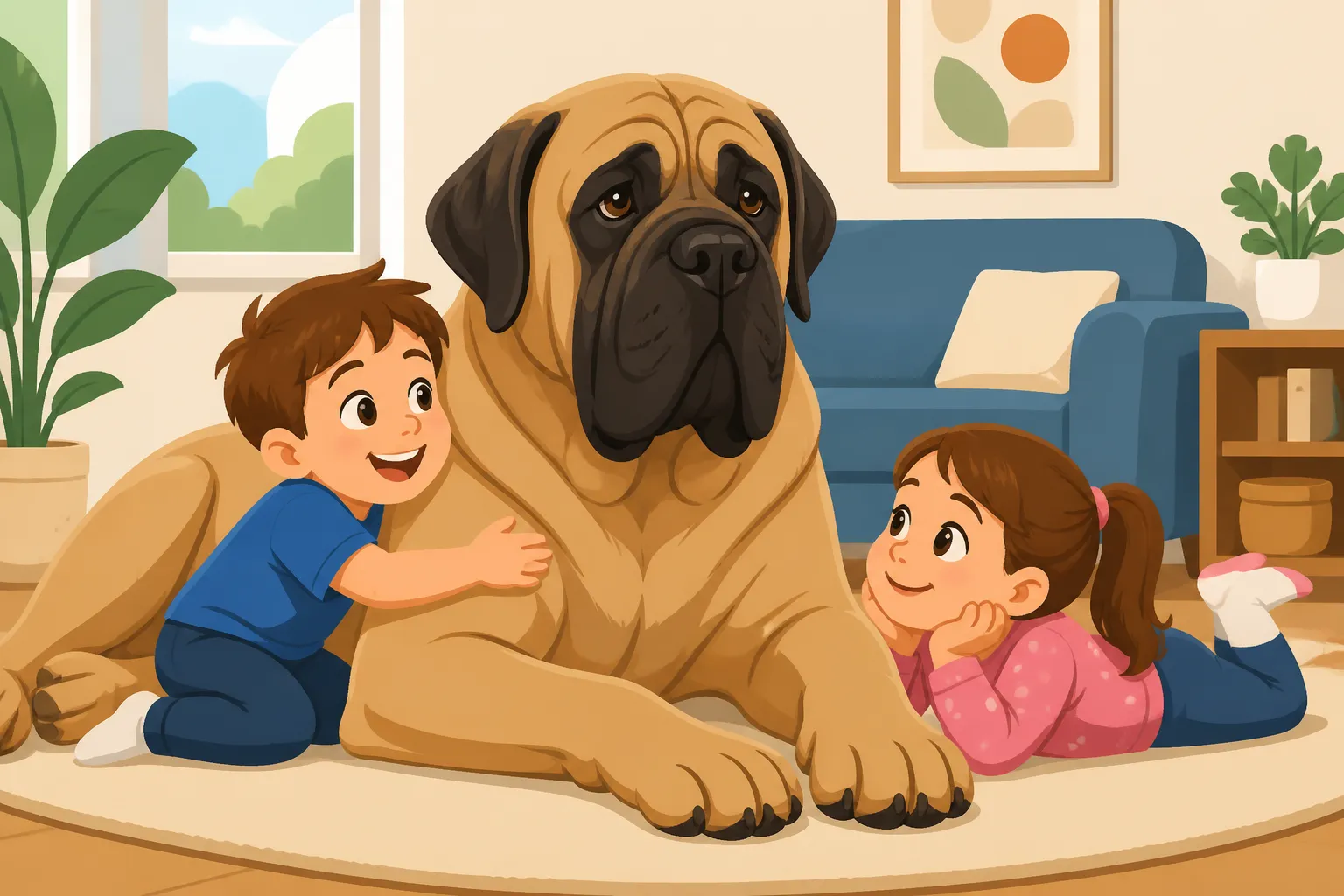
When people think of a Mastiff, often the first image that comes to mind is the "gentle giant" – a colossal, docile dog lounging placidly while children climb all over it. And while it’s true that Mastiffs are renowned for their calm demeanor and protective instincts, relying solely on this romanticized image can lead to serious misconceptions and potential issues. The reality is far more nuanced, demanding a proactive approach to management, training, and supervision.
Why "Gentle Giant" Isn't the Whole Story
A Mastiff’s size is, undeniably, its most defining characteristic. A full-grown male can easily weigh over 200 pounds, and even a female often exceeds 150 pounds. This isn't a medium-sized dog; this is a force of nature. While their intentions are almost always benign, their sheer mass means that accidental bumps, leans, or tail wags can have significant consequences for a small child. Imagine a two-year-old being enthusiastically knocked over by a Mastiff's tail; it's not aggression, but it can certainly cause injury.
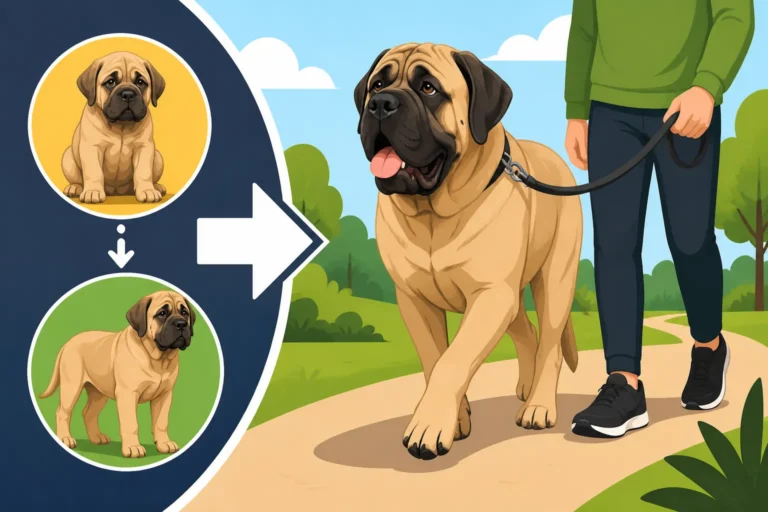
Furthermore, the "gentle" part of the equation isn't an innate, universal trait that applies to every single Mastiff without any guidance or socialization. Like all dogs, a Mastiff's temperament is a blend of genetics, early experiences, and ongoing training. A Mastiff puppy, while adorable and seemingly manageable, will rapidly grow into its enormous frame. Without proper socialization and clear boundaries from day one, even the most well-meaning Mastiff can develop habits that are incompatible with a busy family home. The phrase "gentle giant" should be seen as an aspiration, not a given, and something you actively cultivate.
Navigating Accidental Interactions
Accidents are, unfortunately, a significant concern in a Mastiff-and-children household. It's not usually about malicious intent, but simply the physics of a very large dog in close quarters with tiny humans. A Mastiff might be startled by a sudden loud noise or a child darting unexpectedly, causing it to jump or move quickly, unintentionally knocking someone over. A powerful shake of their massive head can send drool, or even a toy, flying with surprising force. Their clumsy puppy phase, which lasts much longer than in smaller breeds, can be particularly challenging.
Think about everyday scenarios: a Mastiff getting up from a nap, stretching out, and accidentally pushing a child off a cushion, or leaning against a child on the sofa, simply wanting to be close but exerting immense pressure. These aren't signs of a bad dog, but they are very real hazards that require constant vigilance from parents. We owe it to both our children and our dogs to prevent these situations before they occur, recognizing that a Mastiff’s sheer bulk makes even playful or affectionate gestures potentially dangerous for a toddler.
Understanding Mastiff Temperament Around Kids
Mastiffs are often described as having a strong protective instinct and an inherent patience, which can make them seem like ideal family dogs. However, their specific temperament traits need to be understood in the context of children, particularly small ones who might not grasp canine body language or boundaries. Their calm exterior often masks a deep sensitivity that can be easily overlooked.
The Mastiff's Patient Nature
One of the most appealing traits of a Mastiff is its incredible patience. They are not typically high-energy dogs, nor are they prone to neurotic behaviors. They tend to be steady, observant, and often quite tolerant of the general chaos that small children bring to a home. They might allow a child to lean on them, or even stumble against them, without reacting sharply. This patience is a huge asset, but it’s not limitless, and it shouldn't be tested. A Mastiff might endure more than many other breeds, but pushing them too far can lead to a breaking point, even if that breaking point is just a low growl of discomfort, which can be terrifying for a child and concerning for a parent.
It’s crucial to remember that patience isn't permission. Just because your Mastiff tolerates something doesn't mean they enjoy it or that it's good for them. Respecting their boundaries, even subtle ones like a head turn or a sigh, is paramount. This deep well of patience also makes The Sensitivity Nobody Expects in a Two Hundred Pound Mastiff a crucial read, as what appears as stubbornness can often be a gentle giant's subtle plea for understanding.
Protective Instincts: A Double-Edged Sword
Mastiffs were historically bred as guardians, and that protective instinct is still very much alive within the breed. This can be wonderful when you feel your dog is looking out for your family. However, this protective nature needs careful management around children. A Mastiff might perceive rough play between children, or even a child being disciplined, as a threat to one of their "pack" members and intervene. Their intervention, even if well-meaning, can be overwhelming or even dangerous given their size.
It's also important to consider how your Mastiff reacts to strangers, especially those who approach your children. While most Mastiffs are discerning and reserved rather than overtly aggressive, a child running up to greet a new person, or a visitor playfully interacting with your child, could trigger a protective response if the Mastiff misinterprets the situation. Proper socialization for your Mastiff from a young age, exposing them to a wide variety of people and situations in a positive way, is essential to help them distinguish between a genuine threat and everyday interactions.
Reading Their Subtle Cues
Because Mastiffs are often so quiet and reserved, their communication signals can be subtle, especially compared to more overtly expressive breeds. They might not bark or snarl immediately when uncomfortable. Instead, you might see a stiffening of their body, a quick flick of the tongue, a yawn (often a sign of stress, not tiredness), turning their head away, or even just leaving the room. These are all clear signals that they are feeling overwhelmed or anxious. Whether a Mastiff Growls Before It Acts discusses how their communication might present.
It is absolutely vital for parents to learn these subtle cues and teach older children to recognize them as well. Ignoring these early warning signs can escalate a situation, as the dog may feel forced to use more overt communication to express its discomfort. Creating a safe space where your Mastiff can retreat to, away from the hustle and bustle of children, is also incredibly important. This gives them an "out" when they need a break, preventing them from reaching a point of excessive stress.
Preparing Your Home for a Mastiff and Children
Bringing a Mastiff into a home with small children means you need to think about your living space in entirely new ways. It's not just about managing the dog, but about engineering the environment to proactively prevent issues and ensure everyone's safety. This means strategic use of barriers, creating safe zones, and securing anything that could be a hazard.
Strategic Use of Gates and Playpens
Your home, no matter how open-plan or cozy, needs to be compartmentalized. Baby gates are not just for babies; they are essential tools for managing a Mastiff in a family home. Heavy-duty pressure-mounted or hardware-mounted gates can be used to create physical separation between your Mastiff and children when direct supervision isn't possible, or when either needs a break. Think about having gates at doorways to kitchens, living rooms, or any area where a child might be playing unsupervised, or where the Mastiff might be resting.
A large, sturdy playpen can also be invaluable, not just for the children, but sometimes for the Mastiff. While a typical baby playpen won't hold a growing Mastiff, extra-large dog pens or even secured sections of a room can serve as a "safe zone" for your dog. This is especially useful during mealtimes, when visitors are over, or when the children are particularly boisterous. It allows the Mastiff to observe without being directly involved in the action, reducing stress and the chance of accidental collisions. Look for extra-tall and sturdy models on platforms like Amazon that can withstand the weight and curiosity of a Mastiff.
Creating Safe Zones for Everyone
Every member of the household, canine and human, needs a designated safe space where they can retreat and be undisturbed. For your children, this might be their bedroom or a gated play area where the Mastiff is never allowed. This teaches the dog boundaries and gives the children a sense of security. For your Mastiff, this could be a large, comfortable dog bed in a quiet corner, a crate, or a dedicated room that the children are taught to respect as the dog's personal space.
This safe zone should be inviolable. Children must be taught from the earliest age that when the Mastiff is in its bed or crate, it is off-limits. No touching, no disturbing, no bothering. This prevents situations where a child, meaning no harm, accidentally startles a sleeping or resting Mastiff, potentially eliciting a surprised and defensive reaction. A quality, orthopedic bed is also vital for a Mastiff of this size; How Thick a Bed a Mastiff Needs explores this necessity, and having several around the house, especially in their designated safe zones, provides comfort and proper support.
Securing Hazards and Mastiff-Proofing
Just as you baby-proof your home, you need to Mastiff-proof it – and then combine the two. Low-lying objects that children might grab can be easily knocked over or ingested by a curious Mastiff. Secure trash cans, keep food off low counters, and ensure dangerous items like cleaning supplies or medications are completely out of reach. Remember, a Mastiff can reach surprisingly high on counters when motivated.
Consider also the traction on your floors. Traction: Why a Mastiff Cannot Live on Bare Hardwood is a must-read. Slippery surfaces like hardwood or tile can be dangerous for a heavy, growing Mastiff, leading to slips and potential injuries, especially if they are trying to avoid a child. Place rugs or runners in high-traffic areas to provide better grip. Furthermore, secure external doors and gates. A Mastiff, despite its size, can be surprisingly quick if something catches its attention, and you want to prevent any accidental escapes, especially with children around who might leave a door ajar.
Supervision and Interaction Guidelines
Having a Mastiff and small children in the same home requires an unwavering commitment to constant, active supervision. This isn't just about watching them; it's about actively managing their interactions, teaching boundaries, and intervening before problems arise.
Never Leave Them Unsupervised
This is the golden rule, and it cannot be stressed enough: never leave a Mastiff and small children unsupervised, even for a moment. Even if your Mastiff is the most docile, well-trained dog in the world, and your children are perfectly behaved, accidents can happen in an instant. A child could trip and fall on the dog, accidentally pulling an ear or tail; the dog could be startled by a sudden noise outside and react unexpectedly; or the dog could simply shift its weight, causing a child to tumble. The potential for unintended injury is too high to risk.
This means if you need to answer the door, go to the bathroom, or step away for any reason, the dog and child must be separated. This could mean putting the dog in its crate, behind a baby gate, or bringing the child with you. It sounds demanding, and it is, but it’s the most effective way to prevent incidents and ensures peace of mind. This diligent approach is also critical if you are considering whether A Mastiff in a House With Small Children is the right fit for your family dynamic.
Establishing Clear Boundaries
Both children and the Mastiff need clear, consistent boundaries. For the Mastiff, this includes teaching commands like "leave it" for dropped toys or food, "off" to prevent jumping or leaning, and "place" for sending them to their designated safe zone. Consistency is key here; everyone in the household must use the same commands and enforce the same rules. If the Mastiff is not allowed on the furniture, then no one allows the Mastiff on the furniture, not even for a quick snuggle.
For children, boundaries mean teaching them how to interact respectfully with the dog. No pulling ears or tails, no riding the dog, no disturbing the dog while it's eating or sleeping, and no taking toys or food from the dog. It's about teaching empathy and respect for a living creature, no matter how large and seemingly invincible it appears. Using visual aids and simple language for younger children can be helpful, such as "gentle hands" or "leave Rover alone."
Managing Playtime
Playtime needs to be structured and supervised to be safe and enjoyable for everyone. Boisterous play, running, or loud games between children can easily overstimulate a Mastiff or trigger its protective instincts. Keep dog toys and children's toys separate to avoid confusion or guarding issues. Teach children never to chase the dog or run screaming towards it.
Instead, encourage calm, supervised interactions. Perhaps a child can gently brush the Mastiff's coat, or offer a treat after the dog performs a command. Interactive puzzle toys or chew toys for the Mastiff can provide mental stimulation and keep them occupied peacefully. If children want to play fetch, it should be done in an open, contained area with plenty of space, and always under adult supervision, making sure the Mastiff isn't getting too wound up. Remember, Why a Mastiff Puppy Must Not Be Exercised Hard is vital guidance, so intense, prolonged play is out even for older puppies.
Training Your Mastiff for a Child-Friendly Household
Effective training isn't just a suggestion; it's a non-negotiable requirement for any Mastiff living with small children. Their immense size means that even minor behavioral lapses can have major consequences. Consistent, positive reinforcement training from puppyhood is paramount.
Foundation Obedience Commands
Basic obedience commands are the bedrock of a well-behaved Mastiff. "Sit," "stay," "come," "down," and "leave it" are not just party tricks; they are vital safety cues. "Stay" can prevent a Mastiff from bolting out an open door when a child is nearby, or keep them settled while you attend to a toddler. "Leave it" is crucial for preventing them from snatching dropped food or toys that a child might be playing with.
Given their thoughtful nature, Mastiffs respond best to clear, consistent, and positive reinforcement methods. Harsh corrections or punishment can be detrimental, leading to fear or resentment, and a 200-pound fearful dog is a dangerous proposition. Instead, focus on rewarding desired behaviors. For complex training or simply getting started with a new puppy, a program like BAXTER & Bella’s online puppy school can provide structured lessons and support, helping you lay these critical foundations before your Mastiff puppy outgrows you.
Leash Manners and Doorway Etiquette
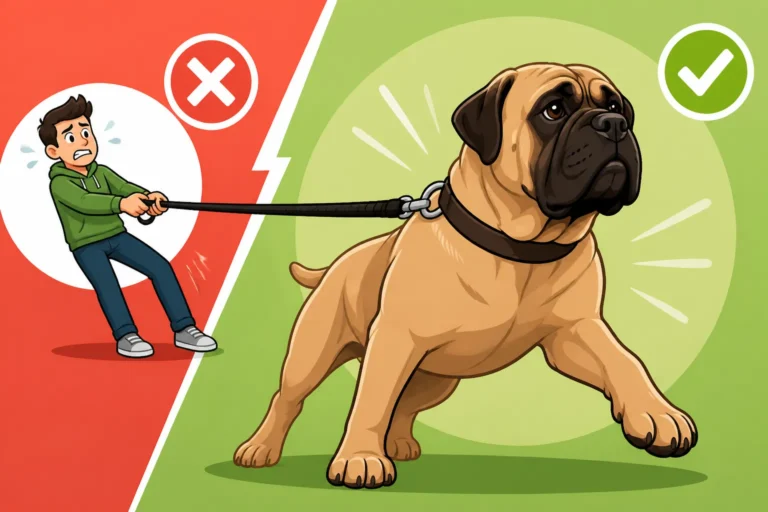
A Mastiff with poor leash manners is not just a nuisance; it's a hazard. A 200-pound dog pulling on a leash can easily drag an adult, let alone a child, off their feet. Early and consistent training on loose-leash walking is essential. Use a sturdy front-clip harness or head halter if needed to gain better control, and ensure that walks are calm and controlled. Whether a Mastiff Pulls on a Leash discusses this struggle in detail.
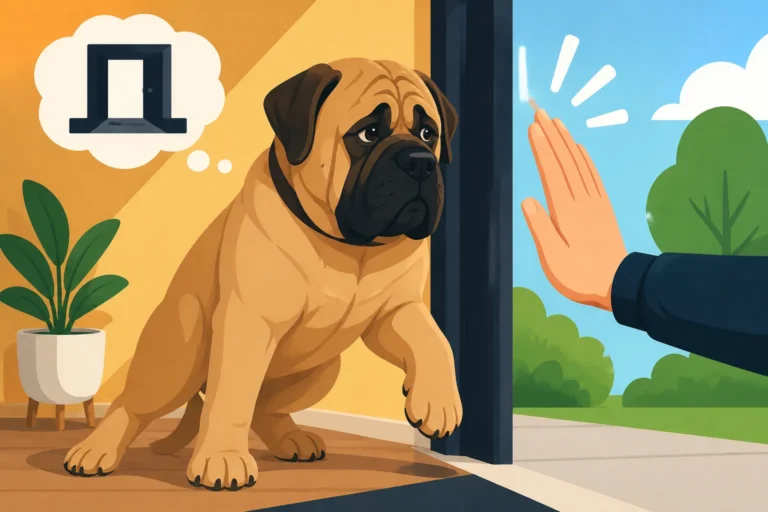
Doorway etiquette is equally important. A Mastiff should never barge through a doorway, especially if a child is on the other side. Train them to "wait" at thresholds and only pass through on your command. This prevents accidental collisions and teaches them to respect boundaries. This training also extends to getting in and out of vehicles; Why a Mastiff Puppy Must Be Lifted Into a Car is an important piece of advice to consider, especially when combining the presence of children and the physical challenges of a large breed puppy.
Desensitization and Socialization
Exposing your Mastiff puppy to a wide variety of sights, sounds, smells, and experiences from a young age is critical for developing a well-adjusted adult. This includes gentle exposure to children, but always supervised and controlled. Enroll in puppy classes where they can safely interact with other dogs and people. This helps them learn appropriate social behavior and builds confidence.
Desensitization involves gradually exposing your Mastiff to things that might normally cause a strong reaction in a calm and positive way. For instance, if your dog is startled by loud noises, slowly introduce them to child-related sounds like crying or shrieking, pairing them with positive rewards. If your Mastiff is protective of its food bowl, practice approaching it while they eat, dropping high-value treats into the bowl, to build positive associations. This isn't about teaching them to tolerate abuse; it’s about teaching them to be calm and confident in a busy, child-filled environment. Socializing a Mastiff Puppy Before It Gets Heavy provides more context on how to approach this critical early training.
Teaching Children How to Interact Safely with a Mastiff
Training your Mastiff is only half the equation. Educating your children on how to behave around their giant companion is equally, if not more, important. This needs to be an ongoing process, adapted to their age and understanding.
"Be a Tree" and "Be a Rock"
These are fantastic, simple rules to teach children for unexpected dog interactions. "Be a Tree" means if a dog approaches them or gets too excited, they should stand still like a tree, facing away, with their arms tucked in like branches. This makes them less interesting to the dog and prevents accidental knocks or playful nipping. "Be a Rock" means if they are knocked over, they should curl into a ball, protecting their face and head, and stay still until an adult helps them.
These simple, actionable responses empower children and give them a clear plan in situations where they might otherwise panic or run, which can further excite a dog. Practice these rules in a calm, playful way so that they become second nature.
Gentle Hands and Respectful Space
From the moment children are old enough to understand, teach them the concept of "gentle hands." This means no hitting, poking, pulling, or roughhousing with the Mastiff. Demonstrate how to pet softly on the shoulders or chest, avoiding sensitive areas like the head, ears, or tail, especially initially. Emphasize that the Mastiff is not a toy, a pillow, or a climbing frame.
Equally important is teaching them to respect the Mastiff's space. This ties into the concept of safe zones. Children need to understand that when the Mastiff is eating, sleeping, or in its bed, they are not to disturb it. This fosters mutual respect and reduces the likelihood of the Mastiff feeling cornered or annoyed. Explain to them, in terms they can grasp, that even the biggest dog needs its quiet time, just like they do.
Understanding Canine Body Language (for Older Children)
As children get older, they can begin to learn more about canine body language. Teach them to recognize signs that the Mastiff might be uncomfortable: a stiff body, ears back, a yawn, lip licking, or turning away. Explain that these are the dog's ways of saying, "I need a break." This knowledge empowers children to proactively give the dog space, preventing situations from escalating.
Encourage them to always ask an adult before approaching or interacting with the Mastiff, even their own family dog. This reinforces the idea of supervision and teaches them to be mindful of the dog's state. Role-playing different scenarios can also be a fun and effective way to teach these lessons in a safe environment.
Addressing Common Challenges and Scenarios
Even with the best preparation and training, life with a Mastiff and small children will present its unique challenges. Knowing how to handle common scenarios is key to maintaining a calm and safe household.
Resource Guarding (Food, Toys, Space)
Resource guarding, where a dog becomes protective of its possessions or space, can be a significant issue with a Mastiff, especially if children are involved. This might manifest as growling when a child approaches their food bowl, snapping if a child tries to take a toy, or guarding a favorite spot on the sofa. This is a natural canine behavior, but it's unacceptable and dangerous in a home with children.
If you observe any signs of resource guarding, immediately seek guidance from a professional, force-free dog trainer. They can help you implement management strategies and behavior modification techniques to address the issue safely. Until then, strict management is crucial: feed the Mastiff in a separate room, keep high-value toys out of reach of children, and ensure the Mastiff always has a safe, undisputed place to relax. What a Mastiff Can Reach on a Counter and Should Not Eat is also worth considering, as accidental "stealing" can trigger guarding.
Accidental Bumps and Knocks
Despite your best efforts, a Mastiff is a large, heavy animal prone to occasional clumsiness. Children, especially toddlers, are equally prone to unpredictable movements. A Mastiff turning quickly, wagging its powerful tail, or simply getting up from a nap can accidentally knock a child over. While often unintentional, these can be painful and frightening for a child.
The key here is prevention through environmental management and constant supervision. Ensure ample space for the Mastiff to move around without bumping into children, especially in narrow hallways or tight spaces. Teach children to avoid standing directly behind or beside a sleeping or eating Mastiff. If an accidental bump occurs, quickly assess the child for injury and calmly separate the dog and child. Do not punish the dog, as it was likely an accident. Instead, review the situation and adjust your management to prevent recurrence.
Over-Excitement and Jumping
A Mastiff, particularly a young one, can get easily over-excited, leading to jumping up on people. While a tiny puppy jumping is cute, a 150-pound Mastiff doing so can be incredibly dangerous for a small child, potentially knocking them down with force. This behavior must be addressed immediately and consistently from puppyhood.
Train your Mastiff that "four paws on the floor" is the only acceptable greeting. When they jump, calmly turn your back, ignore them, or briefly remove yourself from the situation. Only reward them with attention or praise when they are calm and all four paws are on the ground. Teach everyone, including visitors, to reinforce this rule. For children, teach them to "be a tree" if the Mastiff jumps, and always supervise greetings. Whether a Mastiff Jumps Up on Visitors is a closely related topic that details the importance of this training.
The Long-Term Commitment: Growing Up Together
Bringing a Mastiff into a home with children is a long-term commitment. Both children and dog will grow, change, and evolve, and the dynamic between them will shift over the years. Understanding this journey is key to a successful, loving relationship.
As Children Grow Older
As your children mature, their understanding of and interaction with the Mastiff will change. Toddlers become preschoolers, then school-aged children, and eventually teenagers. Their ability to understand dog behavior, follow rules, and participate in the Mastiff's care will increase. This opens up new opportunities for positive interaction. Older children can be involved in feeding (under supervision), gentle grooming, or helping with training sessions.
However, the rules of respect and supervision should never fully disappear. Even an older child needs reminders about giving the dog space and understanding its cues. The challenges might shift from accidental bumps to managing friend interactions, where visiting children might not understand the rules of the house or the dog's temperament. A Mastiff in a House With Small Children means ongoing education for everyone.
The Aging Mastiff
As your Mastiff ages, its physical and behavioral needs will change. An older Mastiff might develop arthritis or other health issues, making them less tolerant of sudden movements or rough play. Their patience might wear thin more easily, and they might seek more solitude. Caring for a Mastiff Past Five becomes particularly relevant here.
It's crucial to adjust interactions accordingly. Ensure the aging Mastiff still has its safe, quiet spaces, and teach children to be even more gentle and respectful. Be vigilant for any signs of discomfort or pain in your senior Mastiff, as this can affect their temperament. Provide comfortable, easily accessible beds and consider ramps to help them in and out of cars or up steps. Understanding that Why a Mastiff Is Old at Five means their comfort and emotional state are paramount is essential.
Nurturing the Bond
Despite the challenges, the bond between a Mastiff and the children in its family can be incredibly special. Mastiffs are known for their devotion and loyalty. They can be wonderful companions, silent guardians, and patient confidantes. Nurturing this bond requires consistent effort, mutual respect, and plenty of love.
Encourage positive, calm interactions. Involve children in appropriate aspects of the Mastiff's care, fostering a sense of responsibility and connection. Read books about dogs, watch documentaries, and continue to teach empathy. The goal is to cultivate a relationship built on trust and understanding, ensuring that your gentle giant and your precious children grow up together, creating cherished memories that will last a lifetime. This extraordinary journey is precisely why families choose such a magnificent breed, acknowledging that the rewards far outweigh the effort in a well-managed home.
Disclaimer
This article is for general informational purposes only and does not constitute professional advice. Laws, prices and regulations vary by location and change over time. Consult a qualified professional for guidance on your specific situation.