Whether DM Is Mistaken for Arthritis in a Mastiff
It's a heartbreaking moment when you start to notice your beloved Mastiff slowing down, struggling to get up, or perhaps showing a slight wobble in their hindquarters. Immediately, our minds often jump to the most common culprits for large breeds: arthritis or hip and elbow issues. But what if it's something more insidious, something that mimics joint pain but attacks the nervous system? This guide delves deep into the often-confusing symptoms of Degenerative Myelopathy (DM) and arthritis in Mastiffs, helping you understand the critical differences and why an accurate diagnosis is paramount for your giant companion.
Understanding Degenerative Myelopathy in Mastiffs
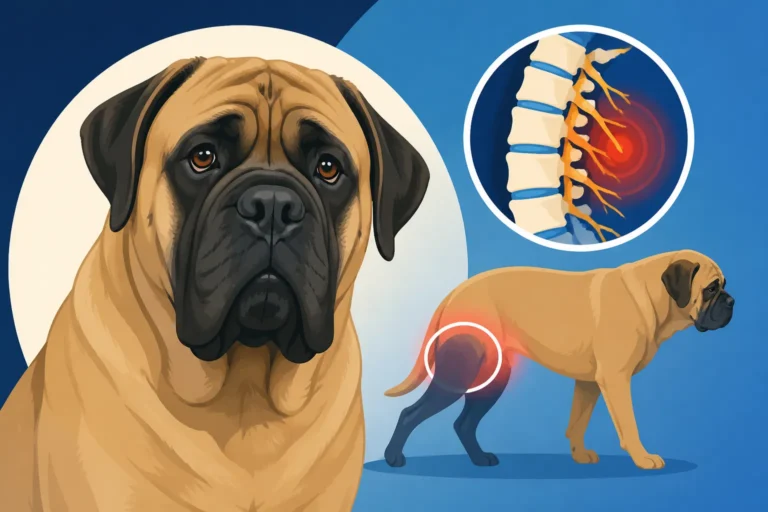
Degenerative Myelopathy, or DM, is a truly cruel and progressive neurological disease that affects the spinal cord, particularly in the thoracic (mid-back) region. It's often compared to ALS in humans because it gradually destroys the white matter of the spinal cord, which is responsible for transmitting movement commands from the brain to the limbs. For a Mastiff owner, witnessing the onset of DM can be incredibly distressing because it often starts with subtle changes that are easily mistaken for the aches and pains of aging or joint problems.
The Relentless Nature of DM
Unlike arthritis, which primarily affects the joints and can sometimes be managed to slow its progression and alleviate pain, DM is relentlessly progressive. It begins with weakness and lack of coordination in the hind limbs, gradually worsening over months to years until the dog is unable to walk. The disease is caused by a genetic mutation in the SOD1 gene, and while not all dogs with two copies of the gene will develop clinical signs, it certainly puts them at a significantly higher risk. This genetic predisposition means that breeds like the Mastiff, German Shepherd, Boxer, and Corgi are unfortunately overrepresented in DM cases. It's a non-painful condition in itself, which is a key differentiator, but the secondary effects of compensatory movement can lead to muscle soreness or strain. If you want to understand more about this debilitating condition, you can read more about What Degenerative Myelopathy Does to a Mastiff.
Why Mastiffs Are Particularly Susceptible
Mastiffs, with their immense size and powerful build, put considerable stress on their joints even in their prime. This makes them prone to conditions like hip and elbow dysplasia, and certainly arthritis as they age. This underlying predisposition to musculoskeletal issues can unfortunately mask the early signs of a neurological condition like DM. Owners and even veterinarians might initially attribute hind leg weakness or gait changes to simple arthritis or an exacerbation of pre-existing joint problems, delaying the specific diagnosis of DM. The average age of onset for DM is typically between 8 and 14 years, which often aligns with the age where arthritis is also becoming more prevalent in large breeds. For a deeper dive into when this disease typically appears, check out The Age Degenerative Myelopathy Starts in a Mastiff.
The Overlap of Symptoms: Why Confusion Arises
It's completely understandable why so many Mastiff owners, and even some veterinary professionals, might initially confuse Degenerative Myelopathy with arthritis. The outward signs, especially in the early stages, can be remarkably similar, leading to frustration and misdirection in finding effective solutions for your giant friend.
Hind Limb Weakness and Gait Changes
Both DM and severe arthritis in the hips or knees can manifest as hind limb weakness. You might notice your Mastiff struggling to get up from a lying position, especially after a nap. They might stumble, their hindquarters might seem a bit "wobbly," or they might drag their paws slightly, leading to scuffed nails. These are classic signs that can indicate either condition. A Mastiff naturally carries a lot of weight, so any weakness in the rear can make simple movements incredibly challenging. It's not uncommon to see them shifting their weight, using their front legs more, or taking shorter, choppier steps to compensate for discomfort or instability.
Difficulty Rising and General "Slowing Down"
As our Mastiffs age, we expect a certain degree of slowing down. They might not jump up to greet you with the same enthusiasm, or they might take longer to settle into a comfortable position. This general decrease in mobility and energy is often attributed to the natural aging process, which, for a giant breed, can start surprisingly early – many consider a Mastiff "old" at five years of age. This "slowing down" can unfortunately obscure the distinct progression of DM. Both conditions can cause difficulty lying down or standing up, and a reluctance to engage in once-loved activities. When your big dog suddenly can't rise as easily, your first thought is usually their massive joints. You can learn more about why older Mastiffs struggle with mobility by reading Why an Old Mastiff Cannot Get Up.
Distinguishing Pain vs. Proprioceptive Loss
Here's where the waters get murky, but also where a crucial distinction lies. Arthritis is, by definition, an inflammatory condition of the joints, and inflammation usually equals pain. Dogs with arthritis will often show clear signs of discomfort: yelping when touched in a certain area, limping, guarding a limb, reluctance to be groomed, or even sudden changes in temperament due to chronic pain. They might have "good days" and "bad days," where symptoms fluctuate with activity, weather, or medication.
DM, on the other hand, is generally not painful in its primary stages. The issue isn't joint inflammation or pain, but a breakdown in the communication lines between the brain and the limbs. This leads to a loss of proprioception – the body's sense of where its limbs are in space. Your Mastiff might not even realize they're dragging a paw or standing awkwardly. While they won't typically vocalize pain from the DM itself, the compensatory movements they make to stay mobile can strain muscles and joints, leading to secondary discomfort that can confuse the picture further. This secondary pain might make you think it's all just arthritis.
Key Distinctions: How to Tell DM and Arthritis Apart
While the early symptoms can be quite similar, there are several key differences that can help distinguish Degenerative Myelopathy from arthritis in your Mastiff. These distinctions are critical for getting an accurate diagnosis and, therefore, the most appropriate management plan.
Nature of the Condition: Neurological vs. Musculoskeletal
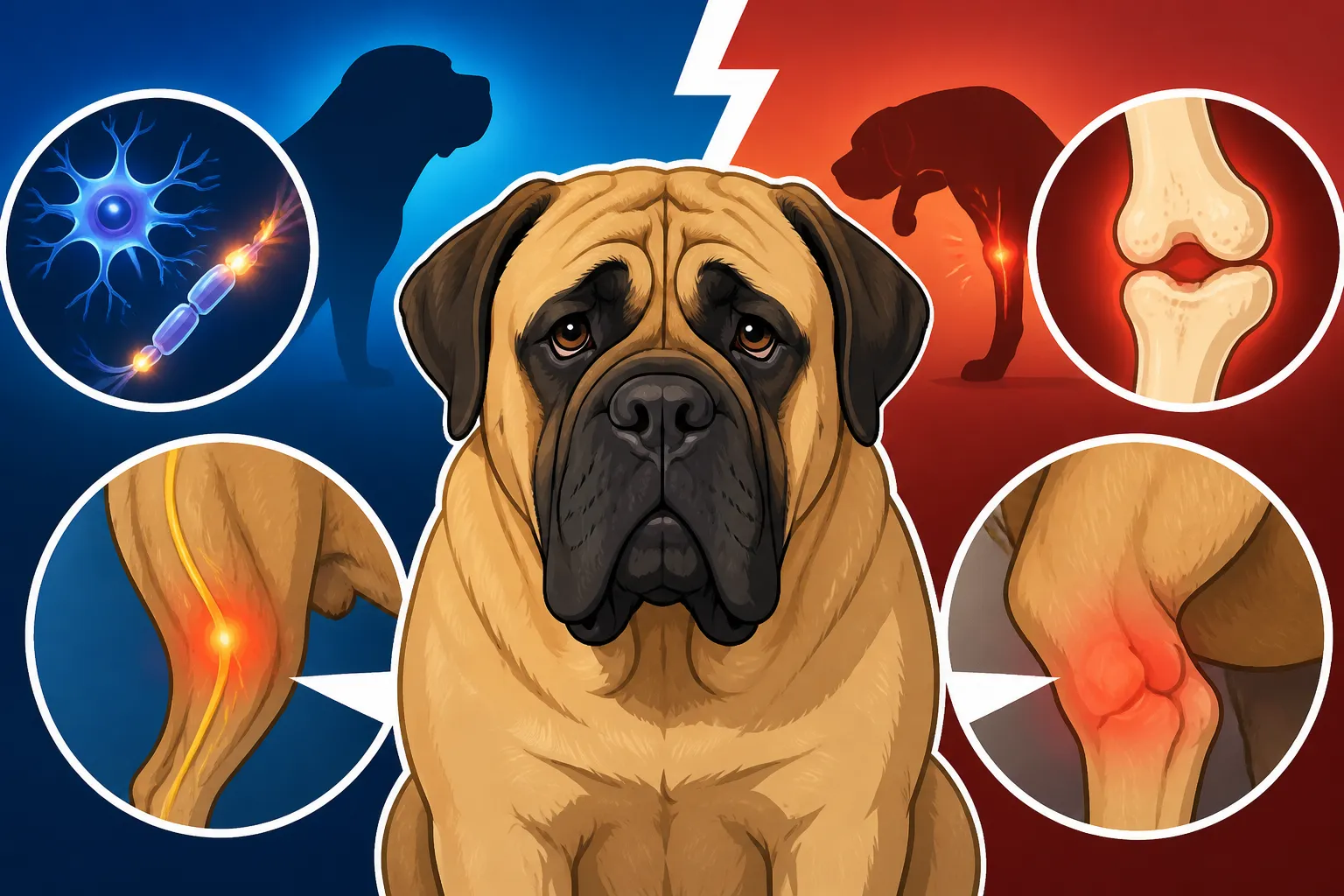
The most fundamental difference lies in the origin. Arthritis is a musculoskeletal problem, affecting the bones, cartilage, and soft tissues of the joints. It's a physical breakdown and inflammation of the joint itself. DM, however, is a neurological disease. It's a problem with the nervous system, specifically the spinal cord, which means the brain isn't effectively communicating with the limbs. Imagine a faulty electrical wire instead of a rusty hinge – very different issues, even if the end result (a difficult-to-move limb) looks similar.
Pain Response and Reflexes
As mentioned, a hallmark of DM is its non-painful nature in the early to mid-stages. Your Mastiff typically won't flinch or yelp when their hindquarters are manipulated, which would be common with severe arthritis. A neurological exam by your veterinarian will look for specific reflex responses. In DM, you might see diminished or absent conscious proprioception (the paw placement test, where the vet flips the paw over to see if the dog corrects it quickly), and altered spinal reflexes. With arthritis, reflexes might be normal, but pain will be elicited upon joint manipulation.
Progression and Symmetry
Arthritis can fluctuate; some days are better than others, and medication can often provide noticeable relief. DM, however, follows a relentlessly progressive course. It doesn't get better, only worse, though the rate of progression can vary. Critically, DM often presents with a more symmetrical weakness in both hind limbs, even if one side seems slightly worse initially. With arthritis, it's common for one hip or knee to be significantly worse than the other, leading to a more pronounced limp or lameness on one side. While severe bilateral arthritis can mimic this, the neurological signs will eventually differentiate DM. Understanding How a Mastiff's Hind End Fails With DM is vital here.
Specific Gait Abnormalities: Knuckling and Scuffing
While both conditions can lead to an awkward gait, the specifics can be telling. Dogs with DM often knuckle over their paws, meaning they walk on the top of their toes rather than the pads. This is due to the loss of proprioception. You might see the tops of their nails or knuckles becoming raw or bleeding from dragging. This scuffing of the nails is a strong indicator of DM. Dogs with arthritis might favor a limb or shorten their stride to avoid pain, but they typically maintain the ability to place their paws correctly. If your Mastiff is displaying unusual gait patterns, it's worth getting a full veterinary assessment.
| Symptom / Feature | Degenerative Myelopathy (DM) | Arthritis (Severe Hip/Knee) |
|---|---|---|
| Origin | Neurological (spinal cord) | Musculoskeletal (joints) |
| Pain | Generally non-painful initially (secondary pain possible) | Often painful (yelping, guarding) |
| Progression | Relentlessly progressive, no remission | Fluctuating, can respond to treatment |
| Symmetry | Often symmetrical hind limb weakness | Can be asymmetrical or bilateral |
| Gait | Knuckling, scuffing paws, uncoordinated | Limping, stiff, shortened stride |
| Proprioception | Significantly impaired (poor paw placement) | Generally intact, but movement limited by pain |
| Reflexes | Altered or diminished hind limb reflexes | Generally normal, but pain response |
| Muscle Atrophy | Rapid, often symmetrical hind limb atrophy | Gradual, can be asymmetrical |
Diagnostic Journey: Getting a Clear Diagnosis for Your Mastiff
Because of the overlapping symptoms, getting a clear diagnosis between DM and arthritis requires a thorough approach by your veterinarian. It’s not always a quick process, and it often involves ruling out other conditions that could be causing similar signs in a giant breed like the Mastiff. This can be a financially impactful journey, so considering options like pet insurance from providers such as Healthy Paws can be really helpful in managing unexpected costs.
Comprehensive Physical and Neurological Examination
The first and most crucial step is a comprehensive physical and neurological exam by your trusted vet. They will observe your Mastiff's gait, reflexes, muscle tone, and proprioception. This includes tests like paw placement, assessing withdrawal reflexes, and checking for spinal pain. Your vet will look for subtle differences in muscle symmetry, unusual wear patterns on nails, and listen carefully to your description of how the symptoms are progressing. These observations are the foundation upon which further diagnostic steps are built.
Ruling Out Other Conditions
Before a DM diagnosis can be made, your vet will need to rule out other conditions that cause hind limb weakness or paralysis. This is especially important in Mastiffs, given their propensity for other large-breed issues. These conditions might include:
- Severe Hip or Elbow Dysplasia: While often diagnosed earlier in life, advanced cases can mimic DM. X-rays are essential here. You can explore topics like Elbow Dysplasia Affects One Mastiff in Seven for more information on common joint issues.
- Intervertebral Disc Disease (IVDD): A slipped or herniated disc can compress the spinal cord, causing pain and neurological deficits. This often requires advanced imaging like an MRI or CT scan.
- Spinal Tumors: Growths on or near the spinal cord can also cause progressive neurological signs. Again, advanced imaging is key.
- Fibrocartilaginous Embolism (FCE): Often called a "spinal stroke," this causes sudden, non-painful paralysis, but typically has a sudden onset, unlike DM's gradual progression.
- Other Neurological Disorders: Less common conditions might also need to be considered.
X-rays are a good starting point to assess bone and joint health, but they won't diagnose DM or soft tissue spinal issues. For that, your vet might recommend a referral to a veterinary neurologist for an MRI or CT scan. These advanced imaging techniques are crucial for visualizing the spinal cord and identifying any compressions or lesions.
DNA Testing for the SOD1 Gene
There is a DNA test available that can identify if your Mastiff carries the SOD1 gene mutation associated with DM. This test is a valuable tool, but it's important to understand its limitations. A positive result (meaning the dog has two copies of the mutated gene) indicates a genetic predisposition or being "at-risk" for developing DM, but it does not mean your dog definitely has DM or will develop it. Conversely, a clear result rules out DM as a possibility. For comprehensive information on this, check out Whether a DNA Test Predicts Mastiff DM. This test is primarily used in breeding programs to make informed decisions and reduce the prevalence of the disease. While a positive DNA test combined with characteristic clinical signs can strongly suggest DM, it's not a definitive clinical diagnosis on its own.
The Ultimate, Challenging Diagnosis
Ultimately, the only definitive diagnosis of Degenerative Myelopathy is made through histopathological examination of the spinal cord post-mortem. This means after your Mastiff has passed away. While this is a difficult reality to face, it’s important for advancing our understanding of the disease and can provide closure for owners. In living dogs, a diagnosis of DM is often one of exclusion – ruling out all other possible causes for the progressive, non-painful hind limb weakness and neurological signs, especially in an "at-risk" breed. This diagnostic process can be extensive and expensive, highlighting again why many Mastiff owners look into robust pet insurance plans from companies like Healthy Paws well before any symptoms arise. The costs can be significant, potentially rivalling What Hip Surgery Costs on a Mastiff if multiple advanced diagnostics are needed.
Managing Life with DM or Arthritis
Receiving any diagnosis that impacts your Mastiff's mobility is tough, whether it's progressive arthritis or Degenerative Myelopathy. However, the path forward for managing each condition is distinctly different, underscoring why an accurate diagnosis is absolutely essential. You cannot effectively treat something if you don't know what it is.
Tailored Treatment Plans: Why Diagnosis Matters
If your Mastiff is diagnosed with arthritis, the focus will be on pain management, reducing inflammation, and supporting joint health. This often involves a combination of non-steroidal anti-inflammatory drugs (NSAIDs), other pain medications, joint supplements (like glucosamine and chondroitin, or even newer injectable options), and controlled exercise. Physical therapy, hydrotherapy, and weight management are also crucial components. Many owners find great success in slowing the progression and improving comfort, sometimes requiring adjustments as they get older. If you're looking into supportive measures, you might be interested in Joint Supplements for a Mastiff, or details about Arthritis in a Mastiff at Four.
For a Mastiff with DM, the approach is unfortunately different because there is currently no cure or treatment to stop its progression. The management focuses entirely on supportive care to maintain mobility and quality of life for as long as possible. This includes:
- Physical Therapy: Regular, gentle exercises to maintain muscle mass, range of motion, and balance. This is crucial for slowing atrophy and preventing secondary issues.
- Assistive Devices: As weakness progresses, harnesses (especially rear-support harnesses), slings, and even custom-fitted wheelchairs or carts can dramatically improve your Mastiff's independence and allow them to enjoy walks and outdoor activities. Learning Whether a Mastiff With DM Can Be Fitted With a Cart can offer hope and practical solutions.
- Maintaining a Clean Environment: With reduced mobility, keeping your Mastiff clean and preventing urine scalding or pressure sores becomes paramount. Regular repositioning and absorbent bedding are vital.
- Nutrition: Ensuring a balanced diet and maintaining a healthy weight to reduce stress on remaining mobile limbs.
- Mental Stimulation: Engaging their minds through puzzle toys and gentle interaction is important when physical activity is limited.
- Referral to Specialists: For complex cases, seeking care from a board-certified veterinary neurologist at a referral hospital might be necessary. This is especially true if you are unsure whether your primary vet has the appropriate equipment or experience to rule out all other neurological issues. Sometimes, your Mastiff may require Which Surgeries a Mastiff Needs a Specialist For if other issues are found.
The Emotional and Financial Toll
Both conditions can take a significant emotional toll on owners. Watching a once-vibrant Mastiff lose their mobility is heart-wrenching. The financial implications are also substantial. Diagnostic imaging, specialist consultations, ongoing medications for arthritis, or the costs of physical therapy, equipment, and home modifications for DM can add up quickly. This is where early planning, potentially with pet insurance, can ease some of the burden. Companies like Healthy Paws are often recommended for their comprehensive coverage, which can be a lifeline when dealing with chronic, expensive conditions in giant breeds like Mastiffs. Understanding the financial commitment is key, and articles like The Full Cost of Eight Years With a Mastiff can provide perspective. While DM is ultimately terminal, effective management can provide months, or even years, of good quality life for your Mastiff. The same goes for severe arthritis, where advanced care can significantly extend their comfortable years. If your Mastiff is past five years old, you might also find guidance in Caring for a Mastiff Past Five.
A Note on Quality of Life and End-of-Life Decisions
Ultimately, whether dealing with advanced arthritis or Degenerative Myelopathy, owners face difficult decisions about their Mastiff's quality of life. Regularly assessing their comfort, their ability to enjoy life, and their dignity is crucial. Your veterinarian can help you evaluate these factors. For older Mastiffs, issues like mobility become a central concern, and resources like Lifting an Old Mastiff That Cannot Get Up can provide valuable guidance on making their senior years as comfortable as possible and managing their increasing immobility.
Disclaimer
This article is intended for informational purposes only and does not constitute veterinary advice. Always consult with a qualified veterinarian for any health concerns or before making any decisions about your Mastiff's care.