Where the Mastiff Came From Before Britain
When we think of the modern Mastiff, our minds often jump to images of majestic English estates or perhaps a cozy hearth in a British home. However, the story of this magnificent breed stretches back far beyond the shores of Britain, winding through ancient empires and across vast continents. If you've ever wondered about the true, ancient lineage of these gentle giants, you're about to embark on a fascinating journey through time, unraveling the threads of their history before they ever became the "Old English" Mastiff we know and love today.
The Mythical Origins of the Molossus Dog
The journey of the Mastiff truly begins in the mists of antiquity, with a legendary dog known as the Molossus. This wasn't a breed in the modern sense, with a registry and a formal standard, but rather a type of large, powerful dog found in the ancient kingdom of Molossia, located in Epirus (modern-day Greece and Albania). These dogs were renowned for their immense size, courage, and protective instincts, making them invaluable assets to the Molossian people.
Descendants of Ancient War Dogs
The Molossus dogs were first and foremost guardians. They protected flocks from formidable predators like wolves and bears, and equally, they stood watch over homes and villages. Their reputation for ferocity and loyalty quickly spread throughout the ancient world, becoming synonymous with powerful canine companions. It’s easy to imagine these colossal canines, standing vigilant on rugged mountain terrain, their deep barks echoing through the valleys. The sheer physical presence of these animals was often enough to deter threats.
Indeed, their formidable nature meant they were not just protectors of livestock but also fierce combatants. Stories from antiquity often depict these dogs as integral to warfare, accompanying soldiers into battle. Their size and strength made them terrifying adversaries, capable of breaking enemy lines or defending positions. This martial heritage is a foundational piece of the Mastiff's story, showcasing a lineage built on courage and an unwavering protective spirit. If you're curious about their ultimate ancestors, read more about The Molossus in the Mastiff's Ancestry.
Appearance and Temperament of the Molossus Type
While no photographs exist, historical descriptions and artistic representations give us a glimpse of the Molossus. They were large, muscular, and broad-chested, with strong jaws and a heavy bone structure – a physical blueprint that would be passed down through millennia. Their heads were massive, often described as powerful and intimidating. Imagine a dog built like a tank, capable of immense power and endurance, perfectly suited to the harsh demands of ancient life.
Their temperament, though fearsome in battle or against predators, was also highly valued for its loyalty to their masters. They were brave and tenacious, yet deeply bonded with their human families. This combination of formidable protection and steadfast devotion is a hallmark of the Mastiff type throughout history, suggesting that the gentle giant personality we adore today has very deep roots. Even then, an animal of this stature would have required significant resources; a modern Molosser owner today might find themselves frequently browsing sites like Chewy for robust supplies.
Mesopotamia and the Assyrian Empire's Mastiff-Type Dogs
Long before the Molossus became famous in Greece, evidence of massive, mastiff-like dogs emerged from the cradle of civilization itself: ancient Mesopotamia. The Assyrian Empire, known for its formidable military and intricate art, provides some of the earliest and most compelling visual records of these powerful canines, depicting them in roles that hint at their enduring utility.
Carvings of Lion Hunters and Guardians
Archaeological discoveries from Assyrian palaces, dating back thousands of years, showcase stunning carvings of colossal dogs. These dogs are depicted with short muzzles, heavy bone, and powerful builds, strikingly similar to the general mastiff type. They appear in scenes of incredible drama and prowess, most notably as lion hunters. Imagine the sheer bravery and strength required for a dog to engage in such a dangerous pursuit, working alongside human hunters to bring down one of the most fearsome predators in the ancient world. These images are not just art; they are historical documents, illustrating the vital role these dogs played in the lives of the Assyrian elite.
Beyond the hunt, these magnificent animals were also employed as guardians. Palace entrances and gates often featured carvings of these dogs, symbolizing their protective power. They stood as silent sentinels, deterring intruders and safeguarding the royal household. This dual role—both hunter and protector—speaks volumes about their versatility and the high esteem in which they were held. To delve deeper into these fascinating historical depictions, explore The Assyrian Carvings That Show Mastiff Type Dogs.
Symbolic Power and Practical Utility
The presence of these dogs in such prominent artistic displays wasn't merely decorative; it was symbolic. They represented strength, courage, and the might of the Assyrian Empire itself. To own and command such powerful creatures was a testament to one's status and authority. The ruler Ashurbanipal, for instance, famously depicted his large hunting dogs. These weren't pets in our modern sense, but highly valued working animals, essential for both sport and security.
Their practical utility extended to guarding trade routes and military outposts, their imposing size and watchful nature providing a living deterrent. The sheer logistics of maintaining such large dogs in ancient times would have been considerable, requiring substantial feeding and care. Even today, feeding a modern Mastiff requires careful consideration of diet, a fact many owners manage with reliable resources like Chewy. The historical records suggest that their unwavering loyalty and effectiveness in their roles made them indispensable members of society.
Classical Antiquity: Greek and Roman Influence
As civilizations rose and fell, the legacy of these powerful Molosser-type dogs continued to evolve, finding new prominence in the classical worlds of Greece and Rome. Here, their reputation as formidable companions and protectors cemented their place in history, leading directly to their eventual spread across Europe.
Alexander the Great's Legendary Dogs
Perhaps one of the most famous anecdotes involving ancient mastiff-type dogs comes from the time of Alexander the Great. Stories tell of dogs gifted to Alexander from India or Epirus, described as incredibly powerful and fierce, capable of taking down elephants or lions. While some details are embellished by legend, the core truth likely remains: Alexander, a conqueror who understood the value of strength and loyalty, would have keenly appreciated such magnificent animals. These dogs were not just pets; they were living symbols of power, courage, and strategic advantage, often accompanying his armies on their campaigns. To learn more about these fascinating companions, consider reading Alexander the Great's Mastiff Type Dogs.
These dogs served a dual purpose in Alexander's campaigns. On one hand, their sheer presence could be a psychological weapon, intimidating enemies. On the other, they were undoubtedly valuable for scouting, guarding camps, and even engaging in direct combat when necessary. The logistics of moving such large dogs with an army across vast distances speaks to their importance and the considerable effort invested in their upkeep.
Roman Arenas and Military Conquest
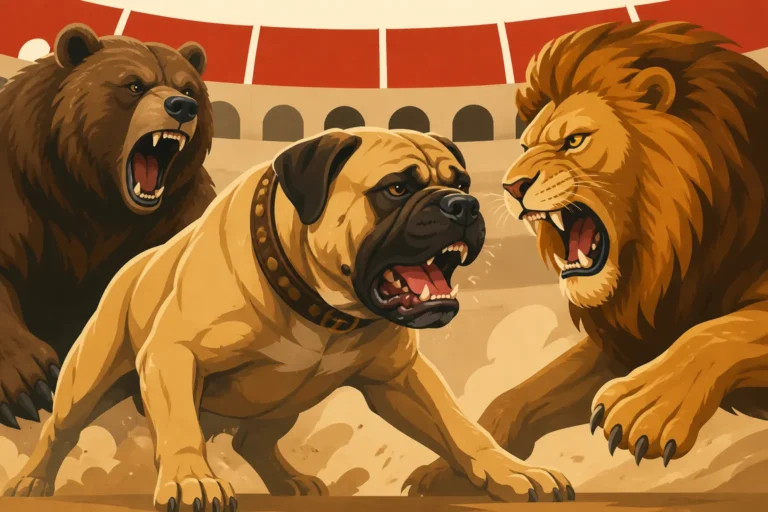
The Romans, ever practical and keen observers, quickly adopted and further developed these mastiff types. They were captivated by their strength and ferocity, deploying them in various capacities, some quite brutal. The Roman arenas, famous for gladiatorial contests, often featured these dogs in combat with wild animals like bears, lions, and even other dogs. This spectacle, though grim, further solidified their image as powerful and indomitable creatures. You can explore the history of these combatants in The Mastiffs That Fought in the Arena.
However, their most significant impact came through their role in the Roman military. As the Roman Empire expanded, its legions brought these powerful dogs with them. They were used as war dogs, scouts, and guards, their imposing presence and protective instincts making them invaluable assets on the battlefield and in newly conquered territories. It was through these military campaigns, particularly the invasion and occupation of Britannia, that these powerful Molosser types first set paw on British soil. The arrival of these dogs with the Roman legions directly seeded the lineage that would eventually become the English Mastiff. For insight into this pivotal moment, check out How Roman Troops Brought Mastiffs to England.
The Continental Spread and Diversification
The Roman Empire’s vast reach and extensive trade networks played a crucial role in spreading these Molosser-type dogs across Europe. As these formidable canines moved beyond their origins, they adapted to diverse environments and human needs, leading to the development of various regional "mastiff-like" dogs that would form the foundational stock for many of today's giant breeds.
Adaptation to Local Needs and Environments
As these powerful dogs traveled with traders, soldiers, and settlers, they encountered different challenges and opportunities in new lands. In some regions, their primary role remained guarding livestock against large predators, a task for which their size and courage were perfectly suited. In others, they became formidable estate guardians, protecting property and families from intruders. Their adaptability allowed them to integrate into various human societies, taking on roles that mirrored the needs of the local populace.
Over generations, these isolated populations began to diverge. Dogs in mountainous regions might have developed thicker coats or more rugged builds, while those in more populated areas might have emphasized a calmer disposition when not actively guarding. This natural selection, combined with intentional breeding by local communities for specific traits, led to a diversification of the Molosser type across the continent. This process of evolution and adaptation is why so many large, powerful breeds today share a common ancestry, and why we often speak of a "mastiff type" rather than just one breed. To understand this broader family, read about Why So Many Breeds Are Called Mastiff.
Early European Mastiff-Type Roles
Across continental Europe, these large dogs were known by various names and served different functions. They were the ancestors of dogs used as catch dogs for wild boars, protectors for butchers (leading to names like "butcher's dog" in some German regions), and steadfast companions for noblemen. Their strength made them ideal for tasks requiring immense power, while their loyalty secured their place within human families.
These dogs were generally prized for their physical attributes and working capabilities rather than specific aesthetic standards. A dog that could effectively guard a farm, deter a thief, or assist in a hunt was a valuable asset, regardless of minute variations in coat color or ear set. This pragmatic approach to breeding ensured that the dogs remained robust and functional, capable of performing the demanding tasks required of them. For anyone looking to understand the core needs of a powerful dog, considering durable and supportive products from Chewy makes a lot of sense, reflecting the same practical utility sought in ancient times.
Bridging to Britain: The Roman Legacy
The journey of the Mastiff to Britain is inextricably linked with the ambitions of the Roman Empire. While large, native dogs likely existed on the British Isles, it was the arrival of the Romans that firmly established the Molosser type, laying the groundwork for the distinct breed we recognize today.
The Roman Invasion and Canine Companions
When Julius Caesar invaded Britain in 55 and 54 BC, he reportedly encountered powerful, native war dogs used by the Britons. Whether these were true Molosser types or large, indigenous breeds is a subject of historical debate. What is clear, however, is that the Roman legions, when they later conquered and occupied Britain, brought their own formidable canine companions with them. These were the descendants of the Molossus, dogs honed by centuries of warfare, guarding, and hunting across the Roman Empire.
These Roman dogs interbred with any existing large native dogs, contributing their own genetics and characteristics to the developing canine population of the island. This infusion of Roman Molosser blood likely amplified the size, strength, and protective instincts already present in Britain’s native stock, forging a new, even more impressive type of dog. The Roman presence, lasting for centuries, ensured a continuous flow of these powerful genetics into the British canine gene pool. For an insightful historical perspective, you might read What Caesar Wrote About British Mastiffs.
The Emergence of the "Old English Mastiff"
Over the subsequent centuries, after the Romans eventually withdrew, these integrated dog populations continued to evolve on British soil. Cut off from continental influences, and bred for the specific needs of medieval England—guarding castles, estates, and protecting against poaching—the characteristics of what would become the "Old English Mastiff" began to solidify. Their primary role remained that of a formidable guardian, a living fortress against threat.
These dogs became symbols of status and power, often depicted alongside knights and noblemen. Their sheer size was a deterrent in itself, and their unwavering loyalty to their masters made them indispensable. The rich tapestry of British history is interwoven with tales of these magnificent dogs protecting homes and families. From this point forward, the Mastiff's story becomes distinctively British, but never forgetting its ancient, international heritage. If you're interested in the timeline of their evolution within Britain, explore How Old the Mastiff Is as a British Breed and later on, how they guarded The English Castles Mastiffs Guarded. The evolution of the Mastiff from its ancient, global origins to the beloved British icon is a testament to its enduring qualities of strength, loyalty, and imposing presence, qualities that continue to captivate dog lovers today.
Characteristics of Early Mastiff-Type Dogs Across Eras
Understanding the Mastiff's journey before Britain means looking at the consistent traits that made these dogs so valuable across different ancient cultures. While not formalized breeds, the "mastiff type" shared core characteristics that ensured their survival and utility.
Common Traits and Roles
Throughout Mesopotamia, Greece, and Rome, these large dogs were consistently chosen for their robustness, courage, and protective nature. They were not dainty companions; they were working animals, built for demanding tasks. Their size was an obvious advantage, making them formidable deterrents and powerful combatants. Their strong jaws and imposing physical presence were essential for hunting large game and confronting human or animal threats.
Beyond their physical might, their intelligence and loyalty were equally prized. A dog that could not be trusted or trained would be a liability, especially one of such power. Ancient texts and art suggest a deep bond between these dogs and their handlers, reflecting a trainable and devoted temperament that made them effective partners in complex tasks like warfare or large-scale hunts. These traits underscore why the mastiff type endured through millennia, adapting but never losing its fundamental essence.
Regional Variations and Selective Pressures
While the core "mastiff type" remained consistent, variations undoubtedly arose due to regional selective pressures. Dogs in colder climates might have developed denser coats, while those in hotter regions might have had shorter, sleeker fur. The specific threats they faced—whether lions in Assyria, wolves in Epirus, or human raiders across Europe—would have shaped their courage, speed, and bite strength.
The table below offers a generalized comparison of these early mastiff-type dogs, highlighting their enduring characteristics across different ancient civilizations.
| Trait / Era | Molossus (Epirus, Greece) | Assyrian Empire (Mesopotamia) | Roman Empire (Europe) |
|---|---|---|---|
| Primary Role | Livestock/Estate Guardian, War Dog | Lion Hunter, Palace/Border Guardian | Arena Combatant, War Dog, Guardian |
| Key Physical | Large, Muscular, Broad Chest, Heavy Bone | Powerful Build, Short Muzzle, Strong Jaw | Robust, Powerful, Intimidating Size |
| Temperament | Courageous, Loyal, Fierce Protector | Brave, Tenacious, Highly Protective | Fearless, Loyal, Adaptable |
| Spread Method | Trade, Military Campaigns | Trade, Royal Gifts | Military Expansion, Colonization |
| Notable Use | Alexander the Great's companions | Ashurbanipal's hunting dogs | Gladiator games, Legionary dogs |
This table illustrates the remarkable consistency of the mastiff type's core identity—a powerful, protective, and loyal companion—even as it evolved and adapted to the specific demands of different ancient societies. These were dogs built for purpose, and their genetic legacy is still clearly visible in the modern Mastiff today.
Disclaimer
This article is for general informational purposes only and does not constitute professional advice. Laws, prices and regulations vary by location and change over time. Consult a qualified professional for guidance on your specific situation.