What Caesar Wrote About British Mastiffs
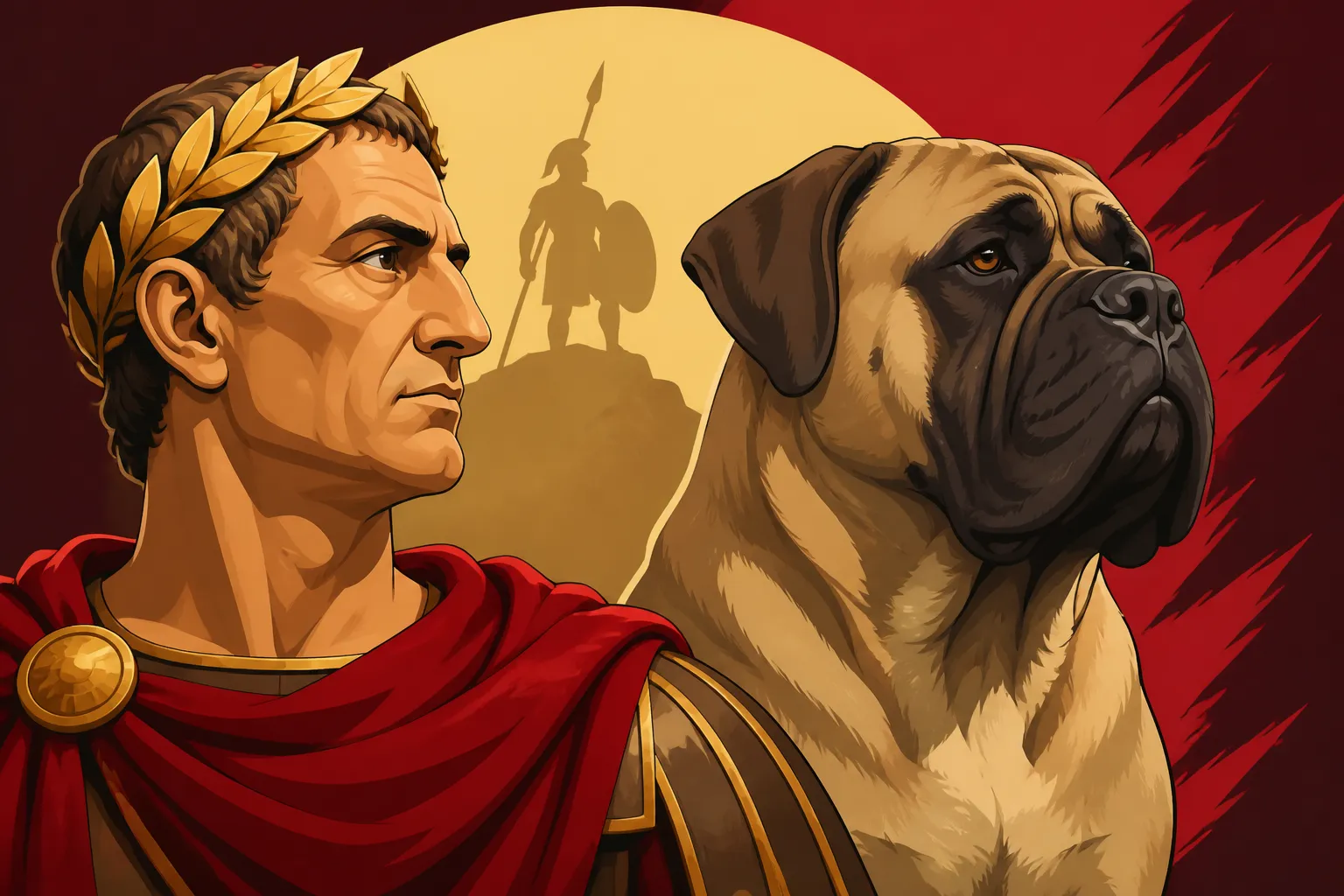
Many of us, when we first fall in love with the majestic Mastiff, find ourselves drawn into the rich tapestry of their history, often picturing them as ancient guardians or fierce war dogs. One name that frequently comes up in these historical discussions is Julius Caesar, and it's natural to wonder what exactly the great Roman general had to say about the imposing canines he might have encountered during his expeditions to Britain. It’s a fascinating journey to separate the historical accounts from the legends that have grown over centuries, and this guide aims to delve into what Caesar actually recorded about the early British Mastiff type.
The Context of Caesar's Writings: A Military Commander's Focus
When we look to Julius Caesar for insights into ancient British dogs, it’s crucial to remember the purpose of his writings. His Commentarii de Bello Gallico, or Commentaries on the Gallic War, were not intended as zoological surveys or cultural ethnographies in the modern sense. They were military reports, a detailed chronicle of his campaigns in Gaul and his two incursions into Britain. His primary goal was to inform the Roman Senate and people about his conquests, justify his actions, and highlight the challenges and triumphs of his legions.
The Gallic Wars and British Expeditions
Caesar's campaigns were brutal, strategic, and deeply focused on military objectives: logistics, troop movements, enemy tactics, and the geography relevant to warfare. He invaded Britain twice, in 55 and 54 BCE, not with the intent of permanent conquest, but primarily to punish the Britons for aiding the Gauls and to deter future resistance. His observations were keen, but always through the lens of a military strategist assessing threats, resources, and terrain. This military imperative naturally colored what he chose to record and what he overlooked or mentioned only superficially. He described the people, their chariots, their fighting styles, and the land, but rarely focused on the domestic animals unless they had a direct bearing on military operations or resources.
Caesar's Eye for Military Detail
If something was an obstacle, an asset, or a strategic point, Caesar noted it. He was meticulous about fortifications, river crossings, forest cover, and the fighting prowess of various tribes. He described the Britons' use of chariots in battle with awe and respect, noting their skill and the difficulty they posed to his legions. He documented the tides, the weather, and the reactions of his soldiers. However, details that were not directly pertinent to the military campaign or political narrative – such as the specific breeds of dogs kept by the Britons – were often, understandably, omitted or mentioned only in passing.
The Lack of Detailed Canine Descriptions
This intense military focus means that anyone hoping for a vivid, detailed description of a "Mastiff" as we know it today will be disappointed by Caesar's direct accounts. He simply wasn't writing a dog breed history. The British dogs, formidable as they may have been, did not represent a unique military threat or a critical resource that warranted extensive commentary in his dispatches. They were likely a part of the backdrop, integrated into the life and culture he observed, but not the main event. This isn't to say they weren't important; rather, they weren't important to his immediate narrative.
What Caesar Actually Wrote About British Dogs
So, if Caesar didn't pen a detailed breed standard for the ancient British Mastiff, what did he actually say? The reality is far more subtle and requires careful interpretation. His direct mentions of dogs in Britain are remarkably sparse, leading to a long history of inference and sometimes, outright embellishment.
Brief Mentions in Commentarii de Bello Gallico
Within Caesar’s Commentarii de Bello Gallico, there are no lengthy passages dedicated to the dogs of Britain. There are no descriptions of their size, temperament, or specific appearance that would allow us to definitively identify them as early Mastiffs. The most commonly cited reference, which has fueled much of the Mastiff's early historical narrative, comes from a section where he discusses the overall characteristics of the British people. He noted their hunting skills and their use of animals. Crucially, the term often attributed to these dogs in his writings is "pugnaces," which translates to "pugnacious" or "fighting." He described the Britons as using these dogs for hunting and, by implication, in protection or perhaps even as a deterrent in conflict, given the Roman fascination with war dogs. However, it's not a direct observation of their use in battle against his legions but more a general characteristic of the animals bred there.
Inferring Canine Presence from British Culture
While direct descriptions are lacking, we can infer a significant canine presence. Dogs were integral to ancient societies, serving roles in hunting, herding, guarding, and companionship. The Britons, being a tribal society heavily reliant on hunting and agriculture, would undoubtedly have kept a variety of dogs. Large, powerful dogs would have been invaluable for hunting large game like wild boar and deer, and for protecting livestock and homesteads. It's this logical inference, combined with the "pugnaces" descriptor, that allows us to connect Caesar's brief remarks to the ancestors of the Mastiff. The sheer size and power attributed to these dogs aligns with the eventual development of the Mastiff breed. How Old the Mastiff Is as a British Breed ties directly into this ancient lineage, suggesting a long history of large dogs in Britain.
The 'Pugnaces' or Fighting Dogs
The most evocative term Caesar might have used, 'pugnaces', suggests dogs bred for their fighting spirit and strength. This is where the narrative of the Mastiff as a formidable war dog or guardian truly takes root. It implies dogs that were not merely companions but active participants in the more strenuous aspects of ancient life. These would have been dogs with substance, courage, and a strong protective instinct – traits that are still hallmarks of the modern Mastiff. The Romans themselves were well-acquainted with large war dogs, often of the Molossian type, and would have recognized similar attributes in any powerful canine they encountered. The Molossus in the Mastiff's Ancestry provides further context on these historical connections.
The Roman Perspective on Dogs and War
To truly understand the impact of Caesar's sparse words, we need to consider the broader Roman context regarding dogs. The Romans were practical people, and dogs played various roles in their society, from guarding villas to assisting in gladiatorial games.
Dogs in Roman Warfare and Hunting
The Romans were certainly not strangers to using dogs in warfare. They had their own formidable war dogs, often descendants of the ancient Molossian hounds. These dogs were used to break enemy lines, act as sentries, and track. So, when Caesar referred to British dogs as "pugnaces," it resonated with a Roman audience familiar with the concept of powerful, even aggressive, canines. Beyond warfare, hunting was a popular Roman pastime, and large, strong dogs were essential for chasing down and holding formidable prey. The British landscape, with its dense forests and abundant wildlife, would have necessitated equally robust hunting partners.
The Molossian Influence
The Molossian dogs of ancient Epirus (modern-day Greece and Albania) were renowned for their size, strength, and guarding abilities. They were spread across the Roman Empire and are considered ancestral to many of today's large guardian breeds, including the Mastiff. The Assyrian Carvings That Show Mastiff Type Dogs illustrate an even older lineage of these powerful canines. The descriptions of these Molossian dogs—brave, powerful, and staunch defenders—would have provided a framework through which Romans like Caesar might have viewed any impressive dog breed encountered in foreign lands. The fact that the British dogs were noted for their "pugnacious" nature likely drew parallels to these well-known, formidable breeds.
Beyond the Battlefield: Other Roles for Large Dogs
While the military and hunting aspects often dominate the historical narrative, it's important to remember that large dogs in ancient times also served crucial roles in domestic life. They were guardians of property, deterrents to thieves and predators, and sometimes even providers of food or skins. A dog that was robust enough to hunt a wild boar would certainly be capable of protecting a home or a flock of sheep. The Romans, with their highly organized society, valued order and security, and powerful dogs were a part of maintaining that. This practical utility is likely what caught Caesar's attention, even if he didn't elaborate on the specifics of the animals themselves.
The Legacy of Caesar's Observations on the Mastiff Narrative
Caesar's brief, albeit significant, mention of British "pugnaces" dogs created a foundational myth that has shaped the perception and history of the Mastiff breed for centuries. It's a testament to the power of a few words in historical texts.
The Foundation of the "British Mastiff" Story
The idea that the Romans encountered powerful, fighting dogs in Britain, then brought some back to Rome to fight in the arenas, became a cornerstone of the Mastiff's origin story. How Roman Troops Brought Mastiffs to England and The Mastiffs That Fought in the Arena explore these pathways. This narrative painted the Mastiff as a breed with a lineage stretching back to antiquity, steeped in courage and strength. It linked the breed directly to the Roman Empire, giving it an aura of ancient nobility and formidable capability. This single historical reference, however brief, established the British Isles as a significant early home for this powerful type of canine, laying the groundwork for what would eventually become the Old English Mastiff.
Separating Fact from Legend
It's vital for modern Mastiff enthusiasts to understand that while Caesar’s writings suggest the presence of large, formidable dogs in ancient Britain, they do not offer irrefutable proof of a direct, uninterrupted lineage to the modern Mastiff. The "pugnaces" reference is tantalizing, but it's not a definitive description of a specific breed. Much of the subsequent history involves interpretation, storytelling, and the blending of historical fragments with romanticized notions. The truth likely lies in a continuous evolution of large, guardian-type dogs within Britain, influenced by various invasions, migrations, and breeding practices over millennia. The core takeaway from Caesar isn't a detailed blueprint, but rather a powerful early endorsement of the type of dog that would one day become our beloved Mastiff.
The Enduring Appeal of Ancient Lineage
Despite the lack of detailed descriptions, the connection to Caesar and ancient Rome adds an undeniable mystique to the Mastiff. It contributes to the breed's image as an ancient, noble guardian with a storied past. For many owners, knowing their gentle giant carries the genes of dogs that impressed even the mighty Roman legions adds a layer of pride and connection to history. It reinforces the idea that these dogs are not just pets but living links to a fascinating, distant past, embodying centuries of loyalty, strength, and quiet dignity. This deep-seated narrative, originating in Caesar's fleeting observations, continues to make the Mastiff one of the most compelling and historically rich breeds we know.
| Feature Described | Caesar's Direct Statements (or strong inference) | Common Interpretations/Legends |
|---|---|---|
| Dog Type | "Pugnaces" (pugnacious, fighting) | Directly refers to "Mastiff" |
| Role in Britain | Used for hunting | Used extensively as war dogs against Romans |
| Roman Usage | No direct statement on immediate adoption | Romans took many back for arena fights |
| Physical Description | None specific | Implied large, powerful build |
| Significance | Part of general observations on British tribes | Definitive origin point for the breed |
Disclaimer
This article is for general informational purposes only and does not constitute professional advice. Laws, prices and regulations vary by location and change over time. Consult a qualified professional for guidance on your specific situation.