Why a Mastiff’s Tail Is Never Docked
A Mastiff puppy is born with a full tail, and the breed standard describes that tail as a natural part of the dog—not something to shorten for appearance. Still, photos and conversations about docking can leave new owners unsure what is normal. This guide explains the Mastiff tail’s shape, why routine docking is not the breed norm, and how to care for it.
What a Mastiff’s tail is supposed to look like
The natural tail is part of the breed standard
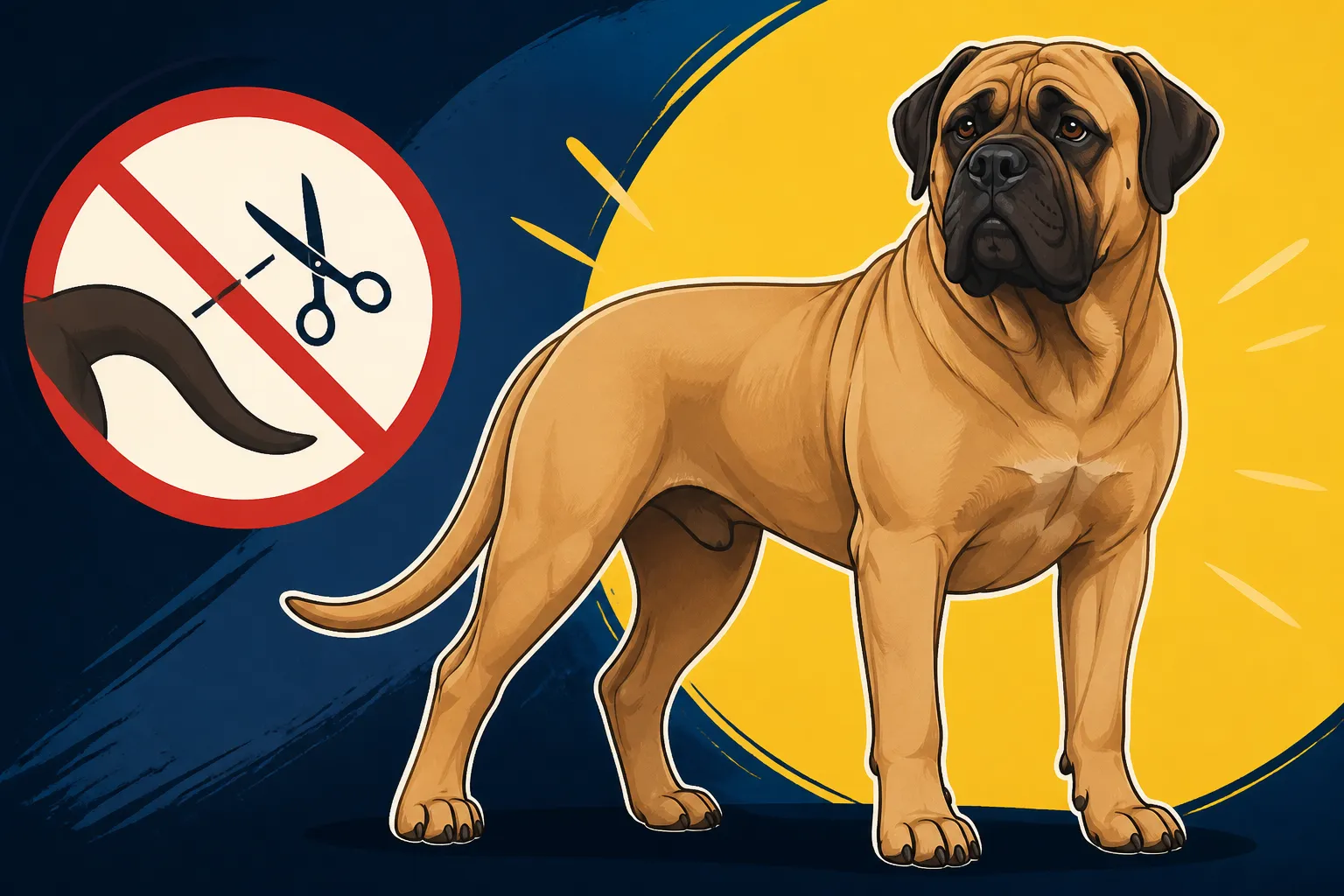
A Mastiff’s tail is broad at the base, gradually tapers, and reaches down to the hocks or a little below. When the dog is relaxed, it usually hangs naturally. When the dog is moving or alert, it may curve, but it should not be carried high over the back. The tail is not supposed to be trimmed into a particular shape.
That description is more than a grooming suggestion. A breed standard records the physical features expected of a breed, and the Mastiff’s standard calls for a natural tail. Docking is not a routine step in producing a show-ready Mastiff. If you are comparing breed descriptions or learning what the official breed name is, What the AKC Officially Calls the Mastiff is a useful related read.
The standard tells you what the tail should look like, but it does not mean every Mastiff’s tail will sit or move identically. A dog’s posture, mood, build, and activity all affect how it carries its tail. A relaxed Mastiff may let it hang down; an interested dog may lift or curve it. Those everyday changes are different from a tail that has been surgically shortened.
Why the tail’s length and movement matter
A tail is not simply decoration. It is one part of a dog’s body language. A Mastiff may shift or hold its tail differently when it is calm, excited, uncertain, or focused. You should interpret that movement alongside the rest of the dog’s posture, including its ears, face, body tension, and approach. A wag by itself does not guarantee that a dog is comfortable with a person or situation.
Because Mastiffs are large, their tails can also make themselves noticed around the house. A sweep across a low coffee table, a thump against a door, or a wag that catches someone’s legs may be familiar to owners of giant dogs. That can be startling, but ordinary contact is not a reason to dock a healthy tail. It is usually more useful to make the room safer and give the dog enough space to turn and settle comfortably.
Tail appearance can also vary somewhat from one dog to another without signaling a problem. Look at the overall shape, whether the dog can move it normally, and whether there is a sudden change. A tail that becomes painful, swollen, limp, or unusually sensitive deserves veterinary attention rather than a guess based on breed photos.
Why Mastiffs are not routinely docked
Docking is different from treatment for an injury
Tail docking means surgically shortening a tail, typically for a nonmedical reason. It is not the same as a veterinarian removing part of a tail to treat a serious injury or disease. A Mastiff may need medical treatment for a damaged tail, but that is an individual health decision—not ordinary breed grooming.
Mastiff puppies are born with tails, and the standard calls for them to keep their natural length. There is no routine need to dock a Mastiff’s tail to make it conform to the breed type. If you see a Mastiff with a shortened tail, the appearance alone does not tell you why it happened. It could reflect a medical history, an old injury, or a choice made by a previous owner or breeder.
Rules and accepted practices around cosmetic docking differ by location. If you are considering a dog with a docked tail, or have been offered docking as a standard puppy procedure, ask the breeder and a local veterinarian what applies where you live. A breeder should be able to explain the puppy’s history clearly. For context on how breed expectations can change, see Whether the Mastiff Standard Has Changed Since 1900.
Natural features are not a cosmetic defect
Some dog breeds are commonly associated with altered ears or tails, which can make people assume that similar procedures are normal across all breeds. They are not. A Mastiff’s natural tail is an expected breed feature, just as the breed’s natural ears are not meant to be cropped. Why a Mastiff's Ears Are Never Cropped looks at that parallel.
It is also worth separating an individual dog’s appearance from a judgment about whether the dog is “properly” a Mastiff. A natural tail that is a little longer, shorter, or carried differently in a particular moment does not, by itself, tell you whether the dog is purebred or healthy. Breed standards describe an ideal; they are not a complete health assessment or a substitute for veterinary care.
For prospective owners, a practical question is not just “Does this tail match a picture?” but “Can the dog move comfortably, and is there a medical reason for its appearance?” If a breeder discusses docking as something all Mastiff puppies need, ask why. The answer should be specific and transparent, not simply that it is what Mastiffs are supposed to have.
How to care for a Mastiff’s tail
Make space for a powerful tail
A Mastiff’s tail can reach furniture, walls, and people without the dog meaning to cause trouble. Clear sharp or fragile objects from the dog’s usual turning areas, and avoid placing breakable items on low surfaces near its bed or food station. If the dog has a favorite spot beside a narrow hallway, consider whether it can turn around there without bumping into furniture.
This kind of adjustment is often easier than trying to prevent every enthusiastic wag. If your Mastiff repeatedly hits the same area, you might move a table or create a wider path rather than scolding the dog for normal movement. A dog that is startled or uncomfortable may also need a quieter place to rest, away from people stepping over or brushing against its tail.
Children should be taught not to grab, pull, or sit on a dog’s tail. Even a gentle Mastiff can be hurt or startled by rough handling, and a child can be knocked over by a sudden turn. Supervision and clear household boundaries help prevent accidental injuries on both sides.
Keep the skin clean and watch for changes
Most Mastiffs have short coats, but that does not make every area of their skin maintenance-free. Check the base and underside of the tail while you are doing ordinary grooming, especially if your dog has a skin fold or a tail that sits close to the body. The broader routine of checking folds is covered in The Wrinkles and Folds a Mastiff Owner Cleans Every Week, and Whether a Mastiff's Tail Fold Needs Cleaning focuses on that specific area.
If you clean the area, use a gentle approach and dry it well. Avoid putting powders, medicated products, or human skin treatments on your dog unless a veterinarian recommends them. Redness, odor, discharge, persistent dampness, or tenderness can point to irritation or infection. A veterinarian can determine whether the cause is a skin-fold issue, injury, allergy, or something else. You can also read Whether a Mastiff Gets Skin Fold Infections for more on recognizing problems in skin creases.
A retailer such as Chewy may be one place owners look for basic grooming supplies, but a product’s availability does not make it suitable for every dog. If the skin is sore or broken, ask your veterinarian before trying a wipe or topical product. When a Mastiff’s tail is healthy, routine observation and gentle cleaning are usually more helpful than adding unnecessary products.
When a Mastiff’s tail needs veterinary attention
Notice sudden pain or a change in movement
A tail that suddenly hangs limp, is held unusually still, or causes the dog to flinch when approached should be checked. So should visible swelling, bleeding, a wound, persistent licking, or a change in how the dog sits or walks. These signs can follow an accident, but discomfort may also have another cause. Avoid bending or pulling the tail to test it; handling an injured area can make pain worse.
If you can see a wound, keep the dog calm and prevent it from licking or chewing while you contact a veterinary clinic for guidance. Do not assume a small-looking injury is harmless, especially if the tail is bleeding or the dog seems distressed. A Mastiff’s size can make transport and handling more complicated, so it is sensible to ask the clinic how to bring the dog in safely.
A veterinarian can examine the tail and decide whether imaging, wound care, medication, or another treatment is needed. If a section has been removed for medical reasons, the decision should be based on the dog’s health and the clinician’s assessment—not on cosmetic preference.
Ask questions if a tail has already been shortened
If you are adopting or buying a Mastiff whose tail is docked, ask for any available medical records and the history behind the change. Was there an injury? Was surgery performed? Has the dog had ongoing sensitivity or problems with movement? The owner or breeder may not know every detail, but they should share what they do know and avoid presenting an unknown history as certainty.
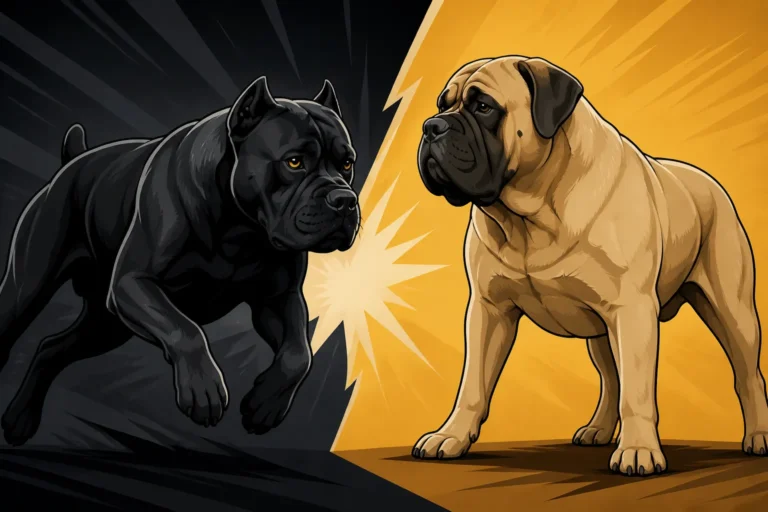
A shortened tail can affect how you read the dog’s body language because one visible communication cue is reduced. It does not make the dog inherently unfriendly or unable to communicate. Pay attention to its whole body, give it room to move, and allow it time to become comfortable with you. If you are comparing Mastiffs with related breeds, The Mastiff Against the Bullmastiff and the Cane Corso explains some of the broader differences in breed type.
| What you notice | What it may mean | A sensible next step |
|---|---|---|
| Tail hangs naturally and moves comfortably | Often ordinary relaxed posture | Continue routine observation |
| Tail lifts or curves while the dog is alert | May reflect attention or excitement | Read the full body language |
| Tail is suddenly limp, painful, or swollen | Possible injury or other health problem | Contact a veterinarian |
| Redness, odor, discharge, or persistent licking near the tail | Possible skin irritation or infection | Arrange veterinary advice |
| Tail is shortened and the history is unclear | Prior surgery, injury, or other cause may be involved | Ask for records and have a vet assess it if needed |
Disclaimer
This article is for general informational purposes only and does not constitute professional advice. Laws, prices and regulations vary by location and change over time. Consult a qualified professional for guidance on your specific situation.