How Old the Mastiff Is as a British Breed
It’s easy to look at a majestic Mastiff today and assume this impressive breed is a relatively recent development, given their massive size and distinct appearance. However, the truth is far more ancient and deeply woven into the tapestry of British history. Pinpointing an exact "birthdate" for the Mastiff as a British breed is akin to trying to find the exact moment a river begins; it's a gradual accumulation and evolution over millennia. What we can do, though, is trace the lineage of these colossal canines back through layers of time, revealing a heritage that stretches back well before the recorded history we often think of when we discuss dog breeds.
The Deep Roots: Pre-Roman British Canines
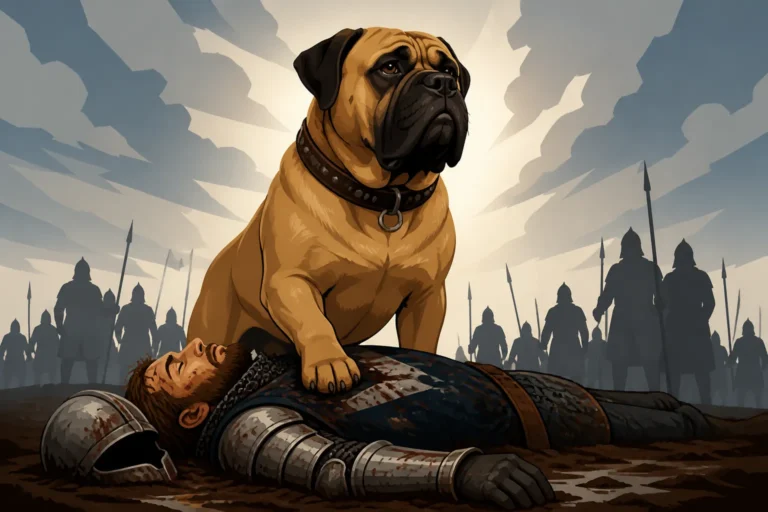
Before the legions of Rome ever set foot on the shores of Britannia, there were already large, powerful dogs roaming the island. These weren't necessarily the Mastiff we know today, but they were certainly their ancient ancestors – formidable canines bred or naturally selected for their strength, protective instincts, and impressive stature. These dogs were integral to the lives of early Britons, assisting with hunting, guarding settlements, and perhaps even playing a role in warfare.
Tracing the Ancestry to Ancient Times
Imagine life in pre-Roman Britain: small villages nestled amongst wild forests, communities reliant on their ability to hunt for survival and protect themselves from both human and animal threats. In such an environment, a large, robust dog wouldn't just be a companion; it would be an indispensable tool for survival. These early "Mastiff-type" dogs were likely diverse in appearance, but their common thread would have been their immense power and protective nature. They were probably rugged, resilient creatures, perfectly adapted to the challenging British landscape and the needs of its people. We're talking about dogs whose presence would have been felt, a silent sentry against the encroaching wild.
There's no definitive breed standard from that era, of course, but the concept of a powerful, guarding dog has been a constant throughout human civilization. These dogs weren't pets in the modern sense; they were working animals, valued for their ability to deter predators, manage livestock, and provide a formidable defense. Their existence speaks to a long-standing partnership between humans and powerful canines on the British Isles, a relationship forged out of necessity and mutual benefit.
Archaeological Evidence and Early Accounts
While concrete archaeological evidence directly linking skeletal remains to "proto-Mastiffs" can be challenging to distinguish from other large domestic dogs, historical accounts and later Roman writings provide tantalizing clues. Imagine discovering ancient burial sites where large canine remains are found alongside human ones, suggesting a deep bond and perhaps an intentional breeding for specific traits. These dogs would have been central to the social fabric, possibly even revered.
The earliest, albeit indirect, mentions of British dogs often come from sources describing the island prior to Roman conquest. These accounts frequently highlight the ferocity and strength of the native hounds, qualities that would later become hallmarks of the Mastiff. It's a testament to their enduring characteristics that these traits were noticeable even to ancient observers, setting the stage for the breed's eventual formal recognition. They were described in ways that paint a picture of impressive animals, far removed from mere curs.
Roman Influence and the Rise of the "Broad-Mouthed Dog"
The arrival of the Roman Empire in 43 AD marked a significant turning point for many aspects of British life, and the native dogs were no exception. The Romans, with their highly organized military and sophisticated understanding of animal husbandry, quickly recognized the exceptional qualities of Britain's indigenous canines. This period laid crucial groundwork for the eventual shaping of the Mastiff as a distinct breed.
Caesar's Observations and Export to Rome
Long before the full-scale invasion, Julius Caesar's expeditions to Britain in 55 and 54 BC provided some of the earliest written accounts of these formidable dogs. Caesar, a keen observer, noted the impressive size and courage of the native British dogs. He was particularly struck by their martial prowess, a trait that clearly stood out to him. His writings, though brief, offer a glimpse into the reputation these dogs already held. It’s not hard to imagine why these dogs caught the eye of Roman strategists and spectacle organizers alike.
The admiration didn't stop there. What Caesar Wrote About British Mastiffs indicates that these powerful British dogs were not only observed but also exported back to Rome. Here, they found a new, albeit often brutal, purpose: the arenas. Roman citizens were fascinated by exotic animals and gladiatorial contests, and these British dogs, often referred to as "Pugnaces Britanniae" (fighting dogs of Britain), became stars of the spectacle, pitted against bears, lions, and even human gladiators. This export of dogs undoubtedly solidified their reputation across the Roman Empire and, in a strange twist of fate, helped document their unique qualities. How Rome Shipped British Mastiffs Home details this fascinating chapter in their history.
The Roman Impact on Breeding and Use
While the Romans certainly appreciated the existing qualities of the British dogs, their presence and sophisticated approach to animal breeding likely had a profound impact. It's plausible that the Romans introduced their own large, powerful dogs, such as the Molossus (a type of mastiff-like dog from ancient Greece and Rome), into the British gene pool. This intermingling of bloodlines could have further refined the physical characteristics and temperament of the indigenous dogs, potentially leading to a more consistent "type."
Furthermore, the Romans utilized dogs for a variety of tasks beyond the arena, including guarding, herding, and even as military aids. Their systematic approach to these roles would have reinforced selective breeding for traits like size, strength, and unwavering loyalty. This period wasn't about developing a "show dog," but rather a highly functional animal for specific, demanding jobs. The Roman era essentially marked a period of formal recognition and, perhaps, an early, informal standardization of the powerful British dog type, laying the genetic and functional foundation for the true Mastiff to emerge.
Medieval England and the "Mastiff" Name
As the Roman Empire eventually withdrew from Britain, the powerful dogs they had admired and perhaps influenced remained. It was during the medieval period that these dogs truly became embedded in English culture, eventually earning the name we recognize today: "Mastiff." This era cemented their role as indispensable guardians and shaped their public perception.
Evolution of the Term "Mastiff"
The word "Mastiff" itself has a fascinating, if somewhat debated, etymology. Many scholars believe it derives from the Old French word "mastin" or "mâtin," meaning a large watchdog, or perhaps from the Latin "mansuetus," meaning "tamed" or "domesticated," implying a large, controlled animal. Regardless of the exact linguistic root, the term began to appear in English texts during the Middle Ages, usually referring to a substantial, powerful guard dog.
By the 13th and 14th centuries, references to "mastiffs" were relatively common in various documents, legal codes, and literary works. This suggests that the type of dog we now associate with the Mastiff was well-established and widely recognized across England. It wasn't just a big dog; it was the big dog, known for its protective nature and imposing presence. The naming itself reflects a distinction, a recognition that this was a specific kind of formidable canine.
Roles in Feudal Society
In medieval England, where vast estates, castles, and manors needed protection, the Mastiff found its true calling. These dogs were the quintessential guardians, integral to the security of property and people. They patrolled castle grounds, protected livestock from wolves and poachers, and deterred unwanted intruders. Their sheer size and intimidating demeanor were often enough to prevent conflict, making them invaluable assets to feudal lords and commoners alike.
Unfortunately, this era also saw them employed in the brutal "sports" of bear-baiting and bull-baiting. These barbaric spectacles were a popular form of entertainment for centuries. The Mastiff's courage, strength, and tenacity made them prime candidates for these gruesome contests, a stark reminder of the harsh realities of the past. Mastiffs in Bull Baiting and Mastiffs in Bear Baiting offer a grim insight into these practices. Thankfully, these cruel traditions were eventually outlawed, but they underscore the Mastiff's historical reputation for unyielding bravery and power.
Forest Law and the Mastiff
Another fascinating, if somewhat distressing, aspect of the Mastiff's medieval history involves the infamous Forest Laws. These laws, established by Norman kings to protect royal hunting grounds, were extremely strict. To prevent commoners' dogs from hunting deer, a practice known as "expeditation" or "footing" was enforced, primarily on large dogs found near royal forests. This involved the removal of three claws from one front foot, or the cutting of the ball of the foot.
The purpose was to maim the dog just enough to prevent it from chasing deer effectively, without rendering it completely useless for guarding or other domestic duties. Whether Medieval Forest Law Applied to Mastiffs confirms that Mastiff-type dogs, due to their size and potential as hunters, were specifically subject to these regulations. This practice, though cruel, further illustrates the recognized power and prevalence of these large dogs in medieval England. Whether a Mastiff's Toes Were Cut Under Forest Law provides more detail on this ancient legal mandate. It also highlights how deeply these dogs were integrated into the landscape and laws of the time, not just as pets, but as forces to be managed and controlled.
Defining the Modern Mastiff's British Heritage
The journey of the Mastiff through British history didn't stop in the medieval era. It continued to evolve and adapt, facing new challenges and finding new admirers. The path from ancient war dog to beloved family guardian is a long one, marked by dedicated individuals who ensured the breed's survival.
The Renaissance and Standardization
As England moved into the Renaissance and beyond, the Mastiff's role began to subtly shift. While still highly valued for guarding, the emphasis moved away from brutal arena sports. People began to appreciate their loyalty and imposing presence as a symbol of status and protection. Estates continued to keep them, with some prominent families, like the Legh family of Lyme Hall, maintaining purebred lines for centuries. This deliberate, long-term breeding at specific estates played a crucial role in maintaining a distinct "type."
During this period, there was a gradual move towards a more recognizable standard, albeit an informal one at first. Breeders and owners began to emphasize certain physical traits and temperaments that would eventually define the modern Mastiff. The sheer mass, the distinctive head, and the calm, dignified demeanor became more pronounced. This wasn't a sudden change, but a slow, continuous refinement, driven by a desire for both function and aesthetic.
Surviving Through the Centuries
The Mastiff's history is not without its perilous moments. The breed faced several significant declines, particularly during times of war and economic hardship. Large dogs are expensive to feed and maintain, and during periods of food rationing, such as the World Wars, many could not be sustained. Fewer Than Twenty Mastiffs Survived the Second World War reveals the devastating impact these conflicts had on the breed's numbers in Britain, pushing them to the brink of extinction.
It was only through the tireless efforts of dedicated breeders, both in Britain and with the crucial reintroduction of stock from America and Canada, that the Mastiff was pulled back from the precipice. These fanciers believed passionately in the breed's historical significance and unique qualities, and their commitment ensured its continued existence. They scoured for remaining individuals, carefully planning breeding programs to rebuild the gene pool, often relying on imported dogs to infuse much-needed diversity and numbers. This period truly underscores the resilience of the breed and the determination of its human advocates.
The "Old English Mastiff": A Timeless Legacy
Today, the term "Old English Mastiff" is often used interchangeably with "Mastiff," and for good reason. It emphasizes the breed's profound and uninterrupted connection to Britain, highlighting its status as one of the oldest, if not the oldest, indigenous British dog breeds. This isn't just a marketing term; it's a recognition of a heritage that spans millennia, a direct line back to the powerful canines that roamed ancient Britannia. Why Some Call It the Old English Mastiff delves into the significance of this designation.
From the dogs that impressed Caesar to the guardians of medieval castles and the beloved family companions of today, the Mastiff has remained a powerful, loyal, and uniquely British presence. They are a living testament to the endurance of a lineage shaped by centuries of history, a silent giant whose every move echoes with the weight of its incredible past. When you look at a Mastiff, you're not just seeing a dog; you're seeing a piece of living history. If you're looking for high-quality supplies for your own piece of living history, a place like Chewy offers everything from specialized large-breed foods to orthopedic beds designed to support their considerable bulk, helping modern Mastiffs live their best lives, a far cry from their ancestors' fare.
| Era | Key Characteristics & Roles | Historical Significance |
|---|---|---|
| Pre-Roman | Large, powerful, protective "type" dogs; hunters, guardians of early settlements. | Indigenous population, foundational stock for later development. |
| Roman Britain | "Pugnaces Britanniae"; exported to Rome for arenas; possible Molosser cross-breeding. | First documented external recognition; genetic influence; early, informal selection for specific traits. |
| Medieval | "Mastiff" name emerges; castle & estate guardians; used in bull/bear baiting; forest law. | Breed name established; vital role in feudal society; physical traits become more consistent; legal recognition. |
| Renaissance | Refinement of type; focus on guarding & status; maintained by noble families. | Moved away from brutal sports; focus on temperament & appearance; beginning of more formal breeding lines. |
| Modern Era | Recognized breed standard; near extinction in wars, then revived; family companion. | Survives through dedicated efforts; symbol of strength & loyalty; adapted to modern companion roles. |
Disclaimer
This article is for general informational purposes only and does not constitute professional advice. Laws, prices and regulations vary by location and change over time. Consult a qualified professional for guidance on your specific situation.