The Protein and Calcium Ceiling for a Mastiff Puppy
Bringing home a Mastiff puppy is an incredible joy, but it quickly comes with a unique set of worries, especially when it comes to feeding. Many new owners stress about providing enough nutrition for their rapidly growing giant, often thinking that more protein or calcium means a stronger, healthier dog. The truth, however, is far more nuanced, and misunderstanding these vital nutrients can inadvertently lead to serious health problems. This comprehensive guide will walk you through the delicate balance of protein and calcium crucial for your Mastiff puppy's healthy development, helping you navigate the complexities of their diet without fear.
Understanding the Unique Growth of a Mastiff Puppy
When you look at a Mastiff puppy, it's easy to be awestruck by how quickly they grow. One day they're a tiny, albeit chunky, ball of fluff, and the next they're doubling in size seemingly overnight. This rapid growth spurt is what makes their nutritional needs so distinct and, frankly, quite challenging to get right without proper guidance. They aren't just growing bigger; they're undergoing monumental skeletal and muscular development in a short span, making them incredibly vulnerable to imbalances.
Rapid Growth, Delicate Bones
Imagine a skyscraper being built; you wouldn't rush the foundational work, right? The same principle applies to your Mastiff puppy. Their bones are growing at an astonishing rate, laying down the framework for an adult dog that can easily weigh over 150 or even 200 pounds. During this intense period, their growth plates—the soft, cartilaginous areas at the ends of long bones responsible for linear growth—are particularly susceptible to injury and abnormal development. Too much, or too little, of certain nutrients can disrupt this delicate process, leading to conditions like hip and elbow dysplasia.
This isn't just about weight; it's about the quality and structure of the bone itself. If growth is forced too quickly, the bones and joints might not mature correctly, setting the stage for lifelong orthopedic issues. It's a cruel irony that trying to give your puppy "the best" by over-supplementing or feeding an overly rich diet can, in fact, cause more harm than good. A steady, moderate growth rate is always the goal, allowing their massive frame to develop strong and soundly, rather than rapidly and erratically.
Not Just a Bigger Dog
It’s tempting to think of a Mastiff puppy as just a bigger version of a Labrador puppy, with proportional feeding needs. But this couldn’t be further from the truth. Giant breeds, like Mastiffs, have a prolonged growth period, often not reaching full maturity until 2-3 years of age, much longer than smaller breeds. Their metabolism, especially concerning calcium and energy utilization, differs significantly. They don't regulate calcium absorption from their diet as efficiently as smaller breeds, meaning they absorb a higher percentage of the calcium they consume, which can quickly lead to an overload if not carefully managed.
This unique physiology demands a feeding approach specifically tailored to giant breeds. Standard puppy foods, even "large breed puppy" formulas that aren't specifically for giants, often contain higher levels of protein, calcium, and phosphorus designed for breeds that mature faster and don't carry the same immense weight. What works perfectly for a German Shepherd puppy could be detrimental to a Mastiff, emphasizing why specialized nutrition is not a luxury, but a necessity for these magnificent giants.
The Dangers of Excess Protein
For a long time, there was a prevalent belief that high protein diets were superior for all growing puppies. The logic seemed sound: protein builds muscle, and a Mastiff is all about muscle and mass, so more protein must be better, right? Unfortunately, for giant breed puppies, this couldn't be further from the truth. While protein is absolutely essential for growth, providing too much can actually contribute to accelerated growth rates that stress developing bones and joints, leading to serious orthopedic problems down the line.
The Old School Myth
Many well-meaning owners, influenced by older advice or general bodybuilding principles for humans, assume that the more protein a growing animal consumes, the stronger and healthier it will be. They might choose puppy foods with protein percentages well over 30%, or even supplement meals with extra protein sources like eggs or lean meat, thinking they're giving their Mastiff a leg up. The problem with this "more is better" mindset for giant puppies is that it fails to account for their unique skeletal development. Unlike smaller breeds that benefit from slightly higher protein to fuel their comparatively rapid but less structurally demanding growth, a Mastiff's skeletal system is the limiting factor.
This old school of thought often overlooks the intricate interplay between protein, calories, and bone mineralization. High protein often comes hand-in-hand with higher caloric density. Rapid weight gain from an abundance of calories, fueled by excessive protein, places undue stress on immature joints and growth plates. It's not just about building muscle; it's about building a robust, resilient skeletal structure that can support that muscle and immense body weight for a lifetime, and that requires a controlled, steady pace.
How Too Much Protein Impacts Bones
When a Mastiff puppy consumes protein beyond what is necessary for optimal, controlled growth, it can inadvertently accelerate their growth rate. This faster growth doesn't necessarily mean stronger bones; in fact, it often means the opposite. The skeletal system is forced to develop too quickly, leading to disproportionate bone growth, particularly in the long bones. This can manifest as an increased risk of conditions like osteochondrosis (OCD), a developmental orthopedic disease where cartilage fails to properly convert to bone.
The real-life impact can be devastating. Owners might start to notice a puppy with a strange gait, or one that seems reluctant to play as much as its littermates. They might experience intermittent lameness, or a persistent stiffness, sometimes referred to as The Shifting Lameness of a Growing Mastiff. These subtle signs are often the body's way of signaling that something in its rapid development is off-kilter, and often, an overly rich diet is a prime suspect. The goal is steady, moderate growth, allowing the bones and surrounding soft tissues to mature in sync, supporting the eventual massive size of the adult Mastiff.
Real-life Scenarios: Puppy Joint Issues from Rapid Growth
Imagine a scenario: You’ve diligently fed your Mastiff puppy a premium, high-protein kibble, proudly noting how quickly he's putting on size. He's growing like a weed, but then you start noticing a slight limp after playtime, or he struggles a bit getting up from a nap. A trip to the vet reveals early signs of elbow dysplasia, or perhaps even hip dysplasia, conditions many people mistakenly attribute solely to genetics. While genetics certainly play a role, diet is a huge contributing factor. How Common Hip Dysplasia Is in Mastiffs is often exacerbated by rapid growth spurred by too much protein and calories.
Another common scenario involves a puppy who seems to "outgrow" his diet. He might look gangly and awkward, or his topline might appear weak even though he's gaining weight. This can be a sign that his skeletal structure isn't keeping pace with his overall mass. The sheer volume of growth that a Mastiff experiences necessitates a careful eye on their body condition score, ensuring they are growing leanly, not just getting big fast. It's a constant tightrope walk, and sometimes the best intentions lead us astray if we don't understand these breed-specific nuances.
The Critical Role of Calcium and its Risks
Calcium is undeniably vital for strong bones and teeth, nerve function, and muscle contraction. For a giant breed puppy like a Mastiff, whose skeletal system will bear immense weight, it might seem logical to provide an abundance of calcium to ensure maximum bone density. However, this is where the Mastiff's unique physiology presents a significant challenge: they are highly sensitive to dietary calcium levels, and both too much and too little can be incredibly damaging.
The Calcium Conundrum: Too Much or Too Little, Both Bad
Most people understand that a lack of calcium can lead to weak bones and developmental issues. But for a Mastiff puppy, an excess of calcium is arguably even more dangerous. Giant breed puppies don't have the same tightly regulated calcium absorption as smaller breeds. If they consume too much, their bodies simply absorb more, leading to hypercalcemia. This unchecked absorption can trigger a cascade of problems, interfering with the normal processes of bone remodeling and maturation. It can accelerate the closure of growth plates prematurely, leading to bone deformities, or contribute to conditions like hip and elbow dysplasia.
The goal is not maximum calcium intake, but optimal intake for controlled, healthy bone development. Picture it like a precise chemical reaction; too much of one ingredient can throw everything off balance, even if that ingredient is essential. Many commercial puppy foods, not formulated for giant breeds, contain calcium levels suitable for smaller, faster-maturing dogs, making them entirely inappropriate for a Mastiff.
Absorption and Regulation Issues
The issue with calcium in Mastiff puppies isn't just about the quantity in their food, but how their bodies handle it. Unlike adult dogs or smaller breed puppies, giant breed puppies have a less developed ability to regulate calcium absorption from their intestines. This means that if you feed them a diet high in calcium, their bodies absorb a disproportionately large amount of it, regardless of their actual physiological need. This excessive absorption then disrupts the delicate balance of hormones (like parathyroid hormone and calcitonin) that normally control calcium levels in the blood and bone remodeling.
This physiological quirk makes Mastiffs particularly vulnerable. A steady, consistent intake of calcium within a very specific range is paramount. Deviating too high or too low can lead to rapid bone growth and density issues. For instance, too much calcium can lead to an over-mineralization of cartilage, which then cannot properly develop into healthy bone, contributing to conditions like osteochondrosis dissecans (OCD), where flaps of cartilage detach within joints, causing pain and lameness.
Phosphorus Balance
Calcium rarely acts alone; its partner in bone health is phosphorus. The ratio of calcium to phosphorus in a puppy's diet is just as crucial as the absolute levels of each. For optimal bone development, the ideal calcium-to-phosphorus ratio for a giant breed puppy generally falls between 1.1:1 and 1.5:1, never exceeding 2:1. When this ratio is out of whack, either due to too much calcium or too little phosphorus (or vice versa), it can severely impact bone mineralization and strength.
A common mistake is to add calcium supplements to a diet that is already adequately balanced, thinking it will further strengthen bones. This can inadvertently throw off the crucial calcium-to-phosphorus ratio, leading to problems like secondary nutritional hyperparathyroidism, where the body tries to compensate for the imbalance, ultimately weakening bones. It's a complex dance of nutrients, and sticking to a diet specifically formulated for giant breed puppies ensures these ratios are meticulously maintained, preventing you from having to guess or potentially cause harm. Remember, a balanced diet eliminates the need for any additional supplements unless explicitly recommended by a veterinarian overseeing your specific Mastiff's health.
Decoding Puppy Food Labels
Navigating the pet food aisle can feel like trying to decipher an ancient scroll, especially when you're looking for the perfect nutrition for a growing Mastiff puppy. Every bag promises optimal growth and health, but without knowing what specific numbers to look for regarding protein and calcium, you could easily pick a formula that's entirely unsuitable for your giant breed.
Key Nutritional Guidelines
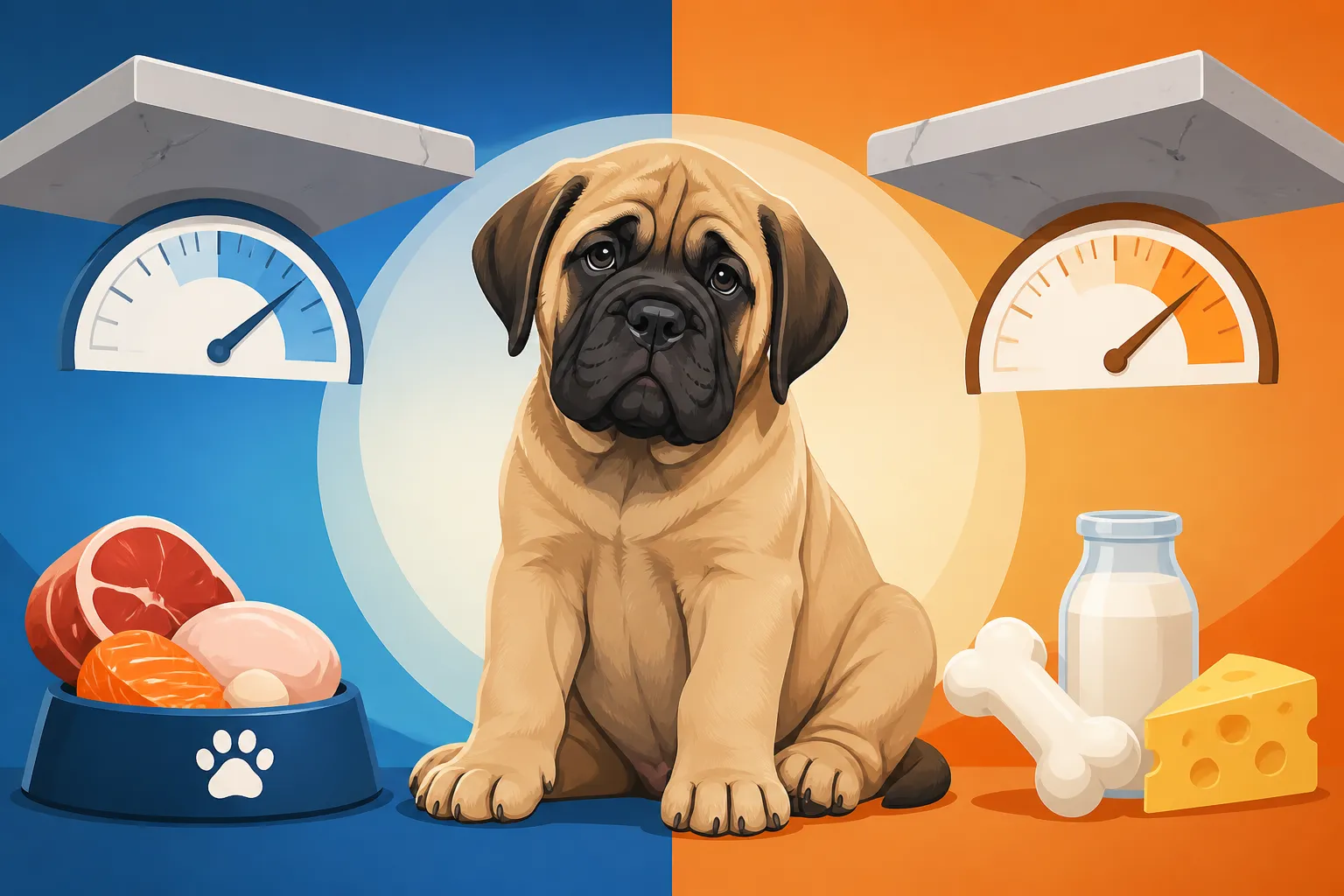
For Mastiff puppies, the magic is in moderation and balance, not excess. When examining a dog food label, you'll want to pay close attention to the "Guaranteed Analysis" and the ingredient list. Specifically for protein, aim for a diet with a crude protein percentage between 23-26%. Anything much higher can risk promoting too rapid growth. For calcium, the sweet spot is typically between 1.0% and 1.5% on a dry matter basis. It’s critical to also check the phosphorus level, ensuring it maintains a healthy ratio with calcium, ideally between 1.1:1 and 1.5:1.
Many major brands, available through retailers like Chewy, offer specific "Large Breed Puppy" or "Giant Breed Puppy" formulas that adhere to these stricter guidelines. Don't assume all large breed formulas are the same; always double-check the actual percentages. Look for terms like "controlled growth" or "moderate energy" on the packaging, as these often indicate a formula designed with the unique needs of massive breeds in mind.
Interpreting Guaranteed Analysis
The "Guaranteed Analysis" on a dog food label tells you the minimum percentages of crude protein and crude fat, and the maximum percentages of crude fiber and moisture. While these are minimums and maximums, they give you a strong indication of the food's nutritional profile. For a Mastiff puppy, understanding these numbers in the context of dry matter basis is crucial. Food with higher moisture content (like wet food) will have lower percentages listed, but the actual nutrient content once the water is removed might be higher. To compare accurately, you can convert percentages to dry matter basis by subtracting the moisture percentage from 100, then dividing the nutrient percentage by that number and multiplying by 100.
For example, if a wet food lists 8% protein and 75% moisture, the dry matter protein would be (8 / (100-75)) * 100 = 32%. This is why comparing dry kibble directly to wet food, or even different kibbles with varying moisture, requires a quick calculation to truly understand the nutrient density your puppy is receiving. It's a bit of extra homework, but essential for ensuring your Mastiff gets the precise nutrition it needs.
Looking Beyond the "Puppy" Label: Why "Giant Breed Puppy" is Crucial
Simply buying a bag that says "Puppy Food" or even "Large Breed Puppy Food" might not be sufficient for your Mastiff. Many standard large breed puppy formulas are designed for breeds like Golden Retrievers or German Shepherds, which, while large, don't reach the sheer mass and prolonged growth period of a Mastiff. These foods often still contain protein and calcium levels that are too high for a truly giant breed, inadvertently contributing to the orthopedic issues we've discussed.
You absolutely must seek out a formula specifically labeled "Giant Breed Puppy" food. These formulations are specifically engineered with lower protein, fat, and critically, controlled calcium levels to support the slower, more steady growth required by Mastiffs. Brands that understand the nuances of giant breed development will clearly state this on their packaging. Sometimes these specialized foods might only be available at dedicated pet supply stores or online through retailers like Amazon or Chewy, but the effort to find them is well worth it for your puppy's long-term health. Never hesitate to contact the food manufacturer directly if you have questions about their specific protein and calcium percentages and if their formula is suitable for truly giant breeds like the Mastiff.
| Nutrient | Standard Puppy Food (Approx.) | Large Breed Puppy Food (Approx.) | Giant Breed Puppy Food (Target) |
|---|---|---|---|
| Crude Protein | 28-32% | 26-28% | 23-26% |
| Calcium (Dry Matter) | 1.5-2.0% | 1.2-1.6% | 1.0-1.5% |
| Phosphorus (Dry Matter) | 1.0-1.4% | 0.9-1.2% | 0.8-1.0% |
| Calcium:Phosphorus Ratio | 1.1:1 to 1.8:1 | 1.1:1 to 1.5:1 | 1.1:1 to 1.5:1 |
Note: These are general guidelines. Always check the specific Guaranteed Analysis and speak with your veterinarian.
Beyond the Bowl: Other Factors Affecting Growth
While diet plays a monumental role in a Mastiff puppy's healthy development, it's not the only piece of the puzzle. The way a Mastiff grows and matures is also significantly influenced by their environment and the amount and type of physical activity they receive. Neglecting these aspects, even with a perfectly balanced diet, can undermine your best efforts to raise a sound and healthy giant.
Exercise, Not Over-exercise
It might seem counterintuitive for a large, energetic puppy, but over-exercising a Mastiff puppy is just as detrimental, if not more so, than an improper diet. Their growth plates remain open and vulnerable for a longer period than smaller breeds. High-impact activities like prolonged running, jumping, or even excessive stair climbing can cause irreversible damage to these delicate structures. Imagine the sheer force of a growing Mastiff puppy's weight repeatedly impacting developing joints; it's a recipe for disaster. Why a Mastiff Puppy Must Not Be Exercised Hard is not just a suggestion; it's a crucial directive for their long-term soundness.
Instead of intense activity, focus on controlled, low-impact exercise. Short, leash walks on soft surfaces are ideal. Think gentle play sessions in the yard for 10-15 minutes, a couple of times a day, rather than marathon romps at the dog park. As tempting as it is to let them go full-throttle, especially when they seem to have boundless energy, enforcing rest and moderation in exercise during their critical growth phases will pay dividends in their adult joint health. The Walk Length That Damages a Mastiff Puppy emphasizes the need for careful management.
Environmental Factors: Slippery Floors and Stairs
Your home environment can also pose significant risks to a growing Mastiff. Slippery floors, such as hardwood, laminate, or tile, offer little traction for their large, rapidly growing paws. This can lead to frequent slipping and sliding, putting immense strain on their developing hips, elbows, and spinal column as they try to regain their footing. A puppy constantly splaying its legs out or struggling for grip is subtly, yet consistently, traumatizing its joints. What Bare Floors Do to a Growing Mastiff can range from muscle strains to exacerbating underlying orthopedic predispositions.
Similarly, stairs, while a common feature in many homes, are an absolute no-go for young Mastiff puppies. The repeated jarring and twisting motions involved in ascending and descending stairs are incredibly hard on their still-forming joints. For the first several months, puppies should be carried up and down stairs whenever possible. As they get too heavy to carry, consider blocking off access or teaching them to navigate stairs slowly and carefully, one step at a time, with ample support. Investing in non-slip runners or strategically placed rugs throughout your home is a small price to pay to protect your giant puppy's joints. Why Stairs Are Worse for a Mastiff Than Any Breed highlights this danger.
Genetics and Predisposition
Even with a perfect diet and carefully managed exercise, genetics still play a significant role in a Mastiff's orthopedic health. If a puppy comes from lines with a high prevalence of hip or elbow dysplasia, or other skeletal issues, they may still develop these conditions despite your best efforts. This isn't to say diet and exercise don't matter – they absolutely do, and can significantly mitigate or worsen genetic predispositions – but it underscores the importance of choosing a reputable breeder.
A responsible breeder will openly share health clearances for both parents, including OFA (Orthopedic Foundation for Animals) certifications for hips and elbows, and potentially other genetic tests. The Four CHIC Tests a Mastiff Breeder Must Clear outlines these essential screenings. While health clearances are not a guarantee, they drastically reduce the risk of your puppy inheriting debilitating conditions. A puppy from un-cleared parents, even on the best diet, faces a much higher uphill battle. This is why doing your homework on breeders is just as crucial as doing your homework on nutrition.
Practical Feeding Strategies for Your Mastiff Puppy
Successfully feeding a Mastiff puppy for optimal, controlled growth requires consistency, attention to detail, and a willingness to adapt as they mature. It's a commitment that will significantly influence their health and well-being for their entire, albeit Six to Ten Years Is What a Mastiff Gets, lifespan.
Meal Frequency and Portion Control
Mastiff puppies should typically be fed three to four meals a day until they are around 6 months old, and then transition to two to three meals a day as they mature. This frequent feeding helps to prevent rapid spikes in blood sugar and ensures a steady nutrient supply without overwhelming their digestive system or contributing to gorging behaviors that can increase bloat risk later on. Portion control is paramount. Follow the feeding guidelines on your chosen "Giant Breed Puppy" food, but always adjust based on your puppy's individual growth and body condition. The Feeding Chart a Mastiff Puppy Should Follow often provides a good starting point, but every puppy is unique.
Don't free-feed your Mastiff puppy. Leaving food out all day encourages overeating and can lead to unhealthy weight gain, which is a major contributor to orthopedic problems. Instead, offer meals at set times and remove any uneaten food after 15-20 minutes. This also helps with house-training and allows you to monitor their appetite, which can be an early indicator of illness. Regularly feeling your puppy's ribs (you should be able to feel them easily with light pressure, but not see them) is a better indicator of healthy weight than just looking at their sheer size. How Ribby a Mastiff Puppy Should Look is a crucial visual guide.
Choosing the Right Kibble
As reiterated throughout this guide, the single most impactful decision you can make regarding your Mastiff puppy's diet is selecting a high-quality "Giant Breed Puppy" specific formula. These foods are scientifically formulated to have the correct, controlled levels of protein, fat, calcium, and phosphorus for their unique growth curve. Avoid generic "all life stages" foods or those meant for smaller large breeds. Read labels meticulously, checking the dry matter percentages discussed earlier.
Brands like Royal Canin, Eukanuba, and Hill's Science Diet often offer specific giant breed puppy formulations. While these might be a bit more expensive, they are an investment in your puppy's long-term health. Some owners might also explore fresh food options, such as those offered by Ollie, but be acutely aware that formulating a nutritionally complete and balanced fresh or raw diet for a giant breed puppy, particularly regarding calcium and phosphorus, is incredibly complex and should only be done under the strict guidance of a board-certified veterinary nutritionist. Errors in homemade diets can have severe, irreversible consequences for a growing Mastiff. Whether a Mastiff Puppy Grows Too Fast on Rich Food is a serious concern, especially with poorly balanced fresh diets.
Supplements: A Double-Edged Sword
This is where many well-meaning owners make critical mistakes. It's common to think that if a little calcium is good, more must be better, or that adding joint supplements early will prevent issues. For a Mastiff puppy on a proper "Giant Breed Puppy" diet, no additional calcium or vitamin supplements should be given unless specifically prescribed by your veterinarian. Adding extra calcium, as discussed, can lead to dangerous imbalances and developmental orthopedic diseases.
Joint supplements, like glucosamine and chondroitin, are generally not recommended for puppies. Their efficacy in preventing joint issues in healthy, growing puppies is unproven, and they can sometimes mask subtle signs of problems that might require veterinary attention. Focus on the foundational elements: the correct giant breed diet, controlled exercise, and a safe environment. If your veterinarian identifies a specific deficiency or condition, they will advise on appropriate supplementation. Until then, resist the urge to "boost" your puppy's diet with extras.
Regular Vet Checks and Weight Monitoring
Your veterinarian is your most important partner in ensuring your Mastiff puppy grows up healthy. Regular check-ups are essential, not just for vaccinations, but for monitoring their growth rate, body condition score, and overall joint health. Your vet can assess if your puppy is growing too fast or too slow and provide tailored advice. Don't be afraid to ask for a body condition assessment at every visit; they can teach you Feeling for a Mastiff's Ribs Under Its Bulk to help you monitor at home.
Maintain a growth chart, if possible, noting your puppy's weight at regular intervals. This visual record can help you and your vet spot any alarming trends in their growth curve. Early intervention is key if issues arise. Open communication with your vet about your puppy's diet, exercise, and any concerns you have will be invaluable in guiding your Mastiff through their critical developmental period into a strong, healthy adult.
Disclaimer
This article is for general informational purposes only and does not constitute professional advice. Laws, prices and regulations vary by location and change over time. Consult a qualified professional for guidance on your specific situation.