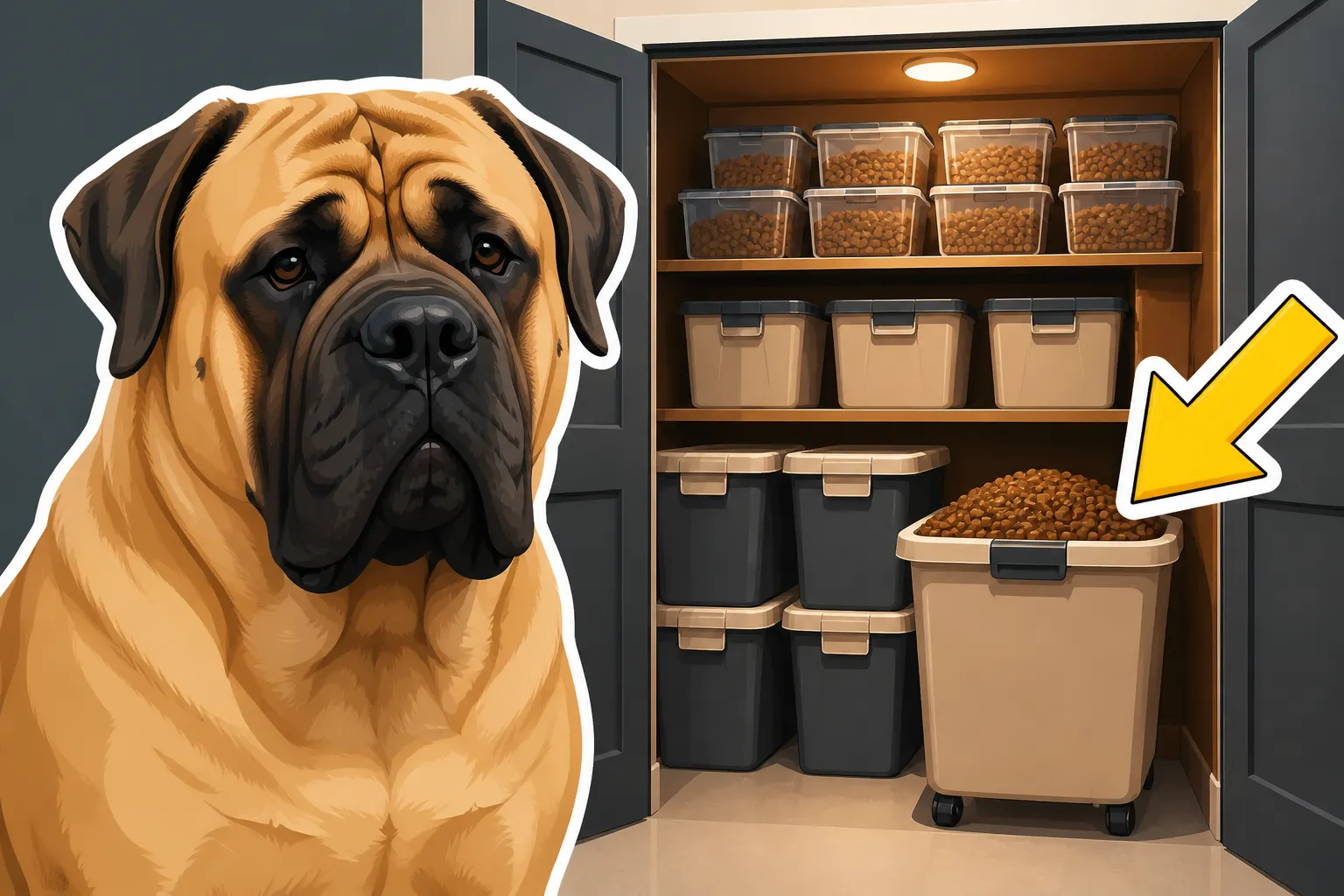
Where a Mastiff Owner Stores a Month of Food
Bringing a Mastiff into your home is an incredible joy, but it also brings a unique set of logistical challenges that most dog owners simply don't face. One of the biggest, and often underestimated, hurdles is figuring out where to store a month's worth of food for a dog that can easily weigh over 200 pounds. This guide is here to walk you through the very real frustrations and practical solutions for managing the enormous quantities of food your gentle giant requires, ensuring their diet stays fresh and your home stays organized (mostly!).
The Sheer Volume of Mastiff Food
When you first bring home a Mastiff puppy, you might be thinking about cute little bags of kibble. Fast forward a few months, and that tiny bag is replaced by something that looks like it belongs in a farm feed store. This isn't an exaggeration; the sheer volume of food a full-grown Mastiff consumes can be startling, and it profoundly impacts your storage needs.
Understanding Your Mastiff's Monthly Consumption
Let's get real about just how much an adult Mastiff eats. We're talking about a dog that can easily weigh as much as an adult human, and sometimes more. While their metabolism isn't always as blazing as a smaller, high-energy breed, their sheer mass demands a significant caloric intake to maintain that majestic presence. Many adult Mastiffs will go through 4-8 cups of high-quality kibble per day, depending on their activity level, age, and individual metabolism. If you do the math, that quickly adds up to well over 100-200 cups a month. This translates into multiple large bags of kibble, often 30-40 pound sacks, just to get through a single month. If you're feeding a mix of dry, wet, or fresh food, the volume can fluctuate, but the overall bulk remains substantial. It's a constant consideration, a daily reality that sets Mastiff ownership apart. If you want a deeper dive, check out How Much an Adult Mastiff Eats by Weight Each Day.
Mastiff puppies, though growing rapidly, need careful management of their diet to avoid accelerated growth that can lead to orthopedic problems. They might not eat quite as much in total volume as a mature adult in their very early months, but their food is often denser in nutrients, and still comes in large bags designed for "large breed puppies." You'll be surprised how quickly they transition from a puppy eating two or three times a day to a behemoth consuming multiple cups at each meal. The type of food also matters; specialized giant breed formulas are crucial, and they don't always come in smaller, more convenient packaging.
It's not just about the weight; it's about the physical space these bags occupy. Imagine dedicating a significant portion of your pantry, or even a closet, to dog food. This isn't a "small corner" problem. It's a "do I need a dedicated dog food pantry" type of issue. This is why careful planning is essential from day one, even before you bring your puppy home, as their dietary needs will rapidly scale up. Many owners find themselves going through multiple bags per month, which brings its own set of storage challenges. For those crunching the numbers, What Feeding a Two Hundred Pound Mastiff Costs a Month offers a good perspective on the financial commitment tied to this volume.
The Packaging Problem: Bags and Sacks
Most dog food, especially the kind designed for giant breeds, comes in incredibly bulky bags. We're talking about 20, 30, or even 40-pound sacks that are unwieldy to carry, difficult to pour from, and nearly impossible to keep truly airtight once opened. They aren't designed for long-term freshness after that first tear, and they certainly don't look pretty sitting in your kitchen. Storing one or two of these might be manageable, but four to six of them for a month's supply? That's a different story entirely.
These massive bags are often made of thick, multi-layered plastic or paper, which is great for protecting the kibble during transit but terrible for resealing properly. Once you cut them open, you often end up rolling the top down and clipping it, which, let's be honest, is a less-than-perfect seal. This invites pests, allows air exposure, and can lead to spills if knocked over. The sheer size means they rarely fit neatly into standard pantry shelves or cupboards, forcing you to find alternative, often less ideal, locations.
Beyond the practicality, there's the aesthetic and hygienic aspect. An opened bag of dog food, no matter how carefully clipped, can attract ants, mice, or even pantry moths. It also doesn't present a very clean appearance, especially in a living area. For many Mastiff owners, the first step to effective food storage is realizing that the original packaging, while necessary for purchase, is rarely sufficient for home storage beyond a day or two. This realization often leads to investing in more robust, dedicated storage solutions to protect both the food and your sanity.
Essential Considerations for Food Storage
Storing your Mastiff's food isn't just about finding a space for it; it's about preserving its quality and safety. You're dealing with a significant investment in both nutrition and money, so protecting that investment is paramount. Thinking through these essential considerations will save you headaches (and vet bills) down the line.
Preventing Pests and Contamination
Pests are a real concern when you're storing large quantities of food. Mice, ants, cockroaches, and even pantry moths see those big bags of kibble as an open invitation to an all-you-can-eat buffet. Once pests get into a bag, the entire contents are compromised, and you're faced with throwing away a substantial amount of expensive food. This isn't just a waste of money; it's a health risk for your Mastiff if they consume contaminated kibble.
The key to pest prevention is an airtight, impenetrable barrier. This means getting food out of its original flimsy bag and into something much more secure. Plastic containers with rubber gaskets and strong latches are often the first line of defense. For larger volumes, consider heavy-duty metal bins that pests can't chew through. Even if you think your home is pest-free, a large supply of food is an attractant, so proactive measures are always best.
Beyond pests, contamination can come from moisture and mold. If food is stored in a humid environment or if moisture somehow gets into the container, mold can quickly develop. Moldy food is extremely dangerous for dogs, potentially causing severe gastrointestinal upset, neurological issues, or even liver damage. This is why location matters as much as the container itself. A damp basement, while seemingly spacious, might be a breeding ground for mold if not properly managed, whereas a cool, dry utility room could be ideal.
Maintaining Freshness and Nutritional Value
Dog food isn't shelf-stable indefinitely, and once opened, its quality begins to degrade. The fats in kibble, especially, can oxidize when exposed to air, light, and heat, leading to rancidity. Rancid fats not only taste terrible to your Mastiff (leading to picky eating or outright refusal) but can also cause digestive upset and aren't nutritionally beneficial. Vitamins, particularly fat-soluble ones, can also lose potency over time, meaning your dog might not be getting the full benefit of their expensive diet.
To combat this, freshness is key. The ideal storage environment is cool, dry, and dark. Heat accelerates fat oxidation, and light can break down sensitive nutrients. Keeping the food in its original bag inside an airtight container is often recommended by experts. This is because the bag itself sometimes has a grease-resistant lining that further protects the kibble. However, if space is at a premium, transferring directly to a clean, airtight container is still better than leaving it in an open bag.
Think about the journey your kibble takes from the manufacturing plant to your Mastiff's bowl. Every step where it's exposed to air, humidity, or fluctuating temperatures chip away at its quality. Investing in a good storage solution is an investment in your Mastiff's health and ensures that every meal provides the maximum nutritional benefit. This approach aligns with overall responsible Mastiff ownership, where every aspect of their care, from their diet to their joint health (like needing Joint Supplements for a Mastiff), is carefully considered.
Accessibility and Convenience for Daily Feeding
Let's face it, scooping several cups of food twice a day from a massive bag or bin can be a workout, especially if it's stored in an awkward location. You want your storage solution to be not only safe and fresh but also convenient for your daily routine. Imagine having to lug a 40-pound bag across the house or bend into a cramped space every morning and evening. That quickly becomes a chore, and sometimes, a literal pain in the back.
The ideal setup allows for easy access to the food without excessive bending, heavy lifting, or complicated maneuvers. This often means choosing containers with wide openings that accommodate a standard scoop, and placing them strategically near your Mastiff's feeding area, or at least in an easily accessible utility space. Some large food bins come with wheels, which can be a lifesaver for moving heavy loads without straining your back.
Consider your own physical capabilities. Mastiffs are not small dogs, and their food reflects that. If you struggle with heavy lifting, a system that allows you to decant smaller amounts into a more manageable daily container, or a bin with a convenient dispensing mechanism, could be beneficial. The goal is to make feeding time smooth and stress-free for both you and your gentle giant, rather than a wrestling match with a giant bag of kibble.
Practical Storage Solutions for Mastiff Owners
Now that we've covered the "why," let's dive into the "how." Finding the right storage solution for your Mastiff's monthly food supply requires a bit of creativity and an understanding of what works best for your home and lifestyle. It's not a one-size-fits-all problem, but there are definite common themes and effective strategies.
Dedicated Food Bins and Containers
For most Mastiff owners, dedicated food bins are the go-to solution for bulk storage. These aren't your average small pet food containers; we're talking about industrial-sized options designed to hold significant weight and volume. They come in various materials, most commonly durable plastic or galvanized steel. Plastic bins are usually lighter and often come with airtight seals and rubber gaskets to keep freshness in and pests out. Many have clear or translucent bodies, allowing you to see how much food is left at a glance.
Metal bins, particularly those made of galvanized steel, offer superior pest resistance, as mice and other rodents can't chew through them. They also tend to be more aesthetically pleasing if they're going to be in a visible area of your home. However, they can be heavier and may not always have the same airtight sealing mechanisms as some plastic counterparts, so checking reviews for specific models is essential. When selecting, prioritize features like wheels for easy mobility (a must for 30+ pounds of food), wide openings for scooping, and secure, easy-to-operate latches. Many online retailers like Chewy offer a wide selection of these specialized large-capacity food storage containers, making it easy to compare options and find one that fits your needs.
When considering capacity, err on the side of larger. A Mastiff might need a bin capable of holding at least 50-70 pounds of kibble to accommodate their monthly intake, giving you a buffer. Some owners even use two bins: one primary large bin for the bulk, and a smaller, more accessible one in the kitchen that they decant into daily. This "two-stage" approach can be incredibly convenient, keeping the main supply secure while providing easy access for routine feeding. This level of planning goes hand-in-hand with understanding the total financial commitment to your Mastiff, as outlined in What a Mastiff's Food Bill Comes to Over Eight Years.
Utilizing Garage, Basement, or Utility Spaces
For a month's worth of Mastiff food, your kitchen pantry is likely not going to cut it. This is where auxiliary spaces like your garage, basement, laundry room, or even a mudroom become invaluable. These areas often offer more square footage and are generally less sensitive to the aesthetic impact of large food bins.
However, each of these spaces comes with its own set of pros and cons. A garage can be excellent for volume, but temperatures can fluctuate wildly, potentially affecting food freshness. Basements are often cooler and darker, which is great for preserving kibble, but they can also be prone to humidity, which invites mold. Utility rooms or mudrooms often strike a good balance, offering consistent indoor temperatures and lower humidity.
Regardless of the location, ensuring it's secured from your Mastiff is crucial. These clever giants have an uncanny ability to sniff out food, and a determined Mastiff can sometimes knock over or even open less secure containers if left unsupervised. Elevated shelving is a great solution, keeping food off the floor and out of reach. Investing in industrial-strength shelving units can transform a cluttered corner into a highly organized food storage hub, capable of holding not just food, but also supplements like those discussed in Whether a Mastiff Needs Joint Supplements From a Year and other large pet supplies. Just remember to maintain a clear path to access the bins for easy scooping!
Pantry and Kitchen Strategies (for smaller amounts/daily use)
While your main bulk supply will likely live outside the kitchen, having a smaller, more manageable amount of food readily accessible for daily feeding in the kitchen or pantry is a game-changer. This is where the "decanting" method comes in. Instead of wrestling a giant bag every meal, you can transfer a week's worth of kibble from your bulk storage into a more modest, counter-friendly, airtight container.
These smaller containers are perfect for keeping a few days' supply fresh and within easy reach. They can be elegant ceramic jars, smaller plastic bins, or even a countertop dispenser. The benefit is twofold: it reduces the number of trips to your main storage, and it keeps your kitchen looking tidy without giant dog food bags cluttering the floor. This also ensures that the food your Mastiff is eating today is at peak freshness, while the rest remains securely stored away.
However, even with this system, be mindful of where you place the daily container. A Mastiff can easily reach countertops, so ensure it's either in a cabinet or a spot they can't access, or is heavy enough not to be knocked over. A hungry Mastiff has a surprisingly long reach and can be quite adept at finding hidden treats. For new Mastiff owners trying to figure out the right portions, our guide on How Much a Mastiff Puppy Should Eat offers valuable insights, though always consult your vet.
Alternative Food Types and Their Storage Implications
Not all Mastiffs eat dry kibble. Many owners explore options like raw food, fresh food, or wet food, each of which presents its own unique storage challenges and requirements. It's important to understand these differences before making a dietary switch.
Raw and Fresh Food Considerations
If you're feeding a raw or fresh diet, storage shifts dramatically from a dry, cool place to the freezer. A Mastiff consuming a fresh diet, for example, supplied by companies like Ollie, will require a significant amount of freezer space. We're talking about multiple large containers or pre-portioned bags of food, which can quickly fill an entire freezer drawer or even necessitate a dedicated chest freezer.
Thawing is another logistical hurdle. You can't just thaw a week's worth of food on the counter. It needs to be safely defrosted in the refrigerator, often taking 24-48 hours for larger portions. This means constant planning ahead, ensuring you always have a thawed supply ready for your Mastiff's next meal. Without careful rotation and defrosting schedules, you risk either running out of food or having it spoil.
Beyond the freezer, once thawed, fresh or raw food must be treated like any other perishable meat product. It needs to be stored in airtight containers in the refrigerator and consumed within a few days. The surfaces it touches – bowls, countertops, utensils – must be cleaned thoroughly to prevent bacterial contamination. This level of management is a significant time commitment, but for many owners, the health benefits for their Mastiff outweigh the extra effort.
Wet Food Storage
Wet food, typically in cans or large pouches, is generally shelf-stable when unopened. This makes initial storage a bit simpler than kibble, as it doesn't require airtight bins or pest-proof containers as urgently. You can stack cans in a pantry or on shelves. However, the sheer weight of a month's supply of wet food for a Mastiff can be immense. Imagine cases upon cases of large cans; they will require sturdy shelving that can handle hundreds of pounds.
Once opened, wet food is highly perishable and must be refrigerated immediately. Any uneaten portion needs to be transferred to an airtight container and can typically be stored in the fridge for 2-3 days. This means your refrigerator will also need to accommodate several large containers of wet food, on top of your human groceries.
While seemingly easier to store in its unopened form, the daily management of wet food can be more demanding due to refrigeration requirements and the need for frequent opening and sealing. And just like dry kibble, the overall cost of wet food for a Mastiff is substantial, especially when considering Whether Giant Breed Kibble Is Worth Its Premium for a Mastiff versus canned options.
Tips for Managing Large Food Orders and Deliveries
Owning a Mastiff means becoming a master of logistics, especially when it comes to ordering and receiving their food. You're not just picking up a small bag at the grocery store; you're coordinating a significant supply chain operation right to your doorstep.
Bulk Buying and Delivery Logistics
Bulk buying is almost a necessity for Mastiff owners. Purchasing multiple large bags at once often offers cost savings and reduces the frequency of your shopping trips. Many pet supply stores and online retailers offer discounts for larger quantities. Companies like Chewy, for example, often provide auto-ship options and bulk pricing, which can be a lifesaver for managing your Mastiff's substantial food needs.
However, bulk buying introduces a new logistical challenge: delivery. Imagine a dozen 40-pound bags showing up at your door. You need a plan for where they'll be dropped, and how you'll move them to their final storage location. If you have a garage, asking the delivery driver to place them directly inside can save you a lot of heavy lifting. If you live in an apartment, this becomes even more complex, often requiring multiple trips or a cart to get everything upstairs.
Always check the expiration dates on bulk orders as soon as they arrive. While reputable suppliers usually send fresh stock, it’s good practice to verify to ensure you're not getting close-dated bags that will expire before your Mastiff can finish them. A reliable delivery service is key to making this process smooth, reducing the stress that can sometimes come with managing the sheer scale of Mastiff care.
Rotating Stock for Optimum Freshness
Whether you're dealing with kibble, raw, or fresh food, rotating your stock using the "first-in, first-out" (FIFO) method is crucial for maintaining freshness and preventing waste. This means that the oldest food (the bags or containers that arrived first) should be used first, and new deliveries should be placed behind the older stock.
For kibble in a large bin, this might mean scooping out the last bits before refilling, or using a "two-bin" system where you fill an empty bin with new food while the other is being used. For frozen or refrigerated foods, clear labeling with dates is essential. This ensures that no food sits at the bottom of a bin or at the back of a freezer for too long, losing its nutritional value or spoiling.
Implementing a rotation system extends the life of your food and ensures your Mastiff is always eating the freshest possible diet. It's a small habit that makes a huge difference in the long run, contributing to your dog's health and helping you manage costs by preventing wasted food. Remember, a healthy Mastiff is a happy Mastiff, and good nutrition, properly stored, is a cornerstone of their well-being. Keeping on top of these kinds of details, just like considering the wider financial picture with things like Why a Mastiff's Bills Arrive Front Loaded, is part of being a diligent Mastiff owner.
Disclaimer
This article is for general informational purposes only and does not constitute professional advice. Laws, prices and regulations vary by location and change over time. Consult a qualified professional for guidance on your specific situation.