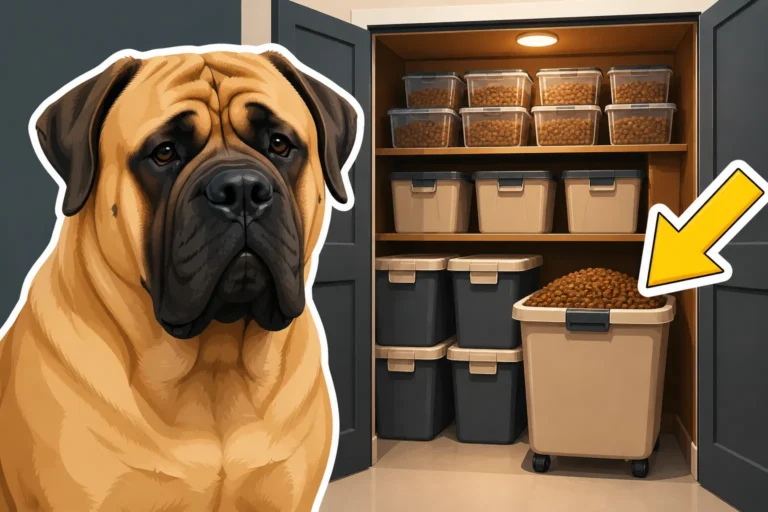
Whether a Mastiff Owner Should Buy by the Pallet
If you've ever owned a Mastiff, you know the daily routine isn't just about walks and cuddles – it's also about feeding a small horse. The sheer volume of food these gentle giants consume can be staggering, leading many owners to wonder if there's a more efficient, cost-effective way to keep their beloved companions fed without constant trips to the pet store. This guide dives deep into the practicalities of buying Mastiff food in bulk, specifically exploring the idea of buying by the pallet, and offers alternative strategies to manage this significant aspect of Mastiff ownership.
The Sheer Volume of Food a Mastiff Consumes
Let's be real for a moment: owning a Mastiff means becoming intimately familiar with large quantities of dog food. It’s not like feeding a chihuahua where a bag lasts months. For us Mastiff parents, a "large" bag of kibble often feels like a week's supply, maybe two if you’re lucky. This reality hits hard, not just in terms of logistics but also on the wallet.
Understanding the Daily and Monthly Intake
A healthy adult Mastiff can easily eat anywhere from 6 to 10 cups of kibble a day, sometimes even more depending on their activity level, metabolism, and the caloric density of the food. Imagine pouring that much into a bowl twice a day. It adds up incredibly fast.
Think about it this way: if your Mastiff is eating 8 cups a day, that's 56 cups a week. A standard 30-pound bag of kibble, depending on the density, might contain roughly 120-150 cups. This means one of those "big" bags barely lasts you two to three weeks. Now multiply that by a month – you're looking at needing at least two, possibly three, of those hefty bags. The grocery cart fills up quickly, and your back aches from lifting. It's an ongoing commitment to heavy lifting and constant restocking that often takes people by surprise. We've all been there, standing in the pet store aisle, doing mental math and groaning at the thought of another trip so soon. How Much a Mastiff Eats in a Month delves further into these figures.
The Financial Burden of Daily Feeding
Beyond the physical bulk, the cost is a continuous, significant factor. When you're buying 60-90 pounds of premium giant breed kibble every month, those dollars evaporate from your bank account at an alarming rate. It’s not just the price per bag; it’s the cumulative effect. Even a seemingly small increase in price per pound makes a huge difference when you're buying so much.
Many Mastiff owners quickly realize that food is one of their top recurring expenses, often rivaling or even exceeding vet bills in a healthy, young dog. Over the lifespan of a Mastiff, which is already shorter than many breeds, this food cost becomes monumental. What a Mastiff's Food Bill Comes to Over Eight Years provides a stark look at the long-term financial commitment. It’s enough to make you consider if you could somehow buy direct from the factory, isn't it?
The Storage Challenge
Before you even get to the idea of a "pallet," consider the logistics of storing a month's worth of Mastiff food. Those 30-pound bags take up considerable space. Do you have a dedicated pantry, a corner of the garage, or a basement area? Now, imagine doubling or tripling that volume.
Proper storage isn't just about finding a spot; it's about keeping the food fresh, dry, and protected from pests. Open bags can attract mice, ants, or other unwelcome guests. Airtight containers are a must, but finding containers large enough for multiple 30-pound bags is a challenge in itself. Most owners opt for large, wheeled bins, but even these fill up fast and take up valuable floor space. If you're struggling to store two or three bags, the thought of ten or twenty can feel completely overwhelming. Where a Mastiff Owner Stores a Month of Food really hits home on this common struggle.
The Pros and Cons of Bulk Buying for Mastiffs
The dream of buying food by the pallet for your Mastiff is often born out of pure frustration with running out of food, the constant lifting, and the never-ending bills. It seems like a logical solution to a very big problem, but it comes with its own set of considerations.
The Financial Savings
The primary allure of buying in massive bulk is the potential for cost savings. Retailers and manufacturers often offer discounts for larger quantities, as their handling costs per unit decrease. Buying a pallet might mean a lower price per pound compared to buying individual bags. Even if it's just a few cents per pound, when you're dealing with hundreds or thousands of pounds over a year, those cents add up to significant savings.
For example, if you save $0.10 per pound on 1,000 pounds of food, that's a $100 saving. Over a year, if your Mastiff consumes, say, 1,200 pounds of food (a conservative estimate), that's $120 extra in your pocket. This kind of saving can be incredibly appealing, especially when you're trying to budget for all the other costs associated with a giant breed, like The Mastiff's Short Life Buys the Biggest Bills or Why a Mastiff Costs More Per Year Than a Dog That Lives Twice as Long. It could even help offset the cost of quality joint supplements that many Mastiffs need early in life.
Convenience and Supply Stability
Imagine not having to think about buying dog food for six months, or even a year. That’s the kind of convenience bulk buying promises. No more last-minute dashes to the store because you're down to the last scoop. No more lugging heavy bags from the car. Instead, you'd have a steady, reliable supply right on hand.
This stability is particularly valuable if you rely on a specific brand or formula for your Mastiff, especially if they have sensitivities or dietary needs. We've all experienced the dread of a favorite brand being out of stock, forcing us to scramble for an alternative, which can sometimes lead to upset stomachs or picky eaters. With a pallet, you insulate yourself from these common supply chain hiccups and save valuable time and effort.
Storage Requirements and Practicalities
Now for the reality check. While the idea of a pallet sounds great, the practicalities of storing that much food are immense. A standard pallet (often 48" x 40") can hold a surprising amount of dog food – easily 20-40 large bags, weighing over a thousand pounds.
- Space: Do you have a dedicated, climate-controlled space for this? A garage might work, but it needs to be dry, free from extreme temperature fluctuations (heat and humidity can spoil kibble quickly), and completely secure from pests. Basements can be good if dry, but moisture is the enemy. A large, spare room or a shed specifically designed for storage might be necessary.
- Pest Control: Storing hundreds of pounds of kibble is like putting out a giant "all you can eat buffet" sign for rodents and insects. You'll need robust pest control measures, including heavy-duty, airtight containers (and these would need to be industrial-sized for a pallet), and regular inspections. Even sealed bags can be chewed through by determined critters.
- Freshness and Expiration: Kibble has a shelf life, typically around 12-18 months for unopened bags, and much shorter once opened. Buying a year's supply means you need to be confident your Mastiff will consume it all before it starts to lose nutritional value or, worse, goes rancid. Storing it incorrectly (heat, humidity) will significantly shorten this. Imagine having half a pallet of expensive kibble go bad – that's not saving money, that's throwing it away.
Before committing, it's crucial to map out your storage capabilities. A small apartment, or even a regular suburban home without a large, dry basement or outbuilding, simply won't accommodate a pallet of dog food safely and effectively.
Alternative Approaches to Managing Mastiff Food Costs and Logistics
If the idea of a literal pallet of dog food feels daunting (and for most of us, it absolutely is!), don't despair. There are several excellent, more manageable strategies to keep your Mastiff well-fed without breaking your back or the bank.
Online Retailers and Subscription Services
This is arguably the most practical solution for many Mastiff owners. Online pet supply retailers have revolutionized how we buy dog food. Companies like Chewy offer massive selections, often at competitive prices, and—crucially—they deliver heavy bags right to your door. This eliminates the lifting and trips to the store altogether.
Many online retailers also offer subscription services, allowing you to set up recurring deliveries. You can customize the frequency based on your Mastiff's consumption rate. Not only does this ensure you never run out, but these subscriptions often come with a discount, typically 5-10% off each order. While you might not get "pallet pricing," the convenience, the slight discount, and the heavy lifting handled by someone else are massive benefits. Consider platforms like Ollie for fresh food options, though be mindful that fresh food volumes for a Mastiff become incredibly challenging and expensive. For a Mastiff, the sheer volume Why Fresh Food Is Impractical at Mastiff Volumes.
Local Pet Stores and Loyalty Programs
Don't discount your local brick-and-mortar pet stores. While they might not be able to offer literal pallet delivery, many independent stores are incredibly accommodating to their loyal customers, especially those with giant breeds.
- Special Orders: Many stores can place special orders for larger quantities of specific brands. If you commit to buying, say, six large bags at once, they might be willing to order them for you and even store them in their back room until you're ready to pick them up in stages, or even offer assistance getting them to your car.
- Loyalty Programs and Discounts: Most pet stores have loyalty programs where you earn points or get discounts after a certain number of purchases. For a Mastiff owner, you'll reach those thresholds very quickly, leading to ongoing savings. Some even offer "buy X bags, get the Yth free" programs which, again, a Mastiff owner will benefit from immensely. Building a relationship with your local store can yield surprising advantages.
Community Buying Groups
This is an interesting, less common approach that some giant breed owners successfully utilize. If you know other Mastiff owners in your area (perhaps through a local breed club, dog park, or online forum), you could explore forming a "buying group."
The idea is simple: pool your orders together to meet the minimum quantity for a bulk discount directly from a distributor or manufacturer. One person would handle the logistics of the order and delivery, and then everyone would pick up their share. This effectively turns a "pallet" into several smaller, more manageable orders for individual households, while still reaping the financial benefits of large-scale purchasing. It requires trust, coordination, and a dedicated point person, but it can be a fantastic way to save money and share the logistical burden.
Deciding if Pallet Buying is Right for Your Household
So, after weighing the options, how do you really know if buying by the pallet is a feasible, smart move for your specific situation as a Mastiff owner? It boils down to a few critical factors that are unique to your home and lifestyle.
Assessing Your Storage Capacity
This is perhaps the single biggest hurdle. Be brutally honest with yourself: do you truly have the space? We're not talking about tucking a few extra bags into a closet. A pallet of dog food requires a significant, dedicated area.
- Measurements: Measure the exact dimensions of your potential storage space. Remember the pallet itself is large, and you need room around it to move, inspect, and access the bags.
- Environmental Control: Is the space consistently cool, dry, and dark? Basements can be great, but many are prone to humidity. Garages can work, but temperature extremes (very hot summers, freezing winters) can degrade food quickly. Attics are almost always too hot. Exposure to sunlight can also diminish nutritional value.
- Accessibility: Can you easily get a pallet into and out of this space? Do you have wide doorways, or will you need to break down the pallet as it arrives? How will you move individual 30-40 pound bags from the pallet to your dog's feeding station once it's in storage? Remember, the goal is convenience, not creating a new logistical nightmare.
If you find yourself having to move furniture, sacrifice living space, or worry about dampness, it's probably not the right solution for you.
Evaluating Your Financial Situation
While bulk buying can save money long-term, it requires a significant upfront investment. A pallet of quality Mastiff kibble could easily represent hundreds, if not thousands, of dollars. Do you have that capital readily available without impacting other essential household finances?
Think about your cash flow. If tying up a large sum of money in dog food for several months causes financial strain, the savings might not be worth the stress. Also, consider emergency funds. It's usually wiser to have money liquid for unexpected vet bills or other emergencies (perhaps covered by a good pet insurance like Healthy Paws, but even then, deductibles and co-pays exist) rather than having it all locked into kibble. Whether a High Deductible Suits a Mastiff Owner or What a Mastiff Owner Should Bank Each Month speaks to the need for robust financial planning when owning one of these magnificent dogs.
Considering Food Freshness and Expiration
No one wants to feed stale or, worse, rancid food to their beloved Mastiff. The nutritional integrity of kibble begins to degrade over time, especially once exposed to air, light, and humidity.
- "Best By" Dates: Always check the "best by" or expiration dates on the bags you receive. Ensure that the entire pallet has a sufficiently long shelf life to be consumed by your Mastiff before it expires, given their daily intake.
- Rotation: If you do buy in bulk, implement a strict "first in, first out" rotation system. This means using the oldest bags first to ensure nothing sits too long.
- Monitoring: Regularly inspect stored food for any signs of spoilage, such as off odors, mold, or insect activity. Even with the best precautions, a large volume of food can be a target.
Ultimately, the decision to buy by the pallet is a big one. It's not just about finding a good deal, but about ensuring it aligns with your home's capacity, your financial comfort, and your commitment to providing fresh, nutritious food for your Mastiff throughout their impressive, albeit often too short, life.
| Buying Method | Pros | Cons | Ideal For |
|---|---|---|---|
| Pallet (Direct Bulk) | Highest potential cost savings, ultimate convenience of supply on hand, fewer shopping trips. | Massive upfront cost, significant storage space requirements, pest control challenges, freshness concerns. | Owners with large, climate-controlled storage, stable finances, multiple Mastiffs, or part of a buying co-op. |
| Online Retailers | Convenient home delivery, subscription discounts, wide selection, no heavy lifting. | Moderate cost savings (less than pallet), still need space for a few large bags, potential for delivery delays. | Most Mastiff owners seeking convenience and regular supply without extreme bulk storage. |
| Local Pet Stores | Personal service, loyalty programs, supporting local business, special ordering capabilities. | May not have the absolute lowest prices, still requires transport (unless delivered), limited immediate stock. | Owners who value community, want support for special needs, and prefer in-person shopping. |
| Community Co-op | Shares the cost and logistics of bulk buying, often achieves significant savings. | Requires coordination and trust with other members, reliance on a central organizer, potential for disagreements. | Groups of local Mastiff owners committed to shared effort and mutual savings. |
Disclaimer
This article is for general informational purposes only and does not constitute professional advice. Laws, prices and regulations vary by location and change over time. Consult a qualified professional for guidance on your specific situation.