Whether a Mastiff Fits in a Hospital Run
When your beloved Mastiff needs urgent veterinary care, or even just a routine check-up, one of the most unexpected anxieties can be wondering if the facility itself is actually equipped to handle a dog of their immense size. It's a valid concern, as standard veterinary hospital runs, exam rooms, and even equipment are often designed with much smaller patients in mind, leaving you in a stressful predicament at a time when you need seamless support. This guide will delve into the realities of veterinary clinic capabilities for giant breeds like Mastiffs and help you understand what to look for and how to prepare.
The Reality of Veterinary Facility Sizes
Let's be honest, most veterinary clinics are built for the average dog – a Labrador, a Poodle, maybe a German Shepherd. They're designed efficiently, with examination rooms, hallways, and hospital runs that make sense for the majority of their patients. However, a Mastiff isn't just a big dog; they're a colossal, magnificent creature whose sheer bulk can strain the limits of standard veterinary infrastructure.
Imagine trying to navigate a narrow hallway with a Mastiff who is unwell, perhaps struggling to walk, weighing upwards of two hundred pounds. What might be a simple stroll for a smaller dog becomes a logistical challenge, requiring careful maneuvering and potentially stressing both your dog and the clinic staff. This isn't about lack of care or willingness on their part; it's about physical limitations in building design and equipment specifications that weren't necessarily conceived with a patient the size of a small pony in mind.
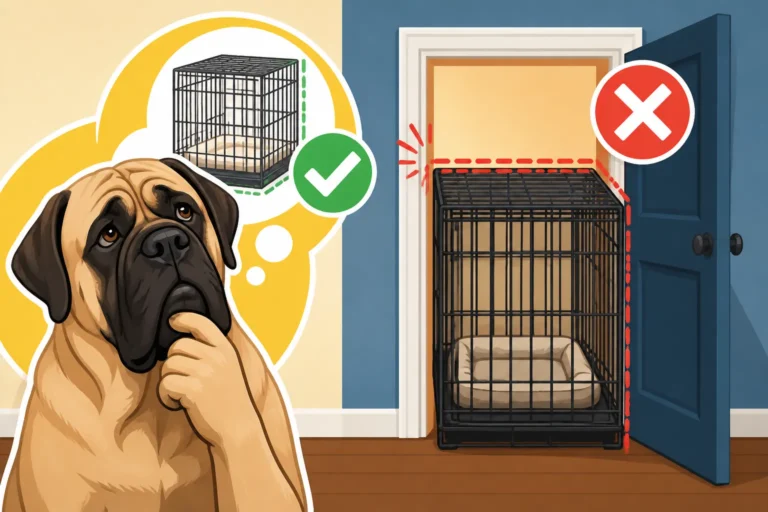
Standard hospital runs, those kennels or enclosures where dogs stay if they need observation or overnight care, are a prime example. These are often stacked, or designed as individual compartments that are just barely large enough for a mid-sized dog to stand up and turn around. For a Mastiff, trying to fit into such a space can be impossible, or, at best, incredibly uncomfortable and undignified. They may not be able to fully stretch out, leading to pressure sores, joint pain, and immense stress during what should be a time of healing and rest. It’s a real problem, and one that many Mastiff owners only discover when they're already in a crisis.
Physical Challenges for Mastiffs in a Clinic Setting
The issues extend far beyond just the size of the hospital run. Every aspect of a veterinary visit, from arrival to recovery, can present unique challenges when your patient is a two-hundred-pound Mastiff. It requires a different approach, specialized equipment, and a staff prepared for the physical demands.
Navigating the Clinic and Exam Rooms
Getting a healthy, cooperative Mastiff into an exam room can be a tight squeeze. For one that is sick, weak, or injured, it becomes significantly more complicated. Many clinics simply aren't designed with wide enough doorways or expansive enough spaces to comfortably accommodate a large breed that needs assistance moving. If your Mastiff is struggling to walk or is completely non-ambulatory, the challenge escalates immediately.
Standard gurneys or trolleys found in clinics are often too small and not rated for the weight of an adult Mastiff. This means staff might need to manually lift or support your dog, which can be dangerous for both the Mastiff and the people involved. Specialized slings or hydraulic gurneys exist, but they are not universally available, especially in smaller, general practices. You might find yourself having to assist, even in an emergency, if the clinic lacks the proper tools. This is where researching ahead of time can make all the difference. How a Clinic Moves a Collapsed Mastiff is a topic many Mastiff owners unfortunately have to consider.
Equipment Limitations and Their Impact
Once inside the clinic, the challenges continue with the equipment. Standard exam tables, even those that lift, have weight limits that a full-grown Mastiff can easily exceed. Imagine your vet trying to conduct a thorough examination or draw blood from your huge dog if they can't get them safely onto a suitable table. Some larger clinics or referral centers might have walk-on scales and hydraulic tables that lower completely to the floor, allowing a Mastiff to step on and then be gently raised. This is a game-changer, but again, it’s not standard everywhere.
Diagnostic imaging, such as X-rays, presents another hurdle. A standard X-ray plate might not be large enough to capture the entire joint of a Mastiff, requiring multiple exposures and repositioning, which can be stressful and difficult for a painful dog. Whether a Mastiff Fits on a Standard X Ray Plate is a very real question. Similarly, specialized procedures like MRIs or ultrasounds can also have table weight limits or gantry opening sizes that a Mastiff may struggle with. Whether a Mastiff Must Be Sedated for an Ultrasound highlights the necessity of these procedures and the additional considerations for giant breeds.
Hospitalization and Recovery Spaces
This brings us back to the core issue: hospital runs. If your Mastiff needs to stay overnight or for several days, the lack of appropriate housing can be a serious welfare concern. Being confined in a space too small can exacerbate existing conditions, lead to anxiety, and hinder recovery. They need enough room to stand, turn around, and lie down comfortably in various positions to relieve pressure on their joints and prevent muscle stiffness.
A Mastiff who cannot fully stretch out or shift their weight properly is at risk for developing pressure sores, especially on their elbows (which are already prone to calluses) and hips. This is why having access to large, comfortable, and well-padded runs or even dedicated recovery rooms is crucial. Some veterinary hospitals, especially referral or emergency centers, are designed with a few oversized kennels or "walk-in" runs specifically for giant breeds, understanding their unique needs.
Furthermore, the process of anesthesia and recovery carries increased risks for Mastiffs due to their size, physiology, and propensity for certain health issues. Why Anesthesia Is Riskier in a Mastiff means that even after a procedure, careful monitoring and spacious, comfortable recovery areas are paramount. How Much Anesthetic a Two Hundred Pound Mastiff Takes also highlights the different dosage considerations.
Preparing for a Mastiff's Veterinary Visit
Given these challenges, proactive preparation is not just helpful, it's essential for any Mastiff owner. You don't want to be scrambling for answers when your gentle giant is in distress.
Researching Ahead of Time
The single most important step you can take is to find a veterinarian and, crucially, an emergency veterinary hospital before you ever need one in a crisis. Don't wait until your Mastiff is sick or injured. Call local clinics and ask specific questions:
- Do they have a walk-on scale or a hydraulic exam table that goes all the way to the floor?
- What are the weight limits on their equipment, including X-ray tables?
- Do they have any oversized kennels or walk-in runs for large breeds needing overnight stays? How many, and are they typically available?
- Are their doorways and hallways wide enough for easy access with a very large, potentially weak dog?
- Do they have lifting equipment, such as gurneys rated for a Mastiff’s weight, or slings?
- Is their staff experienced and comfortable handling giant breeds?
It might feel like a lot of questions, but this due diligence will save you immense stress later. Some clinics will openly admit they aren't fully equipped for a Mastiff, and that's okay – it allows you to find one that is. You might also ask if they have a relationship with a referral hospital that does have these amenities, should your Mastiff need specialized care. Whether a Practice Has a Table That Holds a Mastiff is a fundamental question.
Emergency Protocols for Giant Breeds
Beyond routine care, have an emergency plan in place. Know which 24/7 emergency veterinary hospitals in your area are best suited for a Mastiff. These facilities are often larger and better equipped for critical cases across all sizes, but it’s still wise to confirm. Keep their contact information readily accessible, along with your Mastiff's medical history and any current medications.
Consider how you will transport your Mastiff in an emergency. If your dog can't walk, how will you get them into your vehicle? A sturdy ramp can be invaluable for senior or injured Mastiffs, even if they can normally jump. For a collapsed Mastiff, a heavy-duty blanket or tarp can act as an improvised stretcher to carefully slide them into a car, preferably one with a large cargo area like an SUV or van. Why a Mastiff Puppy Must Be Lifted Into a Car can apply to sick or injured adults too.
Financial preparedness is also key. Veterinary care for a Mastiff can be substantially more expensive than for smaller dogs due to higher medication dosages, more complex procedures, and the need for specialized equipment or extended recovery. What a Mastiff's Weight Does to Every Line on the Vet Invoice is something every owner comes to understand quickly. Pet insurance from providers like Healthy Paws can be a lifesaver in these situations, helping to cover unexpected and often hefty bills. Start looking into policies when your Mastiff is young and healthy to avoid pre-existing condition exclusions.
Finding the Right Veterinary Care for Your Giant
Ultimately, providing the best care for your Mastiff means finding veterinary partners who are not only skilled but also appropriately equipped and experienced with giant breeds. This often means looking beyond the closest general practice.
General Practice vs. Specialty and Emergency Clinics
While your local general practice might be wonderful for routine care, they might simply lack the physical space, specialized equipment, or staff training for complex or emergency Mastiff cases. This isn't a failing on their part, just a reality of their business model.
| Feature | General Veterinary Practice (Typical) | Specialty/Emergency Veterinary Hospital (Often) |
|---|---|---|
| Exam Room Size | Standard, sometimes cramped for Mastiff | Larger, more accommodating |
| Hydraulic Exam Tables | Often absent or limited weight capacity | More common, heavy-duty, floor-level options |
| Hospital Run/Kennel Size | Standard, often too small for comfortable lying | Dedicated oversized runs, walk-in kennels, or recovery suites |
| Lifting Equipment | Manual lifting, standard gurneys (often insufficient) | Heavy-duty gurneys, slings, specialized lifting aids |
| X-Ray Plate Size | Standard, may require multiple shots for large joints | Larger plates, sometimes digital with stitching capability |
| MRI/CT Availability | Rarely on-site, requires referral | Often on-site, specialized for larger patients |
| Staff Experience | Varies widely with giant breeds | Higher likelihood of experience with critical giant breed care |
| Overnight Monitoring | Limited or none after hours | 24/7 critical care, dedicated night staff |
Specialty or emergency veterinary hospitals, often found in larger metropolitan areas, are far more likely to have the necessary infrastructure. These facilities are designed to handle a wider range of cases and breeds, including those at the extreme ends of the size spectrum. They often have larger imaging suites, surgical rooms, and, crucially, hospital runs specifically built for giants. Whether a Mastiff Needs a Referral Hospital for Surgery is a question that often arises when specialized equipment or expertise is required.
Building a Relationship with a Giant Breed-Savvy Team
Once you identify a few promising veterinary clinics or hospitals, schedule a non-urgent visit. Take your Mastiff for a "happy visit" where they just get treats and praise, helping them associate the clinic with positive experiences. This also gives you a chance to see the facility, speak with the staff, and confirm their capabilities firsthand. Ask about their protocol for large dogs needing hospitalization and what their overnight care looks like.
Developing a strong relationship with a veterinary team that understands the nuances of Mastiff health is invaluable. They'll be familiar with breed-specific issues like bloat, joint problems, and certain cancers, which can often be diagnosed and treated more effectively by experienced professionals. The overall cost of caring for a Mastiff, from daily needs to unexpected emergencies, can be substantial, making careful planning and a knowledgeable vet team paramount. The Mastiff's Short Life Buys the Biggest Bills, so every bit of good care counts.
Even simple things like ensuring your Mastiff has access to appropriate food, especially during recovery or if they're struggling with appetite, requires consideration. Services like Chewy can deliver large bags of specific veterinary diets or supplements right to your door, making it easier to manage dietary needs without extra trips. Similarly, if your vet recommends a fresh food option for sensitive stomachs, companies like Ollie can provide custom meal plans that accommodate a Mastiff's caloric requirements, ensuring they get the right nutrition even in challenging times. What a Mastiff Needs Every Day extends to their dietary intake, especially when recovering.
Remember that preparedness for a Mastiff isn't just about their health; it's about making sure the places where they receive care are physically ready for them too. Just as you'd ensure a Whether a Boarding Kennel Has a Run Big Enough for a Mastiff, you must ensure your vet is also equipped.
Disclaimer
This article is for general informational purposes only and does not constitute professional advice. Laws, prices and regulations vary by location and change over time. Consult a qualified professional for guidance on your specific situation.