Whether a Practice Has a Table That Holds a Mastiff
It's a common, nagging worry for any Mastiff owner: picturing your massive, gentle giant needing a vet visit and instantly dreading the logistics. Will they even have a scale big enough? More importantly, can their examination table physically hold a two hundred-plus-pound dog, especially if he's sick or injured? This guide is here to walk you through the realities of veterinary care for giant breeds, and how to find a practice truly equipped to handle your magnificent Mastiff.
Understanding the Challenge: The Sheer Scale of a Mastiff
Let's face it, a Mastiff isn't just a big dog; he's a furry, lovable locomotive. Their sheer size and weight present unique challenges in a veterinary setting that are often overlooked until you're in the moment. It's not just about lifting them, it's about stability, safety, and ensuring their comfort during what can already be a stressful experience.
The Practicalities of Weight and Bulk
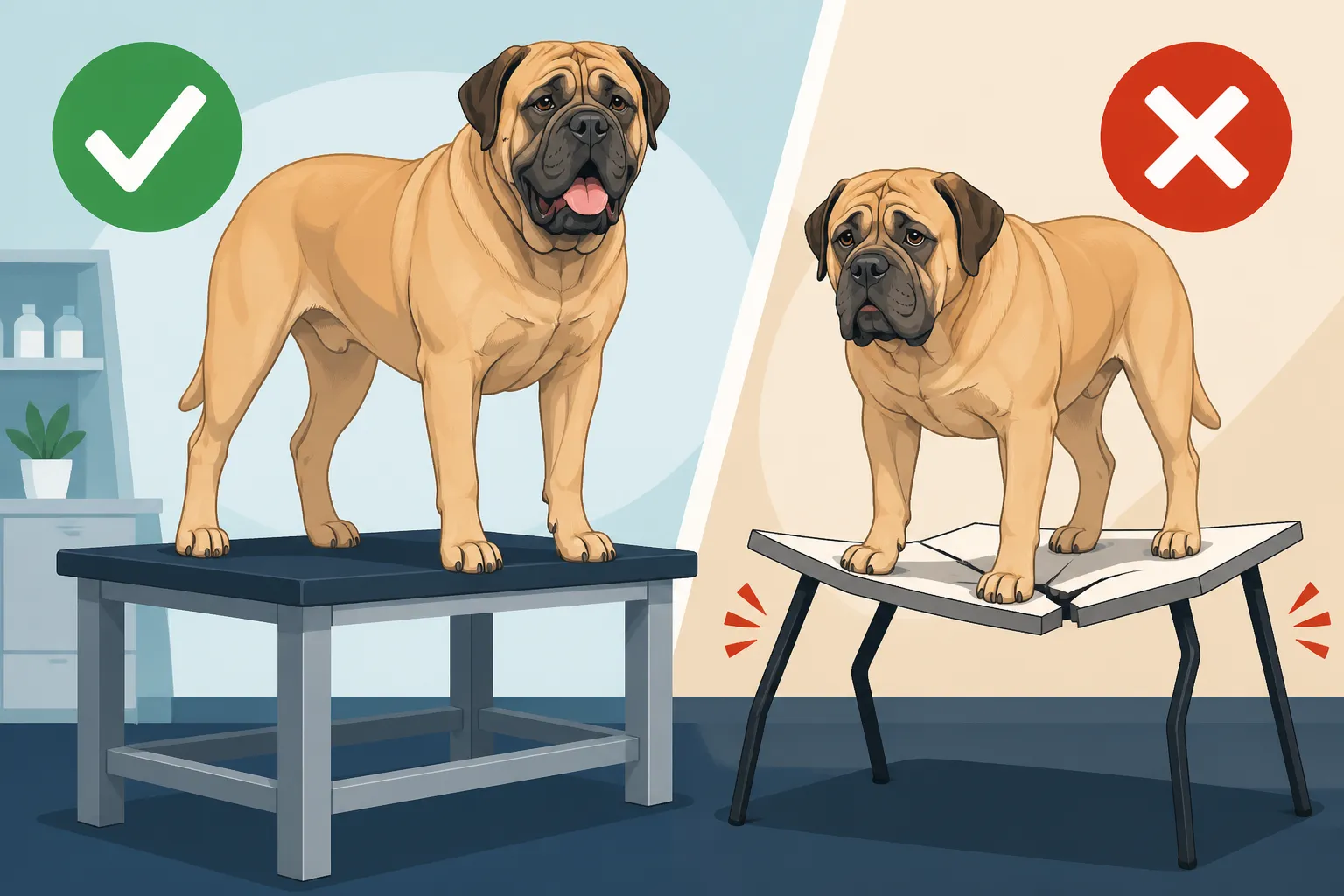
Imagine trying to get a fully grown Mastiff, who might weigh as much as a small adult human, onto a standard exam table. Most average veterinary tables are designed for dogs up to, say, 70 or 80 pounds. Anything beyond that starts to push their limits, both in terms of weight capacity and surface area. You might be accustomed to seeing a Labrador or a Golden Retriever hop up onto a table with a little encouragement, but a Mastiff simply doesn't operate in the same way. Their bulk makes even simple maneuvers difficult. A Mastiff's centre of gravity is different, and if he's feeling unwell or is in pain, asking him to balance on a small, elevated surface can be outright dangerous for both him and the veterinary staff. This is precisely why practices need to invest in specialized equipment.
Space Requirements in the Exam Room
Beyond the table itself, consider the actual physical space of the examination room. A Mastiff needs room to turn around, to lie down comfortably, and for the veterinary team to work around him safely. Cramped spaces can exacerbate a Mastiff's anxiety, making examinations even harder. If your dog gets stressed, imagine trying to restrain a 200-pound animal in a tiny room while he's trying to express his discomfort. It's a recipe for increased stress for everyone involved. Some clinics are designed with smaller breeds in mind, with compact rooms and narrow hallways that simply don't accommodate the grand scale of a Mastiff. You want a clinic where your Mastiff can enter, move, and be examined without feeling like he's trying to squeeze into a dollhouse.
Types of Examination Tables and Their Limitations
Not all vet tables are created equal, and understanding the differences can help you assess whether a practice is genuinely prepared for a giant breed like yours. From basic fixed tables to state-of-the-art hydraulic lifts, each has its own capacity and functionality.
Standard Fixed Tables
Most general veterinary practices have standard fixed tables. These are typically stainless steel or laminate-topped tables set at a fixed height, usually around waist-level for an average person. They are sturdy for most medium-to-large breeds, often rated for dogs up to 100-150 pounds. However, the critical factor is getting the dog onto the table. For a Mastiff, this usually requires two or even three strong people to manually lift him, which is not only difficult but also risks injury to the dog or the staff, especially if the dog is compromised. If your Mastiff is particularly elderly or has mobility issues, such as those discussed in Lifting an Old Mastiff That Cannot Get Up, this type of table becomes a significant obstacle. Moreover, once a Mastiff is on such a table, there's little room for him to adjust his position, making long examinations uncomfortable.
Hydraulic and Electric Lift Tables
This is where things start to look much better for Mastiff owners. Hydraulic or electric lift tables are designed to lower almost to floor level, allowing your Mastiff to simply walk onto the surface. Once he's comfortably positioned, the table can then be slowly raised to a comfortable working height for the veterinarian. This eliminates the need for any strenuous lifting, significantly reduces stress for your dog, and improves safety for everyone. These tables are usually rated for much higher weights, often 300-500 pounds, making them perfectly suitable for even the largest Mastiffs.
Here's a quick comparison of common vet table types:
| Table Type | Typical Weight Capacity (approx.) | Lifting Mechanism | Key Advantages for Mastiffs |
|---|---|---|---|
| Standard Fixed | 100-150 lbs | Manual lift required | Lower initial cost for clinics; good for smaller/medium breeds |
| Hydraulic/Electric | 300-500 lbs | Foot pedal/button | Eliminates manual lifting; reduces stress; safer for dog & staff |
| Floor Level Exam | 500+ lbs | Walk-on entry | Max comfort & safety; ideal for critical cases; no elevation fear |
Some practices might also use floor-level exam areas or even simply perform examinations on a heavily padded mat on the floor for very large or anxious dogs. This approach prioritizes safety and comfort over traditional table exams, which can be an excellent sign of a Mastiff-friendly clinic.
Finding a Vet Equipped for Giant Breeds
The good news is that more and more veterinary practices are recognizing the needs of giant breed owners. Finding one that's truly prepared means doing a little homework before an emergency strikes.
What to Look For in a Clinic
When you're searching for a new vet or evaluating your current one, don't be afraid to ask direct questions. A great starting point is inquiring about their equipment. Specifically, ask:
- "Do you have a hydraulic or electric lift table in your exam rooms?"
- "What is the weight capacity of your examination tables?"
- "How do you handle weighing a Mastiff-sized dog?" (Look for large, low-profile scales).
- "Do you have large kennels or runs if my Mastiff needs to stay overnight?" This is crucial, as a standard kennel simply won't suffice for a Mastiff.
- "What is your protocol for moving a collapsed Mastiff in an emergency?" As explored in How a Clinic Moves a Collapsed Mastiff, this is a significant concern.
Beyond the tables, observe the general layout of the clinic. Are the hallways wide enough? Do they have non-slip flooring? Do the staff seem comfortable and experienced with large dogs? A friendly, calm approach from staff can make all the difference to a sensitive Mastiff. Consider also the parking situation and how easy it is to get your Mastiff from your vehicle into the building. Some clinics have specific large-dog entrances or ground-level access points.
The Benefits of a Giant Breed-Friendly Practice
Choosing a vet practice specifically geared towards giant breeds offers immense peace of mind. Firstly, it ensures the safety and comfort of your Mastiff during examinations and procedures. No more struggling to lift your dog, no more worrying about him slipping off a table. Secondly, these practices often have staff who are experienced with the unique health challenges of giant breeds, from growth plate issues in puppies to arthritis in older dogs. This specialized knowledge can be invaluable for preventative care and early diagnosis. Furthermore, the availability of appropriate equipment, such as large X-ray plates (as discussed in Whether a Mastiff Fits on a Standard X Ray Plate) or specialized anesthesia monitoring equipment for larger body masses, means better care overall. The cost implications of owning a Mastiff are significant, and finding a vet who understands their unique needs can sometimes lead to more efficient care, even if some specialized services might initially seem pricier. This is also where having robust pet insurance like Healthy Paws can truly come into its own, helping to offset the costs of specialist care that a giant breed might require.
Alternative Solutions and Emergency Preparedness
Even with the best-equipped vet, there might be times when your Mastiff cannot be moved onto a table, or an emergency demands swift, ground-level intervention. Being prepared for these scenarios is part of responsible Mastiff ownership.
When a Table Just Isn't an Option
There will be times when, regardless of the table's capacity, a Mastiff simply cannot or should not be put on one. Perhaps he's too weak, in too much pain, or experiencing severe balance issues. In these instances, a good veterinary practice will have alternative solutions. This might involve conducting the entire examination on the floor, using comfortable, non-slip mats. They may have portable scales that can be placed on the floor for easy walk-on weighing. For procedures requiring more stability, some vets utilize specialized gurneys or reinforced floor platforms that offer a stable, low-to-the-ground surface. Don't be shy about advocating for your Mastiff's comfort and safety. If you feel he's too unstable for a table, communicate that clearly to the staff. These are the kinds of conversations that highlight the importance of knowing your dog's temperament and physical limits, especially as they age, something we cover in Caring for a Mastiff Past Five.
Preparing for Emergencies at Home
Emergencies don't wait for convenient times, and they often happen when your Mastiff is least mobile. Having a plan for how you'll get your dog to the car, and then from the car into the vet clinic, is essential. Consider investing in a heavy-duty moving blanket or a specialized dog stretcher that can support a Mastiff's weight. Practice using it (with treats, of course!) when your dog is well, so you're not fumbling in a crisis. Knowing how much your Mastiff might actually cost in an emergency, as touched upon in What Anesthesia Costs on a Mastiff, can also influence your preparedness. It's not uncommon for vets to suggest specific dietary changes or supplements like those available on Chewy, which can support joint health and mobility, indirectly reducing the likelihood of mobility-related emergencies. For those considering specialized nutrition, services like Ollie offer custom meal plans that might be part of an overall health management strategy to keep your Mastiff strong and mobile, reducing the strain on both him and vet clinic equipment.
Ultimately, finding a vet clinic that understands and is equipped for the unique needs of your magnificent Mastiff will make veterinary visits less stressful for both of you, ensuring your gentle giant receives the best possible care throughout his life.
Disclaimer
This article is for general informational purposes only and does not constitute professional advice. Laws, prices and regulations vary by location and change over time. Consult a qualified professional for guidance on your specific situation.