Why a Mastiff Puppy Must Be Lifted Into a Car
Bringing home a Mastiff puppy is a whirlwind of joy, excitement, and admittedly, a fair bit of clumsy bumbling as they grow at an astonishing rate. One of the first challenges many new owners face is simply getting their enormous, wobbly bundle of fluff into the car. While it might seem natural to encourage them to jump in like any other dog, this seemingly innocent act can pose significant, long-term health risks for your growing Mastiff. This guide will delve into why lifting your Mastiff puppy into a car is paramount, exploring the delicate physiology of their developing joints and offering practical solutions to protect their future mobility.
The Delicate Construction of a Growing Mastiff Puppy's Joints
Mastiff puppies grow at an incredible, almost unbelievable rate. They go from tiny, palm-sized pups to over 100 pounds in their first year, and sometimes even double that by maturity. This rapid growth puts immense strain on their developing skeletal system, particularly the vulnerable growth plates and soft tissues in their joints. Understanding this crucial developmental phase is key to preventing lifelong health issues.
Understanding Growth Plates and Their Vulnerability
At birth, a puppy's bones aren't fully ossified; they have areas of cartilage called growth plates (or epiphyseal plates) located near the ends of long bones. These plates are responsible for all the bone growth, gradually hardening into solid bone as the puppy matures. For a giant breed like the Mastiff, these growth plates remain open and active for a much longer period than in smaller breeds, often not fully closing until they are 18-24 months old, sometimes even later.
Because these growth plates are made of cartilage, they are significantly softer and more fragile than mature bone. Any sudden, high-impact stress, like the jarring force of jumping out of a car or landing awkwardly, can easily damage them. This damage might manifest as a fracture, a partial separation, or microscopic trauma that disrupts the natural growth process. Imagine trying to build a sturdy house on a shaky foundation – it's a recipe for disaster down the line. Protecting these delicate structures is foundational to their long-term health.
The Specific Risks of High-Impact Jumps for Giant Breeds
When a Mastiff puppy jumps from even a modest height, such as the back of a sedan or an SUV, the force of gravity combined with their rapidly increasing body mass creates a substantial impact on their still-developing joints. This isn't just about a potential acute injury; it's about the cumulative stress. Each jump, each awkward landing, each slip on a slick surface, contributes to microtrauma in the joints, particularly in the hips, elbows, and shoulders.
For a breed predisposed to conditions like hip and elbow dysplasia, this kind of repetitive stress can be a significant contributing factor. Even if a puppy has excellent genetics, environmental factors like excessive impact during their crucial growth period can worsen or even trigger the manifestation of these debilitating conditions. It's why we emphasize that a Mastiff puppy must not be exercised hard. Their sheer bulk, even as a puppy, makes activities that are fine for smaller breeds incredibly risky for them. We're talking about preventing a lifetime of pain and expensive veterinary care down the road.
Preventing Long-Term Orthopedic Issues Through Careful Handling
The consequences of neglecting proper joint care during a Mastiff's puppyhood can be severe, leading to chronic pain, reduced mobility, and a diminished quality of life. Proactive measures, starting with simple acts like lifting them into the car, can make an enormous difference in safeguarding their joint health.
Hip Dysplasia and Elbow Dysplasia: Early Trauma's Role
Hip and elbow dysplasia are unfortunately common orthopedic conditions in Mastiffs. While genetics play a significant role, environmental factors during growth are critical. Hip dysplasia involves the malformation of the hip joint, where the ball and socket don't fit together properly. Elbow dysplasia is a complex condition involving multiple developmental abnormalities in the elbow joint. Both can lead to arthritis, pain, and lameness.
Early trauma from high-impact activities, such as repeatedly jumping into or out of vehicles, can exacerbate or even initiate the development of these conditions. The impact can cause microfractures, stress the joint capsules, and lead to abnormal development of the bone and cartilage. For instance, a bad landing might loosen the ligament holding the femoral head in place, contributing to a shallower socket over time, or put undue pressure on the growth plates in the elbow, disrupting their smooth development. It’s a sad reality that Elbow Dysplasia Affects One Mastiff in Seven, and we certainly don't want to contribute to that statistic by poor management. The goal is to minimize any external factors that could put undue stress on their inherently vulnerable joints.
The Cumulative Effect of Small Impacts
It's not usually one catastrophic jump that causes a problem, but rather the accumulation of many small impacts over time. Think about the daily routine: jumping off the couch, leaping off the bed, navigating stairs, and of course, getting in and out of the car multiple times a week. Each seemingly minor impact contributes to the overall wear and tear on those young, impressionable joints. This is especially true for What Bare Floors Do to a Growing Mastiff, causing slips and strains that add to the joint stress.
Over time, this cumulative stress can lead to micro-injuries, inflammation, and abnormal development. Even if the puppy doesn't show immediate signs of pain, the damage is often occurring subtly, laying the groundwork for problems that only become apparent later in life when the conditions are much harder to treat. This is why a consistent, careful approach to protecting their joints throughout puppyhood is so important. This also extends to overall exercise; excessive running, jumping, and rough play should be strictly limited to allow their skeletal system to develop properly.
| Activity | Risk Level for Mastiff Puppy | Specific Joint Impact | Prevention Strategy |
|---|
The Unseen Dangers of Your Mastiff Jumping into the Car
For such a monumental breed, Mastiffs are notoriously prone to certain musculoskeletal conditions. The weight and speed of their growth put immense pressure on their still-developing bones and joints. When you see your bouncy Mastiff puppy try to leap into the car, you might think it's cute or simply part of their boundless energy. However, what you might not realize is that each jump carries a hidden risk, potentially leading to debilitating issues down the road. This seemingly innocent action can inflict significant stress on their fragile structure, setting them up for a lifetime of discomfort and expensive veterinary interventions.
Understanding the Vulnerable Puppy Skeleton
Mastiff puppies aren't just scaled-down versions of adult Mastiffs. Their bodies are actively growing and changing at an incredible pace, and this rapid development means certain parts of their skeleton are particularly susceptible to injury. What might be a minor bump for an adult dog can be a serious setback for a growing puppy.
Growth Plates Are Not Fully Formed Bone
Imagine the ends of your puppy’s long bones—like those in their legs—as being capped with soft, cartilaginous areas called growth plates. These aren't solid bone yet; they're the engine room of bone growth, where cartilage cells rapidly multiply and gradually turn into new bone, lengthening the limb. In a Mastiff, these growth plates are active and vulnerable for a prolonged period, often not fully closing and hardening into solid bone until they are 18-24 months old, sometimes even later depending on the individual.
Because growth plates are softer than mature bone, they are the weakest link in a growing puppy's skeleton. When your Mastiff puppy jumps into a car, the sudden impact of landing, especially if it's awkward or onto a hard surface, can transmit significant force directly through these fragile areas. This can lead to various injuries, from minor bruising and inflammation that disrupt normal growth, to more severe issues like fractures or premature closure of the growth plate. If a growth plate closes too early or unevenly, it can cause deformities and lifelong lameness. This is precisely why it’s critical to understand that Why a Mastiff Puppy Must Grow Slowly and protect their growing bodies.
The Impact of Weight and Momentum on Developing Joints
Even at a few months old, a Mastiff puppy is already a substantial animal. They gain weight incredibly fast, often putting on several pounds a week. This rapidly increasing mass, combined with the momentum generated during a jump, translates into considerable force when they land. For example, a 60-pound Mastiff puppy jumping from a height of just two feet can generate impact forces many times its body weight on its tiny, developing joints.
This intense, repetitive stress on the knees, elbows, shoulders, and hips can cause micro-trauma to the soft cartilage and ligaments surrounding the joints. Over time, this cumulative damage can contribute to the development or worsening of orthopedic conditions that Mastiffs are already prone to, such as hip and elbow dysplasia. These conditions, which we'll discuss further, can lead to chronic pain, arthritis, and significant mobility issues as they age. Protecting them from these early impacts is a crucial step in ensuring they have a healthy, comfortable life.
The Long-Term Consequences of Joint Stress
While an occasional jump might seem harmless, the repeated microtrauma to a Mastiff puppy’s developing joints can accumulate over time, leading to serious and often painful conditions later in life. These aren't just minor aches; they can be debilitating issues that require extensive medical management and significantly impact your dog's quality of life.
Aggravating Hip and Elbow Dysplasia
Mastiffs, sadly, have a genetic predisposition to both hip and elbow dysplasia. Hip dysplasia occurs when the ball and socket of the hip joint don't fit together perfectly, leading to grinding, pain, and eventually arthritis. Elbow dysplasia is a complex condition involving multiple abnormalities in the elbow joint, also resulting in pain and degenerative joint disease. While genetics lay the groundwork for these conditions, environmental factors, especially during the critical growth period, play a huge role in how severely they manifest.
Repeated jarring and high-impact activities, such as jumping into and out of cars, can stress these already vulnerable joints. This stress can damage the articular cartilage, inflame the joint capsule, and even lead to abnormal bone development. It can exacerbate mild genetic predispositions, turning a potentially manageable case into a severe one, or accelerate the onset of symptoms. Many Mastiff owners learn the hard way that Why a Mastiff's Hips Fail Under Its Own Weight is often a combination of genetics and how they are managed as puppies. Preventing these early impacts is a key preventative measure, alongside careful breeding, to give your Mastiff the best chance at healthy joints.
Increased Risk of Arthritis and Chronic Pain
Even if your Mastiff puppy doesn't develop full-blown dysplasia, the cumulative stress from high-impact activities like car jumping can still lead to premature onset of arthritis and chronic pain. Each small injury or inflammation within a joint contributes to a cycle of cartilage degradation. Cartilage is the smooth, cushioning tissue that allows bones to glide effortlessly past each other. Once damaged, it doesn't regenerate effectively.
As the cartilage wears down, bones rub against each other, causing pain, stiffness, and reduced range of motion. For a dog that can weigh up to 200 pounds or more, chronic joint pain is not just uncomfortable; it significantly impairs their ability to move, play, and enjoy life. This can also lead to secondary issues, as they may shift weight unevenly, causing problems in other joints or muscle atrophy. Dealing with Arthritis in a Mastiff at Four is a heartbreaking reality for many owners, often stemming from early, preventable stressors. The expenses for managing chronic pain, from medications to physical therapy, can also be substantial, which is where a good pet insurance policy like Healthy Paws can be incredibly helpful for covering ongoing treatment costs.
Practical Solutions for Safe Car Entry and Exit
Knowing the risks is one thing, but actually implementing safe practices for a massive and growing Mastiff puppy is another. It requires a commitment to consistency and a bit of ingenuity, especially as they get heavier.
Safe Lifting Techniques for a Growing Puppy
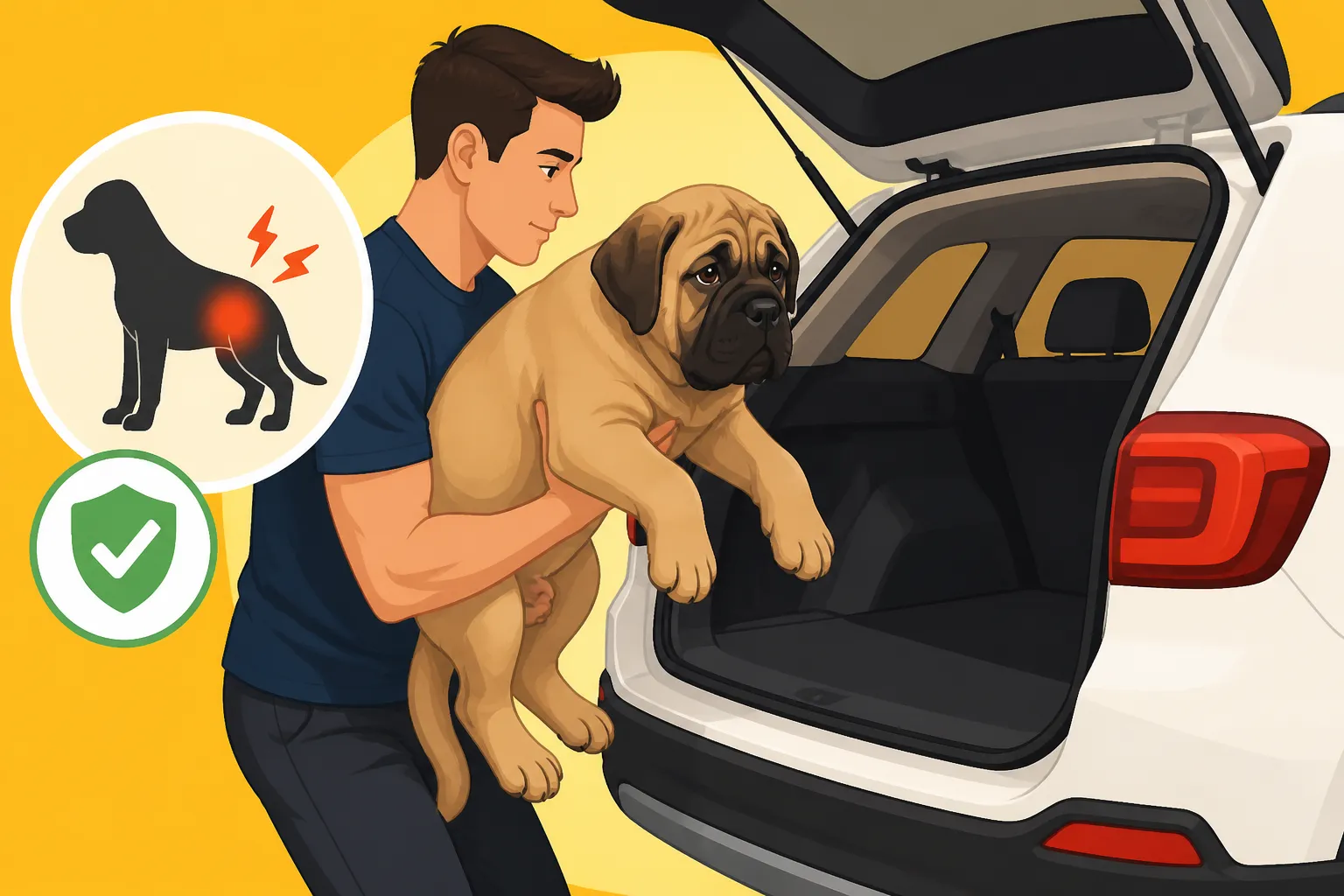
When your Mastiff is still small enough, lifting them is the safest option. Always aim to support their entire body weight evenly to avoid putting strain on any single joint or their spine.
- Support the Chest and Rear: For smaller puppies, one arm should scoop under their chest, just behind their front legs, and the other arm should support their hindquarters. This distributes their weight and keeps their spine aligned.
- Lift with Your Legs, Not Your Back: Bend your knees and keep your back straight. Lift using the strength in your legs, not by straining your back. This is crucial for your own safety as your Mastiff grows heavier.
- Hold Close to Your Body: Keep the puppy close to your body as you lift. This reduces strain and gives you better control.
- Gentle Placement: Carefully place them onto the car seat or into their crate, ensuring they have a stable footing before you release them. Avoid dropping them even a short distance.
- Practice Makes Perfect (for you!): The more you practice safe lifting, the easier and more natural it will become. Remember, as your Mastiff puppy gains How Fast a Mastiff Puppy Puts On Weight, you'll need to adjust your technique and perhaps enlist help.
This method is viable until your Mastiff puppy simply becomes too heavy for you to lift safely alone, which for many individuals, happens remarkably quickly.
Introducing Ramps and Steps as They Grow
Once your Mastiff puppy starts to approach or exceed a comfortable lifting weight, usually around 50-70 pounds, it's time to transition to using a ramp or sturdy pet steps. This is the safest long-term solution for protecting their joints.
- Start Early and Positively: Introduce the ramp or steps early in puppyhood, even while they can still be lifted. Make it a positive experience with lots of treats and praise. Lay the ramp flat on the ground initially and encourage them to walk over it.
- Gradual Incline: As they get comfortable, gradually increase the incline of the ramp. Lure them up and down with high-value treats.
- Consistency is Key: Use the ramp every single time they get in or out of the car. Consistency prevents them from trying to jump when you're not expecting it.
- Choosing the Right Ramp: Look for a ramp designed for large or giant breeds. It needs to be wide enough for your Mastiff to feel secure, have a non-slip surface, and be able to support their adult weight. Some ramps are telescoping, others fold, so consider your vehicle type and storage space. Brands like PetSafe and Solvit offer sturdy ramp options well-suited for larger dogs. Learning Teaching a Mastiff to Use a Ramp can save you and your dog a lot of discomfort and potential injury.
- Consider Vehicle Type: If you have a low-slung sedan, steps might work, but for SUVs or trucks, a ramp is almost always necessary due to the height.
Even if you choose a ramp, remember that pet insurance like Healthy Paws can provide a financial safety net should, despite all your precautions, an unforeseen accident or a genetic condition like Whether a Mastiff Tears a Cruciate Ligament arise.
Holistic Care for a Mastiff's Developing Body
Protecting your Mastiff's joints goes beyond just car entry. It involves a comprehensive approach to their environment, diet, and overall health management during their crucial growth phases.
Creating a Joint-Friendly Environment
Your home environment plays a massive role in your Mastiff puppy's joint health. Eliminating unnecessary impact and providing support are vital:
- Avoid Stairs: Whenever possible, carry your Mastiff puppy up and down stairs until their growth plates have closed. If carrying isn't an option, supervise them closely and consider baby gates to restrict access. This is Why Stairs Are Worse for a Mastiff Than Any Breed for a giant breed puppy.
- Provide Traction on Floors: Slippery floors (hardwood, tile, laminate) are a huge hazard. They force puppies to splay their legs, putting unnatural strain on their hips and knees. Use runners, area rugs, or carpet in high-traffic areas where your puppy spends time. You might also consider toe grips or traction socks.
- No Jumping On/Off Furniture: This can be tough to enforce with a giant, cuddly puppy, but it’s essential. Teach them to wait for an invitation to get on furniture and then help them up and down, or provide doggy steps/ramps for their favorite spots.
- Supportive Bedding: Invest in high-quality, orthopedic dog beds that provide ample cushioning and support. A Mastiff will spend a lot of time lying down, and proper support prevents pressure sores and joint discomfort.
By creating a "soft landing" environment, you significantly reduce the daily micro-traumas that can accumulate and lead to future problems.
Nutritional Support for Slow, Steady Growth
Diet plays an equally critical role in joint health, especially for giant breeds. The goal is slow, steady growth, not rapid weight gain, which can put excessive stress on developing bones and joints.
- Giant Breed Puppy Food: Choose a high-quality commercial dog food specifically formulated for large or giant breed puppies. These formulas are designed with slightly lower protein and controlled calcium levels. Excessive calcium can interfere with proper bone development in large breed puppies.
- Portion Control: Follow feeding guidelines carefully and resist the urge to overfeed. A Mastiff puppy should always look a little "ribby" or lean, never plump. Overfeeding leads to faster growth and excess weight, both detrimental to joints.
- Avoid Supplements Unless Advised: Do not add calcium or other supplements to your puppy's diet unless explicitly instructed by your veterinarian. You could inadvertently upset the delicate calcium-phosphorus balance crucial for bone development.
- Hydration: Always ensure your Mastiff puppy has access to fresh, clean water. Good hydration supports overall bodily functions, including joint health.
A balanced diet tailored to their specific growth needs is as important as physical protection. If you ever have questions about your Mastiff's diet or need recommendations for joint supplements for a Mastiff, always consult your veterinarian.
Proactive Veterinary Care and Monitoring
Regular veterinary check-ups are essential to monitor your Mastiff puppy's growth and joint health.
- Scheduled Exams: Adhere to your veterinarian's recommended schedule for puppy exams. They can assess gait, palpate joints, and catch potential issues early. This includes discussing The Age a Mastiff Puppy's Elbows Are First Filmed for conditions like elbow dysplasia.
- Discuss Any Concerns: Don't hesitate to mention any limping, stiffness, or changes in your puppy's movement to your vet, no matter how subtle. Early intervention can make a significant difference.
- Weight Management: Your vet can help you determine the ideal weight and body condition score for your growing Mastiff, which is crucial for minimizing joint stress.
- Consider Pet Insurance: Given the potential for orthopedic issues, investing in pet insurance like Healthy Paws early in your Mastiff's life can provide peace of mind. Coverage for conditions like hip and elbow dysplasia, should they arise, can amount to thousands of dollars for diagnostics, medications, and potential surgeries like What Hip Surgery Costs on a Mastiff or Whether a Mastiff Recovers From Elbow Surgery. Being prepared financially allows you to make the best health decisions for your beloved companion without undue stress.
By taking a holistic approach to your Mastiff puppy's care, you significantly increase their chances of a long, healthy, and comfortable life, free from preventable joint pain.
Disclaimer
The information provided in this article is for general informational purposes only and is not a substitute for professional veterinary advice. Always consult with a qualified veterinarian regarding your Mastiff's specific health concerns, treatment options, and dietary needs.