Whether a Boarding Kennel Has a Run Big Enough for a Mastiff
Leaving your beloved Mastiff in someone else's care, even for a short while, can be incredibly nerve-wracking. One of the biggest worries, especially for those of us with these magnificent giants, is whether a boarding kennel will truly have enough space to keep them comfortable, safe, and happy. This guide will walk you through exactly what to consider and look for to ensure your big friend has the best possible stay.
The Unique Space Requirements of a Mastiff
Let's be honest, a Mastiff isn't just a big dog; they're a massive dog. Their sheer size dictates so much of their care, from their food bowls to their beds, and this absolutely extends to their living space at a boarding facility. You can't just toss a Mastiff into a run designed for a Labrador and expect them to be fine. It just doesn't work that way.
The Sheer Physical Footprint of a Giant
A Mastiff can easily weigh upwards of 150-200 pounds, with some males pushing even heavier. When they stand, they are tall and wide. When they lie down, they sprawl. Imagine a two-hundred-pound dog trying to turn around in a small, cramped kennel run. It's not just awkward; it's practically impossible without bumping into walls or the door. Their physical presence alone demands significant square footage. We're talking about dogs that need room to stretch out fully, not curl into a tight ball, especially if they're used to having free range in your home. A Mastiff Lying Two Hundred Pounds on One Elbow All Day is a real concern, and a cramped space makes it worse. They need enough room to stand up, turn around, and lie down comfortably without their head or tail hitting the enclosure. Anything less is simply inadequate for a dog of this stature.
Comfort and Joint Health in a Confined Space
Beyond simply fitting, there's the critical aspect of comfort and, more importantly, joint health. Mastiffs are predisposed to orthopedic issues like hip and elbow dysplasia. Confining them to a hard, small space for extended periods can exacerbate these problems. They need room to shift their weight, change positions frequently, and ideally, have access to a soft, supportive surface. Being forced to lie on cold, hard concrete or a thin mat in an uncomfortable position for hours on end is a recipe for stiffness, pain, and potential long-term issues. When you're assessing a kennel, think about your Mastiff's joints. Are they going to be able to move freely enough to avoid unnecessary strain? Their well-being directly links to the space they inhabit.
Mental Well-being and Stress Reduction
A cramped environment isn't just physically uncomfortable; it's mentally stressful for any dog, but particularly for a large, sensitive breed like the Mastiff. These dogs thrive on feeling secure and having personal space. Being confined in a small, noisy run with little room to move can lead to anxiety, pacing, excessive barking, or even destructive behaviors. They might get stressed if they can't comfortably observe their surroundings or retreat to a quiet corner. Mastiffs are known for The Sensitivity Nobody Expects in a Two Hundred Pound Mastiff, and this sensitivity means they need a calm, spacious environment to truly relax. A stressed Mastiff is not a happy Mastiff, and your goal is to minimize their anxiety while you're away.
Exploring Different Boarding Facilities and Their Space Provisions
The world of dog boarding isn't one-size-fits-all, and neither are the spaces they offer. Knowing the various options can help you narrow down your search for a place that genuinely caters to a Mastiff's colossal needs.
Traditional Kennels: Are the Runs Truly "Large"?
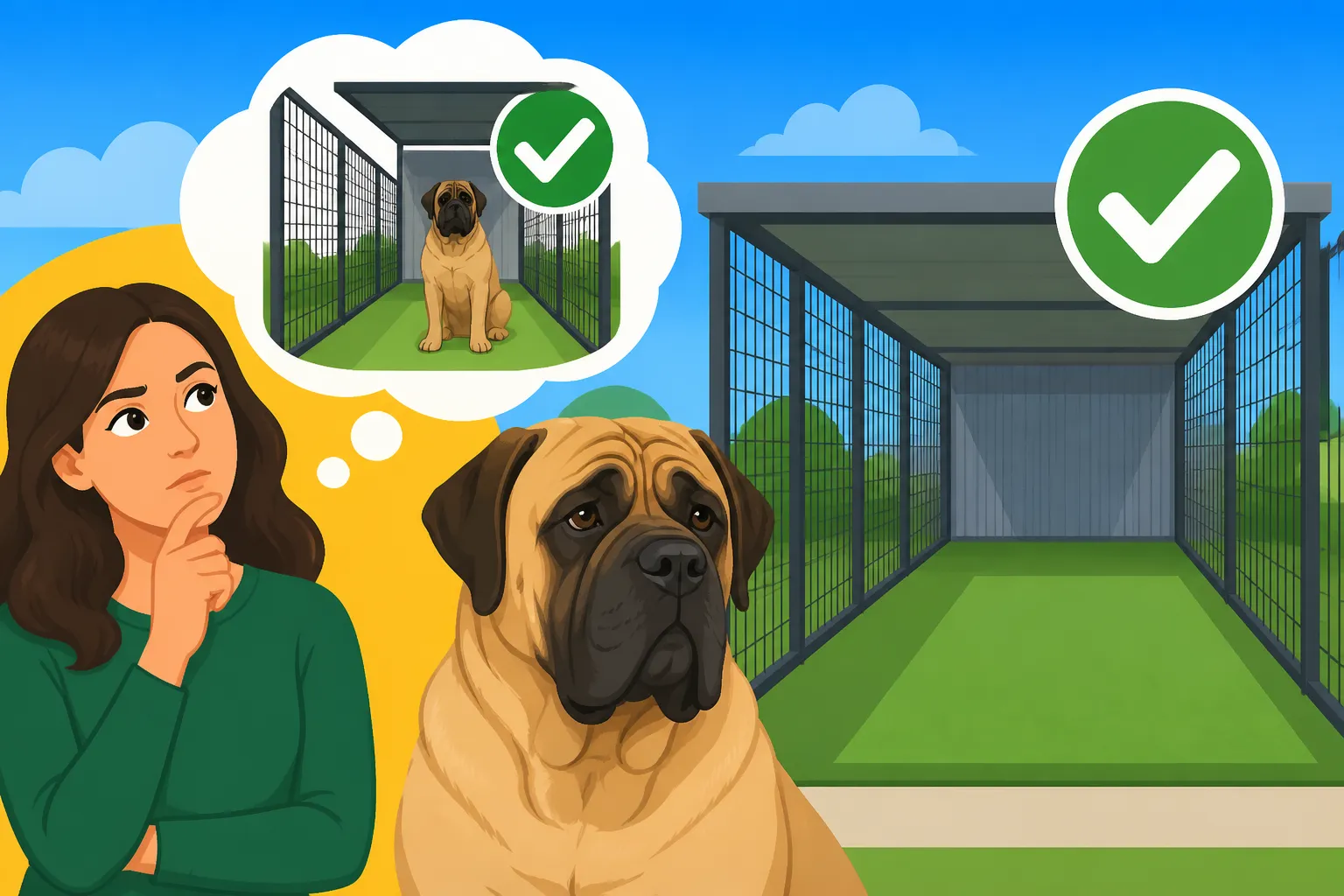
Many traditional boarding kennels offer "large" or "extra-large" runs. The problem is, these terms are relative. What's considered "large" for a German Shepherd might still be uncomfortably snug for a Mastiff. These runs often consist of an indoor sleeping area connected to an outdoor concrete patio run. When evaluating these, you need to physically measure them or, at the very least, eyeball them critically. Can your Mastiff stand up, turn around, and take a couple of steps in each direction without hitting a wall? Does the outdoor portion offer enough length for a few strides, or is it just enough space to relieve themselves? Be wary of facilities that describe their runs as "generous" without providing actual dimensions. A good facility should be transparent about their kennel sizes, and ideally, have runs specifically designated for giant breeds, not just "large dogs."
Luxury Pet Hotels and Suites: Do They Live Up to the Hype?
In recent years, "luxury pet hotels" and "dog suites" have become popular, promising more spacious and comfortable accommodations. These often feature larger private rooms, sometimes with beds, windows, and even webcams. While they generally offer more square footage than traditional runs, it's still crucial to confirm the actual dimensions. Don't assume "suite" automatically means "Mastiff-friendly." Some "suites" might just be slightly larger rooms that still lack the expansive feel a Mastiff needs. However, these facilities are often more inclined to understand the specific needs of giant breeds, including providing orthopedic beds (though it's still wise to bring your own, or a spare, if you have one, given What an Orthopedic Bed for a Mastiff Costs and how quickly they flatten. Check with Chewy for a sturdy, giant-sized option if you need to buy one for home and want to ensure your Mastiff has proper support there too). Many also offer more individualized playtimes and comfortable resting spots that can make a huge difference for a Mastiff's stay.
In-Home Pet Sitters or Doggy Daycares with Overnight Stays
Sometimes, the best solution for a giant breed isn't a kennel at all, but a professional in-home pet sitter who comes to your house, or a specialized doggy daycare that offers overnight stays in a home-like environment. An in-home sitter allows your Mastiff to stay in their familiar surroundings, with all the space and comfort of their own home, which can significantly reduce stress and anxiety. If you opt for a sitter, ensure they are experienced with giant breeds and can physically manage your dog, especially on walks or in an emergency. Whether a Sitter Can Physically Manage a Mastiff is a valid concern given their immense size and strength. Daycares with overnight stays might offer a blend of social interaction and a more comfortable sleeping arrangement than a traditional kennel, but again, scrutinize the sleeping area and overall space. Some daycares may integrate overnight stays into a human’s home, providing a much larger, less confining experience than a dedicated kennel run.
What to Look For When Touring a Boarding Kennel
Once you've identified potential facilities, a physical visit is non-negotiable. This is your chance to be a detective and ensure they meet your Mastiff's demanding standards. Don't be afraid to ask tough questions and observe everything.
Physical Space Dimensions: Go Beyond the Label
When you tour a facility, ask to see the exact run or suite your Mastiff would occupy. Don't settle for a generic tour of a smaller kennel. Bring a tape measure if you're serious, or at least mentally gauge the space. For a Mastiff, you're looking for a minimum indoor dimension that allows them to fully stretch out, lie on their side, and stand up and turn around without feeling restricted. An ideal indoor run might be 6×10 feet or larger. The outdoor portion should be at least as generous, allowing for comfortable movement, not just a quick potty break. Observe if the flooring is comfortable or if it's hard concrete. Look for good ventilation and temperature control, as The Temperature at Which a Mastiff Should Stay Indoors is crucial due to their sheer bulk and potential to overheat. A quality facility will understand these specific needs for large breeds.
Outdoor Access and Exercise Areas: More Than Just a Run
Even the largest individual run isn't enough for a Mastiff without adequate outdoor exercise and playtime. Inquire about the frequency, duration, and type of outdoor access. Will your Mastiff get individual turn-out time in a larger, secure yard, or is it always group play? If it's group play, how are dogs screened for temperament, and how is size managed? A two-hundred-pound Mastiff playing with a smaller, more fragile dog could lead to accidental injury. Look for secure, well-maintained outdoor areas with plenty of space to roam. Access to shaded areas and fresh water is also critical, especially in warmer weather. A facility that offers structured walks or individual play sessions as part of their package or for an additional fee is a big plus for a Mastiff.
Staffing, Supervision, and Giant Breed Expertise
Beyond the physical space, the quality of the staff is paramount. A kennel can have the biggest runs in the world, but if the staff isn't experienced with giant breeds, it could still be a poor fit. Ask about staff-to-dog ratios, especially during active hours and overnight. How often are dogs checked on, particularly at night? Inquire about their emergency protocols and what veterinary services they use. Do they have experience handling large, powerful dogs on leashes, administering medication, or recognizing subtle signs of distress or illness in a Mastiff? How Much Anesthetic a Two Hundred Pound Mastiff Takes might indicate that a facility is not accustomed to handling dogs of this size for medical procedures, so understanding their vet relationship is key. A knowledgeable staff can make all the difference in providing a safe and comfortable stay.
Preparing Your Mastiff for a Successful Boarding Stay
Even the best kennel can be a stressful experience if your Mastiff isn't prepared. A little proactive planning can go a long way in ensuring their comfort and your peace of mind.
Trial Stays: Easing Them Into It
For a giant breed like a Mastiff, a gradual introduction to boarding is highly recommended. Start with a short daycare visit, then a one-night stay, building up to longer periods if needed. This allows your Mastiff to become familiar with the environment, the staff, and the routine before a longer absence. It also gives you a chance to see how they react and if the facility truly meets their needs. Observe them when you pick them up after a trial stay: do they seem happy, tired in a good way, or stressed and withdrawn? This feedback is invaluable. Think of it as a low-stakes test run for everyone involved.
Packing Essentials: Bringing a Piece of Home
Even in a large, comfortable suite, familiar items can provide immense comfort. Pack their regular food to avoid stomach upset (especially crucial for Mastiffs, given their sensitive digestion and risk of bloat). Many owners use Chewy for convenient delivery of their specific giant-breed kibble or supplements, so ensuring the kennel can accommodate your preferred food is important. Bring a familiar blanket or a worn t-shirt with your scent on it. If the kennel allows, their favorite sturdy toy can also be a comfort. Discuss with the kennel whether they provide orthopedic beds or if you should bring your own. Remember, How Often a Mastiff Flattens a Bed means you might want to send an older, still-comfortable one rather than your brand new expensive one, just in case.
Health Records and Emergency Contacts: Being Prepared
Before you drop off your Mastiff, ensure all vaccinations are up-to-date and easily accessible. Provide clear, written instructions for any medications, including dosage and frequency. Make sure the kennel has your current contact information, as well as an emergency contact person who can make decisions if you're unreachable. It’s also wise to leave the contact information for your regular veterinarian and specify your wishes regarding emergency medical care. Consider pet insurance from providers like Healthy Paws, which can offer peace of mind for unexpected veterinary expenses that might arise from stress-related issues, accidents, or illnesses while your Mastiff is away. What a Mastiff's Weight Does to Every Line on the Vet Invoice means any vet visit, big or small, can be costly.
Comparing Boarding Options for Your Mastiff
To help you visualize the differences, here's a quick comparison of common boarding types through the lens of a Mastiff owner.
| Feature | Traditional Kennel Run | Luxury Pet Suite | In-Home Pet Sitter/Overnight Daycare Host |
|---|---|---|---|
| Space Provided | Varies widely; often too small for full stretch. | Generally larger, more room to move. | Full house access; familiar environment. |
| Comfort Level | Can be basic (concrete, thin mat); noisy. | Enhanced comfort (beds, quieter environment). | High comfort; familiar bed, routines. |
| Supervision | Group monitoring, periodic checks. | More individualized attention; sometimes cameras. | Consistent one-on-one attention. |
| Social Interaction | Can be isolated or group play (check safety). | Often includes individual or small-group play. | Depends on host's other pets/clients. |
| Cost Shape | Typically lower initial cost. | Higher cost, more amenities included. | Varies widely based on services and duration. |
| Giant Breed Expertise | May vary; ask directly for specific experience. | More likely to cater to and understand large breeds. | Essential to vet sitter's large breed experience. |
| Stress Level for Mastiff | Can be high due to confinement and noise. | Generally lower, but new environment. | Lowest, due to familiar surroundings. |
Choosing the right option requires careful consideration of these factors, always prioritizing your Mastiff's well-being and unique needs. What a Mastiff needs every day at home in terms of space, comfort, and routine, should ideally be mirrored in their boarding environment.
Final Thoughts on Your Mastiff's Boarding Experience
Finding the right boarding solution for your Mastiff is a significant decision, and it’s completely understandable to feel overwhelmed by the process. These gentle giants are members of our family, and their comfort and safety are paramount. Whether you choose a facility with expansive runs or opt for an in-home sitter, remember that your diligent research and preparation are the best gifts you can give your Mastiff before you head out the door. Take the time, ask all the questions, and trust your gut. Your Mastiff will thank you for it with happy wags and leans when you return.
Disclaimer
This article is for general informational purposes only and does not constitute professional advice. Laws, prices and regulations vary by location and change over time. Consult a qualified professional for guidance on your specific situation.