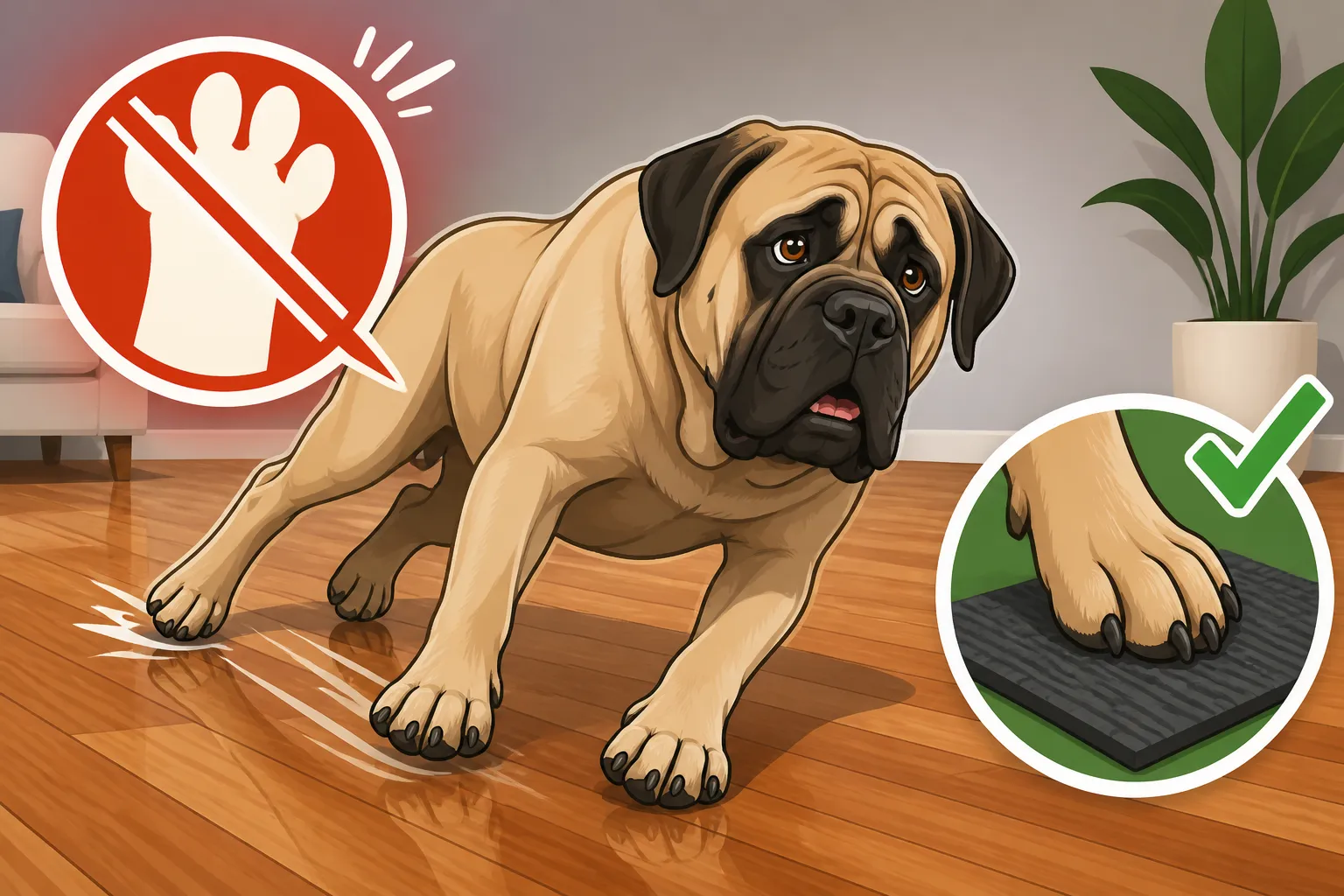
Traction: Why a Mastiff Cannot Live on Bare Hardwood
There’s nothing quite like the majestic, lumbering presence of a Mastiff in your home. Their sheer size and gentle nature can fill a room with warmth, but it can also present unique challenges, especially when it comes to something as seemingly simple as your floors. Many Mastiff owners grapple with the heartbreaking reality of watching their beloved giant struggle, slip, and even injure themselves on bare hardwood or tile, feeling utterly helpless. This comprehensive guide is here to shed light on exactly why these slick surfaces are such a hazard for Mastiffs and, more importantly, to arm you with practical, empathetic solutions to transform your home into a safe and comfortable haven for your magnificent companion.
The Physics of a Giant Dog on Slick Surfaces
It’s easy to look at a Mastiff and think their massive frame would anchor them to the ground, but paradoxically, their size is often their biggest weakness on slippery floors. It’s not just about a lack of grip; it’s a complex interplay of weight distribution, momentum, and the very design of their paws that turns a simple walk across the kitchen into a treacherous journey. Understanding these physical realities is the first step toward safeguarding your gentle giant.
The Mastiff's Weight Distribution and Center of Gravity
Imagine trying to balance a refrigerator on a skateboard – that's a bit what it's like for a Mastiff navigating a slick floor. Their immense body weight, often well over 150 pounds and sometimes pushing 200 or even more, means there's an incredible amount of pressure concentrated through their relatively small paw pads. This weight is distributed across a large, somewhat rectangular frame, giving them a high center of gravity compared to shorter, more squat breeds. When they move, especially at a trot or attempting to change direction, this high center of gravity makes them inherently less stable. A sudden shift, a quick turn, or an unexpected stop can easily throw them off balance, with their substantial mass making any recovery difficult. It’s not elegant; it’s a frantic, often painful flailing to regain equilibrium, which can lead to disastrous slips and falls. The sheer force of their body hitting the ground can cause significant trauma that a smaller dog might avoid.
Consider a Mastiff standing still on a polished floor. Even then, their considerable bulk means they are constantly exerting downward pressure, requiring precise, tiny adjustments to maintain balance. Now imagine them trying to push off from that surface to get up from a nap. The effort required is immense, and if their paws can't find purchase, their limbs splay out, stressing joints and muscles in unnatural ways. It's a daily battle for them, often unseen until a serious incident occurs. For a breed already prone to orthopedic issues, this constant struggle only adds to the wear and tear on their frame. Why a Mastiff's Hips Fail Under Its Own Weight discusses how their immense weight already puts pressure on their joints.
Paw Mechanics and Lack of Grip
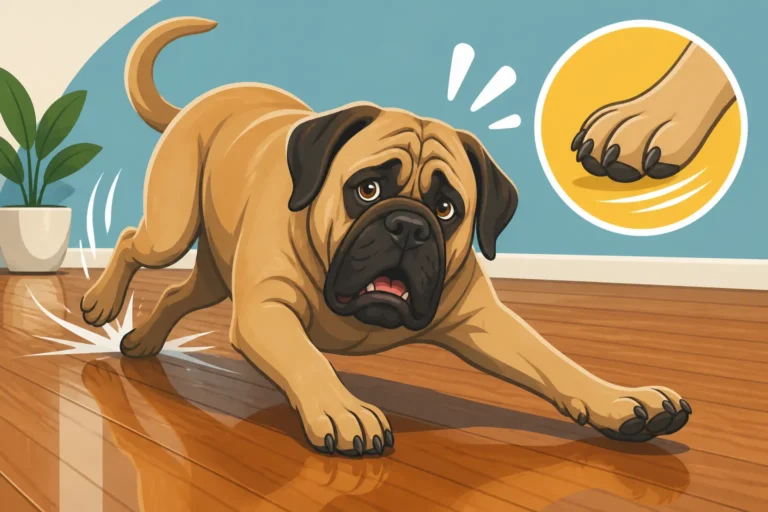
A dog's paw is a marvel of natural engineering, designed for traction on varied terrain like soil, grass, or even rough concrete. The paw pads are tough and slightly pliable, offering some grip, while their nails act like cleats, digging into softer surfaces for propulsion and stability. However, hardwood, laminate, and tile floors present an entirely different challenge. These surfaces are smooth and unforgiving. The Mastiff’s large, relatively flat paw pads simply slide over them, offering minimal friction. Their nails, which would typically provide grip, often end up clicking and skittering across the hard surface, providing no useful traction whatsoever. In fact, if a Mastiff's nails are too long, they can actively hinder their ability to get traction, as they push the paw pads up off the floor, reducing the crucial contact needed for grip. This makes keeping their nails meticulously trimmed even more critical for these giants.
Think about how you'd feel trying to walk on ice with smooth-soled shoes. You'd move slowly, carefully, constantly bracing yourself. A Mastiff feels much the same. Their natural gait, which is a powerful, deliberate stride, becomes compromised. They shorten their steps, walk with a stiff-legged shuffle, and use their heads and necks for counter-balance, all adaptations to avoid a fall. This unnatural posture itself can lead to muscle strain and discomfort over time, as their bodies are forced to compensate for the unstable footing. It’s a constant, low-level stressor on their musculoskeletal system that can quietly contribute to chronic pain and mobility issues. Keeping a Mastiff's Nails Short Enough for Traction delves into this important aspect of care.
The Perils of Momentum
When a Mastiff gets moving, even at a leisurely pace, their sheer mass translates into significant momentum. On a surface with good traction, they can easily accelerate, decelerate, and change direction, using their powerful muscles and gripping paws to control their movement. On a bare hardwood floor, however, that momentum becomes a liability. Once they start to slide, it's incredibly difficult for them to stop or regain control. Their powerful legs, designed for pulling and pushing on stable ground, become almost useless in a skid.
Imagine your Mastiff getting excited at the sound of the doorbell and trying to rush to greet a visitor. On a carpeted floor, they might charge and stop abruptly. On a slick floor, that same burst of energy turns into an uncontrolled slide, potentially into a wall, furniture, or even a person. The impact from such an uncontrolled collision can be severe, not just for the dog but for anyone in their path. For instance, a slip and fall that sends a 180-pound Mastiff crashing into a coffee table can result in painful bruises, lacerations, or even fractures for the dog, and a broken table for you. This lack of control isn’t just about comfort; it’s a real safety hazard in a home with hard, smooth floors.
Furthermore, this struggle with momentum extends to everyday actions. Getting up from a lying position, especially on a smooth floor, requires a strong push off their hind legs. If they slip, they might try repeatedly, straining muscles and joints with each failed attempt. The resulting frustration and potential pain can make them reluctant to move or even stand, leading to a more sedentary lifestyle which is detrimental to their overall health. They can end up Why an Old Mastiff Cannot Get Up even when they are not yet senior because the floor offers no purchase.
The Hidden Dangers: Injuries from Slipping
Beyond the immediate embarrassment or fright of a slip, the repeated trauma of navigating slick floors poses a significant threat to a Mastiff's long-term health. These aren't just minor tumbles; they can lead to debilitating and painful injuries, some of which can permanently impact their quality of life. Owners often don't realize the extent of the damage until chronic issues begin to manifest.
Joint Stress and Degeneration
The most insidious danger of slick floors for Mastiffs is the relentless stress they place on their joints. Every time a Mastiff slips, their legs splay out unnaturally, forcing their joints—especially their hips, elbows, and knees—into extreme ranges of motion they're not designed for. This twisting and wrenching can strain ligaments, tear muscles, and bruise cartilage. Over time, these micro-traumas accumulate. It’s like constantly grinding gears without proper lubrication; eventually, something breaks down. For a breed already genetically predisposed to conditions like hip and elbow dysplasia, this constant joint stress is a recipe for accelerated degeneration. Elbow Dysplasia Affects One Mastiff in Seven and Why a Mastiff's Hips Fail Under Its Own Weight are serious concerns already for the breed, and bare floors only make it worse.
Imagine a Mastiff trying to stand up on a tiled floor after a long nap. Their powerful hind legs push, but instead of gaining purchase, they slide outwards. The dog might scramble, splaying wide, before eventually finding enough grip to hoist themselves up. This action, repeated multiple times a day, every day, puts immense shear force on their hip joints. This force grinds the cartilage, leading to inflammation and pain, and ultimately accelerating the onset and severity of arthritis. Owners might notice their Mastiff becoming stiffer, slower to rise, or less enthusiastic about walks, attributing it to age, when in reality, the floor is a major contributing factor to their discomfort. It's a silent destroyer of their joint health.
Acute Injuries: Sprains, Strains, Tears, and Even Fractures
While chronic joint degeneration is a long-term worry, acute injuries are a more immediate and often dramatic consequence of slipping. A severe slip, especially one involving a fall, can cause a range of painful problems. We're talking about muscle strains where the muscle fibers are overstretched or torn, ligament sprains where the tough bands connecting bones are damaged, and even more severe tears, such as a cruciate ligament rupture in the knee. The sound of a Mastiff yelping in pain after an unexpected fall can be terrifying, and the resulting veterinary bills can be astronomical. These are not minor injuries that heal quickly; they often require weeks or even months of strict rest, pain medication, and potentially extensive physical therapy.
Consider a Mastiff running to the door, skidding uncontrollably, and slamming into a wall or piece of furniture. That kind of impact, coupled with the twisting motion of the slip, can easily result in a fractured toe, a dislocated patella, or a deeply bruised rib. These aren't minor "oops" moments. They are significant medical emergencies that inflict immense pain on your dog and significant stress on your wallet and emotions. The recovery process for a giant breed like a Mastiff is always more challenging and prolonged due to their size, making prevention paramount.
Exacerbating Existing Conditions
For Mastiffs that already suffer from orthopedic conditions, whether congenital or age-related, slick floors are an absolute nightmare. If your Mastiff has Arthritis in a Mastiff at Four, walking on a slippery surface means every step is a potential re-injury. The instability forces them to use stabilizing muscles more intensely, leading to fatigue and increased inflammation in already compromised joints. A dog with mild hip dysplasia might manage their discomfort on carpeted floors, but put them on bare wood, and their pain could escalate dramatically, requiring more medication and limiting their mobility further.
Moreover, conditions like Degenerative Myelopathy, which affects spinal cord function and leads to hind-end weakness, are made exponentially worse by slick floors. A dog with early-stage DM might drag their hind paws slightly; on hardwood, this slight drag turns into uncontrollable splaying and falling. This not only increases the risk of injury but also accelerates the progression of the disease by frustrating the dog and discouraging movement. It can also make them more susceptible to pressure sores and other secondary issues if they spend too much time lying down because getting up is too difficult. What Degenerative Myelopathy Does to a Mastiff outlines how challenging this condition already is, without adding slippery floors into the mix. Essentially, for any Mastiff with a pre-existing mobility issue, a slippery floor acts as a constant, aggravating factor, transforming manageable discomfort into severe pain and drastically reducing their quality of life.
Recognizing the Struggle: Signs Your Mastiff is Uncomfortable
Sometimes, our big, stoic Mastiffs don't overtly complain. They might hide their discomfort or adapt in subtle ways that we, as attentive owners, need to learn to recognize. Understanding these signs is crucial, as early intervention can prevent minor issues from escalating into severe, painful problems. Don't wait for a dramatic fall to realize your floors are a problem.
Reluctance and Hesitation
One of the first and most common signs that your Mastiff is struggling with slick floors is a noticeable reluctance or hesitation to traverse them. You might see them pause at the threshold between a carpeted room and a tiled hallway, looking almost as if they're contemplating a perilous journey. They might "test" the surface with a paw before committing. This isn't stubbornness; it's a genuine fear of falling or pain. They are learning to associate certain areas of your home with instability and discomfort, and they're actively trying to avoid those negative experiences.
This reluctance can manifest in various ways. Perhaps your Mastiff used to follow you from room to room, but now they stay put on the rug in the living room while you go into the kitchen. They might choose to lie down on the small area rug in the dining room rather than seeking out their favorite, more comfortable bed if it's located on a bare floor. They might even develop avoidance behaviors, finding detours through carpeted rooms or even refusing to go into certain areas of the house altogether. These small, seemingly innocuous changes in behavior are often loud signals that your dog is trying to tell you something about their environment.
Gait Changes and Instability
Watch your Mastiff closely as they walk across bare floors, and you'll likely observe distinct changes in their gait. Instead of their natural, powerful stride, they may adopt a more cautious, stiff-legged, or shuffled walk. Their steps might become shorter, almost mincing, as they try to keep their center of gravity low and avoid lifting their paws too high, which could lead to a slip. You might notice their hind legs splaying out slightly, or their paws scrambling for purchase, making a clicking sound against the hard surface. This is particularly noticeable when they're accelerating, decelerating, or attempting to turn.
A truly concerning sign is repeated splaying or falling. If your Mastiff's hind legs consistently slip out from under them when they're getting up from a lying position, or if they regularly lose their footing when rounding a corner, this is a clear indication that the floors are a serious problem. You might also notice them 'bunny hopping' with their hind legs together when they try to run, which is an attempt to stabilize themselves by moving both back legs simultaneously, minimizing the risk of one leg sliding out from under them independently. All of these adaptations are compensations for a lack of traction and are putting undue stress on their joints and muscles, often leading to pain and discomfort.
Emotional and Behavioral Impact
Beyond the physical struggle, navigating slippery floors can take a significant toll on a Mastiff's mental and emotional well-being. A dog that is constantly slipping, scrambling, and losing its footing can become anxious, stressed, and even depressed. The joy of moving freely around their home is replaced by fear and apprehension. They might start to associate movement with pain or instability, leading to a general decrease in activity. This can be particularly heartbreaking to witness in such a typically confident and serene breed.
An anxious Mastiff might pant excessively, drool more than usual (which is saying something for a Mastiff!), or show subtle signs of stress like lip-licking or yawning when faced with a large expanse of bare floor. They might become more withdrawn, preferring to stay curled up in a safe, carpeted spot rather than engaging with family activities that involve moving around the house. In severe cases, they might even develop resource guarding behavior over their safe, non-slip zones, becoming protective of their rugs or beds because they represent the only secure footing they have. Addressing the physical environment by providing proper traction can profoundly improve not just their physical health but their overall happiness and confidence within their own home.
Creating a Safe Haven: Flooring Solutions for Mastiffs
Once you recognize that your bare floors are a problem, the good news is that there are many effective solutions available. Transforming your home into a safe and comfortable environment for your Mastiff doesn't always require a complete renovation, though sometimes that's the ideal. It's about strategic planning and understanding the options.
Area Rugs and Runners
For many Mastiff owners, the most practical and immediate solution is to strategically place area rugs and runners throughout the home. These provide essential islands of traction, creating safe pathways for your dog to move from room to room. The key is to choose rugs that are large enough to provide ample footing, especially in high-traffic areas where your Mastiff walks, turns, or gets up and down. Don't skimp on size; a small postage-stamp rug often does more harm than good as it can easily shift and cause more slipping.
It's absolutely critical that these rugs have non-slip backings or are secured with rug pads underneath. A rug that slides along with your Mastiff when they push off it is worse than no rug at all, creating an even greater falling hazard. Look for rug pads made of natural rubber or felt that grip both the floor and the rug. You can find a wide variety of sizes and styles on sites like Amazon or Chewy, making it easy to match your decor. Think about covering at least 70-80% of the walking paths your Mastiff uses, especially leading to food bowls, water dishes, and their favorite resting spots. Remember that What Floor Runners for a Mastiff Cost can be a significant investment, but it's a vital one.
For example, if your living room has a central seating area with a large rug, ensure there are also runners extending from that rug to the doorways, creating a continuous "traction highway." In the kitchen, a long runner along the main walkway and perhaps a smaller rug under the food and water bowls can make a huge difference. The goal is to eliminate as many slick stretches as possible where your Mastiff has to navigate without solid footing.
Wall-to-Wall Carpeting
While often not feasible for existing homes, wall-to-wall carpeting is arguably the ideal flooring solution for a Mastiff. It provides consistent, widespread traction, cushioning for their heavy joints, and can help muffle the sounds of their weighty steps. For anyone building or undertaking a major renovation, carpeting in main living areas is a fantastic consideration. It eliminates the worry of strategic rug placement and the risk of rugs shifting.
The main downsides, of course, are practicalities like cleaning and maintenance, especially with a breed known for drool and shedding. However, modern carpets come in a vast array of durable, stain-resistant, and low-pile options that are much easier to keep clean than older varieties. For instance, commercial-grade loop pile carpets can be incredibly resilient and less likely to snag a Mastiff's nails than deep shag. The cushioning effect of carpet is invaluable for a Mastiff, reducing the impact on their joints with every step and providing a soft landing should they ever stumble. This consistent soft surface makes rising, walking, and playing much safer and more comfortable, contributing significantly to their long-term orthopedic health.
Alternative Flooring Options
If wall-to-wall carpeting isn't an option and you're considering replacing your existing hard floors, there are several alternatives that offer better traction than polished hardwood or slick tile.
- Cork Flooring: Cork is naturally soft, resilient, and has a higher coefficient of friction than traditional hardwoods, making it less slippery. It also provides excellent insulation and sound absorption, which can be a bonus in a busy household. Its natural give is also kinder on a Mastiff's joints.
- Textured or Scraped Hardwood: If you absolutely love the look of wood, opt for hardwoods with a highly textured, hand-scraped, or distressed finish. These surfaces create more friction points and are less slippery than smooth, glossy finishes. Avoid high-gloss sealants.
- Luxury Vinyl Plank (LVP) or Tile (LVT): Modern LVP and LVT products are incredibly durable, waterproof, and come in a huge range of textures that mimic wood or stone without the slickness. Many brands offer slightly textured finishes that provide much better grip for paws. These are also generally warmer underfoot than ceramic tile, which can be more comfortable for large, heavy dogs.
- Rubber Flooring: While typically used in gyms or utility areas, rubber flooring is an excellent, high-traction option, particularly for dog-specific spaces like a mudroom, laundry area, or even a dedicated dog room. It's incredibly durable, easy to clean, and provides maximum grip.
When choosing any new flooring, always prioritize a matte finish over a glossy one, and a textured surface over a smooth one. Consider how the material feels underfoot – if it feels slippery to you in socks, it will almost certainly be slippery for your Mastiff. The right flooring can significantly reduce the risk of injury and improve your Mastiff's comfort and confidence within your home.
| Flooring Type | Pros for Mastiffs | Cons for Mastiffs |
|---|---|---|
| Polished Hardwood/Tile | Easy to clean (for drool/shedding) | Extremely slippery, high injury risk |
| Area Rugs/Runners | Immediate solution, relatively inexpensive, customizable | Must have non-slip backing, can shift, partial coverage |
| Wall-to-Wall Carpeting | Excellent traction, cushioning, full coverage | Can be harder to clean, retains odors |
| Cork Flooring | Good traction, soft on joints, insulating | Can be susceptible to scratches, can be pricey |
| Textured Hardwood | Retains wood aesthetic, better grip than polished | Still harder than carpet, can be expensive |
| Luxury Vinyl Plank/Tile | Durable, water-resistant, good texture options | Can feel less "premium" than wood, quality varies |
| Rubber Flooring | Superior traction, highly durable, easy to clean | Less aesthetic appeal for living spaces, specific odor |
Paw Care and Traction Aids
While modifying your flooring is the primary defense, don't overlook the crucial role of your Mastiff's paws themselves. Proper paw care and specialized traction aids can significantly enhance their grip on existing surfaces, acting as a vital secondary layer of protection against slips and falls.
Keeping Nails Trimmed
This cannot be stressed enough: meticulously trimmed nails are paramount for a Mastiff's traction and overall paw health. When a dog's nails are too long, they hit the ground before the paw pad can make proper contact. This pushes the paw pads up and back, reducing their ability to grip the surface. It's like trying to walk on the balls of your feet all the time, rather than your whole foot. The long nails act like tiny stilts or skates on hard surfaces, making them slide rather than providing the necessary friction.
For a Mastiff, whose immense weight already challenges their joints, proper nail length is even more critical. Ideally, when your Mastiff is standing naturally, their nails should not touch the ground. You should not hear a clicking sound as they walk on hard floors. If you do, their nails are too long. Trimming a giant dog's nails can be a daunting task, often requiring specialized heavy-duty clippers or a dremel tool, and sometimes even two people. Consistency is key; regular, short trims are better than infrequent, drastic ones, which can lead to quicken exposure and pain. If you're unsure or uncomfortable, ask your vet or a professional groomer to demonstrate or perform the trims. Regular nail care makes a huge difference in their stability.
Paw Pad Health and Protection
Healthy paw pads are essential for grip. Dry, cracked, or overly smooth paw pads offer less friction. Just like human skin, paw pads can benefit from moisturizing and conditioning. There are various paw balms and waxes available that can help keep their pads supple and improve their natural grip. These products create a slightly tacky surface on the pads, enhancing traction on smooth floors. You can find a range of options for paw balms and waxes at pet supply stores or online retailers like Chewy.
Another option for immediate traction is specialized paw protection. "Paw socks" or dog boots with rubberized soles can be incredibly effective, especially for older or arthritic Mastiffs. These come in various sizes and materials, designed to provide maximum grip. However, introducing boots to a Mastiff can take time and patience, as some dogs are initially reluctant to wear them. Start with short periods, associate them with positive experiences (like treats or walks), and gradually increase the wear time. While perhaps not an everyday solution for every Mastiff in every room, they can be invaluable for specific situations, like vet visits on slick clinic floors, or for short walks on icy sidewalks, improving confidence and preventing slips.
Specialized Traction Solutions
Beyond conventional paw care, a few innovative products specifically address the traction problem.
- Toe Grips: These are small, non-slip rings that are applied to a dog's toenails, designed to provide grip on smooth surfaces. They extend slightly beyond the end of the nail, allowing the natural motion of the paw to push the soft, rubberized ring against the floor, creating immediate traction where the nail usually slips. They are generally discreet and can be very effective for dogs who struggle with splaying, particularly in the hindquarters. Application can be tricky, and professional help might be needed initially to ensure they are fitted correctly and comfortably.
- Liquid Anti-Slip Sprays or Waxes for Paws: These are sprays or creams that you apply directly to your dog's paw pads to increase friction. They can be a quick, temporary fix for special occasions or specific problematic areas. Always ensure the product is non-toxic and specifically formulated for dogs.
- Paw Pad Tougheners: Some products are designed to harden and texturize paw pads, which can improve natural grip. These usually contain ingredients that promote healthy skin and slightly rougher texture, enhancing the natural friction of the paw.
These specialized aids can be game-changers for Mastiffs who continue to struggle despite floor modifications or for those with specific mobility challenges. They provide that extra bit of confidence and security, allowing your big dog to move more freely and safely around the home.
Furniture and Environmental Modifications
Addressing the floors themselves is a significant step, but a holistic approach to creating a safe Mastiff-friendly home involves looking at your furniture and overall environment. Sometimes, it's not just the floor, but how the space is laid out that creates hazards.
Supportive Beds and Mats
For a Mastiff, a good quality, supportive bed isn't a luxury; it's a necessity. Their immense weight means they exert enormous pressure on any surface they lie on. Sleeping on a hard, unsupportive floor can lead to uncomfortable pressure points, calluses on their elbows and hocks, and exacerbate joint pain. An orthopedic bed, specifically designed for large and giant breeds, provides crucial cushioning and support for their joints, helping to distribute their weight evenly and reduce stress. How Thick a Bed a Mastiff Needs is often much thicker than people initially assume.
Look for beds with dense, high-quality orthopedic foam (like memory foam or gel foam) that won't flatten out under their weight. The bed should be large enough for your Mastiff to stretch out completely in any position without hanging off the edges. Placing these supportive beds in strategic, easily accessible locations on non-slip surfaces (like a rug or carpet) ensures your Mastiff has a comfortable and safe place to rest and rise. This also helps prevent conditions like Whether a Mastiff Gets Hygromas on Its Elbows, common in heavy dogs who lie on hard surfaces. Consider a bed that is easy to clean, possibly with a removable, washable cover, given the drool and shedding inherent to the breed. You can find a good selection of durable, giant-breed orthopedic beds on Amazon.
Ramps and Steps
While Mastiffs are known for their calm demeanor, their sheer size can make everyday activities like getting into a car, onto a couch (if allowed!), or even navigating a few steps a challenge, especially as they age or if they have joint issues. Forcing them to jump up or down repeatedly can put immense stress on their joints and lead to acute injuries. This is where ramps and specialized pet steps become invaluable.
A sturdy, non-slip ramp can be a lifesaver for helping your Mastiff get into and out of vehicles. Choose a ramp that is wide enough to accommodate their substantial frame and has a textured, high-traction surface to prevent slips. The ramp should also be long enough to provide a gentle incline, as a steep ramp can still be difficult or intimidating for a large dog. Similarly, if your Mastiff frequently needs to get onto a raised surface like a bed or a low sofa, pet steps or a low ramp can provide a safer alternative to jumping. Training your Mastiff to use a ramp takes patience and positive reinforcement, but it's an investment in their long-term joint health and your back, too! Why a Mastiff Puppy Must Be Lifted Into a Car even applies to adults with joint issues.
Strategic Placement of Furniture
Sometimes, simply rearranging your furniture can significantly improve your Mastiff's mobility and safety on bare floors. Think about creating clear, wide pathways between carpeted areas or rugs. Avoid having furniture that creates narrow gaps or forces your Mastiff to make sharp turns on slippery surfaces. A wide, open path provides them with more room to maneuver and reduces the likelihood of them stumbling or colliding with obstacles.
Consider creating "safe zones" by pushing furniture closer together to form a barrier around a carpeted area, effectively fencing off a non-slip zone where your Mastiff can relax and move without fear. For instance, if your kitchen is tiled, but the adjacent dining room is carpeted, ensure a clear, wide path from the dining room to the food and water bowls, possibly lined with a non-slip runner. This proactive approach to furniture arrangement can help guide your Mastiff toward safer pathways and reduce their exposure to hazardous slippery expanses. It's about thinking like your Mastiff and anticipating their movement patterns to minimize risk.
Managing Mobility in Older Mastiffs
The challenges of bare hardwood floors become even more pronounced and critical as a Mastiff ages. Senior Mastiffs are already battling the natural effects of aging on their joints and muscles, and slippery surfaces can quickly turn a manageable decline into a distressing loss of mobility and quality of life. Empathy and proactive measures are paramount for these wise old souls.
The Compounding Effect of Age and Arthritis
As Mastiffs enter their golden years, typically around age five or six, they often begin to develop age-related arthritis, muscle loss, and general stiffness. Their joints, having supported an enormous body for years, simply aren't as resilient. Their reflexes slow down, their eyesight might diminish slightly, and their balance can become less precise. The Age a Mastiff Starts to Slow usually aligns with the onset of these issues. When you combine these natural effects of aging with slick flooring, the situation becomes gravely compounded.
A senior Mastiff with arthritis in their hips or elbows finds it excruciatingly painful to navigate a slippery surface. The instability forces them to overcompensate, straining already inflamed joints and causing further pain. Every slip, every struggle to stand, sends a jolt through their aching body. This isn't just discomfort; it's a chronic, debilitating pain that can severely limit their willingness to move, interact, or even get up to relieve themselves. They may become less interested in walks, avoid certain areas of the house, and generally withdraw, not because they are "lazy," but because moving is simply too painful and frightening. This lack of movement, in turn, leads to further muscle atrophy and weight gain, creating a vicious cycle that accelerates their decline.
Assisted Mobility Devices
When age and mobility issues truly take hold, assisted mobility devices can become invaluable tools for helping your Mastiff maintain some independence and comfort.
- Lifting Harnesses and Slings: For Mastiffs who struggle to get up from a lying position or navigate a few steps, a lifting harness or sling can provide crucial support. These devices typically wrap around their chest or hindquarters (or both) and have handles that allow you to help lift and support their weight. This takes the strain off their aching joints and helps them maintain balance. It's especially useful for Lifting an Old Mastiff That Cannot Get Up for potty breaks or short walks. There are many robust options available on Chewy or Amazon, designed for giant breeds.
- Dog Carts/Wheelchairs: For Mastiffs with severe hind-end weakness or paralysis, such as those with advanced Degenerative Myelopathy, a custom-fitted dog cart can offer a new lease on life. These allow the dog to use their front legs to pull themselves along while their hindquarters are supported by wheels. This isn't a decision to take lightly, as it requires significant commitment and adjustment, but for the right dog and family, it can restore mobility and joy. These devices should always be fitted by a professional to ensure comfort and proper function.
- Booties with Extra Grip: For senior Mastiffs, even in a home with some rugs, specialized non-slip booties can provide that extra layer of security. Look for options with robust rubber soles and secure fastenings that won't slip off easily. They can be particularly useful when walking outdoors on uneven or potentially icy surfaces, as well as indoors on those unavoidable slick spots.
These devices aren't just about physical support; they also provide a huge psychological boost, allowing your senior Mastiff to continue engaging with the family and environment, which is vital for their mental health.
Maintaining Muscle Mass and Moderate Exercise
While the instinct might be to limit movement for an aging, arthritic Mastiff, maintaining appropriate muscle mass through gentle, consistent exercise is absolutely critical. Strong muscles support the joints, reducing pain and improving stability. A sedentary lifestyle leads to muscle atrophy, which further weakens the support structure around their joints, making them even more vulnerable to injury and pain on slick floors.
- Controlled Walks: Short, frequent walks on soft, even surfaces (like grass or packed dirt) are ideal. Avoid long, strenuous hikes or running, especially in warmer weather, as Mastiffs are prone to overheating. The goal is to keep their muscles active without overtaxing their joints.
- Water Therapy/Swimming: For Mastiffs with severe joint pain, swimming or hydrotherapy can be a fantastic, low-impact way to exercise. The buoyancy of the water takes the weight off their joints while still allowing them to move their limbs and build muscle. Always ensure they are supervised and safe in the water.
- Gentle Range of Motion Exercises: Your veterinarian or a certified canine rehabilitation therapist can teach you gentle stretches and range-of-motion exercises to keep your Mastiff's joints flexible and muscles strong. These can be done daily at home on a non-slip mat.
- Weight Management: Keeping your senior Mastiff lean is perhaps one of the most impactful things you can do for their joint health. Every extra pound puts additional stress on already compromised joints. Adjusting their diet and ensuring they receive appropriate, moderate exercise are key to maintaining a healthy weight. Keeping a Mastiff Lean on Purpose can make a huge difference in their comfort and longevity.
Combining a safe home environment with thoughtful exercise and appropriate veterinary care will give your beloved senior Mastiff the best chance at a comfortable, active, and dignified life in their later years, even with the challenges of living with a giant breed.
Disclaimer
This article is for general informational purposes only and does not constitute professional advice. Laws, prices and regulations vary by location and change over time. Consult a qualified professional for guidance on your specific situation.