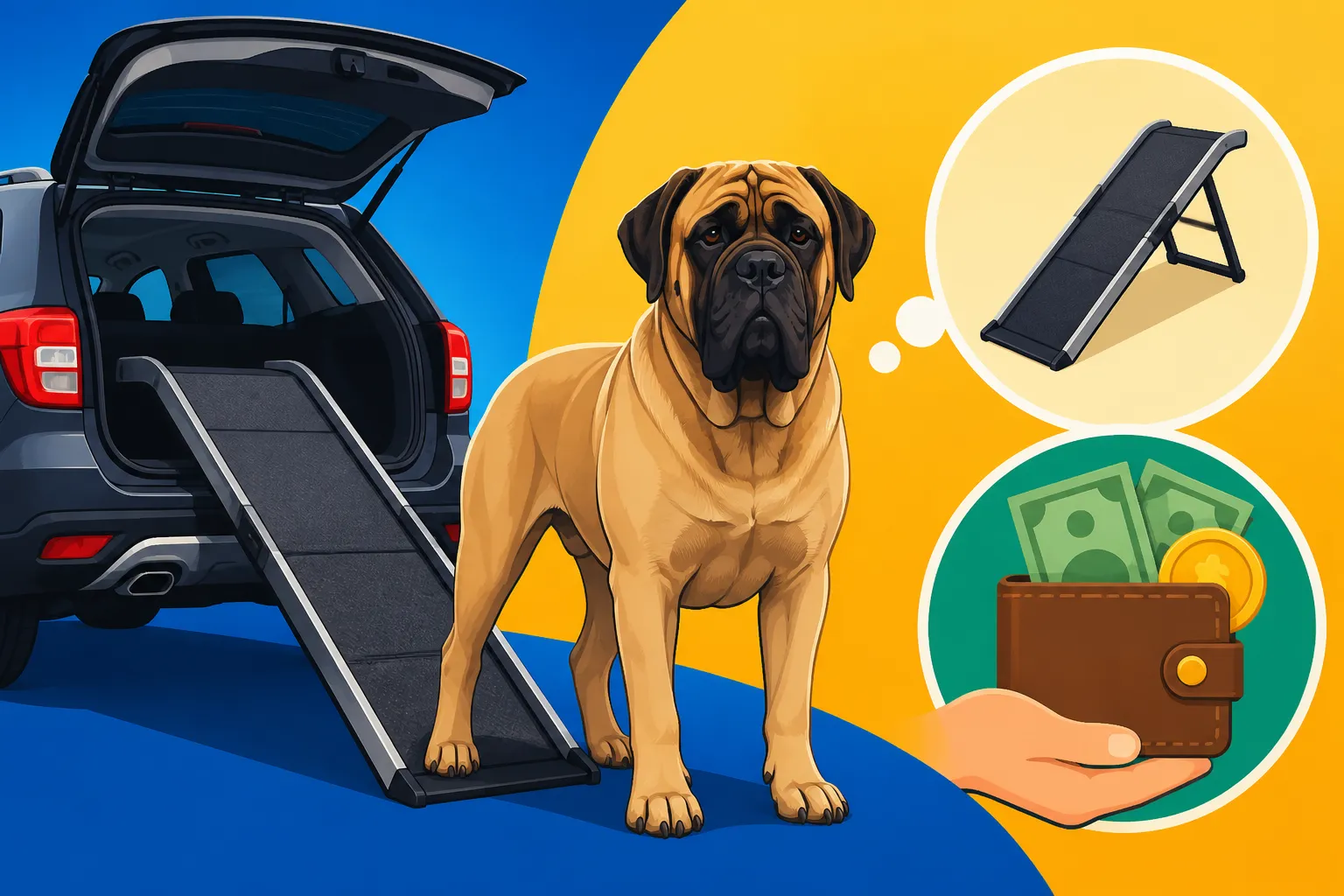
What a Ramp Rated for a Mastiff Costs
One of the biggest realities of sharing your life with a magnificent Mastiff is their sheer, undeniable size. While we adore their gentle giant presence, their weight can become a serious challenge when it comes to everyday tasks like getting into the car for a vet visit or navigating a few porch steps. This guide is here to shed light on the real costs associated with finding a ramp that is robust enough to safely support your beloved Mastiff, ensuring their comfort and your peace of mind.
Why a Mastiff Needs a Ramp in the First Place (Beyond Convenience)
Let's be honest, trying to lift a two-hundred-pound dog is a Herculean task, often impossible and downright dangerous for both you and your Mastiff. But beyond the obvious physical struggle, a properly rated ramp isn't just about making life easier; it's a critical piece of equipment for their long-term health and your safety. Their massive bodies, while impressive, come with specific vulnerabilities that a ramp can help protect against.
Protecting Those Precious, Heavy Joints
Mastiffs are predisposed to certain orthopedic conditions, largely due to their rapid growth and immense size. Conditions like hip and elbow dysplasia are unfortunately common in the breed. Every jump into or out of a car, every hurried dash up a flight of stairs, puts incredible strain on these developing or already stressed joints. Imagine the impact force of nearly a quarter-ton animal landing repeatedly on fragile cartilage and bone. It’s a recipe for exacerbating existing problems or even creating new ones.
For puppies, the concern is even greater. Their growth plates are still open and incredibly vulnerable. Over-exercising or allowing them to jump excessively can cause irreversible damage, setting them up for a lifetime of pain and expensive veterinary care. That quick leap from the car's tailgate might seem harmless in the moment, but the cumulative stress over months and years can accelerate the onset of arthritis and other degenerative joint diseases. Thinking ahead and investing in a ramp early can make a world of difference. Why a Mastiff Puppy Must Not Be Exercised Hard is something every Mastiff owner should know. Even in adolescence, a Mastiff can experience The Shifting Lameness of a Growing Mastiff as their bones and joints develop, making a ramp an even more crucial tool.
Preventing Injury to Both Dog and Owner
It’s not just about protecting your Mastiff's joints; it's about protecting yourself too. Attempting to lift a fully grown Mastiff can easily lead to back injuries, strained muscles, or even a fall if your dog shifts unexpectedly. These dogs can weigh well over How Much a Male Mastiff Weighs, making them challenging to handle even for the strongest individuals. Many owners, especially as their Mastiff ages or if they themselves are getting older, find themselves in a precarious position, facing the impossible choice between risking injury or leaving their dog behind.
Furthermore, a Mastiff slipping or falling while trying to navigate an awkward step or slick surface can result in severe injuries for them, from sprains and fractures to more serious head trauma. Imagine the heartbreak and expense of an emergency vet visit because of an avoidable accident. A sturdy, non-slip ramp provides a stable, gentle incline, eliminating the need for high-impact jumps or awkward lifts, keeping both ends of the leash safe and sound. When an old Mastiff struggles to get up, it truly is a challenge for an owner, as discussed in Lifting an Old Mastiff That Cannot Get Up.
Understanding Different Types of Mastiff Ramps and Their Features
Just like with any piece of equipment designed for our colossal companions, not all ramps are created equal. The market offers a surprising variety, each with its own benefits and limitations. For a Mastiff, you can’t just grab any old pet ramp off the shelf; you need something built to withstand serious weight and offer maximum stability. Understanding the different types available is the first step in making an informed decision.
Portable vs. Stationary Ramps
The primary distinction often lies in whether a ramp is intended for on-the-go use or a fixed location. Portable ramps are typically designed for vehicles, helping your Mastiff get into and out of cars, SUVs, or trucks. These are often foldable or telescoping, making them easier to store and transport. They're usually constructed from lightweight yet strong materials like aluminum or reinforced plastic to strike a balance between durability and portability. If you frequently take your Mastiff to the vet, the park, or on road trips, a portable ramp is a must-have. You’ll want one that’s easy to deploy and pack away.
Stationary ramps, on the other hand, are meant for permanent or semi-permanent placement, such as leading up to a deck, porch, or even a raised dog bed. These can be pre-fabricated or custom-built from materials like wood, metal, or durable composites. They tend to be heavier and more robust, prioritizing stability and longevity over portability. If you have steps leading into your home that your Mastiff struggles with daily, a stationary ramp can transform their access and reduce strain over countless repetitions. Some owners even construct elaborate custom ramps for their beloved companions to access specific areas of the home, perhaps even a favorite window-watching spot.
Key Features That Impact Price and Functionality
When you’re looking at ramps for a Mastiff, you'll quickly realize that certain features become non-negotiable, and these often correlate directly with the price tag. The most crucial factor is weight capacity. A ramp rated for a toy poodle won't even bend under a Mastiff’s paw; it’ll simply collapse. You need a ramp capable of safely supporting at least 200-300 pounds, if not more, to account for any shifting weight or the largest individuals. Always check the manufacturer's stated weight limit and err on the side of caution.
Another vital feature is the surface texture and grip. A slick surface is a dangerous surface for a heavy dog, especially if it’s raining or if your Mastiff is hesitant. Look for ramps with high-traction surfaces, like sandpaper-like textures, rubberized mats, or even carpeted treads. This prevents slipping and gives your Mastiff confidence as they ascend or descend. The length and incline are also important. A longer ramp will provide a gentler slope, which is much easier on a Mastiff's joints and less intimidating for them to use. A short, steep ramp, while more compact, can still put significant stress on their hips and elbows and might be too challenging for a large, hesitant dog. Finally, consider foldability and portability for mobile ramps. How easily does it collapse? Does it have handles? Is it light enough for you to manage alone?
Factors Influencing the Cost of a Mastiff-Rated Ramp
Now that we understand the types and features, let's dive into what truly drives the price of these essential Mastiff accessories. It's not just a flat piece of material; it's engineered to safely support a colossal amount of weight, and that engineering comes at a cost. Skimping here could lead to disastrous consequences.
Material and Construction Quality
The materials used in a ramp's construction are a huge determinant of its price. Ramps made from heavy-duty aircraft-grade aluminum are typically more expensive than those made from reinforced plastic. Aluminum offers an excellent strength-to-weight ratio, meaning it can be strong enough for your Mastiff without being impossibly heavy for you to lift. It's also durable, rust-resistant, and can withstand various weather conditions, making it a sound long-term investment. Plastic ramps, while often more affordable, need to be exceptionally well-made and reinforced to handle a Mastiff's weight reliably. They might be lighter, but their overall longevity could be less, especially with frequent use or exposure to extreme temperatures.
Custom wood or metal ramps, often built for home use, can vary wildly in price depending on the wood species, the complexity of the design, and whether you're hiring a professional carpenter or tackling it as a DIY project. A professional-grade, custom-built wooden ramp with non-slip surfacing, proper framing, and weatherproof treatment will naturally cost more than a basic off-the-shelf plastic model, but it offers unparalleled stability and can be designed to perfectly integrate with your home's aesthetics. The quality of the hinges, locking mechanisms, and the traction surface itself also contributes to the overall cost and, more importantly, the safety and reliability of the ramp.
Weight Capacity and Size Requirements
This is where Mastiffs truly differentiate their ramp needs from almost any other breed. A ramp designed for a Labrador simply won't cut it for a two hundred-pound Mastiff. The higher the required weight capacity, the more robust the materials and construction need to be, and consequently, the higher the price. You're paying for the engineering and the assurance that the ramp won't buckle under your gentle giant's bulk. Investing in a ramp that can handle substantially more than your Mastiff's current weight offers a margin of safety and ensures it will serve them even if they gain a few pounds or if two smaller dogs decide to use it simultaneously.
Furthermore, the physical dimensions of the ramp play a significant role. A longer ramp, as we discussed, provides a gentler incline, which is always preferable for a Mastiff’s joints. However, longer ramps require more material and more complex folding or telescoping mechanisms, driving up the cost. If you need a ramp to reach a high vehicle bed or navigate a steep set of stairs, you'll need a longer ramp, and that will be reflected in the price. Sometimes, the vehicle itself dictates the ramp's size; fitting a ramp into a smaller car vs. a spacious SUV is a different challenge, and in some cases, a larger vehicle might even be a necessary investment, as explored in What an SUV Upgrade Costs a Mastiff Owner.
Typical Cost Ranges for Mastiff Ramps
Pinpointing exact figures is tricky because prices fluctuate and depend heavily on where you shop and what sales might be happening. However, we can talk about the general tiers of what you can expect to pay for a ramp suitable for a Mastiff. Remember, this isn't an area where you want to cut corners; the safety of your massive companion is paramount.
Entry-Level Ramps for Occasional Use
At the lower end of the spectrum, you might find some heavy-duty plastic ramps. These are typically the most affordable option. They might be shorter, making the incline steeper, and the weight capacity, while higher than a small dog ramp, might be just adequate for a medium-sized Mastiff, rather than providing a comfortable margin for larger ones. These could be suitable for very occasional use, perhaps once a month for a short trip to the vet, where the dog is young and agile, and the owner is always supervising closely.
The key limitations here often revolve around durability and stability over time. While they might do the job for a bit, consistent use by a heavy Mastiff can lead to wear and tear faster, or the plastic might flex in a way that makes your dog hesitant. The traction surface might also be less robust than on more expensive models. Think of these as a starting point, but always weigh the cost against potential replacements or, more importantly, the risk to your dog.
Mid-Range and Heavy-Duty Ramps
This is often the sweet spot for many Mastiff owners, balancing cost with quality and durability. In this range, you'll typically find well-constructed aluminum ramps, often with advanced non-slip surfaces and robust folding or telescoping mechanisms. These ramps are designed to handle significant weight, often up to 300 pounds or more, providing a good safety margin for even the largest Mastiffs. Brands known for their pet products often have offerings in this category that feature thoughtful design, like built-in handles, safety tether points, and high-traction surfaces that hold up to repeated use and various weather conditions.
These ramps are ideal for owners who use them regularly, whether it's for daily car rides, trips to the park, or as a reliable aid around the house. The investment here offers better peace of mind, knowing that the ramp is built to last and can safely support your Mastiff for years to come. For instance, reputable brands available through retailers like Chewy often provide detailed specifications and customer reviews that can guide your choice, helping you find a ramp that stands up to the demands of a Mastiff. The peace of mind that comes from preventing potential injuries with a robust ramp can also reduce the likelihood of costly vet visits later, which pet insurance providers like Healthy Paws would certainly appreciate!
Custom-Built or Specialized Solutions
For those with very specific needs, or a desire for something truly integrated into their home, custom-built ramps represent the higher end of the cost spectrum. This could involve hiring a carpenter to construct a permanent wooden ramp for a porch or deck, or even working with a metal fabricator for a highly durable, bespoke solution. The cost will depend on the materials, labor, and complexity of the design. Factors like weatherproofing, specific angles to match your home's architecture, or advanced non-slip treatments all add to the price.
Specialized ramps might also include extra-long models for very low-incline requirements, or ramps with unique features for dogs with severe mobility issues. While the initial outlay can be significant, a custom solution offers unparalleled fit, stability, and often, aesthetics. It becomes a permanent part of your home, designed specifically for your Mastiff's needs, and can be an invaluable asset for their entire life, especially as they get older and if Arthritis in a Mastiff at Four starts to become a concern.
| Feature | Entry-Level Plastic | Mid-Range Aluminum | Custom Wood/Metal |
|---|---|---|---|
| Weight Capacity | 150-200 lbs (often max) | 250-400 lbs | 300-500+ lbs |
| Durability | Moderate, susceptible to flex/weather | High, rust-resistant, robust | Very High, built to last |
| Portability | Good, often lighter | Excellent, foldable/telescoping | Limited to none, stationary |
| Surface Grip | Basic molded texture | High-traction, rubberized, or textured | Custom non-slip treads, carpet |
| Cost (Relative) | $ | $$ | $$$+ |
| Best For | Occasional car trips for young, agile Mastiffs | Regular car/home use, travel | Permanent home installations, specific accessibility needs |
Beyond the Purchase Price: Long-Term Value and Care
The upfront cost of a ramp for your Mastiff is just one part of the equation. Thinking about the long-term value, how you care for it, and the potential savings it offers in terms of vet bills and quality of life, really puts the investment into perspective. A quality ramp isn't just an expense; it's an asset for your Mastiff's health journey.
Maintenance and Longevity of Your Mastiff's Ramp
Just like any equipment, your Mastiff's ramp will benefit from a bit of routine care to ensure its longevity and continued safe operation. For portable ramps, this usually means wiping them down after use, especially if they’ve been out in the rain or mud. Checking the non-slip surface for wear and tear is crucial; if it starts to degrade, it needs to be repaired or replaced to prevent slips. Hinges and locking mechanisms on foldable ramps should be kept clean and inspected for proper function. Store portable ramps in a clean, dry place to prevent rust or material degradation. You can often find cleaning supplies, or even replacement traction pads for some models, through online retailers like Chewy.
For stationary ramps, especially outdoor wooden ones, regular cleaning, sealing, or painting will protect them from the elements. Inspecting the structural integrity, checking for loose screws or rot, and ensuring the non-slip surface remains effective are all key to ensuring it remains safe and reliable for years to come. Investing in a durable, well-made ramp from the outset means less maintenance and a longer lifespan, making it a more economical choice over time compared to constantly replacing cheaper, less robust options.
The Health and Safety ROI of a Quality Ramp
The most significant return on investment for a Mastiff ramp isn't measured in dollars saved on the purchase, but in potential vet bills avoided. Think about the cost of major orthopedic surgeries, such as those for hip or elbow issues. What Hip Surgery Costs on a Mastiff can be astronomical, and recovery is often long and difficult, not to mention painful for your dog. Similarly, if your Mastiff tears a ligament from a misstep, Whether Cruciate Surgery Is Worth It on a Mastiff becomes a very serious and costly consideration.
A quality ramp helps prevent these catastrophic injuries and the gradual wear and tear that leads to debilitating arthritis. By reducing impact and strain on their joints from puppyhood, you’re actively contributing to their comfort and mobility throughout their life. This proactive approach supports a higher quality of life for your Mastiff and can reduce the need for expensive medications, specialized therapies, or emergency interventions down the line. It's an investment in their health, well-being, and ultimately, a more comfortable and active life for your beloved companion, allowing them to enjoy tailored nutrition from services like Ollie without discomfort.
Making the Right Ramp Choice for Your Mastiff
Choosing the perfect ramp might feel a bit overwhelming with all the options out there, but by focusing on your specific needs and your Mastiff’s individual characteristics, you can make a decision that will serve you both well for years to come. It’s about more than just picking one; it’s about choosing a solution that truly fits your lifestyle and your dog’s unique requirements.
Assessing Your Specific Needs
Before you even start looking at models and prices, take a moment to consider how and where the ramp will primarily be used. Is it mainly for getting into and out of your vehicle? If so, measure the height of your car’s cargo area or backseat and the space you have available to deploy a ramp. A longer ramp is always better for a gentler incline, but it needs to fit your vehicle’s available space and still be manageable for you. If your Mastiff is one of those who Whether a Mastiff Refuses to Get in a Car, a ramp can be a game-changer, but you'll still need to dedicate time to Teaching a Mastiff to Use a Ramp.
If the ramp is for home use, identify the specific steps or obstacles your Mastiff struggles with. Measure the height and length of the stairs. Consider the flooring; will the ramp need extra grip at its base to prevent sliding? Think about the frequency of use. A ramp for daily access to a backyard deck needs to be more robust and perhaps permanently fixed than one used once a week for a trip to the groomer. Also, don't forget your Mastiff's temperament. Is your dog confident or easily spooked? A wider, more stable ramp with excellent traction might be necessary for a hesitant dog.
Where to Find and Purchase a Mastiff-Rated Ramp
Once you have a clear idea of your needs, you can start exploring your options. Online retailers are an excellent place to start, as they offer a wide selection and often detailed specifications, customer reviews, and comparison tools. Specialty pet supply stores or stores focusing on large and giant breed dogs might also carry suitable options and provide knowledgeable staff who can offer advice. When browsing, always pay close attention to the stated weight capacity, ramp length, and the type of non-slip surface. Don’t hesitate to read through customer reviews, especially those from other Mastiff owners, to get real-world insights into a ramp's performance and durability.
Consider the brand's reputation and warranty information. A company that stands behind its product is usually a good sign of quality. While cost is a factor, prioritize safety and durability above all else. A well-chosen ramp is an investment in your Mastiff's long-term health and your peace of mind, allowing them to participate in family activities and get the veterinary care they need without unnecessary strain or injury. Even if you're building a home ramp, checking out commercial ramps can give you ideas for materials and design. Remember, this critical piece of equipment can truly enhance your Mastiff's quality of life, making their golden years more comfortable and their younger years safer.
Disclaimer
This article is for general informational purposes only and does not constitute professional advice. Laws, prices and regulations vary by location and change over time. Consult a qualified professional for guidance on your specific situation.