Mastiff or Bullmastiff for a Family
Choosing between a Mastiff and a Bullmastiff can feel like choosing between two very large versions of the same family dog. They share a calm, protective reputation, but their size, energy, handling needs, and typical household fit differ. This guide explains those differences so you can picture daily life with each breed—not just how they look in a photo.
Mastiff and Bullmastiff differences that matter at home
Size, space, and the everyday logistics
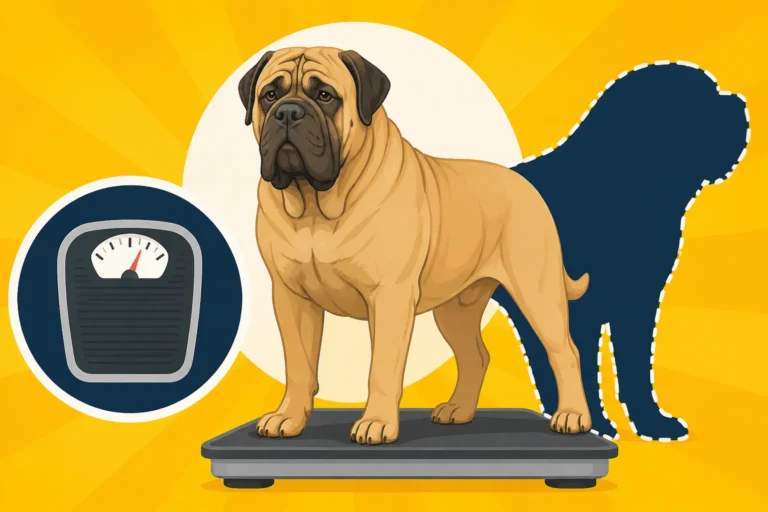
An English Mastiff is generally the larger, heavier dog. A Bullmastiff is still a substantial breed, but often takes up less physical space and may be easier to manage in the car, at the vet, or when navigating a narrow hallway. Individual dogs vary, so meet the parents or adult relatives when possible rather than assuming a puppy will match a breed-average description. For a broader look at the size difference, see The Mastiff Against the Bullmastiff and What a Mastiff Actually Weighs.
The practical difference can be surprisingly ordinary. Picture guiding a sleepy dog through a crowded entryway, fitting a bed into the living room, or making room for a dog to turn around in the back of an SUV. A few inches and several dozen pounds can affect all of those moments. Neither breed is a good match for a household that expects the dog to be easy to lift or physically move if it refuses to budge.
A large dog also needs a home arranged for traction and comfort. Slippery flooring can make getting up harder, especially for a young dog still growing or an older dog with stiff joints. Before bringing either breed home, think about where rugs or runners could go, whether a bed will fit outside busy walkways, and how the dog will get in and out of your vehicle. These details matter more than having a large yard; a securely fenced yard is useful, but neither breed needs a sprawling property instead of daily attention. For more on living space, see Whether a Mastiff Suits an Apartment and Whether a Mastiff Needs a Yard.
Temperament and energy are not interchangeable
Both breeds are often described as steady, affectionate, and watchful, but that does not mean every dog will behave the same way. English Mastiffs are commonly known for a slower, more laid-back presence. Bullmastiffs can be more alert and active, though plenty are content to lounge close to their people after a walk and some gentle activity.
The names can create a misleading impression: a Bullmastiff is not simply an English Mastiff in a smaller package. The breeds have different histories and were developed for different purposes. That background can influence the traits a family notices, but it does not predict an individual dog’s behavior with certainty. Why a Bullmastiff Is Not Just a Smaller Mastiff offers more context on that distinction.
Think about the rhythm of your household. If your family enjoys quiet evenings and moderate walks, either breed might suit you, provided you can handle the dog safely and give it consistent training. If you want a dog for long runs, energetic hikes, or a busy schedule full of outings, these breeds may not be your ideal match. Their comfort in warm weather also deserves attention: a bulky dog can overheat, so walks and play need to be adjusted in hot conditions.
| Family consideration | English Mastiff | Bullmastiff |
|---|---|---|
| Typical physical presence | Usually the larger, heavier dog | Large and powerful, but often more compact |
| General household style | Often calm and content to settle near family | Often watchful, with individual variation in activity |
| Space planning | Requires room for a very large body and bed | Still needs generous room, but may be easier to accommodate |
| Handling | Strength and weight can make control challenging | Also strong; early leash skills are essential |
| Family safety | Requires supervision around children because of size | Requires the same supervision and thoughtful management |
| Best first question | Can we manage the dog’s full adult size? | Can we manage a strong, alert guardian-type dog? |
Use the table as a starting point, not a personality guarantee. A responsible breeder or rescue can help you understand the dog in front of you: how it reacts to visitors, whether it has lived with children, how it handles other dogs, and what support it may need as it settles in.
Which breed fits a family with children
Gentle intentions do not prevent accidental knocks
A well-socialized Mastiff or Bullmastiff may be affectionate with children, but large dogs can bump, lean on, or knock over a child without meaning to. A wagging tail, a sudden turn, or a dog stepping across a play area can be enough to startle a toddler or topple a small child. This is why “good with kids” is not a substitute for active supervision.
Set the house up so the dog has a place to rest where children are not allowed to climb on or interrupt it. Teach children not to pull ears or skin, hug tightly, approach a sleeping dog, or take food and toys. At the same time, teach the dog calm behaviors around children, such as waiting at a doorway and moving away when asked. For a deeper look at household safety, read Whether a Mastiff Suits a Family With Young Children and Whether a Mastiff Is Safe With Toddlers.
Age and temperament matter as much as breed. A settled adult dog with a known history around children may be easier for some families to assess than a puppy whose adult size and behavior are still developing. But an adult dog still needs a careful introduction, and a rescue’s background may be incomplete. Ask what is known, observe the dog in a calm setting, and plan to use gates or separate rooms whenever an adult cannot actively supervise.
Family routines need to include training
A dog this strong should learn household manners before it is physically difficult to redirect. Practice walking on a loose leash, waiting before going through doors, settling on a mat, and greeting visitors without jumping or rushing. Rewarding the behavior you want is generally more useful than relying on force: a sensitive dog may become wary or shut down if training turns into repeated confrontation. The Sensitivity Nobody Expects in a Two Hundred Pound Mastiff explores why a calm approach matters.
Start while the dog is young enough for you to guide it comfortably, but remember that a puppy’s joints and body are still developing. Short, positive practice sessions can build useful habits without turning training into strenuous exercise. If you adopt an adult, use the same patient approach while learning what the dog already knows. A qualified trainer who has experience with giant breeds can help you work on leash manners, visitor greetings, and calm behavior in public. See Teaching a Mastiff Before It Outweighs You for more on early preparation.
Consider the less glamorous parts of family life, too. Who will take the dog out in bad weather? Can the person walking it safely manage a sudden stop or a strong reaction to a passing dog? If a child’s sports practice or school pickup changes the household schedule, will the dog still get attention, bathroom breaks, and calm exercise? A breed match is about the routine you can sustain, not only the affection everyone feels on puppy day.
Health, care, and long-term commitment
Think beyond the puppy stage
A giant-breed puppy grows into a dog whose food, equipment, transport, and veterinary care all need to suit its size. A crate has to fit the dog while allowing safe movement, and it also has to fit through the doorway. A bed that looked enormous in a shop may quickly become too small. If you’re comparing supplies, retailers such as Chewy can help you check product dimensions before ordering; still, measure the space at home and read the item’s size details rather than relying on a product photo.
Food needs should be discussed with a veterinarian, especially during growth. The goal is not to make a puppy grow as fast or as large as possible. A suitable feeding plan supports steady development and a healthy body condition. Treats count as part of the dog’s overall intake, so they should not quietly become a large extra meal. You can compare food and feeding accessories through Chewy if that makes household shopping easier, but choose food based on your veterinarian’s guidance and the dog’s individual needs.
Both breeds can face serious health problems, and the risk for an individual dog depends on its genetics, body condition, age, and care. Ask a breeder for documented health testing relevant to the breed and for clear information about the parents’ health. A rescue may not have the same family history, so ask what medical records and observations are available. Keep a plan for routine veterinary care and for emergencies; transporting a dog that cannot walk comfortably may require more than one adult and advance planning.
Budget for everyday care as well as emergencies
Food is only one part of the cost of living with a giant dog. You may need larger beds, secure gates, sturdy leads, more towels, and a vehicle arrangement that works for the dog. Check that your vet clinic and any emergency hospital can safely accommodate a dog of this size. Finding out during an emergency that a dog cannot fit on a table or be moved safely is an avoidable source of stress.
Pet insurance and savings each have trade-offs. If you compare policies, read the exclusions, waiting periods, and rules for pre-existing conditions carefully; don’t assume every health issue or treatment will be covered. You may also want to ask your clinic how it handles urgent care and which emergency hospitals it recommends. Chewy may be useful for routine supply orders, but it is not a substitute for choosing a veterinarian and preparing for urgent medical needs.
Time is part of the commitment, too. Neither breed should be treated as a living security system that needs little interaction. Both need a stable home, thoughtful socialization, daily contact, and appropriate activity. Their life expectancy can feel short compared with the years a family hopes to share with a dog, so it is worth considering how you will manage care as the dog ages. A thoughtful overview of lifespan and care is available in Why the Mastiff Is Not the Same as a Tibetan Mastiff—though that article focuses on a different breed comparison, it also helps clarify why breed labels should be checked carefully.
How to choose between the two breeds
Match the dog to your real household, not an idealized one
Write down what a normal week looks like: who is home, how often the dog will be alone, where it will sleep, how walks will fit around work and school, and which adults can manage it physically. If a child is expected to walk the dog, consider whether that will still be safe when the dog is fully grown. If your home has stairs, slick floors, narrow passages, or a small vehicle, think through how those features will affect daily movement.
Then meet dogs in person. Pay attention to how an adult dog settles after excitement, responds to handling, and behaves when people enter the room. Ask a breeder or rescue about the dog’s history with children, other pets, visitors, and ordinary household noise. If you already have a dog, introductions should be planned rather than left to chance; Whether a Mastiff Accepts Another Dog can help you think through that question.
A good match is not determined by which breed sounds more protective or impressive. It is determined by whether the adults in the home can provide calm leadership, safe handling, and dependable care. If you are unsure, talk with a veterinarian, a responsible breed club, or a trainer experienced with giant breeds before committing.
A simple decision guide
A Mastiff may be the better fit if your family has room for a very large dog, prefers a generally unhurried companion, and is prepared for the physical and financial demands of a giant breed. A Bullmastiff may be a better fit if you want a somewhat more compact dog but are still ready for a powerful, watchful companion that needs early socialization and careful management.
Neither is automatically the “family breed,” and neither should be chosen because one seems like an easier version of the other. Look at the individual dog’s temperament, the household’s experience, and whether everyone understands the responsibilities involved. If you cannot confidently manage a strong adult dog, waiting or choosing a smaller, less powerful breed may be kinder to both your family and the dog.
Disclaimer
This article is for general informational purposes only and does not constitute professional advice. Laws, prices and regulations vary by location and change over time. Consult a qualified professional for guidance on your specific situation.