The Colors a Mastiff Comes In
Bringing a Mastiff into your home is an incredible journey, and if you're like most prospective owners, you've probably spent hours poring over photos, dreaming about the gentle giant you'll welcome. One of the first things that captures our attention, aside from their immense size, is their coat color. It's not just about aesthetics; understanding the various colors, what the breed standard permits, and what might be considered a deviation can be a little confusing, and frankly, some breeders can muddy the waters with talk of "rare" colors. This guide is here to demystify Mastiff coat colors, giving you a clear picture of what to expect and what truly defines this magnificent breed.
The Official Palette: Standard Mastiff Colors
When we talk about Mastiff colors, we're really talking about a very specific and recognized set of shades that are accepted by major kennel clubs and are part of the breed's official standard. These aren't just arbitrary choices; they reflect the historical appearance of the breed and aim to maintain a consistent look. Deviations from these colors, while sometimes visually striking, are generally not considered desirable for conformation showing and can, in some cases, signal genetic variations that aren't typical for the breed. It’s important to understand these foundational colors before diving into anything else.
Fawn: The Classic Gentle Giant
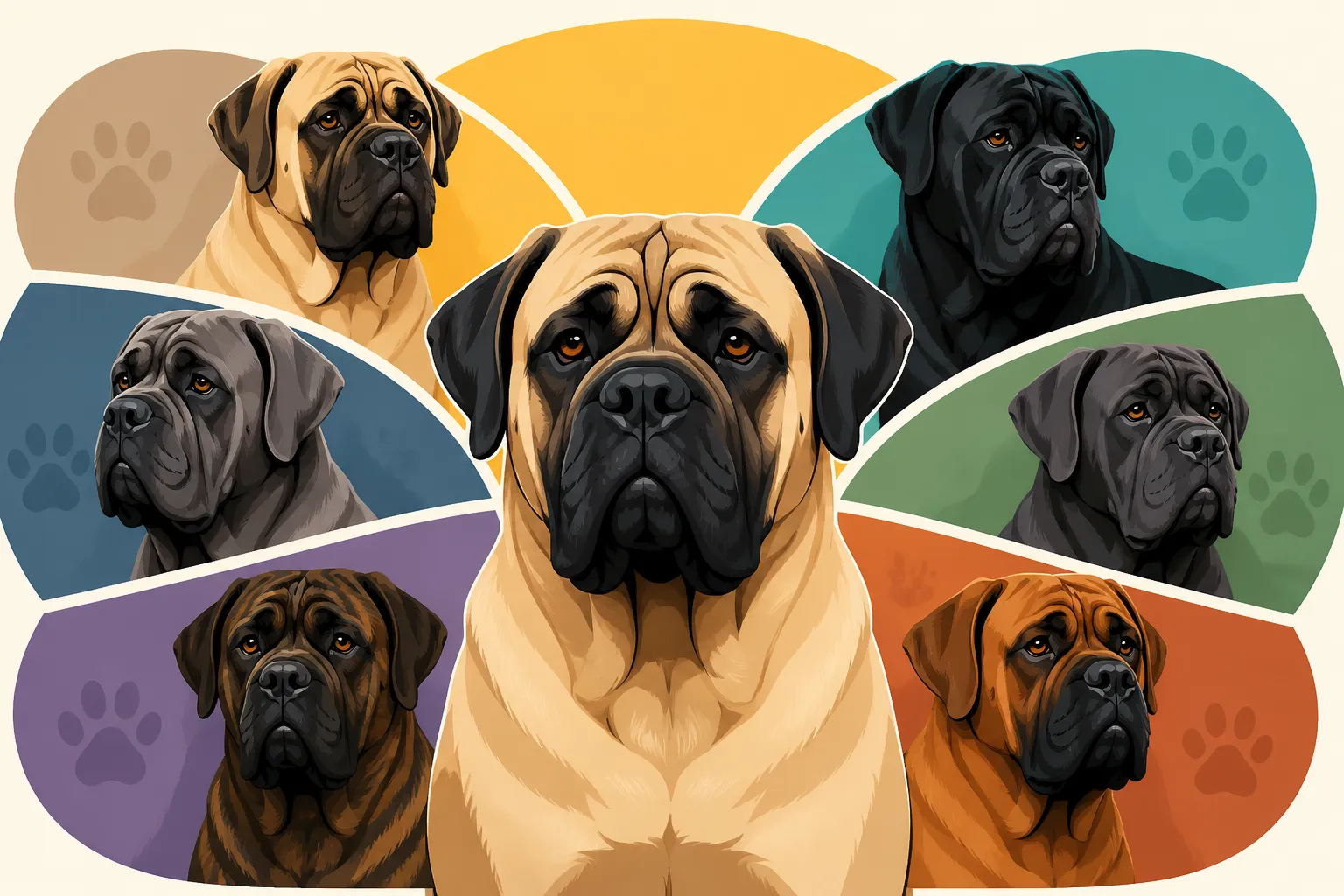
Fawn is arguably the most common and widely recognized color for a Mastiff. When most people picture a Mastiff, they often envision this warm, sandy tone, offset by that distinctive black mask. It’s truly a classic look that has been associated with the breed for centuries.
The fawn color itself can range quite a bit, from a very light, almost creamy tan to a deeper, richer gold. You might see puppies that start out very pale and darken slightly as they mature, or others that are born with a more pronounced golden hue. The key characteristic is the consistent base color across the body, without any strong red or apricot undertones. It’s a beautifully understated color that perfectly complements the Mastiff’s stoic and dignified presence. Owners often find that the fawn coat, especially in lighter shades, can be quite easy to maintain, though regular brushing is always a must to keep it looking its best.
Apricot: A Warm, Rich Hue
Apricot is another standard color, offering a deeper, more reddish-golden tone compared to fawn. If fawn is a golden sunset, apricot is the richer, warmer glow of dawn. This color carries a beautiful depth and can be quite striking, especially when paired with a strong black mask. For those interested, you can learn more about What Apricot Means on a Mastiff.
Just like fawn, apricot isn't a single, unvarying shade. You'll find apricot Mastiffs that are a lighter, almost rusty gold, and others that lean into a deep, rich reddish-orange. The intensity of the color can sometimes vary seasonally or with sun exposure, with some dogs developing a slightly deeper tan in warmer months. This rich color often gives the Mastiff an even more imposing and majestic appearance. Despite its distinctive hue, caring for an apricot coat is similar to fawn; the short, dense fur requires routine grooming to manage shedding and keep the coat healthy and vibrant.
Brindle: Stripes of Distinction
Brindle is perhaps the most visually dramatic of the standard Mastiff colors, characterized by dark stripes or "tiger stripes" over a fawn or apricot base coat. It’s a fascinating genetic pattern that makes each brindle Mastiff truly unique.
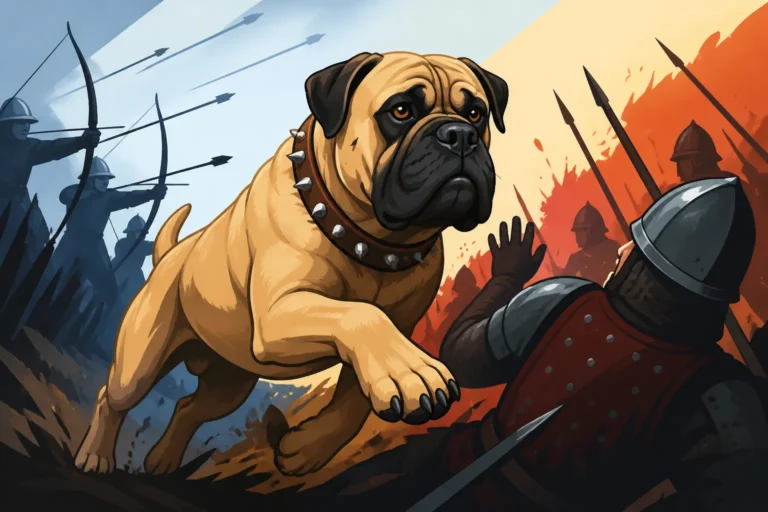
The brindle pattern itself can vary greatly in intensity and distribution. Some Mastiffs will have very fine, sparse stripes, while others will be heavily brindled, with thick, dark stripes covering much of their body, almost giving the impression of a darker dog. The base color can be either fawn or apricot, meaning you can have a "fawn brindle" or an "apricot brindle," although often breeders simply refer to them as brindle. The stripes are typically black or very dark brown, creating a stunning contrast against the lighter background. It's truly a testament to nature's artistry. Just imagine the majestic sight of a brindle Mastiff, with those bold markings, sitting calmly by your side. The Mastiff That Stood Over Sir Piers Legh at Agincourt would have been a sight, perhaps even a brindle one!
The Importance of the Black Mask
Regardless of whether a Mastiff is fawn, apricot, or brindle, one feature is absolutely non-negotiable in the breed standard: the black mask. This isn't just a pretty facial marking; it's a defining characteristic of the breed, giving the Mastiff its distinctive noble and somewhat melancholic expression.
What Constitutes a Proper Mask
A proper Mastiff mask covers the muzzle, extending up to and around the eyes, and ideally includes the ears. The color should be a solid, rich black. It's this contrast between the light body color and the dark mask that truly defines the Mastiff's face and is a hallmark of the breed's appearance.
The mask's coverage can vary slightly. Some Mastiffs will have a very extensive mask that reaches far up their forehead, while others might have a more minimal mask that primarily covers just the muzzle and areas around the eyes. However, regardless of the extent, the quality and color of the mask are paramount. It should be dense black, not faded or patchy, and certainly not absent. This strong black pigmentation is also crucial for the eye rims and nose, which should also be black, further framing the face and adding to that intense, watchful gaze. For a deeper dive into this iconic feature, consider reading Why a Mastiff Must Have a Black Mask.
Variations and Deviations in Mask Color
While a solid black mask is the ideal, you might occasionally see variations. Some Mastiffs, particularly those with lighter fawn coats, might have a mask that appears less intense, perhaps a deep charcoal rather than jet black. This isn't usually considered a fault unless it's noticeably weak or uneven.
More significantly, any mask that isn't black is considered a serious deviation from the standard. For example, a Mastiff with a liver or red mask would not conform. Similarly, a Mastiff completely lacking a mask, often referred to as a "self-colored" face, is also a serious fault. These deviations can sometimes be linked to other genetic traits or health considerations, and responsible breeders will always prioritize adherence to the standard not just for aesthetics, but for the overall health and integrity of the breed. It’s something to be aware of if you're ever looking at puppies, as a weak or off-colored mask can be a sign of a breeder not adhering to established breed guidelines.
Unaccepted and "Rare" Colors: Proceed with Caution
Beyond the standard fawn, apricot, and brindle, you might encounter discussions about other Mastiff colors. These often fall into one of two categories: colors that are genetically possible but not accepted by the breed standard, or colors that are marketed as "rare" or "exotic" and come with a hefty price tag, often without true breed merit.
The Myth of the Black Mastiff
One of the most frequently discussed non-standard colors is black. While black Mastiffs do exist, they are not recognized by the American Kennel Club (AKC) or most other major international kennel clubs as standard. A black Mastiff, while striking, is considered a disqualifying fault in the show ring. For specific details on this, you might find Whether a Black Mastiff Is Purebred to be a helpful resource.
Genetically, a black coat in a Mastiff typically results from a specific gene that overrides the fawn/apricot base. While it doesn't inherently mean the dog is unhealthy, it does mean it falls outside the established breed type. The "myth" part often comes into play when breeders try to charge exorbitant prices for black Mastiff puppies, claiming their rarity. In reality, while less common than standard colors, they are not inherently "rare" in a way that increases their value or desirability within the legitimate Mastiff breeding community. It’s vital to understand that a black coat is simply a deviation from the standard, not a premium feature. If you encounter a breeder marketing "rare black Mastiff puppies," approach with skepticism and understand that you would not be able to show such a dog in conformation.
Blue, Isabella, and Other Dilutes
Other colors sometimes advertised are "blue" (a dilute black, appearing as a grey/slate color) and "Isabella" (a dilute liver, appearing as a pale, washed-out fawn with lighter points). These are also disqualifying faults in the Mastiff breed standard. They result from dilution genes that affect the intensity of the pigment.
Like black, these dilute colors are genetic variations. A blue Mastiff, for instance, has a genetic makeup that dilutes black pigment to grey. Similarly, Isabella dilutes both black and liver pigment. While beautiful in other breeds, these colors are not characteristic of the Mastiff. There's also some debate and ongoing research in various breeds about potential health links with certain dilute genes, particularly "color dilution alopecia," a skin condition that can affect dogs with dilute coats. While not definitively proven to be rampant in Mastiffs with dilute colors, it’s a consideration for any breed carrying these genes. Again, be wary of breeders who sensationalize these colors as "rare" or "special," often leveraging them to justify higher prices. Ethical breeding focuses on the overall health, temperament, and adherence to the breed standard, not on producing non-standard colors.
The Genetics Behind Mastiff Colors
Understanding how Mastiff colors come about involves a peek into basic canine genetics. It’s not overly complicated, but knowing the basics can help you appreciate why certain colors are standard and why others are not.
The Agouti Series and Dilution Genes
The primary colors of Mastiffs (fawn, apricot, brindle) are determined by genes within the "A" (Agouti) series. This series dictates how pigment is distributed on the hair shaft. For example, the fawn and apricot colors are variations of "recessive yellow" (often denoted as 'e/e' in the E-locus, but also influenced by the A-locus for fawn/sable). Brindle is a pattern gene that lays stripes over these base colors.
The black mask, so crucial to the Mastiff, is controlled by a separate gene, the "K" (Dominant Black) locus, specifically Kbr (for brindle) and K (for dominant black, if a black Mastiff existed by pure dominant black). Most Mastiffs are genetically 'ky/ky' at the K-locus, allowing the Agouti series to express, but they also have the gene for the black mask (Em). The dilution genes (like the "D" locus for blue/dilute and "B" locus for brown/liver) are responsible for colors like blue or Isabella, by diluting the black or brown pigment. In Mastiffs, these dilution genes are generally absent in standard-colored dogs. This intricate dance of genes ensures the Mastiff's classic appearance. Knowing about these underlying genetics helps us appreciate why adherence to the breed standard is important – it’s about preserving a specific genetic blueprint for the breed.
How Colors are Inherited in Breeding
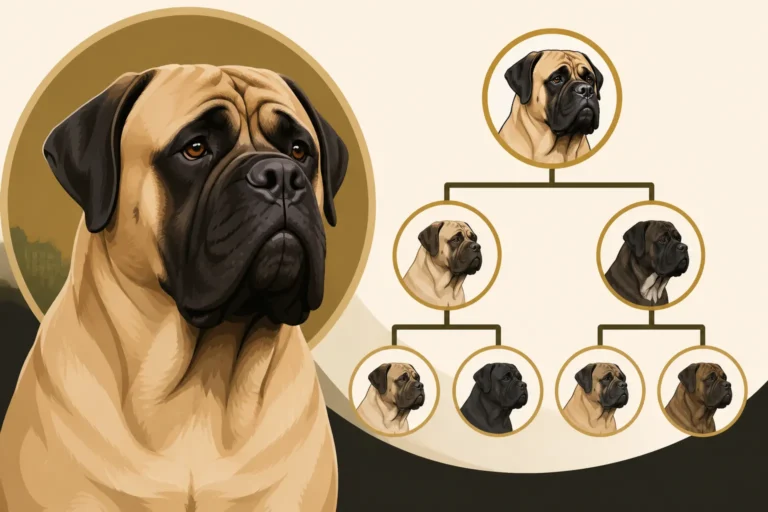
Color inheritance follows predictable patterns, just like other genetic traits. A breeder aiming for standard colors will select parent dogs who carry the correct genetic make-up for fawn, apricot, or brindle, along with strong black masks. For example, if both parents are fawn, they are likely to produce fawn puppies, though they might carry recessive genes for apricot which could surface if paired with another carrier.
Brindle is typically dominant over solid fawn/apricot, meaning if one parent is brindle and passes on the brindle gene, some puppies in the litter will be brindle. Producing non-standard colors like black or blue usually means that both parents carry the recessive genes for those colors, even if they themselves are standard fawn or apricot. This is why responsible breeders perform genetic testing and understand pedigrees deeply to avoid unexpected colors that fall outside the standard. It’s not just about looking pretty; it’s about maintaining the breed’s genetic health and integrity. If you're considering a puppy, asking about the color genetics of the parents, even for standard colors, can be an insightful question.
Breed Standard and Health Considerations
While color might seem like a superficial trait, in some breeds, certain colors or the genes that produce them can be linked to health issues. For the Mastiff, the standard colors are generally not associated with specific health problems, but deviations from the standard can sometimes raise questions.
Why the Standard Exists for Color
The breed standard for the Mastiff, as defined by organizations like the AKC, exists to describe the ideal physical and temperamental characteristics of the breed. Color is a part of that. The standard colors (fawn, apricot, brindle with a black mask) are those that have been historically prevalent and are believed to be part of the breed's authentic heritage. Deviations are considered faults or disqualifications because they move away from this established ideal.
It's not just about aesthetics; adherence to a standard helps maintain the genetic health and purity of a breed. When breeders chase "rare" colors, they sometimes make breeding decisions based solely on color, potentially overlooking more critical traits like temperament, structure, and health clearances. This can lead to a narrowing of the gene pool or the proliferation of dogs with undesirable traits, all in the pursuit of a non-standard color. Ethical breeders will always prioritize health and temperament over color, ensuring their lines are clear of common Mastiff ailments like hip and elbow dysplasia, as discussed in Elbow Dysplasia Affects One Mastiff in Seven, or The Four CHIC Tests a Mastiff Breeder Must Clear.
Potential Health Links with Non-Standard Colors
For Mastiffs, the standard fawn, apricot, and brindle colors are not known to be linked to any particular health issues related to their hue. However, as mentioned earlier, some dilute colors (like blue or Isabella) in other breeds have been associated with conditions such as Color Dilution Alopecia (CDA), a skin condition that can cause hair loss and skin problems. While not extensively documented in Mastiffs specifically, it's a general caution with dilute genes across breeds.
Another consideration, though less directly color-linked, is the overall pigmentation. Strong, dark pigmentation in the eye rims, nose, and lips is desirable, not just for appearance but also because lighter pigmentation can sometimes indicate a predisposition to sun sensitivity or other minor issues. So, while a Mastiff's coat color itself is often just skin deep, the underlying genetics for pigmentation can occasionally have broader implications. Always prioritize a puppy from health-tested parents with sound genetics, regardless of color. If a breeder is selling a "rare" colored puppy at a premium, it’s a red flag. The CHIC Four Plus the DNA Stack Behind a Mastiff's Price details the crucial health testing that should justify a puppy's cost, not its unusual color.
Caring for the Mastiff Coat, Regardless of Color
Regardless of whether your Mastiff is a stately fawn, a regal apricot, or a striking brindle, their coat care needs are fairly consistent. Mastiffs have a short, dense coat that is generally easy to maintain but does require regular attention.
Brushing and Bathing Routine
Mastiffs shed, and sometimes more than people expect for a short-haired dog! Regular brushing is key to managing this and keeping their coat healthy and shiny. Aim for at least 2-3 times a week, or even daily during heavy shedding seasons. A rubber curry brush or a shedding blade works wonders for removing loose hair and stimulating the skin. You'll find a good selection of these grooming tools, often with comfortable ergonomic handles designed for larger breeds, on Chewy.
Bathing a Mastiff isn't an everyday task, thankfully. Their short coats don't tend to get excessively dirty or smelly, especially if they're brushed regularly. Bathing every few months, or when genuinely dirty, is usually sufficient. Remember, a Mastiff is a large dog, and getting them in and out of a tub can be a challenge. Many owners opt for professional groomers or dedicated bathing stations, but if you're bathing at home, be prepared with plenty of towels and a non-slip mat. A mild dog shampoo, followed by a conditioner, will keep their skin and coat in top condition.
Special Considerations for Skin and Folds
One aspect of Mastiff care that definitely transcends color is the attention needed for their wrinkles and skin folds. Mastiffs are known for their magnificent, wrinkled brows and jowls, and these areas can trap moisture, dirt, and debris, leading to skin irritation or infections if not cleaned regularly.
The most common areas needing attention are the facial folds around the muzzle and eyes, and sometimes even tail folds. Weekly cleaning with a damp cloth or a veterinarian-approved wipe is often recommended. Ensure these areas are thoroughly dried afterwards to prevent yeast or bacterial growth. The Wrinkles and Folds a Mastiff Owner Cleans Every Week provides an in-depth look at this essential part of Mastiff care. Additionally, their massive size means they spend a lot of time lying down, which can lead to elbow calluses. Ensuring they have soft, orthopedic bedding is crucial to prevent these from becoming a problem. Many high-quality, durable orthopedic beds suitable for giant breeds can be found on Chewy, designed to support their immense weight and prevent pressure sores.
Debunking "Rare" Color Marketing
It's common to see breeders advertise "rare" Mastiff colors like black, blue, or Isabella, often at a significantly higher price. As a responsible future Mastiff owner, it's crucial to understand why this is misleading and potentially harmful to the breed.
Understanding the Breeder's Intent
When a breeder focuses on "rare" colors, their intent is often driven by market demand and profit rather than adherence to breed standards or genuine improvement of the breed. These colors are not recognized by the breed's official standard, which means dogs of these colors cannot compete in conformation shows. More importantly, reputable breeders prioritize health, temperament, and conformity to the breed standard, aiming to produce sound, healthy representatives of the breed.
A breeder who is genuinely invested in the Mastiff breed will always prioritize these core tenets over a novel color. They will openly discuss health clearances, pedigree, and the temperament of their breeding dogs, not just the "uniqueness" of a puppy's coat. If a breeder emphasizes a color as "rare" and demands a premium for it, it should be a significant red flag. This often indicates a lack of understanding or respect for the breed standard, and potentially a compromised focus on overall health and welfare. Remember, The Mastiff's Short Life Buys the Biggest Bills, so investing in a dog from a reputable breeder focused on health, regardless of color, is paramount.
The True Value of a Mastiff
The true value of a Mastiff lies not in the rarity of its coat color, but in its health, temperament, conformation, and lineage. A well-bred Mastiff, whether fawn, apricot, or brindle, embodies the majestic and gentle spirit the breed is known for. This includes a sound structure, a calm and dignified disposition, and a heritage of health-tested parents.
Investing in a Mastiff means committing to years of companionship with a magnificent animal. This commitment should start with selecting a puppy from a reputable breeder who prioritizes the breed's welfare, performs all recommended health screenings, and adheres to the breed standard. Such a breeder will be transparent about their practices and proud of their standard-colored Mastiffs. They understand that the beauty of a Mastiff is far more than skin deep. For those seeking supplies or even considering adoption, resources like Chewy, or reputable Mastiff rescue organizations, are great places to start, offering support and genuine care for Mastiffs of all standard colors. Focus on the whole package, not just a flashy coat, to ensure you bring home a truly wonderful Mastiff companion.
| Mastiff Standard Color | Base Description | Mask Color | Brindling | Key Characteristics |
|---|---|---|---|---|
| Fawn | Light tan to golden | Black | Absent or present (fawn brindle) | Classic, often lighter. |
| Apricot | Reddish-gold to orange-gold | Black | Absent or present (apricot brindle) | Warmer, deeper hue. |
| Brindle | Fawn or Apricot with dark stripes | Black | Present (distinct tiger stripes) | Stripes vary in density and width. |
Disclaimer
This article is for general informational purposes only and does not constitute professional advice. Laws, prices and regulations vary by location and change over time. Consult a qualified professional for guidance on your specific situation.