Whether a Mastiff Accepts Another Dog
Bringing a second dog into a household that already has a majestic Mastiff can be a dream come true for many, picturing a harmonious multi-dog family. However, the reality can be fraught with anxiety, questions about compatibility, and very real concerns about how a dog of the Mastiff’s immense size and unique temperament will react to a new canine companion. This guide aims to help you navigate the complexities of introducing another dog to your Mastiff, offering practical advice and setting realistic expectations for fostering a peaceful co-existence.
Understanding the Mastiff Temperament with Other Canines
Mastiffs are truly unique dogs, and their personality isn't always what people expect from such a large breed. When considering adding another dog, it's crucial to understand their inherent traits and how they typically interact with other canines.
The Gentle Giant Stereotype vs. Reality
The term "gentle giant" is often lovingly applied to Mastiffs, and for good reason. They are generally known for their calm, docile nature and profound loyalty to their families. In their ideal state, they are laid-back and tolerant, often choosing to observe rather than engage in boisterous play. This can make them seem like prime candidates for a multi-dog household, as they don't typically seek out conflict.
However, the "gentle giant" stereotype can sometimes lead to misunderstandings. While they are not inherently aggressive, their sheer size and quiet demeanor mean that any negative interactions can have serious consequences. A Mastiff’s patience, while vast, is not limitless. They are also incredibly sensitive creatures, and abrupt or confrontational approaches, whether from humans or other dogs, can easily set them back or create anxiety. The Sensitivity Nobody Expects in a Two Hundred Pound Mastiff explores this aspect in more detail. They might tolerate a lot, but if pushed too far, or if they feel their space or resources are threatened, their reactions, even if intended as a warning, can be overwhelming due to their sheer bulk. It’s less about malice and more about the impact of their physical presence.
A History of Guarding, Not Pack Hunting
Mastiffs historically were not bred as pack hunters or working alongside many other dogs in the field. Their lineage speaks more to guarding estates, protecting livestock, and deterring threats with their imposing size and presence. This means that while some breeds thrive on communal living and intricate pack dynamics, a Mastiff often views its home and family as its domain to be observed and protected. This isn't to say they can't form bonds with other dogs; many do. But their social structure often leans more towards co-existing peacefully within their established territory rather than actively seeking out a "pack" dynamic in the same way a husky or a beagle might.
This guarding instinct can manifest as territoriality, especially if a new dog is introduced without proper management. They might not react with overt aggression, but perhaps with a subtle stiffening, a low growl, or a blocking posture when the new dog approaches what the Mastiff considers its space or its people. Understanding this background helps us approach introductions with caution and respect for their inherent guarding traits. They are protective by nature, and while they usually accept family members, human or canine, as part of their inner circle, earning that spot takes time and careful management, especially from the human side.
The Importance of Early Socialization
For Mastiffs, like all dogs, early and consistent socialization is absolutely critical, especially if you anticipate a multi-dog future. A Mastiff puppy needs to meet a wide variety of friendly dogs, people, and experience different environments before they grow into an imposing two hundred-pound adult. A well-socialized Mastiff puppy learns appropriate canine etiquette, how to read other dogs’ signals, and how to respond in a balanced way. Without this foundational experience, a Mastiff, particularly one that has been an "only dog" for an extended period, might lack the social graces to comfortably integrate a new canine.
If you’re starting with a Mastiff puppy and know you want another dog later, prioritize this socialization. Puppy classes, supervised playdates with vaccinated, friendly dogs, and positive experiences are invaluable. Socializing a Mastiff Puppy Before It Gets Heavy is an excellent resource for this. This isn't about creating a dog that loves every single dog it meets, but rather one that is confident, calm, and able to navigate canine interactions without fear or aggression. An undersocialized Mastiff might resort to avoidance, fear-based aggression, or simply be unable to understand appropriate play, which can be dangerous given their size difference with many other breeds.
Factors Influencing Acceptance and Compatibility
When considering adding a new dog to your Mastiff household, it's not just about the Mastiff; it's about the combination of personalities, ages, and backgrounds. Several factors play a significant role in determining how well two dogs will get along.
Age and Sex Dynamics
The age and sex of both your resident Mastiff and the potential new dog are hugely important. Generally, introducing a young puppy to an adult Mastiff tends to be easier than introducing two adult dogs. An adult Mastiff is more likely to accept a puppy as a non-threatening, subordinate creature, and will often be remarkably gentle, albeit sometimes clumsy, with a tiny newcomer. However, this isn't a guaranteed pass. The puppy's boundless energy can sometimes annoy an older, more sedate Mastiff, and supervision is always paramount to prevent accidental injury due to size disparity. For older Mastiffs, a rambunctious puppy might be more of a nuisance than a companion, so consider their energy levels. The Age a Mastiff Starts to Slow provides good context for this.
Regarding sex, a male-female pairing often has the highest chance of success in a multi-dog household. Two females can sometimes lead to intense rivalries, particularly if both are strong-willed or reach maturity without clear hierarchy. Two intact males are generally the riskiest combination, often resulting in serious conflicts over dominance, resources, and territory. Even two neutered males can occasionally have issues, though usually less severe. If you have an intact male Mastiff, be especially cautious about adding another male. How Two Male Mastiffs Work Out Rank offers more insight into these dynamics. It's often best to have both dogs spayed or neutered to reduce hormonal influences on behavior, but timing of neutering in Mastiffs has its own considerations, which you can read about in Why Neutering Age Matters More in a Male Mastiff.
Introducing a Puppy vs. an Adult Dog
The process of introducing a puppy versus an adult dog to your Mastiff differs significantly. A puppy, due to its small size and lack of established habits, is often easier for an adult Mastiff to accept. They pose less of a perceived threat and often trigger a more nurturing or tolerant response. When bringing home a puppy, the Mastiff will likely establish its role as the elder, and the puppy will naturally defer. However, constant supervision is vital to ensure the Mastiff doesn't accidentally step on, sit on, or inadvertently injure the much smaller puppy during play or even just moving around. Ensure the puppy has safe spaces the Mastiff cannot access, like a playpen or crate, especially for naps. For a Mastiff puppy, consider their growth trajectory as explored in The First Year With a Mastiff Puppy That Doubles in Size.
Introducing an adult dog, especially one similar in size or temperament, requires more careful management and a longer acclimatization period. Adult dogs come with their own learned behaviors, social history, and potential insecurities. They might challenge the Mastiff's established hierarchy or feel threatened by the Mastiff's presence. This is where patience, neutral introductions, and providing ample separate resources become non-negotiable. You’re essentially asking two established individuals to merge their lives, and that takes time, careful observation, and clear communication from you.
Size, Breed, and Energy Levels
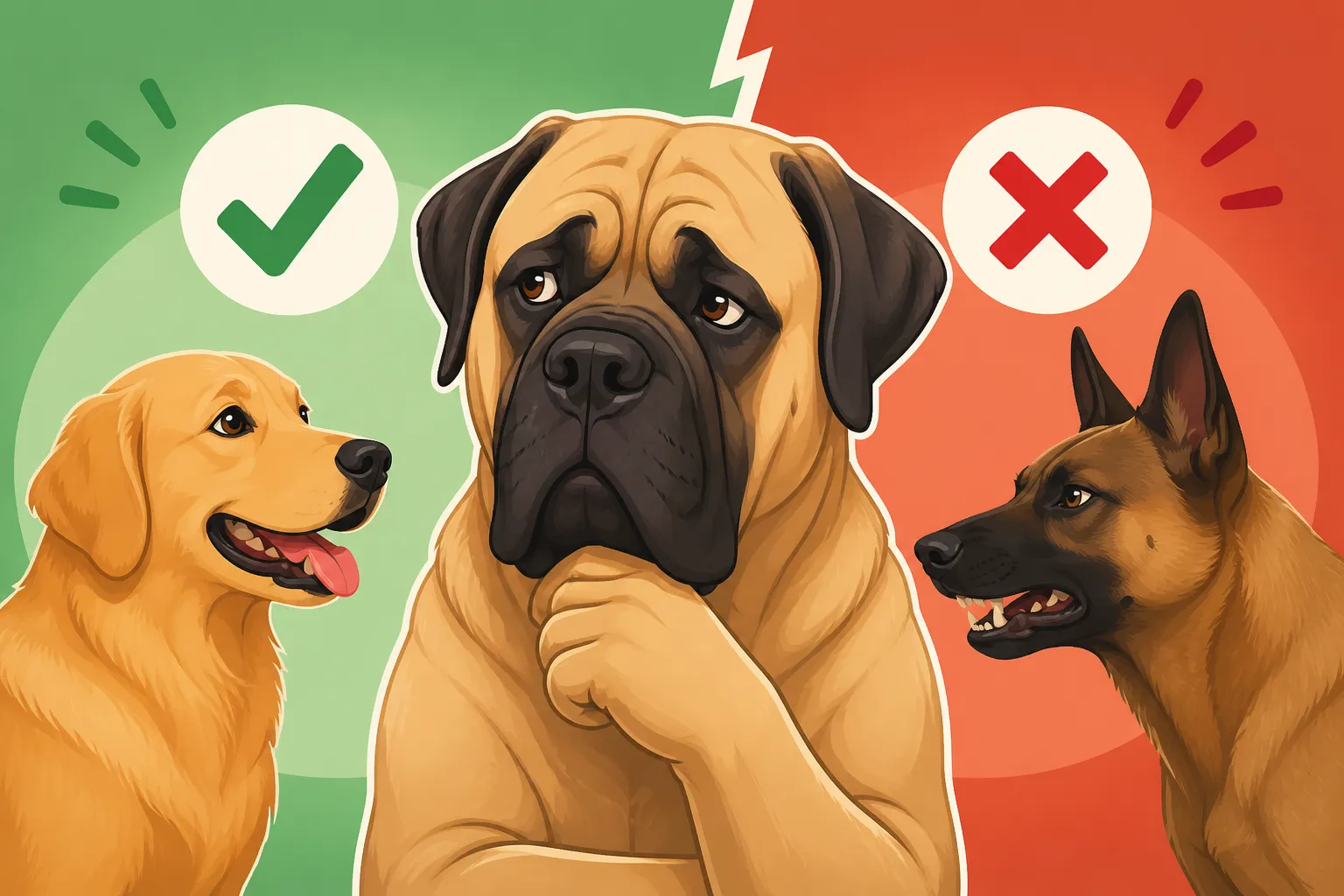
The physical characteristics and inherent breed traits of the new dog are also crucial. While a Mastiff can be incredibly gentle with a tiny Chihuahua, the size disparity itself can be a risk. Accidental injuries can occur, even with the best intentions. Whether a Mastiff Tolerates a Small Dog goes into more detail on this specific challenge. If the new dog is too small or fragile, you might always be on high alert. On the other hand, a dog that is equally large and rambunctious might overwhelm the Mastiff, who often prefers a calmer energy.
Consider the new dog's breed and its typical energy level and play style. A high-energy terrier or an intensely playful retriever might constantly pester a Mastiff who prefers to lounge. This persistent annoyance could eventually lead to frustration or a snap from the Mastiff, simply because they want peace and quiet. Conversely, a breed known for being equally calm and dignified, or one that understands subtle canine body language, might be a better fit. Look for a dog whose play style complements your Mastiff's, or at least one who can respect a Mastiff's signals for "I'm done playing."
Strategies for Successful Introductions
Bringing a new dog into your home isn't a single event; it's a carefully orchestrated process. The success hinges on thoughtful planning, managing expectations, and creating a positive, low-stress environment for both your Mastiff and the newcomer.
Neutral Territory and Gradual Exposure
The absolute golden rule for introducing dogs is to start on neutral territory. This means a place where neither dog feels territorial or possessive. A local park, a quiet field, or even a friend's securely fenced yard that neither dog frequents regularly are good options. Both dogs should be on leashes, handled by separate adults who can maintain control and observe body language. Keep initial meetings short, perhaps just five to ten minutes, focusing on calm, positive interactions. Allow them to sniff each other, walk parallel to one another at a distance, and observe. Avoid forced greetings or intense nose-to-nose contact right away.
Repeat these neutral territory meetings over several days or even weeks, gradually decreasing the distance and increasing the duration. The goal is for them to associate each other with calm, pleasant experiences rather than stress or competition. Look for relaxed body language: loose tails, soft eyes, gentle sniffing, and parallel walking. If you see tension, stiffness, lip-licking, or avoidance, increase the distance and slow down. Only when both dogs appear comfortable and relaxed in neutral settings should you consider bringing them into your home environment. Many fantastic resources, including online platforms like BAXTER & Bella, offer detailed step-by-step guides for introductions, which can be invaluable for ensuring you don't miss any crucial stages.
Setting Up the Home Environment for Harmony
Before the new dog even steps foot inside, prepare your home to minimize potential friction. This means ensuring each dog has its own dedicated space, where they can retreat and feel safe. This could be a crate, a dog bed in a quiet corner, or even a separate room. Ensure these spaces are respected by the other dog. Having individual, sturdy dog beds – perhaps even orthopedic ones from retailers like Amazon due to the Mastiff's size and joint needs – in different areas can help establish personal zones.
Crucially, separate all resources that might trigger competition or resource guarding. This includes food bowls, water bowls, toys, chew bones, and even favored resting spots. Feed dogs in separate rooms or crates. Give high-value treats and chews only when separated. If your Mastiff is particularly prone to guarding, this step is non-negotiable. Initially, keep them separated when unsupervised, even for short periods. Use baby gates or crates to create physical barriers, allowing them to see and smell each other without direct contact, building familiarity without pressure. Creating a sense of abundance, where there are always enough resources for everyone, can go a long way in preventing conflicts.
Training and Management Tools
Effective training and management are paramount in a multi-dog household, especially with a Mastiff. Both dogs should ideally have a solid foundation in basic obedience commands such as "sit," "stay," "come," and "leave it." These commands become essential tools for redirecting attention, creating space, and managing interactions. For example, a reliable "leave it" can prevent a potential squabble over a dropped toy.
Invest in appropriate management tools: sturdy leashes, harnesses (especially important for controlling a large Mastiff without neck strain), and crates. For walks together, ensure you have strong enough leashes and harnesses that can safely handle your Mastiff's power. Whether a Mastiff Should Wear a Harness or a Collar can help you decide. Even if they get along splendidly, always use leashes during initial in-home introductions until you are confident in their interactions. Never leave high-risk items like food or prized toys unsupervised between them. Consider hiring a professional dog trainer specializing in multi-dog households if you feel overwhelmed or encounter persistent challenges. Whether a Mastiff Needs a Professional Trainer offers guidance on when to seek expert help.
Managing Challenges and Potential Conflicts
Even with the best intentions and preparations, challenges can arise when introducing a new dog to your Mastiff. Knowing how to identify potential problems and intervene effectively is crucial for maintaining peace and safety.
Recognizing Warning Signs and Stress Cues
Learning to read canine body language is your superpower in a multi-dog household. Dogs communicate constantly through subtle (and sometimes not-so-subtle) cues. For a Mastiff, a warning sign might not be a bark or a growl initially, but rather a stiffening of the body, a hard stare, a slight raise of the hackles, or a deep, rumbling exhale. These are their ways of saying, "I'm uncomfortable" or "back off." Other signs of stress or impending conflict include:
- Lip licking or yawning (when not tired): Often displacement behaviors indicating stress.
- Turning away or avoiding eye contact: A dog trying to de-escalate or remove itself from a stressful situation.
- Tail tucked or held very stiffly: Indicates fear or tension.
- Whale eye: When the whites of the eyes are visible, indicating anxiety or fear.
- Freezing: Becoming rigid and still, a precursor to either flight or fight.
If you observe any of these signs, immediately and calmly create distance between the dogs. Don't punish the Mastiff for growling; a growl is a warning, and suppressing it can lead to a dog that bites without warning. Instead, thank them for communicating, and then remove them from the stressful situation. Prevention is always better than intervention, so observe closely and separate before tension escalates.
Resource Guarding and How to Prevent It
Resource guarding is a very common canine behavior where a dog protects items they value – food, toys, sleeping spots, even their humans – from other perceived threats. Given their protective nature, Mastiffs can be prone to this, especially if they've been an only dog for a long time. If your Mastiff guards, it's a serious concern that needs immediate, careful management.
To prevent resource guarding from escalating:
- Separate feeding: Always feed dogs in separate, secure locations. This is non-negotiable.
- Manage high-value items: Remove all high-value toys, bones, or chews when both dogs are together. Only offer them when dogs are separated in their safe spaces.
- Teach "drop it" and "leave it": These commands are invaluable. Practice them regularly with low-value items, gradually increasing the value as your Mastiff masters the command.
- Create abundance: Ensure there are always more toys, beds, and water bowls than dogs, reducing the perceived need to guard.
- Manage human attention: Some Mastiffs can guard their favorite human. If this happens, train both dogs to calmly wait for attention, and ensure your attention is distributed fairly, without letting one dog monopolize it. Always be aware of your body language and how it might inadvertently encourage guarding behavior.
If resource guarding is severe or escalates, please consult a professional positive-reinforcement trainer or a veterinary behaviorist immediately. This is not a behavior to ignore or attempt to "alpha" your way out of.
Seeking Professional Guidance
There are times when even the most experienced dog owner needs help. If you're struggling with introductions, observing persistent tension, or witnessing outright aggression between your Mastiff and the new dog, it's time to call in a professional. A certified professional dog trainer (CPDT-KA) or a certified veterinary behaviorist (DACVB) has the expertise to assess the specific dynamics in your household, identify triggers, and develop a tailored management and training plan.
Trying to "tough it out" or ignoring the signs can lead to severe injury, ongoing stress for both dogs, and a breakdown of the human-animal bond. A professional can teach you how to read the subtle signals you might be missing, guide you through structured desensitization and counter-conditioning protocols, and provide practical strategies for creating a safer, calmer environment. Remember, their role is to help you and your dogs succeed, not to judge. It's an investment in the long-term well-being and harmony of your household. Whether a Mastiff Needs a Professional Trainer highlights the value of expert input for this specific breed.
Living in a Multi-Mastiff Household
Sometimes, the question isn't just about whether a Mastiff accepts another dog, but whether they accept another Mastiff! The dynamics of a home with two or more of these magnificent giants require specific considerations.
The Unique Dynamics of Two or More Mastiffs
Bringing a second Mastiff into the home introduces a different set of considerations compared to pairing your Mastiff with a smaller, different breed. With two Mastiffs, you have two very large, powerful animals, each with the potential for immense physical impact. While Mastiffs are generally more tolerant than some breeds, their sheer size means that even a minor disagreement can quickly become serious.
In a multi-Mastiff household, maintaining a clear but fair hierarchy is important. Often, one Mastiff will naturally be more dominant, and the other more submissive, and if this dynamic is stable, it can lead to peace. Problems arise when two Mastiffs of similar age and temperament are constantly vying for top dog status, or if the more dominant Mastiff is overly pushy. This is where early, continuous socialization and consistent training become even more crucial. Supervise all interactions, especially around resources. Even though they are the same breed, individual personalities can vary greatly, and what works for one Mastiff might not work for another. Be prepared for double the drool, double the food, and potentially double the vet bills, as detailed in What a Mastiff's Weight Does to Every Line on the Vet Invoice.
Ensuring Individual Attention and Space
In any multi-dog home, but especially with Mastiffs, ensuring each dog receives adequate individual attention and has its own personal space is vital for their mental well-being and to prevent jealousy or friction. While Mastiffs are often described as "velcro dogs" who love to be near their people, they also appreciate their own quiet corners.
Each Mastiff needs a comfortable, dedicated spot that is truly theirs – a large, sturdy bed or a crate where they can retreat without being bothered by the other dog. Encourage them to use these spaces. Beyond physical space, dedicate one-on-one time with each Mastiff daily. This could be a separate walk, a dedicated training session, or simply quiet cuddle time without the other dog present. This individual attention reinforces your bond with each dog and ensures they don't feel overlooked or compete for your affection. It also gives you a chance to check in with each dog's health and mood without distractions. For example, if you have two, ensure you check The Wrinkles and Folds a Mastiff Owner Cleans Every Week on each dog.
Long-Term Management for Peace
Achieving harmony in a multi-Mastiff household isn't a one-time event; it's an ongoing commitment to mindful management. As dogs age, their personalities, energy levels, and tolerance can change. What worked seamlessly for years might suddenly hit a snag. Regular reassessment of the dogs' interactions is necessary.
Continue to manage resources, ensure separate feeding, and maintain training routines. Rotate toys to keep interest high and prevent possessiveness. Be observant for subtle shifts in dynamics. If one Mastiff is showing signs of discomfort or the other is becoming pushy, step in and create space. Sometimes, a quiet afternoon where the dogs are simply in separate rooms, even if they usually get along, can be beneficial for everyone to decompress. Remember that your role is to be a calm, consistent leader who provides structure and security, ensuring that both your majestic Mastiffs can live together peacefully and happily for their Six to Ten Years Is What a Mastiff Gets.
| Factor | Easier Combination | More Challenging Combination |
|---|---|---|
| Age | Adult Mastiff + Puppy | Two Adult Mastiffs of Similar Age |
| Sex | Male Mastiff + Female (both neutered/spayed preferred) | Two Intact Males OR Two Strong-Willed Females |
| Size/Breed of New Dog | Smaller, calmer breed (respectful of Mastiff's cues) | Another very large, pushy breed, or very tiny/fragile |
| Temperament | Calm, respectful, agreeable | High energy, dominant, easily agitated |
| Socialization | Both dogs well-socialized | One or both dogs undersocialized |
Disclaimer
This article is for general informational purposes only and does not constitute professional advice. Laws, prices and regulations vary by location and change over time. Consult a qualified professional for guidance on your specific situation.