Whether a Mastiff Needs a Yard
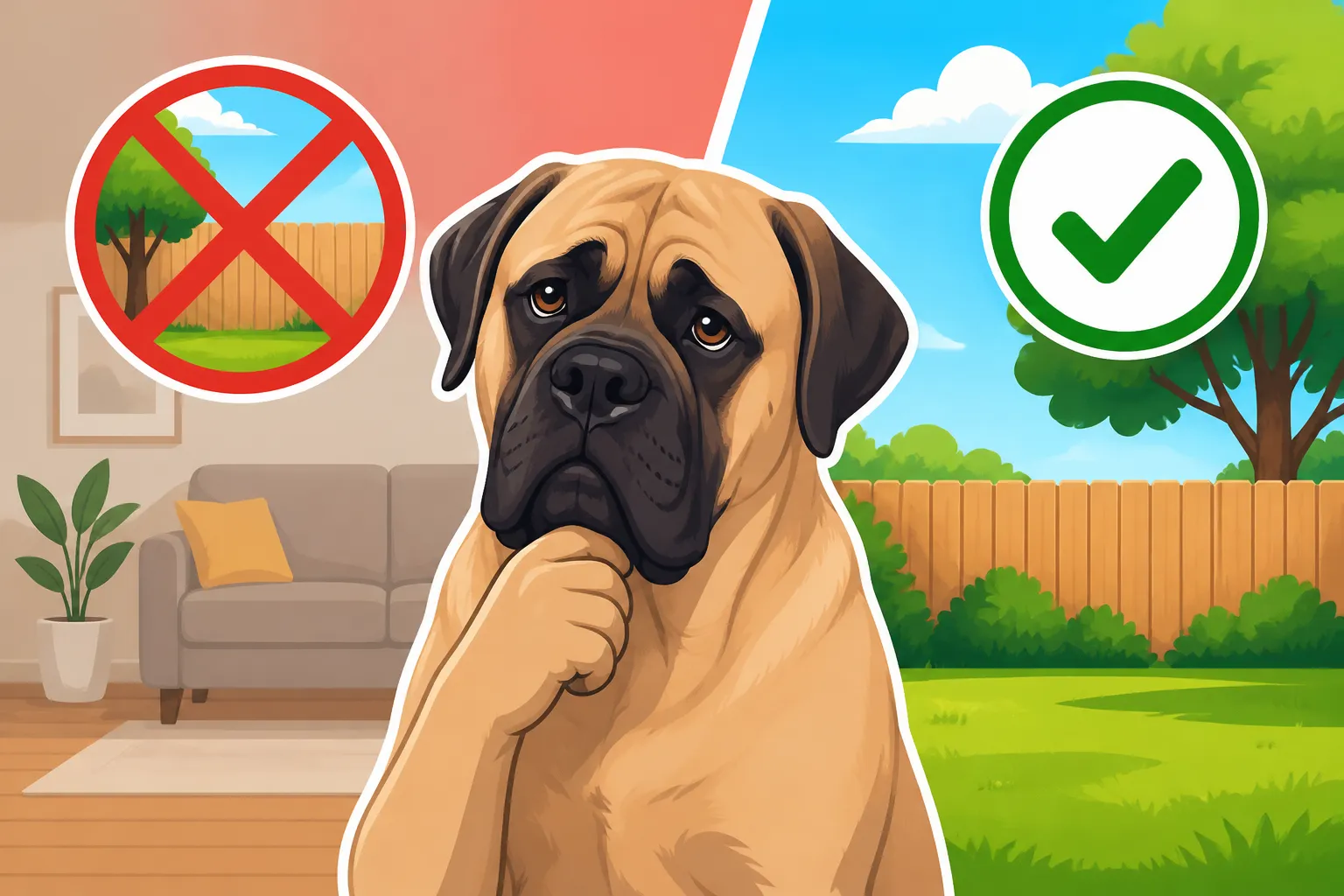
A fenced yard can make bathroom breaks and outdoor lounging easier, but it is not a requirement for every Mastiff. The bigger questions are whether you can provide regular walks, safe toileting, room to move indoors, and protection from heat and cold. This guide explains what a yard does and does not solve, and how to decide whether your home suits a Mastiff.
Does a Mastiff need a yard to be happy
A yard is useful, but it cannot replace attention
A private yard is convenient. Your Mastiff can step outside for a bathroom break, sniff around, and stretch its legs without you having to get dressed and clip on a leash every time. That convenience can matter on rainy mornings, during a busy workday, or when an older dog needs more frequent opportunities to go out.
But a yard does not automatically provide exercise, enrichment, or companionship. Many Mastiffs use outdoor space for a brief sniff and then head straight back to the cool floor inside. A large lawn can be less useful than a calm daily routine that includes walks, training, and time with the family.
It is also worth separating “having access to a yard” from “leaving a dog outside.” Mastiffs are people-oriented companions, not dogs who should be expected to entertain themselves outdoors for long stretches. A yard works best as one part of a home routine, with supervision and a way to come back inside.
A yard does not solve every space concern
Mastiffs are enormous, and their size affects everyday life even when they are indoors. They need clear paths to walk through the home, a comfortable place to rest, and enough room to turn around without knocking into furniture. In a smaller home, rearranging a coffee table or adding rugs for traction may matter more than having a large lawn.
If you are weighing a smaller home, apartment, or yard-free property, think about the full picture: your dog’s route to the outside, stairs or elevators, nearby walking areas, and how you will handle bathroom breaks in bad weather. Whether a Mastiff Suits an Apartment explores those trade-offs in more detail, while Whether a Mastiff Settles in a Small Space can help you consider how a giant dog’s indoor habits affect a compact home.
A fenced outdoor area is a convenience, not a substitute for assessing the home itself. A Mastiff who cannot move comfortably through a narrow doorway or who struggles on slippery floors may find the home frustrating even if it opens onto a generous yard.
What a Mastiff needs instead of a yard
Plan for walks and bathroom breaks
Without a yard, you will need to take your Mastiff outside on a leash for bathroom breaks. That means building short, regular outings into the day, including first thing in the morning and before bed. Puppies, senior dogs, and dogs with health concerns may need more frequent opportunities; your veterinarian can help you set a routine that fits your dog.
Daily walks are not simply a way to cover distance. A relaxed walk gives your Mastiff a chance to sniff, explore, and experience the neighborhood at a comfortable pace. Keep the outing suited to the dog’s age, fitness, and weather tolerance. A young Mastiff should not be pushed into long or strenuous exercise just because it is physically large. Why a Mastiff Puppy Must Not Run explains why growing dogs need a more careful approach.
A dog who pauses, moves slowly, or seems reluctant to continue may need a break rather than a tug on the leash. Why a Mastiff Lies Down and Refuses to Move looks at a familiar challenge for owners of powerful, heavy dogs. If a sudden change in willingness to walk comes with signs of pain or illness, contact your veterinarian rather than treating it as stubbornness.
Add low-impact activity and indoor enrichment
Mastiffs are generally better suited to steady, moderate activity than to a schedule built around intense exercise. Short training sessions, scent games, and calm exploration can make a day more engaging without requiring a yard or a long hike. For example, you could ask your dog to find a few treats hidden in safe, easy-to-reach spots, practice a familiar cue, or take a slow sniffing walk around the block.
A dog without outdoor space still needs opportunities to move and use its senses. You can rotate simple activities so that every day does not feel identical: a few minutes of basic training in the morning, a walk after work, and a food puzzle or quiet sniffing game in the evening. Keep food-based activities within your dog’s daily feeding plan, especially if your Mastiff needs help staying lean.
The goal is not to exhaust your dog. A calm, predictable routine is usually more practical than trying to replace a yard with one very long outing. Why One Hour a Day Is Enough for a Mastiff offers more context on balancing activity with this breed’s needs.
Yard, no yard, or shared outdoor space
| Home setup | Potential advantages | Things to plan for |
|---|---|---|
| Secure private yard | Convenient bathroom access and room to sniff or lounge | Fencing, supervision, weather, and time spent with the family |
| No yard, nearby green space | Access to walks and outdoor exploration without maintaining a yard | Leash outings for every bathroom break and a dependable daily routine |
| Shared courtyard or dog area | Convenient outdoor access in some homes | Building rules, other dogs, cleanliness, and whether the space is appropriate for your Mastiff |
| Rural or open property without a fence | More room to explore with close supervision | Boundaries, roads, wildlife, and reliable leash or recall management |
A secure fence matters more than a large yard
If you have a yard, check whether the fence is secure, tall enough for your dog, and free of gaps or weak sections. A Mastiff may not be inclined to leap around like a sporty breed, but a determined dog can still push at a loose gate, follow an interesting scent, or wander through an opening. Do not assume that the size of the property makes it safe to leave a dog unattended.
Outdoor access should also be supervised, particularly in unfamiliar spaces. Check that gates latch properly and that the yard does not contain items your dog could chew or swallow. If your dog spends time outdoors, make sure it has access to shade and fresh water, and bring it inside when conditions are uncomfortable. Whether a Mastiff Should Sleep Outdoors explains why outdoor access should not be mistaken for a suitable sleeping arrangement.
Shared spaces need a realistic routine
Some homes have a shared courtyard, a common dog area, or a convenient patch of grass nearby. Those options can work, but they require thought. You may have to coordinate around other residents, clean up immediately, and keep your Mastiff leashed where required. A communal space is also not a private exercise area; follow building rules and consider whether your dog is comfortable around unfamiliar dogs and people.
If you live in a building, test the practical route before bringing a Mastiff home. Can you reach the outdoor area quickly? Are there stairs, a long hallway, an elevator, or a busy street crossing? Imagine doing the trip in the middle of the night or in heavy rain. These ordinary details can shape daily life more than the presence or absence of a lawn.
Weather, safety, and everyday logistics
Heat and cold affect outdoor time
A yard does not protect a Mastiff from extreme weather. The breed’s size and bulk can make hot conditions especially challenging, so avoid relying on an outdoor area as a place for long periods in the heat. Offer shade and water, choose cooler times for walks, and bring your dog indoors if it is panting heavily, seems weak, or appears distressed. Signs of overheating need prompt attention.
Cold weather also calls for judgment. A short bathroom break is different from spending hours outside, particularly if your dog is wet, uncomfortable, or reluctant to move. Think about the surface underfoot as well as the air temperature: ice, mud, and slick steps can make it harder for a heavy dog to stay steady. The Temperature at Which a Mastiff Should Stay Indoors covers how to think through weather and outdoor exposure.
For owners without a yard, weather can make bathroom breaks feel like a chore. Keep a leash and towels near the door, make outings purposeful, and return indoors when your dog has finished. If extreme conditions make a normal walk unsafe, ask your veterinarian about suitable alternatives for your individual dog rather than trying to push through.
Account for the people and places around your home
A Mastiff’s size affects more than the dog’s comfort. You may need to guide it through shared hallways, keep the entryway clear, and plan how it will get into a vehicle or move through a crowded area. Training calm leash manners and a reliable wait at doors is helpful whether you have a yard or not. A dog that surges through an open gate or doorway can create a safety problem in any home.
Think, too, about who can help with the routine. If you work long hours, can a trusted person take the dog out? If you become ill or have an unexpected appointment, is there someone who can manage a powerful dog on a leash? A yard can reduce the number of outings required, but it does not eliminate the need for care, supervision, or a backup plan.
Before deciding, consider the kind of household this breed tends to suit. The Household a Mastiff Was Built For offers broader context, and Whether a Mastiff Is Too Much Dog for Most People may help you assess the commitment honestly. It is far kinder to recognize a mismatch before bringing a dog home than to discover later that routine walks, weather, or physical handling are unmanageable.
How to decide whether your home is suitable
Use a typical day as your test
Instead of asking only, “Do I have a yard?” walk through a normal weekday. Picture the morning bathroom break, the time you are away, the after-work outing, and the final trip before bed. Include bad weather and the possibility that your dog needs to go out more often than usual. If the plan works without relying on a neighbor’s yard or an occasional dog walker, you have a more realistic answer.
For a home without a yard, the plan might be: a short leashed bathroom trip before work, a midday visit from a trusted helper, a relaxed walk in the evening, and another quick outing before sleep. Someone with a fenced yard might still need a morning walk, supervised outdoor time, and company indoors. The details differ, but both homes need a dependable routine.
If you are considering adopting or purchasing a Mastiff, ask about the individual dog’s habits and needs. A puppy may need more frequent bathroom trips and careful management as it grows. An adult dog may already be accustomed to a particular schedule. A senior Mastiff may need easier access outdoors or more frequent breaks. The right setup depends on the dog as well as the property.
Match the space to your ability, not an ideal picture
A huge yard can look like the perfect Mastiff home, but it is not helpful if the dog is left alone outside or the yard is poorly secured. Conversely, a home without a yard can be suitable when its people are ready to provide regular leash outings, enrichment, and comfortable indoor space.
The most important question is whether you can meet the daily needs consistently. Can you safely manage the dog on a leash? Is there a practical outdoor route? Can you provide enough calm activity without overexercising a growing dog? Does your home have traction and room for a very large body? These are more meaningful measures than the size of the lawn.
If your answer is uncertain, try mapping out the routine before making a commitment. Walk the route from your door to the nearest suitable toileting area, check building or neighborhood rules, and think through rainy or icy days. If you are buying basics such as a sturdy leash, waste bags, or washable towels, retailers such as Chewy may be one place to compare available options; focus on fit, durability, and whether the item suits your dog rather than assuming a product will solve a routine problem. The same practical planning matters far more than any single piece of equipment.
Disclaimer
This article is for general informational purposes only and does not constitute professional advice. Laws, prices and regulations vary by location and change over time. Consult a qualified professional for guidance on your specific situation.