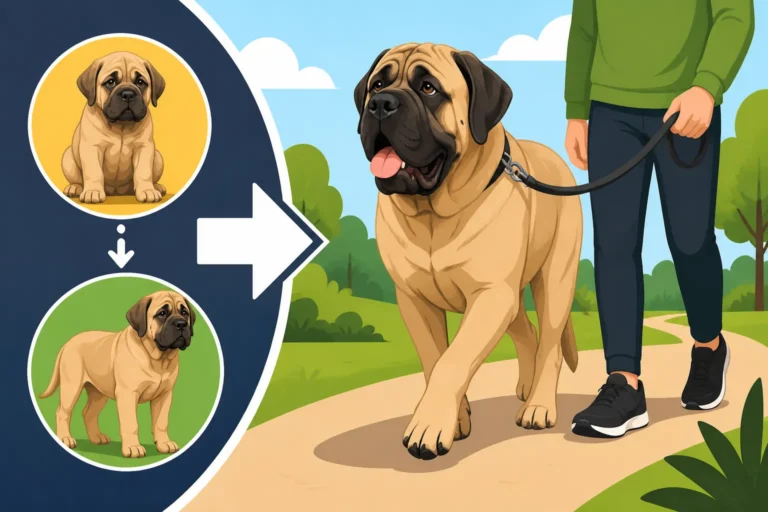
The First Year With a Mastiff Puppy That Doubles in Size
Bringing home a Mastiff puppy is an exciting, albeit slightly overwhelming, experience. You've prepared for the cuddles and the charming clumsiness, but nothing quite prepares you for the sheer velocity at which these adorable fluffballs transform into bona fide giants. This guide is here to walk you through that astonishing first year, helping you understand the unique challenges and joys of raising a Mastiff puppy that literally doubles—and then some—in size before your very eyes, and how to navigate the physical, behavioral, and developmental hurdles that come with it.
The Unbelievable Growth Spurt: Witnessing a Mastiff's Transformation
Imagine blinking, and your furry little potato has suddenly become a small pony. That's not far from the reality of the first year with a Mastiff puppy. This breed grows at an almost alarming rate, packing on pounds and inches with incredible speed. Understanding this phenomenal growth isn't just a fun fact; it's absolutely critical for their health, training, and your sanity.
From Small Fry to Mighty Mastiff: A Timeline of Rapid Development
When your Mastiff puppy first arrives, they're probably already bigger than most adult small dogs. They’ll likely be around 15-20 pounds at 8 weeks old, which feels substantial until you realize they're just getting started. Over the next year, they will, quite literally, balloon. By six months, they can easily weigh 80-100 pounds, and by their first birthday, it’s not uncommon for them to be well over 100-150 pounds, with some males pushing even higher. This isn't just about gaining weight; it's about bone development, muscle accretion, and the incredible strain this puts on a young, still-forming body. It's a marvel to behold, but it also means constant adjustments to their environment and routine.
This rapid growth phase is what makes early care so paramount. Every decision you make, from their diet to how much they exercise, directly impacts the health and soundness of their adult frame. It’s during this time that the foundations for a long, healthy life – or sadly, one riddled with orthopedic issues – are laid. It’s a huge responsibility, and frankly, it can feel daunting when your puppy seems to get bigger every single morning.
The Hidden Dangers of Too Much, Too Soon
With such rapid growth comes a unique set of vulnerabilities. Unlike smaller breeds, a Mastiff puppy's bones, joints, and ligaments aren't designed to withstand high-impact activities or excessive strain during this critical developmental period. Overfeeding, especially with diets too high in calcium or protein, can also lead to orthopedic problems like hip and elbow dysplasia. Imagine a skyscraper being built too quickly without proper foundational support – it’s a recipe for instability. The same applies to your growing Mastiff. Restraining the Growth of a Mastiff Puppy is not about deprivation, but about careful management.
This means you can’t just let your Mastiff puppy run wild at the dog park or go on long hikes before they are physically mature. Their growth plates are open and susceptible to injury, and the sheer weight they carry puts immense pressure on developing joints. Many new owners, excited by their puppy's size and energy, inadvertently push them too hard. It’s a common pitfall, and one that experienced Mastiff owners understand deeply. Slow and steady wins the race when it comes to healthy development for these giants.
Gentle Giants in the Making: Socialization and Early Training
Training a Mastiff is unlike training most other breeds, primarily because of their immense size. What might be a minor inconvenience in a smaller dog—like jumping up or pulling on the leash—becomes a significant safety hazard with a two hundred-pound dog. Early, consistent, and positive training is non-negotiable, not just for obedience, but for harmonious living.
Foundation Training Before They Outweigh You
The window for easy physical control is shockingly short with a Mastiff puppy. You might start off being able to scoop them up, but within a few months, they’ll be too heavy to manage that way. This makes teaching basic commands like "sit," "stay," "come," and "leave it" absolutely essential while they are still manageable. Think of it as building good habits before bad ones become insurmountable due to sheer mass. A Mastiff does not pull you over, it simply stops, or pulls you towards something with surprising force.
Positive reinforcement methods are incredibly effective with Mastiffs, who are generally sensitive and eager to please. Harsh corrections can easily shut them down and damage their trust. Treats, praise, and toys work wonders. For instance, when teaching "down," lure them with a treat, reward the moment their elbows hit the floor, and repeat. Consistency across all family members is key. You might find resources like BAXTER & Bella online programs particularly helpful, as they often focus on positive methods and structure, which is vital for a breed of this size. Starting early with house training, leash manners, and polite greetings will pay dividends for years to come. Teaching a Mastiff Before It Outweighs You is probably the most critical advice you'll ever get.
Socializing a Mountain of Cuddles
A well-socialized Mastiff is a joy; an unsocialized one can be a liability. Given their imposing size, people naturally react differently to them than they would to a smaller dog. It’s crucial that your Mastiff puppy has positive experiences with a wide variety of people, places, sounds, and other animals during their critical socialization period, typically before 16 weeks of age. This helps them grow into confident, well-adjusted adults who understand the world isn't a threat.
Introduce your puppy to friendly strangers, children (always supervised!), and calm, vaccinated adult dogs. Puppy classes are an excellent way to expose them to new environments and learn appropriate play. When out and about, be prepared for people to want to interact with your giant puppy, but also be mindful of those who might be intimidated. Always advocate for your puppy’s comfort and don’t force interactions. The goal is positive exposure, not overwhelming them. Remember, Socializing a Mastiff Puppy Before It Gets Heavy is important, but also, How Many People a Mastiff Puppy Should Meet is less about quantity and more about quality and positive experiences.
Harnessing That Puppy Energy: Exercise and Play Considerations
Mastiffs are often described as "couch potatoes," but even a couch potato puppy needs appropriate exercise. The challenge lies in providing enough mental and physical stimulation without over-stressing their rapidly developing bodies.
The Gentle Art of Puppy Exercise
Forget long runs, jumping competitions, or intense agility courses for your young Mastiff. Their exercise needs are surprisingly modest during their first year. Short, controlled walks on a leash, playtime in a securely fenced yard, and mental enrichment are far more beneficial than strenuous activity. The goal is to build strength and coordination gradually, not to push them to exhaustion. A good rule of thumb for walking is roughly five minutes per month of age, twice a day. So, a four-month-old puppy would get two 20-minute walks.
Activities like gentle games of fetch with a soft toy or exploring new scents in a park are great. Avoid anything that involves repetitive jumping, sharp turns, or running on hard surfaces. Stairs should be limited, or even avoided where possible, during their most rapid growth phases. Why a Mastiff Puppy Must Not Be Exercised Hard is a rule that every Mastiff owner should live by. It takes immense discipline to resist the urge to do more, but your adult Mastiff will thank you for it in the long run.
Mental Stimulation: The Quiet Burn
Because physical exercise is so limited for a growing Mastiff, mental stimulation becomes incredibly important. A bored Mastiff can quickly become a destructive Mastiff, regardless of their size. Puzzle toys, interactive feeders, and training sessions are excellent ways to tire out their minds without stressing their joints. Consider things you can find on Amazon, like snuffle mats or Kongs, which encourage problem-solving and slow eating.
Even simple activities like practicing new tricks or engaging in short "find it" games indoors can be hugely beneficial. Mastiffs are intelligent, even if they sometimes seem slow to respond (which is more often deliberate thought than actual slowness!). Keeping their minds engaged helps prevent boredom-related behaviors like chewing on furniture or digging in the yard. It's about providing an outlet for their natural curiosity and desire to "work" in a low-impact way.
Navigating the Adolescent Phase: When Size Meets Stubbornness
Just like human teenagers, adolescent Mastiffs can test your patience. Around 6 months to a year (and sometimes longer), they enter a phase where their immense size starts to feel like a liability, and their charming puppy antics give way to more deliberate, sometimes challenging, behaviors.
The Teenage Tantrum: Testing Boundaries
Your sweet, compliant puppy might suddenly "forget" commands they knew perfectly, become more easily distracted, or decide that following your instructions is optional. This isn't necessarily defiance; it's often a combination of hormonal changes, increased confidence, and a natural exploration of boundaries. Their brains are still developing, and they are trying to figure out their place in the world. This is where your consistent training, established during their younger months, will be truly put to the test.
During this period, it's vital to remain patient, consistent, and firm, without being harsh. Revisit basic commands, increase the value of your rewards, and keep training sessions short and positive. Avoid giving in to unwanted behaviors just because they’re big and difficult to physically move. For example, if your Mastiff starts to pull more on the leash, go back to short, structured walks in low-distraction environments, reinforcing loose-leash walking every step of the way. The Stubbornness That Is Actually a Mastiff Thinking is a good way to frame their reluctance.
Dealing with Destructive Chewing and Counter-Surfing
A Mastiff puppy's mouth can do a surprising amount of damage, and as they grow, so does their ability to reach things. Counter-surfing becomes a real possibility, and their powerful jaws can quickly demolish toys, furniture, or anything left within reach. This is often driven by boredom, teething (even larger breeds still teethe for a while), or simply exploring their world with their mouths.
Management is key. "Puppy-proof" your home as if you have a very curious, very strong toddler. Keep tempting items off counters and out of reach. Provide a variety of appropriate chew toys – durable ones that can withstand their powerful jaws. Rotate toys to keep things interesting. If you catch them chewing on something inappropriate, redirect them immediately to an acceptable toy. Crate training can be invaluable during this stage, offering a safe space for your Mastiff when you can't actively supervise them.
| Age (Approx.) | Key Developmental Milestones | Common Challenges | Owner Focus Areas |
|---|---|---|---|
| 8-16 Weeks | Rapid growth, primary socialization window | Mouthing, house training, overwhelming new experiences | Positive socialization, basic manners, house training, gentle handling |
| 4-6 Months | Continued rapid growth, teething, increased curiosity | Chewing, testing boundaries, leash pulling (due to strength) | Reinforce training, appropriate chew toys, structured exercise, crate training |
| 6-12 Months | Adolescent hormones, increased independence, nearing adult size | "Selective hearing," counter-surfing, increased strength, body awareness | Consistency, mental enrichment, continued positive reinforcement, management |
The Environment: Adapting Your Home for a Growing Mastiff
Living with a Mastiff means making certain adjustments to your home, sometimes even before they arrive. Their size isn't just a number; it impacts everything from flooring to furniture.
Floors, Beds, and Entryways: Mastiff-Proofing Your Space
Bare hardwood floors, while beautiful, can be treacherous for a growing Mastiff. Their immense weight and developing joints mean they need good traction to prevent slips, falls, and long-term orthopedic stress. Consider runners or large area rugs in high-traffic areas. What Bare Floors Do to a Growing Mastiff is a serious consideration. Their sheer size also means a standard dog bed won't cut it for long. Invest in a high-quality, orthopedic bed (or several) designed for giant breeds. These help support their joints and prevent pressure sores.
Think about the physical layout of your home. Will your Mastiff fit comfortably through doorways? Can they navigate stairs safely, especially as a puppy? Lifting a grown Mastiff is not a realistic option for most people. If you have stairs, consider blockading them for a young puppy or carrying them initially, if you are able. As they grow, teach them to navigate stairs slowly and carefully. They might block doorways naturally, not out of stubbornness, but because they simply take up so much space!
Vehicle and Furniture: Accommodating a Giant
Your vehicle choice might need to be reconsidered when you own a Mastiff. A standard sedan might work for short trips with a small puppy, but a fully grown Mastiff requires significant space. An SUV or a larger vehicle with ample cargo room (and ideally a low entry point or a ramp) becomes essential for vet visits, trips to the park, or any travel. Investing in a sturdy vehicle ramp, which you can find on Amazon, early on can save your back and protect your Mastiff’s joints as they age. Why a Mastiff Puppy Must Be Lifted Into a Car is an important lesson to learn early.
Expect your furniture to take a beating, or at least be covered in drool and shed hair. A Mastiff’s tail can clear a coffee table with ease, and their enthusiasm can lead to accidental bumps. Many Mastiff owners embrace durable, easy-to-clean fabrics or invest in sturdy furniture covers. Your couch might become their couch, so set clear boundaries early if you want to maintain any personal space!
Nutrition for a Growing Giant: Fueling Healthy Development
Feeding a Mastiff puppy isn't just about giving them enough food; it's about giving them the right food in the right amounts to support their incredible, yet delicate, growth. This is arguably one of the most critical aspects of their first year.
The Giant Breed Diet Dilemma: Slow and Steady Wins the Race
The single most important rule for feeding a Mastiff puppy is to promote slow, controlled growth. Sounds counter-intuitive for a breed meant to be enormous, right? But the goal is to prevent them from growing too quickly, which puts undue stress on their developing bones and joints, increasing the risk of orthopedic diseases like hip and elbow dysplasia. Look for a high-quality, large-breed puppy food specifically formulated for giant breeds. These diets typically have lower protein and calcium levels compared to regular puppy foods, which is crucial for healthy bone development.
Why a Mastiff Puppy Must Grow Slowly cannot be stressed enough. Avoid free-feeding your Mastiff puppy; instead, feed measured meals two or three times a day according to the guidelines on your chosen food, adjusting as needed to maintain a lean body condition. You should be able to feel their ribs easily without seeing them prominently. Consult your veterinarian for specific recommendations tailored to your puppy's individual growth rate and health.
Supplements and Treats: What's Safe, What's Not
Generally, if you're feeding a high-quality, giant-breed specific puppy food, additional supplements aren't necessary and can even be detrimental. Adding extra calcium, for example, can throw off the delicate balance needed for proper bone development and actually increase the risk of skeletal problems. Always discuss any supplements with your vet before introducing them.
Treats should be given in moderation and chosen carefully. Opt for healthy, low-calorie options, especially during training sessions. Remember, those calories add up, and keeping your Mastiff lean during their growth phase is paramount. Avoid giving them "people food" that isn't specifically dog-safe, and be mindful of their incredible ability to reach things that might accidentally fall on the floor or be left on a low table. Whether a Mastiff Puppy Grows Too Fast on Rich Food is a valid concern, so choose wisely.
Anticipating the Future: Health and Lifespan Considerations
Even with the best care, Mastiffs are prone to certain health issues, and their lifespan is notably shorter than many other breeds. Understanding this from the beginning helps you make informed decisions and cherish every moment.
Common Health Concerns in Growing Mastiffs
During their first year, you'll be particularly vigilant for signs of orthopedic issues. Limping, stiffness, or reluctance to move are all red flags that warrant a vet visit. Hip and elbow dysplasia are unfortunately common in large and giant breeds, and early detection can sometimes lead to better management outcomes. Elbow Dysplasia Affects One Mastiff in Seven and Why a Mastiff's Hips Fail Under Its Own Weight are realities of the breed. Reputable breeders will have screened their breeding stock for these conditions, which is why choosing a puppy from health-tested parents is so critical.
Beyond joint issues, Mastiffs can also be susceptible to bloat (Gastric Dilatation-Volvulus or GDV), a life-threatening condition where the stomach twists. While it's more common in adult Mastiffs, it can occur in their first year. Knowing the signs – restlessness, unproductive retching, a swollen abdomen – and understanding the urgency of immediate veterinary care is crucial. Some owners opt for a prophylactic gastropexy, a surgery that tacks the stomach to the abdominal wall, to prevent the stomach from twisting. When a Mastiff's Gastropexy Should Be Done is a conversation to have with your vet.
The Shorter Lifespan: Cherishing Every Moment
It's a bittersweet truth that Mastiffs, like many giant breeds, have a relatively short lifespan, typically ranging from Six to Ten Years Is What a Mastiff Gets. This reality can be hard to reconcile when you bring home that adorable, rapidly growing puppy. However, knowing this from the outset can help you prioritize their health, well-being, and the quality of your time together.
Focus on providing the best possible nutrition, appropriate exercise, consistent training, and preventative veterinary care. Regular check-ups, staying up-to-date on vaccinations, and proactive screening for breed-specific issues are all part of responsible Mastiff ownership. Most importantly, shower them with love and affection, creating a lifetime of cherished memories, even if that lifetime is shorter than you might wish. Every day with a Mastiff is a gift, and knowing their typical lifespan only amplifies the importance of appreciating each one.
Conclusion: Embracing the Giant Journey
Raising a Mastiff puppy through its first year is an extraordinary experience filled with rapid changes, immense growth, and profound lessons in patience and dedication. From navigating their incredible transformation from a fluffy baby to a formidable adolescent, to meticulously managing their diet and exercise to ensure healthy development, every decision you make shapes the giant they will become. While the challenges are real—from the vast quantities of drool to the sheer physical demands of a dog that outweighs many humans—the rewards are immeasurable. The bond you forge with these gentle, loving behemoths is unlike any other. By understanding their unique needs and preparing for the journey, you’re not just raising a dog; you’re welcoming a magnificent, loyal companion who will fill your life and home with an unforgettable presence.
Disclaimer
This article is for general informational purposes only and does not constitute professional advice. Laws, prices and regulations vary by location and change over time. Consult a qualified professional for guidance on your specific situation.