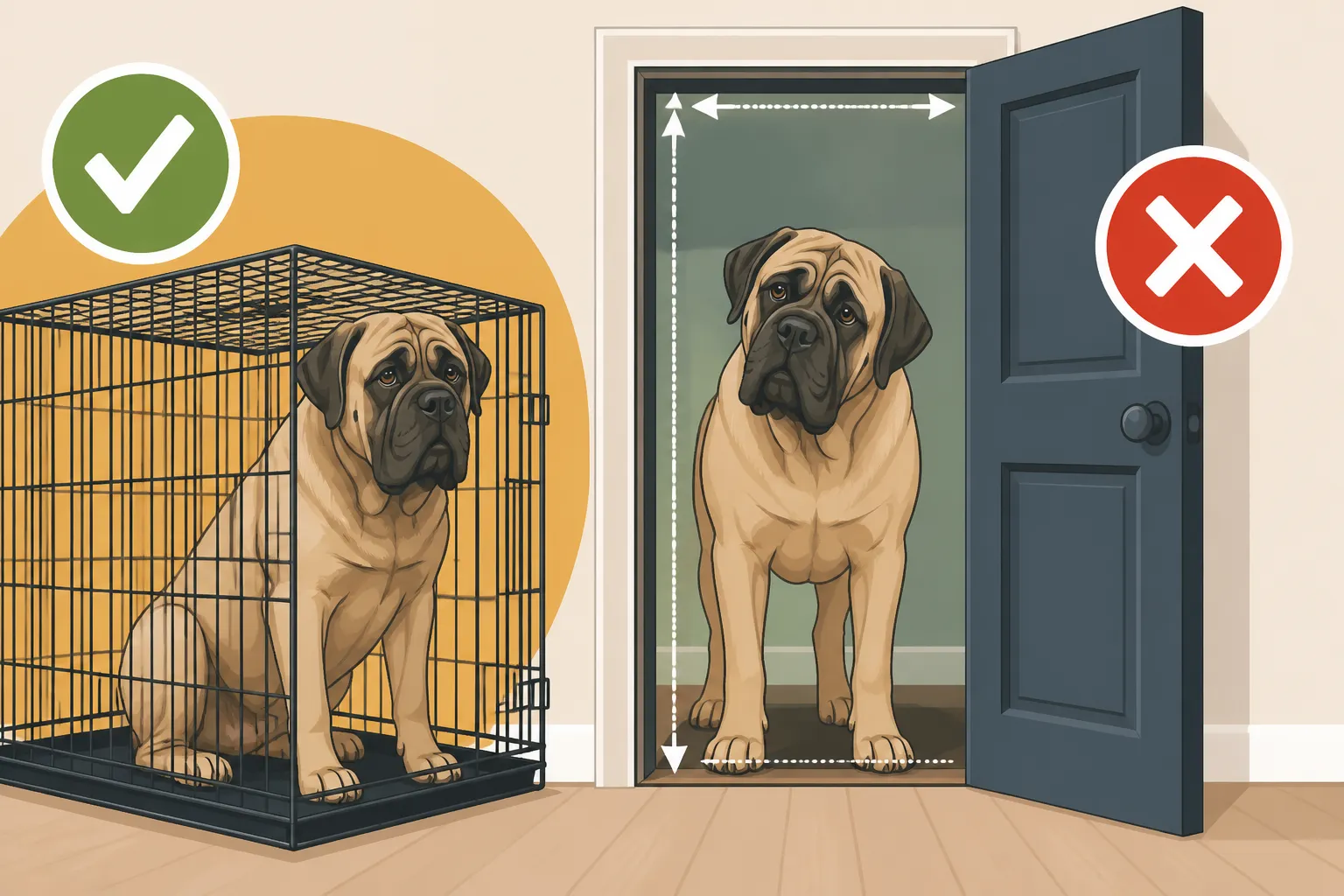
Whether a Mastiff Crate Fits Through Your Doorway
You've fallen in love with a Mastiff puppy, or perhaps you're already living with one of these magnificent giants, and the idea of a safe, comfortable crate for them is a top priority. But then the panic sets in: will that behemoth of a crate actually fit through your front door, let alone around that tricky hallway corner and into the chosen spot? It's a surprisingly common and incredibly frustrating hurdle, and this guide is here to walk you through everything you need to consider to ensure your Mastiff's future home — their crate — makes it inside without a hitch.
The Sheer Scale of a Mastiff Crate: Why They're So Enormous
Mastiffs are, without a doubt, one of the largest dog breeds on the planet. Their presence is undeniable, and so is the size of everything that goes with them – especially their crates. It's not just about length and width; it's about the sheer bulk and rigidity that often comes with a kennel designed to safely contain a dog that can easily outweigh a grown human.
Understanding Mastiff Crate Dimensions
When you look at crate dimensions online or on a box, you're usually seeing the exterior measurements: length, width, and height. For a fully grown Mastiff, you're looking at crates that are often 54 inches long, 36-37 inches wide, and 45-50 inches high. These aren't just numbers; these are substantial pieces of equipment that demand serious consideration. Imagine trying to maneuver a small refrigerator on its side, but one that can't be easily tilted or squeezed without potentially damaging its integrity or your home.
The reason for these enormous dimensions is simple: your Mastiff needs to be able to stand up, turn around, and lie down comfortably without feeling cramped. A crate isn't a cage; it's meant to be a den, a safe haven where your dog can retreat. Skimping on size will lead to discomfort, anxiety, and potentially behavioral issues, as the dog may resist using it or try to escape.
The Challenge of Rigidity and Weight
Many crates built for Mastiffs are constructed from heavy-gauge steel wire or durable, heavy-duty plastic, designed to withstand the immense strength and weight of a large dog. This construction often means they aren't flexible. Unlike smaller crates that might have some give or can be collapsed with a degree of ease, these giant versions are often quite rigid once assembled.
The weight adds another layer to the challenge. A 54-inch wire crate can weigh upwards of 70-80 pounds, and a heavy-duty plastic or composite crate can be even more substantial. This isn't something you can easily lift and manipulate on your own, especially if you're trying to angle it through a tight space. You might need an extra pair of hands, or even three, just to get the box from your delivery truck to your doorstep, let alone through the house.
Measuring Up: Your Mastiff, Your Crate, Your Doorways
The key to avoiding a logistical nightmare is meticulous measurement. Don't just eyeball it; grab a tape measure and get specific. This isn't just about the doorway itself, but the entire path the crate will take from delivery to its final resting place.
Doorway Dimensions: Front Doors, Interior Doors, and Hallways
Standard exterior doors in many homes are around 36 inches wide, while interior doors can be as narrow as 28-30 inches. A 54-inch long crate is likely to be 36-37 inches wide. See the immediate problem? If your crate is 37 inches wide, it won't fit through a 36-inch door unless you remove the door frame. And even if it's 36 inches wide, it's going to be a very tight squeeze with no room for error, scrapes, or bumps.
This applies not only to your front door but also to any internal doorways leading to the room where the crate will live. What about the threshold? Is there a lip or a step that will make sliding a heavy crate even harder? Don't forget ceiling height either, especially if you plan to move the crate on its end. A 45-inch high crate is usually fine, but some extra-tall models could brush against standard door frames if you try to stand them upright.
The Critical Corner Radius
This is often the most overlooked aspect. You might have a 36-inch wide front door, and your crate is 36 inches wide. "Great!" you think. But then you get it through the door, only to realize your hallway immediately turns 90 degrees, and the crate, even on its end, simply can't make the turn without hitting both walls. This is where the concept of a "turning radius" comes into play. A long, rigid object needs significantly more clear space than its width suggests to navigate a corner.
To estimate this, measure the length of your crate, then the width of your hallway or any narrow passage. If your crate is 54 inches long and your hallway is only 40 inches wide, you simply won't be able to turn it. This is why some people find themselves disassembling and reassembling crates multiple times, or worse, leaving a crate outside because it can't clear the house.
Here’s a quick reference table for common crate sizes and doorway considerations:
| Crate Size (Length x Width x Height) | Typical Mastiff Suitability | Standard Exterior Door (36" width) | Standard Interior Door (28-30" width) | Corner/Hallway Challenge |
|---|---|---|---|---|
| 48" L x 30" W x 33" H | Smaller/Leaner Mastiffs, Pups | Fits (often on end or diagonal) | Might be tight, check carefully | Manageable, but measure |
| 52" L x 34" W x 40" H | Average Adult Mastiff | Tight squeeze, measure carefully | Unlikely to fit without door removal | Significant, requires careful angling |
| 54" L x 37" W x 45" H | Large Adult Mastiff | Will NOT fit flat. May need door removal/disassembly. | Will NOT fit. Disassembly likely. | Extremely difficult, measure full path |
| Extra-Large Custom | Very Large Mastiffs | Highly likely to require disassembly or specialized delivery. | Almost certainly requires disassembly. | Plan for assembly in final room. |
Note: Always measure your specific crate and doorways, as manufacturers' dimensions can vary slightly, and door frame widths can differ.
Beyond the Doorway: Getting the Crate into the Right Room
Once you've navigated the front door, your journey isn't over. The path to the crate's final destination often involves more twists, turns, and obstacles than you might initially consider.
Hallways, Stairwells, and Furniture
Think about the entire route. Is there a narrow hallway? Are there stairs involved? Moving a large, heavy crate up or down a staircase is not only difficult but potentially dangerous for both you and your home. The rigidity of the crate means it won't bend to navigate tight turns on a landing. You might have to remove banisters, or even consider professional movers who specialize in large, awkward items.
Don't forget about existing furniture. That antique console table or the oversized armchair might have to be temporarily moved to clear a wider path. Even seemingly innocuous items like floor lamps or coat racks can become major impediments when you're trying to squeeze a 54-inch crate through. It's often easier to clear the path completely before you start the maneuvering process, rather than struggling with an unwieldy crate in one hand and trying to push a sofa with the other.
Assembly in Place vs. Moving Assembled
Many wire crates come disassembled in a flat box, which is much easier to get through doorways and into rooms. The challenge then becomes assembling it in the desired room. This requires space, tools (though many are tool-free), and the ability to maneuver large wire panels. If you have an assembled crate that needs to be moved, this is where the real headaches begin.
For plastic crates, they often come in two halves or as a single large unit, making transport much harder. If you’re considering a heavy-duty plastic kennel, check if it can be easily broken down into smaller components. If not, you might need to reconsider or plan for direct delivery and assembly in the final room if possible. If you ordered from a company like Chewy, they usually deliver to your doorstep, but getting it inside is your responsibility.
Crate Options for the Mastiff Owner
Given the logistical challenges, it's worth exploring the different types of crates available and how they might impact your ability to get them into your home. Each type has its pros and cons, especially when dealing with the sheer size required for a Mastiff.
Collapsible Wire Crates
These are arguably the most common choice for Mastiff owners, precisely because they collapse relatively flat for transport. This makes them much easier to get through doorways and hallways. Once in the chosen room, they unfold and lock into place.
However, even collapsed, a 54-inch wire crate is still a large, heavy, flat panel. It’s not like carrying a sheet of paper. You'll still need to navigate it carefully. The biggest downside is that some wire crates, particularly those not specifically designed for giant breeds, might not be robust enough for a determined Mastiff. They can potentially bend or break if your dog leans or pushes hard against them. Always look for heavy-gauge wire and reinforced latches. For training purposes, a good, sturdy crate like this can be invaluable, especially when teaching a puppy proper house manners, as outlined in guides like How Long a Mastiff Puppy Takes to House Train or The Mastiff Puppy You Are Not Allowed to Exercise.
Heavy-Duty Welded Wire or Aluminum Crates
These are the tanks of the crate world. Often used for escape artists or very powerful dogs, these crates are built to last. They frequently feature thicker bars, stronger welds, and more secure latching mechanisms. Some even come with industrial-grade caster wheels, which can be a lifesaver for moving them once assembled.
The catch? Many of these do not collapse. They might come in panels that need to be bolted together, but once assembled, they are a solid, rigid unit. This means you absolutely must assemble them in the room where they will permanently reside. Getting the individual panels into the room is usually manageable, but once it's together, it's not going anywhere easily. These are often the best choice for long-term crating or if you have a dog with separation anxiety.
Plastic Vari-Kennels or Airline Approved Crates
These crates are typically made of hard plastic, often in two halves that bolt together. While excellent for airline travel and providing a den-like feel, their rigid, bulky nature makes them incredibly challenging to maneuver through tight spaces, even when separated into two halves.
For a Mastiff, these crates become truly enormous and are often wider and taller than standard wire crates of comparable length. If you're considering one of these, double-check the dimensions against all your doorways and hallway clearances. They offer a strong, secure enclosure and are easy to clean, but their immovable form factor is a significant consideration for entry into your home.
Soft-Sided Crates and Fabric Pop-Ups
While tempting for their portability and ease of storage, soft-sided crates are generally not suitable for a Mastiff, especially not as a primary containment or training tool. A Mastiff's immense size and strength mean they can easily tear through fabric, bend zippers, or collapse the frame.
These might be okay for temporary use in a very calm, crate-trained adult Mastiff under direct supervision, say, at a dog show or a visit to a friend's house, but they offer no real security or long-term containment. They're definitely not a solution for getting around the "doorway problem" if your Mastiff needs to be crated for any significant period.
Assembly and Disassembly Challenges
Even if you choose a collapsible crate, the act of putting it together or taking it apart is a task in itself when dealing with Mastiff-sized equipment. It's not like assembling a small nightstand.
The Tools and Techniques for Giant Crates
Most wire crates come with simple latching mechanisms, but the sheer size of the panels can make assembly awkward. You'll need plenty of clear floor space, and often, an extra set of hands to hold panels steady while you clip them together. It's easy to pinch fingers or strain your back if you're trying to wrestle with heavy wire grids on your own.
Some heavy-duty crates require wrenches or screwdrivers for bolts and fasteners. Always check the instructions before you begin. If you anticipate needing to disassemble and reassemble the crate frequently (perhaps if you move or need to temporarily reconfigure a room), ensure the model you choose is designed for ease of repeated assembly. The robust nature of these crates means the components are heavy, and mistakes can lead to scratches on your floors or walls, or even injury.
Planning for Future Moves or Rearrangements
Life changes, and so do home layouts. What if you decide to move the crate to another room, or even to a new house? If you opt for a fully assembled, non-collapsible, heavy-duty crate, moving it will be a significant undertaking. You might need to partially disassemble it, or hire professional movers.
Consider the long-term implications when making your purchase. A crate that's a struggle to get in will be a struggle to get out. This is where retailers like Chewy can be helpful for initial delivery, but the long-term logistics fall to you. It's also worth thinking about accessories, such as durable crate pads or water bowls, that can be ordered at the same time and save you trips. A guide like What a Bed That Holds a Mastiff Costs might give you an idea of related expenses.
Living with a Giant Crate: Placement and Practicality
Once you've successfully navigated the maze of doorways and assembled the giant crate, its placement and integration into your home become the next consideration. This isn't just about functionality, but also about living comfortably with such a large piece of pet furniture.
Strategic Placement for Comfort and Functionality
Where you put the crate matters. It needs to be in a quiet, low-traffic area where your Mastiff can feel secure, but still be part of the family. A corner of the living room, a quiet dining area, or a large bedroom are common choices. However, avoid placing it in direct sunlight or in a drafty spot. Remember, these dogs can be prone to overheating, as discussed in Why Bulk Makes a Mastiff Overheat.
Consider the flooring under the crate. The heavy weight of a Mastiff and its crate can damage hardwood floors, scratch tile, or wear down carpet over time. Placing a durable rug or a heavy-duty mat underneath can help protect your floors. If you're using a wire crate with a plastic pan, ensure the pan is sturdy, because a Mastiff's weight can crack flimsy ones, leading to direct contact with your floor.
Integrating the Crate into Your Home's Aesthetics
Let's be honest: a 54-inch wire crate isn't exactly a design statement. It's a functional item, and a very large one at that. However, there are ways to make it less obtrusive. Crate covers, available in various fabrics and colors, can help it blend into your decor and provide a more den-like atmosphere for your dog. Some creative owners even build custom wooden enclosures around their wire crates, transforming them into attractive furniture pieces like sideboards or console tables. This provides a more aesthetically pleasing solution while maintaining the integrity and function of the crate. These custom solutions often involve careful planning and can become a significant part of The Furniture, Vehicle and Doors a Mastiff Changes when you bring one of these magnificent dogs into your life.
Alternatives and Considerations
If the thought of wrestling a giant crate through your home fills you with dread, or if your home simply cannot accommodate a traditional large crate, there are a few alternative strategies to consider.
Puppy Pens and Enclosures
For younger Mastiff puppies, a heavy-duty exercise pen or modular enclosure can be a good temporary solution. These typically come in individual panels that can be configured into various shapes and sizes, making them much easier to maneuver through doorways. You can set them up as a large, contained play area.
However, be warned: a Mastiff puppy grows incredibly fast. What contains them at 8 weeks might not even slow them down at 4 months. You'll need very tall, sturdy panels, and they are generally not suitable for unsupervised containment once your Mastiff reaches adolescence or adulthood, as they can easily push over or jump out of most standard pens. They're more for supervised containment and creating a safe space within a larger room.
Gates and Room Partitioning
If your Mastiff is fully house-trained and not destructive, you might consider using extra-tall, heavy-duty gates to block off certain rooms or areas of your home. This can effectively create a large, Mastiff-proofed zone where they can roam freely without being confined to a crate. This works well for dogs who don't need strict containment but benefit from defined boundaries.
Again, the challenge is size and strength. Standard baby gates will be no match for a Mastiff. You'll need gates designed for large breeds, ideally those that mount securely to the wall. This can be a great way to manage space for an older, well-behaved Mastiff, perhaps one being nursed through its last two years as explored in Nursing a Mastiff Through Its Last Two Years.
Training for Crate-Free Living
Ultimately, the goal for many Mastiff owners is for their dog to be trustworthy enough to have free run of the house, or at least a significant portion of it, without needing a crate. This requires consistent training, socialization, and patience.
From puppyhood, teaching boundaries, impulse control, and appropriate chewing habits is crucial. A well-trained Mastiff, understanding what's allowed and what's not, often doesn't need a crate for long. However, crating can be an invaluable tool during house-training, managing destructive chewing phases, or providing a safe space when guests are over. Even if your ultimate goal is crate-free living, having a properly sized and accessible crate can make the journey smoother and safer for everyone.
Remember, the goal is always your Mastiff's comfort and safety. Planning ahead for that colossal crate will save you a lot of headache and ensure your gentle giant has the secure den they deserve.
Disclaimer
This article is for general informational purposes only and does not constitute professional advice. Laws, prices and regulations vary by location and change over time. Consult a qualified professional for guidance on your specific situation.