Whether a Mastiff Suits a Full Time Worker
It’s a common dilemma for so many of us who dream of sharing our lives with a magnificent Mastiff: you adore the breed, you’re ready for a giant dog, but your job demands you be away from home for a significant part of the day. The truth is, bringing any dog into a full-time working household requires careful planning, but with a Mastiff, the sheer size and unique temperament bring their own set of considerations. This guide will walk you through the realities, challenges, and practical solutions for making it work.
Understanding the Mastiff's Needs for Companionship
Mastiffs are known for their calm demeanor and loyalty, but this very loyalty often translates into a deep need for companionship. They aren't the kind of dog that thrives on being a solitary backyard dweller, regardless of how large your property might be. Their happiness is deeply intertwined with being near their people, participating in the quiet rhythm of family life.
The Velcro Dog Tendency
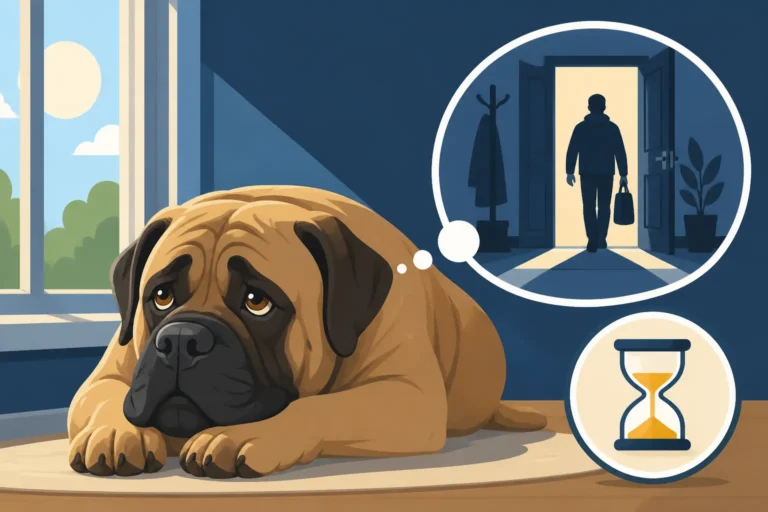
Many Mastiff owners affectionately refer to their dogs as "Velcro dogs," and for good reason. These gentle giants often want to be wherever you are, even if it means just snoozing at your feet while you work, cook, or relax. This isn't just a cute quirk; it's a fundamental aspect of their breed character. They are inherently bonded to their family and derive comfort and security from your presence. When you're gone for many hours, this innate need for closeness can be a real struggle for them. Imagine being a creature designed for companionship, suddenly left in a quiet house for eight to ten hours a day. It can lead to feelings of isolation that manifest in various ways, not all of them ideal for your furniture or your peace of mind.
For a full-time worker, this means acknowledging that your Mastiff won't simply entertain itself quietly all day. They are not independent like some breeds, preferring solitude. Instead, they thrive on interaction, even if it's just a shared space. Without sufficient human interaction, that beautiful, gentle nature can begin to fray, leading to a dog that feels anxious or bored. It's a critical factor to weigh when considering How Many Hours a Mastiff Can Be Left alone.
Addressing Separation Anxiety Risks
Because of their strong bond and desire for companionship, Mastiffs can be particularly prone to separation anxiety. This isn't just about a dog missing you; it's a genuine panic response when left alone. Symptoms can range from mild whining and pacing to destructive chewing, inappropriate urination or defecation, excessive barking, or even self-harm. These behaviors are not acts of defiance; they are expressions of profound distress. A Mastiff, even a fully grown one weighing over 150 pounds, can cause significant damage if experiencing true anxiety. They might chew through door frames, scratch at floors, or even ingest items that lead to expensive vet visits.
Preventing separation anxiety requires proactive steps from the moment you bring your Mastiff home. It means teaching them that being alone can be a calm, positive experience, starting with very short periods and gradually increasing the duration. It also involves providing adequate mental stimulation and comfort items. For a full-time worker, the challenge is that these preventative measures are often time-intensive and require consistent effort, especially during the crucial puppy stage. If you can't dedicate this time, you're setting both yourself and your Mastiff up for a potentially difficult road, leading to significant stress for everyone involved. Separation Anxiety in a Mastiff is a serious concern that demands attention.
The Importance of Early Socialization and Training
Bringing home a Mastiff puppy is an exciting time, but for a full-time worker, it’s also a period that demands immense dedication. That tiny, adorable fluff-ball will very quickly become a massive, powerful dog. The foundation for a well-adjusted adult Mastiff is laid during these early weeks and months, and it requires consistent presence and guidance. You’re not just training a dog; you’re raising a gentle giant who needs to understand its place in the world and how to interact appropriately with people and other animals.
Early socialization means exposing your puppy to a wide variety of sights, sounds, people, and experiences in a positive and controlled manner. This helps them develop into confident, well-rounded adults who aren't easily startled or fearful. If you're at work all day, who is providing these critical experiences during the prime socialization window? Missing this window can result in a Mastiff who is shy, fearful, or even reactive, which, combined with their immense size, can become a management nightmare. A two-hundred-pound dog who is unsure of strangers or other dogs can be incredibly challenging to handle.
Similarly, basic obedience training needs to start immediately. Potty training, leash manners, basic cues like "sit," "stay," and "come" – these are non-negotiable for a breed of this size. You need to be able to control your Mastiff before it outweighs you, a milestone that comes surprisingly quickly. This means consistent training sessions, reinforcement throughout the day, and immediate correction of undesirable behaviors. If you're only home for a few hours in the evening, are you realistically able to provide the intensive, consistent training a Mastiff puppy needs to develop into a well-behaved adult? Think about The First Year With a Mastiff Puppy That Doubles in Size and how quickly they grow beyond easy management.
Managing a Mastiff's Schedule as a Full-Time Worker
The reality of a 9-to-5 (or longer) workday means your Mastiff will spend a significant portion of its waking hours without you. This requires careful planning to ensure their physical and mental needs are met, preventing boredom, loneliness, and potential behavioral issues.
The Puppy Phase: A Critical Window
Let's be brutally honest: the Mastiff puppy phase is incredibly demanding, and it's particularly challenging for a full-time worker without significant external support. A young Mastiff puppy needs to go outside very frequently – every hour or two, especially after waking, eating, and playing. Expecting a tiny puppy to hold it for 8-10 hours is not only unrealistic but also detrimental to successful house training. You'll likely end up with messes, frustration, and a puppy that struggles to learn where it's appropriate to relieve itself.
Beyond potty breaks, puppies need short, frequent bursts of interaction, play, and training throughout the day. This is how they learn about their world and bond with their humans. If you're not there, who is? Crate training is often recommended for safety and house training, but a puppy cannot be crated for an entire workday. They need breaks, food, water, and mental stimulation. Leaving a Mastiff puppy unsupervised for long stretches can lead to destructive chewing out of boredom or anxiety, potentially ingesting dangerous objects. This early period is also when you're working on Teaching a Mastiff Before It Outweighs You, establishing good habits before they become too large to manage.
Consider this table outlining the stark differences in needs between a Mastiff puppy and an adult when you're working full-time:
| Need / Stage | Mastiff Puppy (8 weeks – 6 months) | Adult Mastiff (2 years +) |
|---|---|---|
| Potty Breaks | Every 1-2 hours (critical for house training) | 3-4 times a day (can hold it longer, but frequent is better) |
| Human Interaction | Near-constant, short bursts of play, training, cuddles | Appreciates presence, comfortable napping near you, moderate play |
| Mental Stimulation | Essential for development, puzzle toys, new experiences | Still important, puzzle toys, short training sessions |
| Exercise Needs | Very minimal, short gentle walks only | Moderate, 1-2 moderate walks per day |
| Training Needs | Intensive, foundational obedience, socialization | Reinforcement, maintenance, occasional new skills |
| Independence | Low, easily distressed when alone | Moderate, can cope with alone time if well-adjusted |
| Destructive Risk | High due to teething, boredom, anxiety | Moderate, usually linked to boredom or separation anxiety |
Adult Mastiffs and Their Daily Routine
Once a Mastiff is fully grown and well-adjusted, their routine can be a bit more flexible, but they still require attention. They don't need intense exercise like some high-energy breeds; in fact, over-exercising a Mastiff, especially when young, can be detrimental to their joints. Why One Hour a Day Is Enough for a Mastiff is a good rule of thumb, often broken into two shorter walks. However, "one hour" doesn't mean you can just tack it onto the end of an 8-hour workday and expect them to be fine. They still need mental stimulation throughout the day.
A common misconception is that because Mastiffs are "lazy," they can just lie around all day unsupervised. While they are certainly prone to napping, prolonged periods of inactivity and solitude can still lead to boredom and frustration. Imagine being confined to the same space day in and day out with nothing to do. Even a Mastiff, with its calm disposition, will eventually seek out its own entertainment, which might involve chewing on inappropriate items or becoming listless. They are still sentient beings who need engagement and a break in their day.
This means that even for an adult Mastiff, you'll need a plan for midday breaks, even if it's just a potty break and a quick stretch. Relying solely on your return after eight or nine hours can still be too long, especially as they age or if they have any health issues. Their size also means that simple tasks, like getting up and down, can be harder, making a long wait for a potty break more uncomfortable than it would be for a smaller, more agile dog.
Balancing Exercise and Mental Stimulation
For a full-time worker, ensuring your Mastiff gets enough appropriate exercise and mental stimulation is crucial. Physical exercise for a Mastiff should be moderate. Two short, leashed walks a day are generally sufficient, totaling around an hour. But remember, puppies are different; The Mastiff Puppy You Are Not Allowed to Exercise too hard. Over-exertion can damage their developing joints, leading to issues like hip and elbow dysplasia later in life. So, it's not about running them ragged; it's about consistent, gentle movement.
Mental stimulation is just as, if not more, important. A bored Mastiff can be a destructive Mastiff, regardless of how much physical exercise they get. This is where puzzle toys, treat-dispensing toys, and short training sessions come into play. These activities engage their minds and help prevent boredom-related behaviors. For a worker, this means investing in high-quality, durable toys that can stand up to a Mastiff's powerful jaws. Brands found on platforms like Amazon offer a wide range of interactive feeders and puzzle toys that can keep a Mastiff occupied for short periods.
However, these tools are not substitutes for human interaction. They are aids. A Mastiff still needs human engagement. Even 15 minutes of dedicated training or play when you get home can make a huge difference. Without this balance, even the calmest Mastiff can become restless or withdrawn, impacting their overall well-being. Think about a game of "find the treat" or a short review of basic commands. These small efforts build a stronger bond and keep their minds active.
Practical Strategies for Full-Time Mastiff Owners
If you're a full-time worker and truly committed to providing a loving home for a Mastiff, it's absolutely possible – but it requires foresight, financial commitment, and a strong support system. You can't just hope for the best; you need a solid plan.
Leveraging Support Systems
One of the most effective strategies is to build a robust support network. This might include:
- Professional Dog Walkers/Sitters: Hiring a reliable dog walker to come in midday is almost non-negotiable for a Mastiff puppy and highly recommended for adults. This provides a much-needed potty break, a stretch of the legs, and a dose of human interaction. Look for professionals experienced with giant breeds, as managing a Mastiff on a leash requires strength and confidence. Services like Rover or local dog walking companies often have experienced individuals.
- Doggy Daycare (Carefully Chosen): While not all Mastiffs are suited for a bustling daycare environment, some do well in facilities that offer separate areas for larger, calmer dogs. Ensure the facility is well-staffed, understands giant breed needs (like monitoring for overheating and appropriate play), and has a suitable setup. This can provide socialization and supervision for a few days a week. However, keep in mind Mastiffs are not typically "dog park" dogs due to their size and potential for accidental injury to smaller dogs.
- Friends, Family, or Neighbors: If you have trusted individuals nearby who are willing and able to pop in for a quick visit, a potty break, or even a short play session, this can be invaluable. This informal support can bridge the gap when professional services aren't feasible every day. Just make sure they are comfortable and capable of handling a dog of your Mastiff's size.
- Online Training Resources: Even if you can't be home all day, you can still dedicate your evenings and weekends to consistent training. Programs like BAXTER & Bella offer online puppy training courses that provide structure and guidance, allowing you to work at your own pace around your schedule. This can be a great supplement to any professional training you might pursue, helping you to stay consistent with cues and manners.
These support systems come with a cost, but they are essential investments in your Mastiff's well-being and your peace of mind. Skimping here can lead to behavioral problems that are far more expensive and heartbreaking to address down the line.
Smart Home Solutions and Enrichment
Technology and smart choices in enrichment can play a significant role in making your Mastiff's alone time more bearable.
- Pet Cameras: A Wi-Fi enabled pet camera allows you to check in on your Mastiff throughout the day. Many models, readily available on Amazon, offer two-way audio, so you can speak to your dog, or even toss treats remotely. This can be reassuring for both of you and helps you monitor for signs of distress or boredom.
- Automatic Feeders/Water Fountains: While a Mastiff doesn't need to be fed constantly, an automatic feeder can dispense a small portion of kibble as a puzzle or treat during the day, breaking up the monotony. Elevated slow-feeder bowls are also great for encouraging slower eating and can be found easily. Large capacity water fountains ensure fresh, circulating water is always available, encouraging hydration and preventing the water from becoming stagnant.
- Chew Toys and Puzzle Toys: Invest in a variety of durable, safe chew toys designed for giant breeds. Rotate them regularly to keep things interesting. Kong toys stuffed with frozen peanut butter or wet food can keep a Mastiff occupied for a good chunk of time. LickiMats are also excellent for calming and providing extended mental engagement. Again, Amazon is a treasure trove for finding these types of durable items suitable for a Mastiff's powerful jaws.
- Comfort Items: Leaving a piece of your unwashed clothing can provide comfort due to your scent. A comfortable, supportive orthopedic bed is also crucial for a Mastiff, especially if they're lying around for extended periods. These dogs need proper support for their heavy joints.
These tools are not a replacement for human interaction, but they can significantly improve the quality of your Mastiff's time alone, turning what could be a long, boring stretch into a series of mini-engagements.
Financial Realities of External Support
It's important to be realistic about the financial implications of owning a Mastiff as a full-time worker. All the wonderful support systems and smart home solutions we've discussed come with a price tag, and for a giant breed, those prices are often higher.
Consider the ongoing costs:
- Dog Walker/Pet Sitter: Weekly costs for a professional to visit once a day can add up significantly over a year. If you need multiple visits or longer sessions, the costs increase.
- Doggy Daycare: Per-day rates for daycare can be substantial, especially for facilities catering to large breeds with specialized needs.
- High-Quality Enrichment: Durable chew toys, puzzle feeders, and robust pet tech gear are investments. You might find you're replacing beds or toys more frequently than with a smaller dog because of their sheer size and strength.
- Veterinary Care: While not directly tied to your work schedule, remember that the cost of veterinary care, including medications, anesthesia, and even preventive treatments, is significantly higher for a Mastiff due to their weight. What a Mastiff's Weight Does to Every Line on the Vet Invoice is a very real concern, and these costs can compound if behavioral issues arise from lack of adequate care during the day.
Being a full-time worker with a Mastiff is entirely doable, but it demands a conscious decision to allocate resources – both time and money – to ensure your gentle giant leads a happy, well-adjusted life. It's about proactive planning, not reactive problem-solving. If you're honest with yourself about these commitments, then the joy and companionship a Mastiff brings can truly enrich your life, even with a busy schedule.
Disclaimer
This article is for general informational purposes only and does not constitute professional advice. Laws, prices and regulations vary by location and change over time. Consult a qualified professional for guidance on your specific situation.