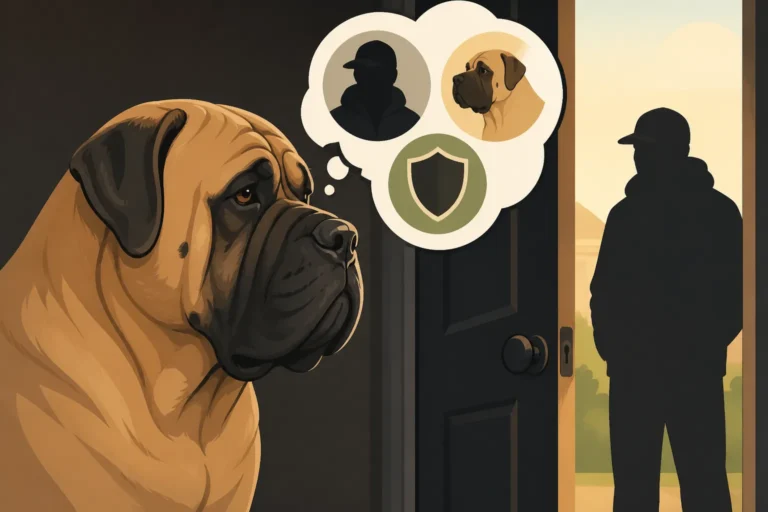
Whether a Mastiff Reads Its Owner’s Mood
It’s a common scenario for Mastiff owners: you walk in the door after a truly awful day, perhaps feeling defeated, frustrated, or just plain sad. Before you even utter a word, your big, gentle giant seems to know. They might lean into you more, offer a soft nudge, or simply lay their head on your lap with an intensity that suggests they're absorbing your emotional state. This guide will delve into whether Mastiffs genuinely read our moods, how their incredible sensitivity manifests, and what this means for fostering a stronger, more harmonious bond with your beloved companion.
The Mastiff's Empathic Nature: More Than Just a Big Dog
Anyone who lives with a Mastiff knows they are far more than just enormous, lumbering figures. They possess an incredible depth of character and a remarkable sensitivity that often surprises people who are unfamiliar with the breed. While we can’t scientifically prove that dogs understand complex human emotions in the same way another human might, Mastiffs are masters at picking up on subtle cues that betray our internal state. This isn't just wishful thinking from a devoted owner; there's a real basis for their perceptive abilities.
It's easy to dismiss a dog's reaction as mere coincidence, but with a Mastiff, it's different. They are often described as "nanny dogs" due to their calm demeanor and protective instincts, especially around children. This protective nature often extends to sensing distress in their human family members, making them remarkably attuned to shifts in the household atmosphere. Their sheer size and presence amplify their subtle responses, making their concern impossible to ignore when they choose to express it. This innate capacity for empathy is part of what makes them such incredible companions, but it also places a unique responsibility on us to be mindful of our own emotional output.
The Subtle Cues a Mastiff Picks Up
Your Mastiff isn't reading your mind, but they are incredibly adept at reading your body. Think about how much information you convey without speaking: the slump of your shoulders, the tension in your jaw, the speed of your movements, the cadence of your breathing. All of these are signals your Mastiff is constantly processing. A sudden change in your routine, a hushed tone of voice, or even the way you close a door can be interpreted by your sensitive companion.
For example, if you typically greet your Mastiff with enthusiasm, a day when you walk in quietly, head down, and immediately sit on the sofa could signal distress. Your Mastiff notices the difference. They observe your facial expressions – the tightened brows, the lack of a smile, the averted gaze. They pick up on vocal changes, too; a quiet sigh, a sharp tone, or a trembling voice all carry meaning for them. They also register your scent. Our bodies release different chemical signals, or pheromones, when we're stressed or upset, and a dog's incredible nose can detect these changes. It's a full-sensory experience for them, and they piece these various cues together to form a comprehensive picture of your current state. This is why The Sensitivity Nobody Expects in a Two Hundred Pound Mastiff is so important to understand.
How Their Bond Influences Their Perception
The deep, unwavering bond you share with your Mastiff plays a crucial role in their ability to "read" your mood. Unlike a casual acquaintance, your Mastiff lives with you, observes you daily, and has an intimate understanding of your baseline behavior. They know your quirks, your routines, and your typical emotional patterns. When something deviates from the norm, it stands out like a sore thumb to them.
This bond is built on trust and mutual affection, meaning your emotional well-being is intrinsically linked to theirs. If their primary human is upset or anxious, it can create an unsettling environment for them, triggering their own sense of unease. They want to be close to you, to offer comfort, and sometimes even to "fix" whatever is wrong. This isn't just instinct; it's a testament to the powerful connection that develops between a Mastiff and their family. Their entire world often revolves around their people, and any disruption to their person's emotional equilibrium can profoundly affect them. They don't just notice; they often internalize and react.
Recognizing Your Own Emotional Impact on Your Mastiff
It’s easy to forget that our colossal companions are also deeply connected to our emotional states. While a Mastiff might seem unflappable due to their size and stoic appearance, they are incredibly impressionable. The way we carry ourselves, the tone of our voice, and the stress we carry can all ripple down to them, sometimes in ways we don't anticipate. Understanding this dynamic is key to nurturing a balanced and secure Mastiff.
Many owners, myself included, have had those moments where you’re trying to hide a bad day, only for your Mastiff to come over, nudge your hand, and simply be there. It’s comforting, but also a stark reminder that they’re absorbing your energy. Their reaction isn't always about trying to cheer you up; sometimes it's about processing their own response to your distress. They might become restless, withdraw, or even display subtle signs of anxiety themselves if your emotional state is consistently turbulent.
When Your Stress Becomes Their Stress
Your stress can absolutely become your Mastiff's stress. Imagine living with someone who is constantly tense, irritable, or unpredictable. Even if they don't direct that energy at you, the general atmosphere can be unsettling. Dogs, and especially sensitive breeds like Mastiffs, thrive on routine and a sense of calm. When their human's emotional landscape is turbulent, it can shake their own sense of security. They might not understand why you're stressed, but they certainly register the shift in your energy.
This can manifest in various ways for your Mastiff. Some might become more clingy, constantly seeking reassurance. Others might become a bit withdrawn, finding a quiet corner to observe from. You might notice changes in their appetite, sleep patterns, or even house-training habits if they are particularly distressed. A Mastiff prone to separation anxiety might have their symptoms exacerbated if their owner is visibly anxious before leaving the house. Separation Anxiety in a Mastiff is a serious concern, and an owner's stress can definitely contribute to it. Being mindful of the energy you bring into the home is not just good for you; it's vital for your Mastiff's emotional well-being.
The Mastiff's Reaction to Conflicting Emotions
Sometimes, our emotions can be a jumbled mess, and a Mastiff can definitely pick up on those conflicting signals. For instance, you might be outwardly cheerful, trying to put on a brave face, but your internal stress is still simmering. Your Mastiff might be confused by the discrepancy between your upbeat tone and your tense body language or the scent of stress chemicals. This can be more disorienting for them than a clear display of sadness or anger.
Consider a scenario where you're trying to be patient with a Mastiff puppy who's just had an accident, but you're internally seething from a tough day. Your voice might be calm, but your movements are stiff, and your facial expression is tight. The puppy, still learning, might react to the underlying tension rather than your calm words, potentially becoming more hesitant or fearful. This is why consistency, not just in commands but in your emotional delivery, is so crucial, especially when you are Teaching a Mastiff Before It Outweighs You. Mastiffs are big, but their feelings are delicate, and Why Harsh Correction Ruins a Mastiff is a testament to their deep sensitivity. They need clear, consistent guidance that aligns with your true emotional state as much as possible.
Practical Steps for a Harmonious Emotional Environment
Understanding that your Mastiff is a mood magnet means taking proactive steps to create an emotionally stable home. This isn't about pretending to be happy all the time, which is unrealistic and unhealthy for you. Instead, it's about developing strategies to manage your own emotional responses and provide your Mastiff with the security they need to thrive, regardless of life's inevitable ups and downs.
It’s a two-way street; by helping your Mastiff feel secure and understood, you often find a sense of calm returning to yourself. Our Mastiffs offer us so much unconditional love and comfort, and making their world as emotionally stable as possible is one of the best ways we can reciprocate that devotion. Remember, these are dogs who will How a Mastiff Sulks After Being Told Off, so their emotional landscape is rich and deserves respect.
Creating a Stable Routine for Emotional Security
One of the most powerful tools for managing a Mastiff's emotional well-being is a consistent routine. Dogs, particularly large and sensitive breeds, find immense comfort in predictability. Knowing when they'll eat, when they'll go out, and when they'll get attention helps to reduce anxiety and creates a framework of security, even if your personal mood is fluctuating. This forms the foundation of What a Mastiff Needs Every Day.
For instance, aim for regular feeding times, consistent walk schedules, and predictable periods of play and rest. Even if you've had a difficult day, sticking to these anchors can signal to your Mastiff that despite your emotional state, the world around them remains stable and safe. If your routine does have to change, try to introduce it gradually and with as much positive association as possible. Providing mentally stimulating activities, like puzzle toys found on Amazon, can also help keep their minds engaged and reduce focus on any perceived changes in your demeanor. A predictable environment fosters a confident Mastiff, and a confident Mastiff is better equipped to handle variations in your mood.
Using Positive Reinforcement to Build Confidence
Positive reinforcement isn't just for teaching commands; it's a profound way to build your Mastiff's confidence and emotional resilience. When you consistently reward desired behaviors and create positive associations, you're building a reservoir of trust and good feelings. This means that even if you're having an off day, your interactions with your Mastiff can still reinforce that positive bond. Remember, What Actually Motivates a Mastiff is often praise and a gentle touch as much as treats.
Instead of reacting negatively when your Mastiff picks up on your stress and perhaps gets clingy or restless, try to redirect them gently with a familiar, positive command. "Go to your bed," followed by a treat, reinforces a calm behavior. Engaging in short, fun training sessions, even when you're distracted, can also be beneficial. Many online training platforms, like BAXTER & Bella, offer comprehensive positive reinforcement programs that can help you and your Mastiff navigate various situations, strengthening your bond and his confidence. This consistent positive interaction helps your Mastiff associate you and their home environment with good things, regardless of your momentary emotional state. Whether Positive Training Alone Works on a Mastiff is a question many owners ask, but for a Mastiff's sensitive nature, it's often the most effective and gentle path.
Misinterpreting a Mastiff's "Reading" of Your Mood
While Mastiffs are undoubtedly perceptive and sensitive, it’s also important to avoid anthropomorphizing their reactions too much. Attributing complex human emotions and motivations to them can sometimes lead to misunderstandings or unrealistic expectations. Their responses, while seemingly profound, are often based on a dog’s unique way of processing the world around them – a world of scents, sounds, and body language, rather than abstract thought.
It's natural to want to believe our dogs understand us on a deeply personal level, and in many ways, they do. However, their "reading" of our mood is often a masterful interpretation of signals, not necessarily a nuanced grasp of the why behind our feelings. Understanding this distinction can help us respond more effectively to their behavior and avoid projecting our own emotional complexities onto them, which can sometimes hinder clear communication and effective training.
Body Language vs. True Emotional Understanding
Your Mastiff's reaction to your mood is primarily driven by their interpretation of your body language, tone of voice, and even your scent. They are brilliant at pattern recognition. If a slumped posture and quiet voice consistently precede a lack of play or a sad atmosphere, they learn to associate those cues with a negative shift. This is sophisticated observation, but it’s not necessarily the same as understanding the intricate emotional narrative playing out in your head.
They respond to the observable effects of your mood – the tightness in your shoulders, the speed of your stride, the way you sigh – rather than comprehending the specific reasons you might be feeling anxious about a work deadline or mourning a loss. Their comfort-seeking or withdrawn behavior is a response to these external signals, designed to either alleviate the tension they perceive or to protect themselves from an unstable environment. This is why Whether Raising Your Voice Sets a Mastiff Back is such a critical consideration; they don't necessarily understand your anger, but they certainly react to the heightened tone and aggressive posture.
When a Mastiff Reacts to Tone, Not Just Emotion
It's common for a Mastiff to react strongly to changes in vocal tone, even if the underlying emotion isn't something they fully grasp. A sharp, loud voice can be startling and perceived as a threat, regardless of whether you're angry or just frustrated. Conversely, a soft, soothing tone can be calming, even if you're feeling down. This is particularly true when giving commands; consistency in tone helps them understand what's expected.
Consider a scenario where you trip and let out a startled yelp. Your Mastiff might jump up, looking concerned or even distressed, not because they understand your momentary pain, but because the sudden, high-pitched noise was alarming and signaled an abrupt change in your usual vocalizations. They react to the sound and the perceived disruption. Similarly, if you are quietly crying, your Mastiff might respond to the soft, broken sounds and the quietness, perhaps approaching to nudge you or lay their head in your lap. They are responding to the acoustic and visual cues of distress, and their instinct is to offer comfort or seek reassurance themselves. It's a beautiful aspect of their nature, but it's important to differentiate this from a human-like understanding of complex feelings.
Understanding Your Mastiff's Connection to Your Well-being
| Human Mood Indicator | Mastiff Perception | Common Mastiff Reaction | Why They Respond That Way |
|---|---|---|---|
| Sadness/Low Energy | Slumped posture, quiet voice, lack of usual interaction | Nudging, leaning, lying close, soft sighs, resting head on lap, reduced playfulness | Instinct to offer comfort, seek proximity, or mirror the low energy, responding to quiet cues and lack of engagement. |
| Stress/Anxiety | Tense body, hurried movements, sharp voice, new scents | Increased vigilance, pacing, seeking reassurance, clinginess, yawning, lip-licking | Sensing a shift in the environment, picking up on physiological changes (scent, heart rate), interpreting tension as a potential threat or instability. |
| Anger/Frustration | Loud voice, sudden movements, stiff posture, intense gaze | Retreating, avoiding eye contact, tail tucked, becoming still, or attempting to appease | Perceiving a threat or negative energy directed at them or the environment, leading to avoidance or appeasement behaviors to de-escalate. |
| Happiness/Excitement | Upbeat voice, loose body language, smiling, playful cues | Tail wagging, playful bows, seeking attention, energetic greetings, bringing toys | Responding to positive vocalizations, open body language, and invitations to interact, aligning with their desire for joy and play. |
| Confusion/Uncertainty | Hesitation, erratic movements, questioning tone | Tilting head, observing intently, waiting for cues, or exhibiting slight anxiety | Relying on their owner for clear direction, uncertainty in cues can make them hesitant or unsure how to respond, leading to observational behaviors. |
Ultimately, your Mastiff is a profound observer of your habits and signals. They may not grasp the nuances of human emotion like a therapist, but they are masters at reading the outward manifestations of your inner world. Their deep connection to you means they are invested in your well-being, and their reactions are often an attempt to respond to the environment you create – whether that's offering comfort, seeking reassurance, or simply mirroring the energy in the room. By being mindful of our own moods and providing a stable, loving environment, we can support these magnificent, sensitive souls in thriving right by our side.
Disclaimer
This article is for general informational purposes only and does not constitute professional advice. Laws, prices and regulations vary by location and change over time. Consult a qualified professional for guidance on your specific situation.