Whether Raising Your Voice Sets a Mastiff Back
It's incredibly frustrating when your gentle giant, your beloved Mastiff, seems to just completely tune you out, especially when you're trying to communicate something important. You might find yourself naturally raising your voice, hoping to cut through the apparent stubbornness, only to wonder if you're actually doing more harm than good. This guide will delve into the profound impact your vocal tone can have on your Mastiff's training and emotional well-being, and offer practical, kinder alternatives that truly get through to them.
Understanding the Mastiff's Unique Temperament and How They Perceive Tone
Many people might look at a Mastiff's immense size and assume they're thick-skinned, maybe even a bit oblivious to subtle cues. After all, they’re often described as formidable guardians. However, this couldn't be further from the truth. Mastiffs, despite their imposing stature, are inherently sensitive souls. They are incredibly attuned to the emotional atmosphere in their home and the nuances of their owner's voice and body language. They're not just listening to the words you say; they're feeling the intention behind them.
More Than Just a Deep Bark
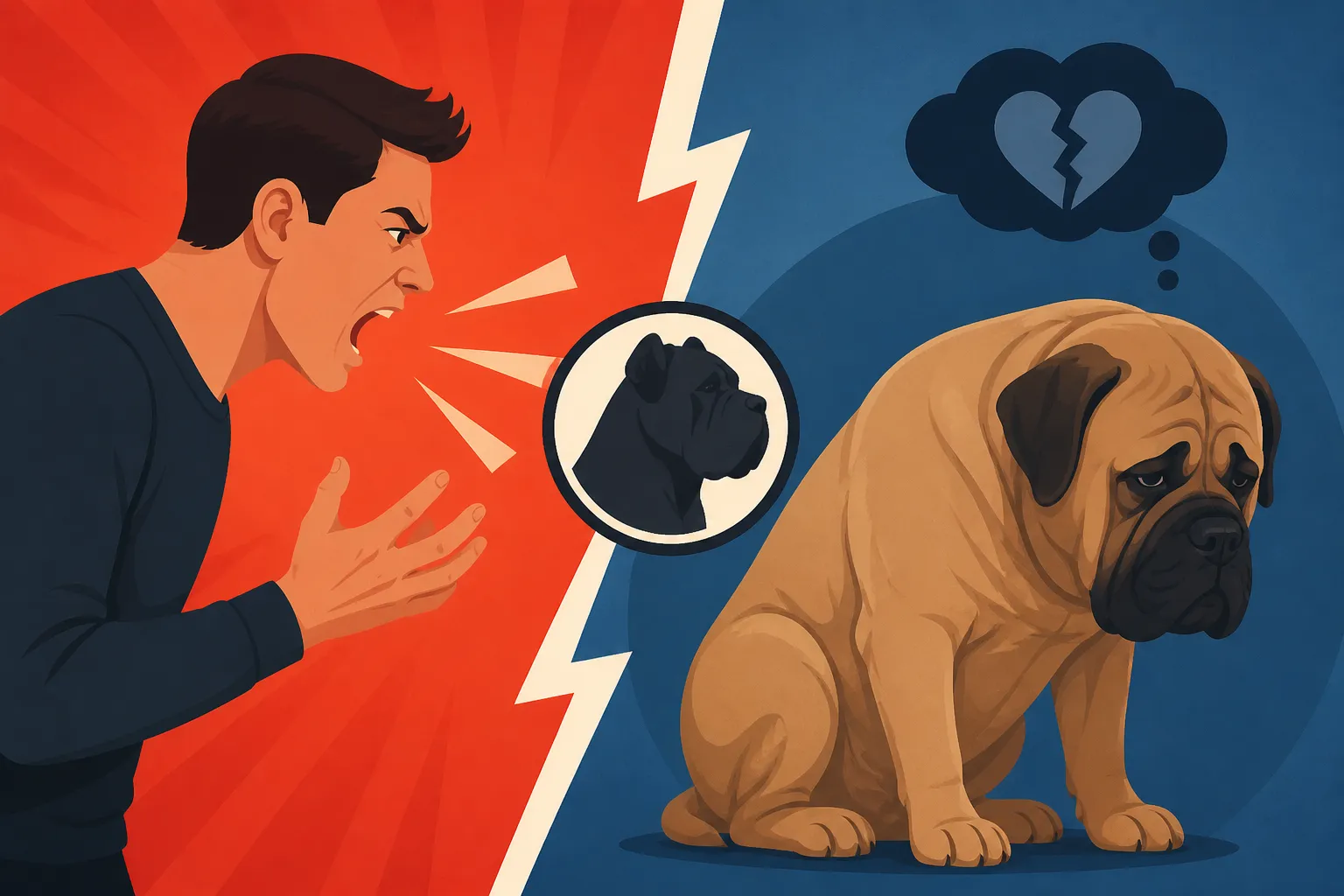
Their barks might be deep and resonant, designed to deter, but their inner world is surprisingly delicate. This isn't a breed that thrives on harsh words or loud, angry tones. Historically, Mastiffs were bred to be watchful protectors, observing their environment and reacting with measured thoughtfulness, not impulsive aggression. This inherent thoughtfulness translates into a deep sensitivity to human emotions. When you raise your voice, a Mastiff doesn't necessarily interpret it as a command; they often perceive it as distress or anger directed at them, which can be genuinely upsetting for them. Think of it from their perspective: their favorite human, their rock, is suddenly sounding loud and upset. This can lead to confusion, anxiety, and a desire to retreat, rather than to comply. They want to please you, but fear or discomfort can override that instinct. This isn't stubbornness, it's often a deeply emotional reaction. The Sensitivity Nobody Expects in a Two Hundred Pound Mastiff explores this further.
Why Your Tone is More Potent Than Your Words
For a Mastiff, the how you say something often trumps the what you say. They are master readers of non-verbal cues. A sudden, loud, or angry tone can immediately put up a wall between you and your dog. It's like trying to have a nuanced conversation with someone who is shouting at you; you're more likely to shut down or become defensive than to engage constructively. This sensitivity means that consistent, calm, and clear communication is paramount. If your voice is regularly sharp or elevated, your Mastiff might learn to associate your presence or commands with an unpleasant experience, leading to avoidance or a general reluctance to engage. They learn to dread the sound, rather than understand the meaning behind it.
The Detrimental Effects of a Raised Voice on Mastiff Training
While it's a natural human reaction to raise one's voice out of frustration, especially with a dog that seems to be ignoring you, it can have several counterproductive and damaging effects on your Mastiff's training and overall behavior.
Shutting Down and Apathy
One of the most common reactions you'll see from a Mastiff when subjected to a raised or angry voice is what we call "shutting down." This isn't defiance; it's often a coping mechanism. Your Mastiff might simply stop responding, turn away, or even lie down, giving the appearance of extreme stubbornness or disinterest. In reality, they're often overwhelmed, confused, or feeling punished. They've learned that attempting to engage leads to discomfort, so they cease trying. This can look like apathy, but it's really a withdrawal of cooperation. They simply want the unpleasant experience to end. Why Harsh Correction Ruins a Mastiff really gets into the nitty-gritty of this dynamic.
Instead of clarifying what you want, a loud voice often muddies the waters. Your Mastiff might associate the command itself with the negative tone, rather than the action. If you yell "Sit!" every time they're being rambunctious, they might start to think "Sit" means "owner is angry," rather than "put your bottom on the floor." This makes it much harder to teach new commands and reinforce existing ones. Over time, their enthusiasm for training sessions, and even for interacting with you, can diminish significantly. They might start avoiding eye contact or moving away when you approach, especially if they anticipate a scolding.
Eroding Trust and Confidence
A strong, trusting bond is the cornerstone of a successful relationship with any dog, but it's especially vital with a breed as large and potentially powerful as a Mastiff. If your Mastiff perceives you as unpredictable or prone to sudden outbursts, that trust can quickly erode. They need to feel safe and secure with you as their leader. A raised voice can shatter that sense of security.
Imagine a Mastiff puppy, still learning the ropes of the world. If every mistake is met with a loud, startling noise from their human, they'll become hesitant to try new things. Their confidence will suffer, and a less confident Mastiff can become a more fearful Mastiff, which in rare cases can lead to defensive behaviors down the line. They learn to second-guess themselves and you. This isn't just about training commands; it's about their overall sense of well-being in your home. A Mastiff who is confident in their owner's consistent guidance is a much happier, more responsive dog. How a Mastiff Sulks After Being Told Off highlights just how deeply these interactions can affect them.
Increased Stubbornness or Anxiety
Paradoxically, yelling can actually increase the very behavior you're trying to stop. A Mastiff who is constantly yelled at might become more stubborn. They learn to tune out the noise because it's become background static associated with unpleasantness. Their colossal size means they are perfectly capable of ignoring you when they want to, and if your primary method of communication is yelling, they might decide it's simply not worth listening.
Alternatively, some Mastiffs might develop anxiety. They could become jumpy, constantly on edge, or even destructive as a way to cope with their stress. You might notice them pacing, panting excessively, or displaying displacement behaviors like licking their lips or yawning repeatedly. This isn't them being "bad"; it's a clear sign they're struggling emotionally. A truly anxious Mastiff is a challenge for any owner, and it's a state we want to avoid for these gentle giants.
Building a Positive Communication Foundation
Since raising your voice is so counterproductive, what's a Mastiff owner to do? The answer lies in consistently building a foundation of positive reinforcement and clear, calm communication. This takes patience, but the rewards are immeasurable.
The Power of a Calm, Confident Voice
Your Mastiff needs a leader who is calm, consistent, and confident. This doesn't mean you have to be silent, but it does mean being deliberate with your tone. Speak clearly, at a normal conversational volume for most commands. When you praise, use an enthusiastic but not piercingly loud voice. When you need to redirect or give a "no" command, keep your voice firm and low, rather than shrill or angry. This conveys seriousness without inducing fear or anxiety.
Consistency in your tone helps your Mastiff understand what different sounds mean. A consistent, happy tone for "good boy!" and a consistent, firm tone for "leave it" will quickly teach them the difference in meaning and expectation. Remember, Mastiffs are deliberate thinkers; they need time to process information. Give them that time, and they'll often surprise you with their understanding. What Actually Motivates a Mastiff often boils down to this positive, clear connection.
Positive Reinforcement: The Mastiff Motivator
Mastiffs respond beautifully to positive reinforcement. They thrive on praise, affection, and high-value treats. Instead of focusing on what they're doing wrong and raising your voice to correct it, focus on catching them doing things right. When they lie down calmly, reward them. When they come when called, throw a party! This builds a strong positive association with obeying commands and engaging with you.
Small, soft training treats work wonders, especially in the early stages. You can find excellent options on platforms like Amazon, from chewy liver bits to soft training sausages. The key is to make the reward immediate and meaningful. Pair the treat with verbal praise in that calm, enthusiastic tone. This makes training a fun game for your Mastiff, rather than a chore. Consider an online puppy program like BAXTER & Bella, which often emphasize positive, science-backed training methods that build trust rather than breaking it. These programs can guide you on how to best communicate with your Mastiff puppy from day one, ensuring you're setting them up for success without resorting to harsh corrections.
Here's a quick comparison of communication methods:
| Approach | Mastiff's Likely Interpretation | Impact on Training & Trust |
|---|---|---|
| Raised, Angry Voice | Owner is upset/angry, I'm in trouble | Causes fear, withdrawal, confusion, erodes trust, increases "stubbornness" |
| Sharp, Startling Loudness | Alarm, danger, sudden punishment | Leads to anxiety, avoidance, can trigger defensive reactions |
| Calm, Clear Command Voice | Owner is giving instruction, specific action needed | Builds understanding, encourages focus, fosters cooperation |
| Enthusiastic, Happy Praise | I did something right, owner is pleased | Reinforces desired behavior, builds confidence, strengthens bond |
| Low, Firm Redirecting Voice | Stop that, serious consequence (no fear) | Establishes boundaries without intimidation, maintains respect |
Short, Frequent Training Sessions
Mastiffs, while intelligent, aren't known for their endless enthusiasm for repetitive drills. They're more deliberate thinkers. Long, drawn-out training sessions can quickly bore or frustrate them. Instead, aim for short, frequent training bursts throughout the day – perhaps 5-10 minutes a few times a day. This keeps their attention, makes training feel like a fun game, and prevents them from getting overwhelmed.
During these sessions, maintain that calm, positive tone. If you feel your frustration building, it's time to take a break. Walk away, get a drink of water, and come back when you've recentered yourself. Your Mastiff will pick up on your mood, and if you're stressed, they'll become stressed too. Remember, How Many Repetitions a Mastiff Needs might be fewer than you think if the quality of those repetitions is high and positive.
Practical Steps for Effective, Calm Communication
It’s one thing to understand the theory, but quite another to implement it consistently, especially when your Mastiff is doing something they absolutely shouldn't be. Here are some actionable steps to help you maintain a calm, effective communication style.
Mastering Your Own Emotions
This is perhaps the hardest part for any dog owner. When your Mastiff is counter-surfing or refusing to move from the middle of a doorway, it's easy to feel a surge of annoyance. However, recognizing and managing your own frustration is key. Before you react, take a deep breath. Count to three. Ask yourself if raising your voice will actually achieve the desired outcome, or if it will simply make you feel better in the short term while confusing your dog.
It's helpful to remember that your Mastiff isn't deliberately trying to annoy you. They're either acting on instinct, haven't been properly trained for that specific scenario, or are simply being a Mastiff (which sometimes means being very deliberate and a little slow to respond). Frame their actions not as malicious, but as an opportunity to teach and guide with patience. This shift in mindset can drastically change how you interact with them. For deeper understanding, consider Whether a Mastiff Reads Its Owner's Mood and how that impacts their responses.
Setting Clear Expectations with Body Language
Your body language speaks volumes to your Mastiff. A confident, upright posture, direct eye contact (but not staring, which can be confrontational), and clear hand signals can reinforce your verbal commands without a single raised decibel. When you give a command like "stay," stand tall and use a clear hand signal. When you want them to "lie down," use a downward sweep of your hand.
Mastiffs are very physical dogs, and they understand boundaries. If you need to stop a behavior, a calm "no" paired with stepping into their space (not aggressively, but asserting your presence) can be more effective than yelling from across the room. They respond to a consistent presence. Teaching a Mastiff Before It Outweighs You really drives home the importance of establishing these clear, physical cues early on.
Utilizing Training Aids and Tools Wisely
While the focus is on your voice, appropriate training aids can support calm communication. A good quality, properly fitted harness or collar gives you control without needing to shout on walks. A long line, available on Amazon, can allow your Mastiff to explore while you practice recall with a calm voice, knowing you have a backup if they choose to ignore you. Puzzle toys can help redirect unwanted behaviors by engaging their minds quietly.
For more structured help, consider resources that advocate positive, gentle methods. BAXTER & Bella offers comprehensive online puppy training that provides a structured approach to communication. They focus on empowering you to teach your Mastiff effectively through positive reinforcement, making training a joyful experience for both of you, without the need for shouting or harsh corrections. Their approach can be particularly beneficial for those moments when you feel your patience wearing thin, providing alternative strategies.
When Frustration Hits: Take a Break
We've all been there. You're trying to teach your Mastiff something, and it's just not clicking. Your voice starts to climb, and you feel that familiar flush of irritation. This is your cue to disengage. It's far better to end a training session on a neutral note than on a negative one.
Walk away, put your Mastiff in their crate with a safe chew toy, or simply step into another room for a few minutes. Give yourself time to calm down. When you return, approach the situation with a fresh perspective and a renewed commitment to patience. This teaches your Mastiff that training is always a positive interaction, and it helps you avoid damaging the trust you've worked so hard to build. Remember, Whether a Mastiff Remembers a Bad Experience is a resounding yes, so always strive for positive interactions.
Ultimately, your Mastiff is a reflection of your leadership. By committing to calm, clear, and positive communication, you're not just training a well-behaved dog; you're nurturing a confident, trusting, and deeply bonded companion who will enrich your life in countless ways.
Disclaimer
This article is for general informational purposes only and does not constitute professional advice. Laws, prices and regulations vary by location and change over time. Consult a qualified professional for guidance on your specific situation.