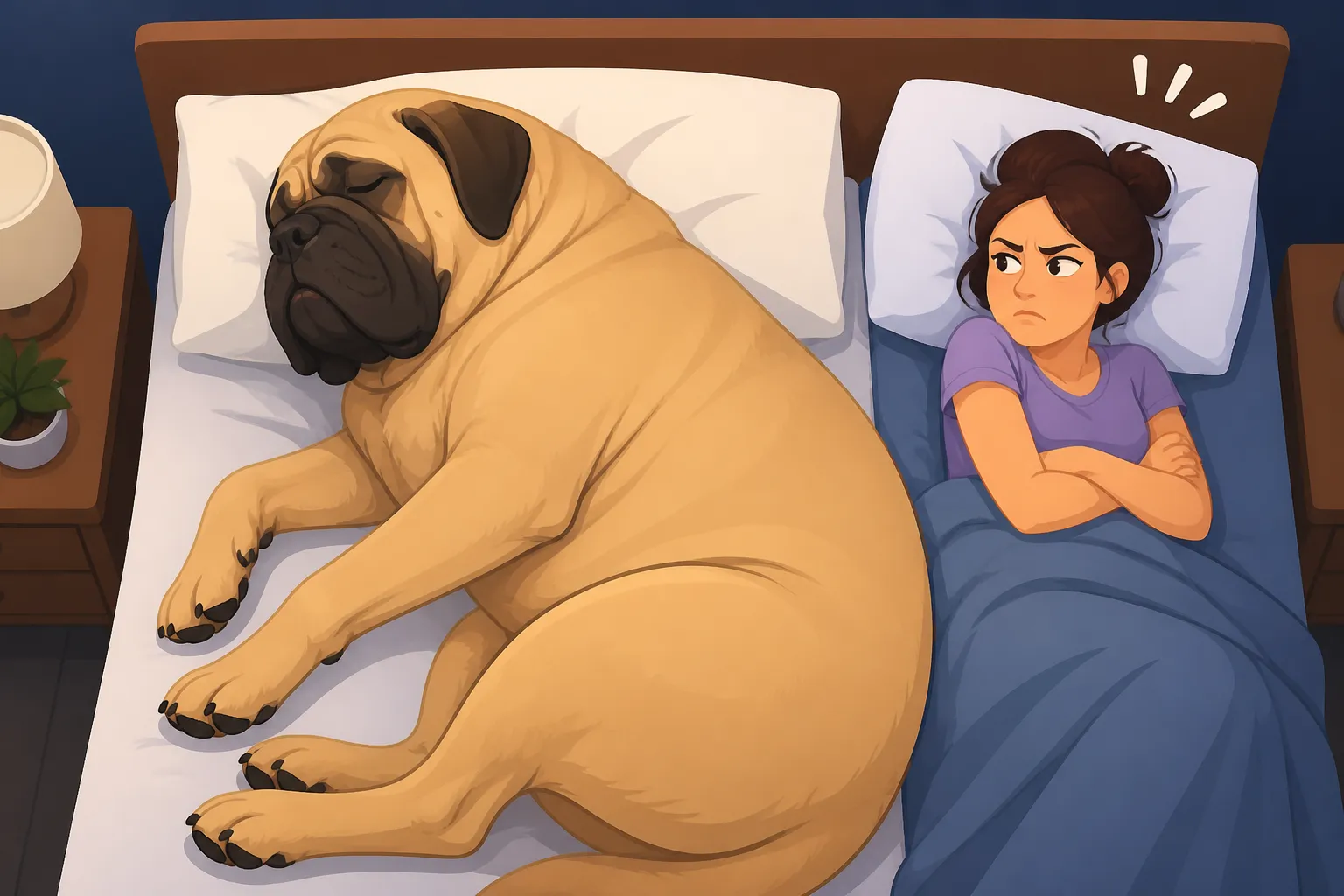
Whether a Mastiff Takes Up the Whole Bed
It's a common, almost humorous, fantasy for many dog lovers: cuddling up with their giant Mastiff in bed, envisioning a peaceful night's sleep. The reality, however, often involves waking up precariously balanced on the very edge of the mattress, a two-hundred-pound furry lump comfortably sprawled across the vast majority of the real estate. This guide will delve into the logistical and emotional considerations of sharing your bed with a Mastiff, offering insights and practical solutions to help both you and your gentle giant get a good night's rest.
The Reality of Sharing Your Bed with a Mastiff
Let's face it, the Mastiff isn't just a big dog; it's a massive dog. Their sheer presence, even when curled into a surprisingly compact ball, demands a significant portion of any bed. Many owners find themselves in a nightly wrestle for space, or resigning themselves to a sliver of mattress while their Mastiff enjoys the lion's share. It’s not just about their weight, which can be considerable, but their innate desire for comfort and, often, their need to be close to their human companions.
The Myth vs. The Mastiff's Actual Size
When people imagine a large dog, they often picture a Labrador or a German Shepherd. A Mastiff, however, exists on an entirely different scale. An adult male can easily weigh between 160-230 pounds, with some reaching even higher, while a female typically ranges from 120-170 pounds. How Much a Male Mastiff Weighs and How Much a Female Mastiff Weighs are questions many ponder, and the answer is usually "more than you think, especially when they're stretching out."
Imagine a creature the size of a small human, or even a large adult, that prefers to sleep horizontally, limbs splayed, sighing contentedly as you attempt to find a patch of un-dogged mattress. Their long bodies, heavy bones, and substantial paws mean that even when they appear "curled up," they still occupy a vast amount of surface area. A king-sized bed, which feels enormous for two humans, can quickly feel like a twin when a Mastiff decides it's their domain. It’s not aggression; it’s simply physics and comfort for them.
Why They Gravitate Towards Your Space
Mastiffs, despite their imposing size, are often deeply sensitive and affectionate creatures. They form incredibly strong bonds with their families and often seek physical closeness as a way to express and receive comfort. This isn't just a quirky habit; it’s part of their intrinsic nature. They are loyal guardians, but also gentle souls who thrive on companionship.
This desire for proximity means they will often follow you from room to room Whether a Mastiff Follows You Room to Room, and bedtime is no exception. For a Mastiff, being near their human is a source of security and contentment. They might not understand "personal space" in the human sense, but they certainly understand the warmth and comfort of your presence. This often translates to them trying to be as close as possible, which, on a bed, means sprawling out and taking up as much room as their large bodies dictate. It's their way of snuggling, albeit a very large, heavy way.
The Unexpected Weight and Sprawl Factor
It's one thing to intellectualize a Mastiff's size, and another to experience it nightly. Their weight isn't just a number; it's a force. When they lean, they lean. When they lay down, they seem to sink into the mattress, claiming it as their own. And then there's the sprawl. Mastiffs are not generally neat sleepers. They stretch, they roll, they sigh dramatically, and they occupy every available inch, often with surprising speed.
One moment you might have a reasonable amount of space, and the next, a massive paw is delicately resting on your head, or a warm, furry back is pressing you against the edge. It's less about them actively trying to push you out and more about their complete obliviousness to the concept of shared real estate when they are comfortable. Their deep chests, long legs, and weighty frames mean that even a slight shift in position can consume what little room you had left. This isn't usually done with malice, but with a blissful ignorance of your discomfort, highlighting The Sensitivity Nobody Expects in a Two Hundred Pound Mastiff in a different context – their own serene self-focus during slumber.
Navigating the Logistics of Co-Sleeping
So, you love your Mastiff and want them close. How do you make it work without sacrificing your own sleep or ending up with a permanent crick in your neck? It requires some strategic thinking, and sometimes, a little compromise. The goal is to maximize comfort for both species, recognizing that a Mastiff's needs are substantial.
Choosing the Right Bed Size for Human and Hound
This is perhaps the most critical logistical consideration. If you're currently trying to share a queen-sized bed with a Mastiff, you're likely fighting a losing battle. For true co-sleeping with a Mastiff, a king-sized bed is almost a necessity, and even then, it can be a tight squeeze. Some dedicated Mastiff owners even opt for California kings or custom-made extra-wide mattresses.
Think about it: a standard king is 76 inches wide. A Mastiff can easily take up 30-40 inches of that length when sprawled out. That leaves significantly less room for one or two humans. Consider the combined weight as well; your mattress needs to be robust enough to support hundreds of pounds night after night without sagging prematurely. Investing in a high-quality, firm mattress is paramount for your back and for the dog's joint health. Some owners even position their bed frame on risers to create extra space underneath for additional storage or to simply give the room a more open feel, but be careful with height, as getting on and off can be tough for older or arthritic Mastiffs.
Strategies for Reclaiming Your Personal Space
While you might accept your Mastiff in bed, you don't have to surrender all your personal space. One effective strategy is to create a "dog zone" on the bed. This could be a large, flat dog bed placed at the foot of your human bed or even a designated corner that you consistently direct your Mastiff to. You can make this spot extra appealing with a favorite blanket or a special dog-safe pillow.
Another tactic involves physical barriers. A body pillow placed strategically can help define boundaries. It won't stop a determined Mastiff entirely, but it can be a gentle reminder of where their space ends and yours begins. Consistency in training is vital here. If you consistently guide them to their spot, even if it's on the bed, they'll learn the routine. Some owners find success with teaching a "place" command that applies to their specific spot on the bed. For valuable training resources, platforms like BAXTER & Bella offer online puppy programs and resources that can help with early boundary setting, which is crucial for a dog that will eventually outweigh you.
Understanding Their Need for Proximity
It's important to remember why your Mastiff wants to be so close. They aren't trying to annoy you; they're seeking comfort and connection. Understanding this can help you find solutions that meet both your needs without alienating your loving companion. If sharing the bed entirely becomes too challenging, consider alternative sleeping arrangements that still provide proximity.
For instance, Whether a Mastiff Should Sleep in the Bedroom is a common question. Many Mastiff owners find that a large, comfortable dog bed right next to their human bed provides the best of both worlds. The Mastiff still gets to be in the same room, close enough to hear your breathing and feel secure, while you get your full mattress back. This arrangement often works wonderfully for Mastiffs who suffer from even mild separation anxiety or simply desire to be part of the "pack."
Alternative Sleeping Arrangements for a Giant Breed
Sometimes, despite the best intentions, sharing your bed with a Mastiff simply isn't sustainable for a good night's sleep. But that doesn't mean your Mastiff has to be banished to an isolated corner. There are plenty of ways to ensure they have a comfortable, secure place to rest that is still close to their beloved humans.
Dedicated Dog Beds: When Size Really Matters
A Mastiff needs a truly colossal dog bed, not just a "large" one from a standard pet store. We're talking about orthopedic, heavy-duty beds designed for giant breeds. These beds need to be large enough for your Mastiff to stretch out fully without limbs dangling off. Think about What a Bed That Holds a Mastiff Costs and What an Orthopedic Bed for a Mastiff Costs – these aren't cheap, but they are an investment in your dog's long-term health, particularly their joints.
These beds are typically made with dense memory foam or orthopedic foam to support their immense weight and prevent pressure sores and calluses, especially crucial as they age. Look for beds with removable, washable covers, as Mastiffs are prone to drooling and shedding. Brands available on platforms like Amazon offer a wide range of giant dog beds, allowing you to compare sizes, materials, and reviews to find one that truly fits your gentle giant. Some owners even buy two, creating Whether a Mastiff Needs Two Beds in different rooms so their Mastiff always has a comfortable spot near the family.
| Bed Type | Human Sleeping Capacity | Mastiff Comfort Level (on bed) | Key Considerations |
|---|---|---|---|
| Twin | 1 | Extremely Low (impossible) | Not an option for co-sleeping. |
| Full (Double) | 1-2 | Very Low | Humans will be pushed off. |
| Queen | 2 | Low (extremely cramped) | Challenging for humans to get sleep. |
| King | 2 | Medium (manageable with effort) | Most common compromise, still tight. |
| California King | 2 | Good | Better length, similar width to standard king. |
| Dedicated Giant Dog Bed | 0 (for dog only) | Excellent | Best for dog's comfort & owner's sleep. |
| Custom Oversize | 2 | Excellent | Expensive, but ideal for human + Mastiff. |
Crating Considerations for Comfort and Safety
While some might think crating is only for puppies, a properly sized crate can be a safe and comforting den for an adult Mastiff. It provides them with their own secure space, which can be invaluable for house training, managing separation anxiety, or simply offering a quiet retreat. However, for a Mastiff, "properly sized" means enormous.
A crate for a Mastiff will likely be one of the largest on the market, possibly a 54-inch or even larger, often needing to be an extra-heavy-duty model to withstand their weight and strength. Ensure it's large enough for them to stand up, turn around, and lie down comfortably. Fill it with soft bedding, like a thick orthopedic crate mat, to make it an inviting haven. The crate can be placed in your bedroom so your Mastiff still feels close to you, offering the security they crave without occupying your mattress. How Many Hours a Mastiff Can Be Left in a crate should be carefully considered, ensuring it's not for excessive periods.
Creating Their Own Cozy Corner
Beyond a traditional dog bed or crate, you can get creative in setting up a "Mastiff zone" in your home. This might involve a large, padded area in a living room corner, a designated space in a den, or even a converted walk-in closet if it's spacious and well-ventilated. The key is to make it their personal sanctuary, a place where they feel safe and comfortable.
Consider layering soft blankets and sturdy cushions. Some Mastiffs enjoy sleeping on cool tiles in warmer weather, while others prefer plush carpets. Adapt the space to your dog's individual preferences. The goal is to make this area so appealing that they willingly choose it over your bed, or at least as a primary alternative. This is especially useful for Caring for a Mastiff Past Five when joint issues might make jumping on and off human beds more difficult. By creating an attractive, easy-to-access sleeping spot, you're not only fostering their independence but also safeguarding their physical well-being.
Training Your Mastiff for Better Bed Manners
Whether you decide to allow your Mastiff on the bed or prefer them to have their own dedicated sleeping space, consistent training is crucial. A Mastiff, even a young one, will quickly learn what's allowed and what's not. Given their future size, it's always easier to set boundaries early. The First Year With a Mastiff Puppy That Doubles in Size is the critical window for establishing these habits.
Establishing Boundaries from the Start
If you don't want your Mastiff on the bed, it's vital to enforce this rule from the very first day. It's much harder to un-train a behavior than to prevent it from forming. If they jump on the bed, gently but firmly redirect them to their own dog bed or crate. Reward them generously when they settle in their designated spot. Positive reinforcement is key; scolding or punishment is rarely effective with Mastiffs and can damage your bond.
If you do want them on the bed but only in a certain spot, or after an invitation, teach them a specific cue. For example, "bed up" might mean they're allowed, and "off" means they need to get down. Make sure everyone in the household adheres to the same rules to avoid confusion for your Mastiff. For comprehensive guidance on setting these early boundaries, online training resources, like those from BAXTER & Bella, can be incredibly helpful for new Mastiff owners trying to Teaching a Mastiff Before It Outweighs You.
Gentle Persuasion and Positive Reinforcement
Mastiffs respond best to gentle, patient training methods. They are intelligent but can be stubborn, and harsh corrections are usually counterproductive. Instead, focus on making the desired behavior (sleeping in their own bed, or in their designated bed spot) incredibly rewarding. Use high-value treats, praise, and gentle pets when they choose their spot.
If they're already on your bed and you need them to move, don't try to physically shove them. A Mastiff’s weight is considerable, and you could injure yourself or them. Instead, use lures like a treat to encourage them to step down or move to their designated space. Practice this regularly, so they associate moving with a positive outcome. Remember, Whether Positive Training Alone Works on a Mastiff is often answered with a resounding yes, especially for a breed as sensitive as this.
Consistency Is Key for a Well-Behaved Giant
The most powerful tool in any Mastiff owner's training arsenal is consistency. If sometimes your Mastiff is allowed on the bed, and sometimes they're not, they will become confused and likely try their luck every time. Establish clear rules and stick to them. This applies to all members of the family – everyone must be on the same page.
Regularly reinforce their preferred sleeping spot with treats and praise, and make sure their own bed is always comfortable and inviting. If they're restless at night, consider if their bed needs an upgrade or if they might need a final potty break before bed. A consistent routine helps your Mastiff understand expectations and feel secure, leading to a much more peaceful night for everyone involved.
Disclaimer
This article is for general informational purposes only and does not constitute professional advice. Laws, prices and regulations vary by location and change over time. Consult a qualified professional for guidance on your specific situation.