Whether a Mastiff Puppy’s Murmur Matters
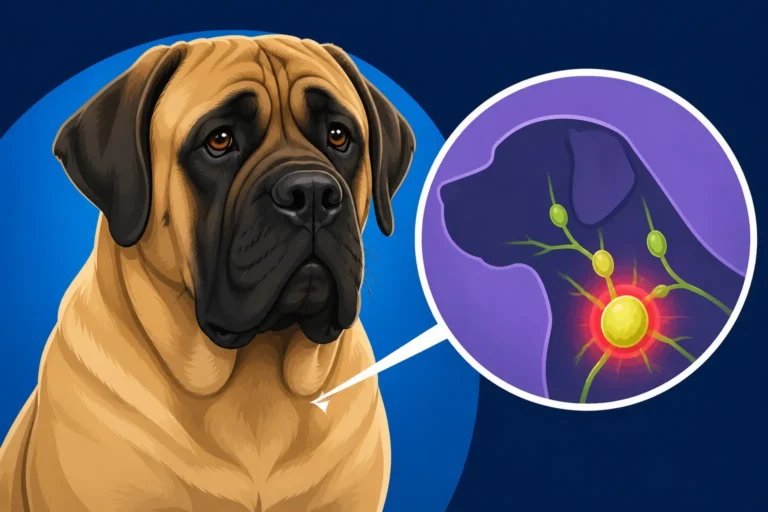
Finding out your Mastiff puppy has a heart murmur can be a truly unnerving experience. You've brought home this colossal, gentle giant, full of hope and dreams, only to be hit with news that stirs up a whirlwind of worry. It's natural to immediately jump to the worst-case scenario, envisioning a life of medical complications for your beloved new family member. This guide is here to walk you through what a heart murmur in a Mastiff puppy means, how it's diagnosed, what steps you can take, and what to realistically expect for their future.
Understanding Heart Murmurs in Mastiff Puppies
A heart murmur is often the first sign of a potential cardiac issue, but it's crucial to understand that not all murmurs are cause for alarm, especially in rapidly growing giant breed puppies like Mastiffs. The heart is a complex organ, and sometimes, the sounds it makes can be a bit misleading.
What Exactly Is a Puppy Heart Murmur?
Simply put, a heart murmur is an unusual sound heard through a stethoscope during a physical exam, typically described as a "whooshing" or "swishing" noise. This sound occurs when there's turbulent blood flow within the heart or great vessels, rather than the smooth, laminar flow that creates the normal "lub-dub" sounds. Imagine water flowing through a perfectly smooth pipe versus water rushing through a kinked or narrowed hose – the latter will create a different, often louder, sound.
In puppies, these murmurs can arise from a variety of reasons. Sometimes, it's due to the heart valves not closing perfectly, or blood moving through a vessel that's temporarily too narrow for the volume of blood being pumped. The vet will listen intently to the location of the murmur, its timing in the cardiac cycle (systolic, diastolic, or continuous), and its intensity or grade to get a better idea of what might be happening. This initial assessment is key, but it rarely provides a definitive diagnosis on its own.
Why Mastiff Puppies Are Prone to Murmurs
Mastiffs are truly majestic dogs, but their sheer size and incredibly fast growth rate make them susceptible to a unique set of health challenges, and heart murmurs can be one of them. Their hearts have a huge job to do, pumping blood efficiently through an enormous and rapidly developing body. This can sometimes lead to temporary physiological murmurs as their cardiovascular system adapts to their expanding frame. It's a bit like a rapidly constructed plumbing system trying to keep up with increasing demand.
Beyond these innocent, temporary murmurs, Mastiffs, like many large and giant breeds, can also be predisposed to certain congenital heart defects. Conditions such as subvalvular aortic stenosis (SAS) or pulmonic stenosis, where there's a narrowing of the outflow tract from the heart, can present as murmurs. While less common, sometimes a patent ductus arteriosus (PDA), a fetal vessel that fails to close after birth, can also cause a very distinct type of murmur. A responsible breeder will often conduct a thorough cardiac exam on their breeding dogs to screen for inherited conditions, as detailed in articles like The CHIC Tests Both Mastiff Parents Must Clear.
Differentiating Innocent vs. Pathological Murmurs
This is perhaps the most crucial distinction your veterinarian will try to make. An "innocent" or "physiological" murmur is a benign finding, often heard in young, healthy puppies, especially large breeds. These murmurs are usually soft, change with position or excitement, and typically disappear on their own by the time the puppy is 4 to 6 months old as their cardiovascular system fully matures. They don't indicate any underlying heart disease and carry no negative health implications for the puppy's future.
On the other hand, a "pathological" or "congenital" murmur is indicative of an underlying structural heart abnormality. These murmurs tend to be louder, don't change with excitement or position, and persist beyond puppyhood. They can signal conditions that range from mild to severe, potentially impacting the dog's health, lifespan, and quality of life. Pinpointing whether your Mastiff puppy's murmur falls into the innocent or pathological category requires more than just listening with a stethoscope; it often requires further diagnostic tests and potentially the expertise of a veterinary cardiologist. This initial differentiation is a critical step in deciding the path forward.
Diagnosing and Evaluating a Mastiff Puppy's Murmur
Once a murmur is detected, the next step is a systematic evaluation to determine its significance. This process can range from simple observation to advanced imaging, depending on the characteristics of the murmur and the puppy's overall health.
The Initial Vet Examination and Grading
Your primary veterinarian is the first line of defense. During the initial exam, they will not only listen to the heart but also conduct a full physical, checking for other signs that might point to a heart problem, such as poor growth, coughing, difficulty breathing, or exercise intolerance. The murmur will be assigned a "grade" from I to VI, with Grade I being very soft and difficult to hear, and Grade VI being so loud it can be heard without a stethoscope.
Here's a quick rundown of murmur grades:
| Grade | Description | Significance (Generally) |
|---|---|---|
| I | Very faint, intermittent, heard only in quiet | Often innocent, may disappear |
| II | Faint, but consistently audible | Can be innocent or mild pathological |
| III | Moderately loud, easily audible | More likely pathological, warrants further investigation |
| IV | Loud, associated with a palpable thrill | Almost always pathological, clear structural issue |
| V | Very loud, thrill easily palpable, heard with stethoscope barely touching chest | Severe pathological condition |
| VI | Extremely loud, thrill palpable, audible with stethoscope off chest | Very severe pathological condition |
While a higher grade often correlates with a more significant problem, this isn't always a hard and fast rule. A Grade II murmur, if persistent, could still be more serious than a Grade III that disappears. Your vet will also note where on the chest the murmur is loudest and when in the heart cycle it occurs, as these details provide valuable clues. For instance, a continuous murmur in a young puppy is highly suspicious for a PDA, while a systolic murmur loudest over the left heart base might suggest subvalvular aortic stenosis. It's a bit like detective work, gathering all the clues before drawing a conclusion.
Advanced Diagnostics: Echocardiogram and Beyond
If the murmur is loud, persists beyond 12-16 weeks of age, or if your puppy shows any other concerning symptoms, your vet will likely recommend a referral to a veterinary cardiologist for an echocardiogram. Think of an echocardiogram as an ultrasound of the heart. It's a non-invasive procedure that allows the cardiologist to visualize the heart's structure, measure chamber sizes, assess valve function, and observe blood flow in real-time. This is the gold standard for diagnosing most congenital heart defects.
During an echocardiogram, the cardiologist can precisely identify the cause of the murmur, such as a narrowed valve, a septal defect (a hole between heart chambers), or abnormal blood vessels. They can also assess the severity of any identified condition and determine if it's impacting the heart's function. In some cases, other tests might be recommended, such as an electrocardiogram (ECG) to evaluate electrical activity or chest X-rays to check for heart enlargement or fluid in the lungs. It's a comprehensive approach to get the clearest picture possible of your Mastiff's heart health. Understanding Whether a Mastiff Needs a Cardiac Exam often involves these advanced tools.
The Importance of Early Detection in Mastiffs
For a giant breed like the Mastiff, early and accurate detection of a heart murmur is incredibly important. If a significant congenital heart defect is present and goes undiagnosed or untreated, it can have severe consequences for their development and overall health. Rapid growth already puts stress on their joints and other systems, and adding an inefficient heart to the mix can lead to exercise intolerance, poor weight gain, stunted growth, and even early onset heart failure.
Catching an issue early can mean the difference between effective management and a rapidly deteriorating condition. For instance, a patent ductus arteriosus (PDA) can often be surgically corrected with a very good prognosis if caught in puppyhood. Similarly, while subvalvular aortic stenosis (SAS) often doesn't have a surgical cure, early diagnosis allows for appropriate medical management and activity restriction, potentially prolonging a good quality of life. This proactive approach helps you, as an owner, make informed decisions about your Mastiff's care and future, considering all the financial implications, as discussing What a Mastiff Cardiac Exam Costs becomes a real consideration.
Managing a Mastiff Puppy with a Diagnosed Murmur
Once a murmur is diagnosed, your vet or cardiologist will outline a management plan tailored to your Mastiff's specific condition and severity. This can range from watchful waiting to ongoing medical intervention.
Monitoring and Follow-Up for Innocent Murmurs
If your Mastiff puppy is diagnosed with an innocent murmur, the primary course of action is typically observation. These murmurs usually resolve on their own by 4 to 6 months of age. Your veterinarian will likely recommend re-evaluating the murmur at subsequent puppy check-ups to confirm its disappearance. It's important to continue to monitor your puppy for any changes in their energy levels, breathing, or appetite. If any symptoms develop or the murmur persists or increases in intensity, then further investigation with an echocardiogram would be warranted.
Even with an innocent murmur, it's wise to be gentle with exercise for a growing Mastiff. Over-exertion is never good for giant breed puppies, as explained in Why a Mastiff Puppy Must Not Be Exercised Hard. Keep play sessions short and avoid forced running or jumping, allowing their large bodies to develop naturally without undue stress, especially while their heart is still maturing. This cautious approach helps ensure healthy development overall.
Treatment Options for Pathological Murmurs
For Mastiff puppies with a pathological murmur caused by a congenital heart defect, the treatment options depend entirely on the specific condition. For some defects, like a PDA, surgical correction can be curative, often performed by a specialist. This involves closing the abnormal vessel, allowing the heart to function normally. In these cases, the prognosis post-surgery is often excellent, leading to a full and normal life.
For conditions like subvalvular aortic stenosis (SAS) or certain septal defects, surgery might not be an option, or it might carry too high a risk. In these instances, medical management becomes key. This can include medications to help the heart work more efficiently, control arrhythmias, or manage symptoms of heart failure. These medications can include ACE inhibitors, beta-blockers, or diuretics. Dosage for a large dog like a Mastiff requires careful calculation, often factoring in lean body weight rather than just scale weight, as covered in Why a Mastiff Is Dosed by Lean Weight and Not Scale Weight. Lifestyle adjustments, such as restricted exercise and careful weight management, are also crucial to reduce strain on the heart.
Living with a Mastiff with a Persistent Heart Condition
If your Mastiff has a persistent heart condition, managing their care becomes a long-term commitment. This means regular veterinary check-ups, potentially yearly or bi-annual echocardiograms, and consistent administration of prescribed medications. You'll need to be vigilant for any signs of worsening symptoms, such as increased coughing, lethargy, or difficulty breathing. Providing a high-quality diet and maintaining a healthy weight are paramount to support their cardiovascular health.
Living with a dog with a chronic condition can be emotionally and financially challenging. The ongoing costs of specialist visits, diagnostics, and daily medications can add up significantly, contributing to The Mastiff's Short Life Buys the Biggest Bills. This is where pet insurance can be a real lifesaver. Providers like Healthy Paws offer comprehensive coverage that can help offset these expenses, allowing you to focus on your Mastiff's well-being without constant financial stress. While pet insurance may initially seem like another expense, it truly offers peace of mind when facing serious health issues. Remember to research policies carefully, as some might have waiting periods or exclusions for pre-existing conditions, so enrolling early is often best.
Breeder Responsibility and Owner Diligence
Understanding a Mastiff puppy's heart health starts long before you bring them home, and it requires both ethical breeding practices and informed choices from prospective owners.
What Reputable Mastiff Breeders Should Do
A reputable Mastiff breeder takes the health of their lines very seriously. They understand the potential for congenital heart defects and will take proactive steps to minimize risk. This includes having their breeding stock undergo thorough cardiac evaluations by a board-certified veterinary cardiologist, often including echocardiograms, before breeding. These results should be transparently available, usually registered with the Orthopedic Foundation for Animals (OFA) or a similar health database. Looking for breeders who actively screen for conditions like dilated cardiomyopathy, even if the puppy's murmur is specific to another issue like subvalvular aortic stenosis, is a good indicator of their commitment to health.
Furthermore, a responsible breeder should be open and honest about any health concerns in their puppies or their lineage. If a puppy develops a murmur, they should disclose this to potential buyers and ideally have it evaluated by a specialist before placement. They will likely have a health guarantee in their contract that covers congenital defects, which can provide some recourse if a serious issue is diagnosed shortly after purchase. Breeders who are evasive or dismissive about health testing should be a red flag.
Questions to Ask Before Bringing a Puppy Home
As a prospective Mastiff owner, it's your right and responsibility to ask detailed questions about the puppy's health and the parents' health history. Don't be shy; a good breeder will appreciate your diligence. Here are some key questions to consider:
- "Have the parents of this litter had cardiac evaluations by a board-certified cardiologist, including echocardiograms? Can I see the results?"
- "What is the health history of the sire and dam, particularly regarding any heart murmurs or conditions?"
- "Has this specific puppy been examined by a vet, and was a heart murmur detected?" If so, "What was the grade, and has it been re-evaluated?"
- "What is your health guarantee, and what does it cover, specifically for congenital defects like heart conditions?"
- "Are you aware of any heart issues in previous litters from these parents or their close relatives?"
Asking these questions helps you understand the genetic predispositions and immediate health status of your potential puppy. It empowers you to make an informed decision and prepare for any potential challenges. Understanding Whether a Mastiff Puppy Can Be Tested Before Purchase is also a valid inquiry, often leading back to the breeder's practices.
Financial Preparedness for Potential Heart Issues
Regardless of whether your Mastiff puppy has an innocent murmur that resolves or a more serious condition requiring ongoing care, being financially prepared for veterinary expenses is paramount. Giant breeds, by their very nature, come with higher costs for everything from food and preventative medications to surgery and emergency care. A heart condition can significantly amplify these expenses.
It's not uncommon for advanced diagnostics and specialized care to run into thousands of dollars. An echocardiogram alone can cost several hundred dollars, and if surgery or long-term medication is needed, the costs climb rapidly. This is why many experienced Mastiff owners advocate for pet insurance from the moment you bring your puppy home. Companies like Healthy Paws can provide a financial safety net, covering a significant portion of eligible veterinary bills, including those for unexpected illnesses or accidents. Just as you would consider Whether Pet Insurance Covers a Mastiff's Elbows, you need to ensure you're covered for potential cardiac issues too. Don't wait until a problem arises; pre-existing conditions are typically not covered, so securing a policy early is the smart move for any Mastiff owner.
Disclaimer
The information provided in this article is for general educational and informational purposes only, and does not constitute veterinary advice. Always consult with a qualified veterinarian or veterinary specialist for any health concerns or before making any decisions about your pet's medical care.