Whether Pet Insurance Covers a Mastiff’s Elbows
One of the biggest anxieties for any Mastiff owner, and honestly, any giant breed owner, is the looming shadow of orthopedic problems. These magnificent dogs are prone to a range of joint issues, and when you're looking at a dog that can easily outweigh a grown human, the thought of veterinary bills for a debilitating condition like elbow dysplasia can be absolutely terrifying. You want to give your beloved companion the best care possible, but the financial burden is a very real concern. This guide is here to untangle the often-confusing world of pet insurance, specifically addressing whether a policy can actually provide a safety net for your Mastiff's elbows, helping you understand the fine print and make informed decisions.
Understanding Mastiff Elbow Issues and Their Costs
Let's be real, owning a Mastiff means becoming intimately familiar with their unique health challenges, and joint problems are high on that list. Elbow dysplasia isn't just a fancy vet term; it's a painful reality for too many of our gentle giants.
The Reality of Elbow Dysplasia in Mastiffs
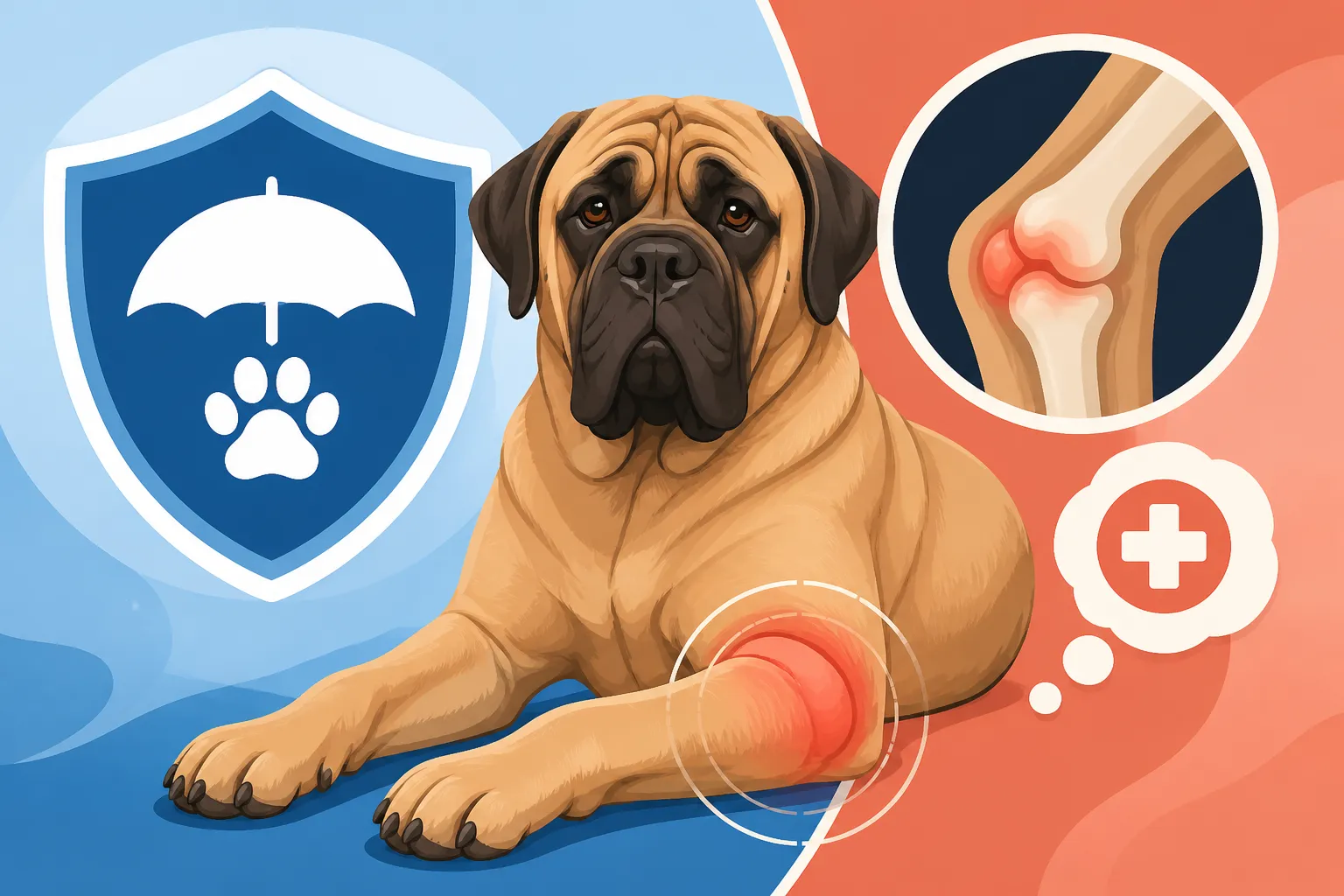
Elbow dysplasia isn't a single condition, but rather a catch-all term for several developmental abnormalities that affect the elbow joint. Imagine a complex puzzle where the pieces (the bones of the forearm and upper arm) just don't fit together perfectly. This can lead to issues like fragmented coronoid process (FCP), ununited anconeal process (UAP), osteochondrosis (OCD), and incongruity of the joint. In a breed as large and heavy as a Mastiff, these imperfections can lead to significant pain, lameness, and debilitating arthritis down the line. It's a sad truth that Elbow Dysplasia Affects One Mastiff in Seven, making it a worry that many of us Mastiff parents face.
The scary part is that these issues often start brewing while your Mastiff is still a young puppy, even if symptoms aren't immediately obvious. A slight limp, a reluctance to play as enthusiastically, or difficulty getting up after resting could all be subtle signs. The rapid growth rate of a Mastiff puts immense strain on developing joints, and even minor misalignments can cause significant damage over time. By the time a Mastiff reaches full size, the cumulative wear and tear can be severe. It's truly heartbreaking to watch your giant dog struggle with something that could have been identified or managed earlier. We all want our Mastiffs to bound through life without pain, but conditions like this make us feel helpless.
This is why responsible breeders go through extensive health testing, but even with the best genetics, these things can sometimes arise. Knowing that What Percentage of Mastiffs Fail OFA Elbows gives you a stark picture of how prevalent this problem can be, and why proactive measures and financial planning are so important for these beloved companions.
The Financial Strain of Diagnosis and Treatment
So, your Mastiff starts showing signs of lameness. What happens next? First, it's a trip to the vet, which for a Mastiff, often involves a larger vehicle, careful loading and unloading, and possibly even an appointment outside of normal hours if they struggle to walk. The diagnostic process itself can be extensive and expensive. It usually begins with a thorough physical examination and then moves to X-rays. For a Mastiff, these X-rays often require sedation to get the clear, specific angles needed, adding another layer of cost. In some cases, your vet might recommend more advanced imaging like a CT scan or MRI to get a precise diagnosis of the elbow's internal structures. Each of these steps, from consultation to advanced imaging, represents a significant bill.
Once diagnosed, treatment varies. Conservative management might include anti-inflammatory medications, pain relievers, physical therapy, weight management (keeping a Mastiff lean is crucial for joint health), and Joint Supplements for a Mastiff. These can help manage symptoms but rarely resolve the underlying structural issue. If surgery is recommended, prepare for a substantial financial commitment. Surgical procedures for elbow dysplasia are specialized, often requiring an orthopedic veterinary surgeon. The cost will encompass the surgery itself, the necessary anesthesia for a dog of their size How Much Anesthetic a Two Hundred Pound Mastiff Takes, post-operative medications, and extensive rehabilitation. A single elbow surgery can run into several thousands of dollars, and if both elbows are affected (which is common), you could be looking at double that.
Even after successful surgery, many Mastiffs will still develop some degree of arthritis as they age, requiring ongoing pain management, anti-inflammatories, and joint support for the rest of their lives. This isn't a one-and-done expense; it's a potential lifelong commitment to managing a chronic condition. The emotional toll of watching your dog suffer is immense, but the financial toll can also be devastating for families unprepared for such significant outlays. This is why having a clear understanding of what pet insurance can, or cannot, cover is so vital. What Elbow Surgery Costs on a Mastiff is a question that weighs heavily on the minds of many Mastiff owners.
How Pet Insurance Generally Works for Orthopedic Conditions
Navigating the world of pet insurance can feel like trying to read ancient hieroglyphics, especially when you're trying to figure out coverage for complex conditions like elbow dysplasia. Let's break down the basics to help you understand what you're actually buying.
Accident & Illness vs. Wellness Plans
When you're looking at pet insurance, you'll generally encounter a few different types of plans, and it's crucial to pick the right one for orthopedic issues.
- Accident-Only Plans: As the name suggests, these cover unexpected injuries like broken bones, lacerations, or being hit by a car. They are usually the most affordable, but they absolutely will not cover illnesses or developmental conditions like elbow dysplasia. If your Mastiff were to tear a cruciate ligament in an accident, this might help, but not for a genetic joint issue.
- Accident & Illness Plans: This is the gold standard for comprehensive coverage, and it's what you need if you're concerned about conditions like elbow dysplasia, cancer, diabetes, or infections. These plans typically cover a wide range of medical problems, from minor sniffles to major surgeries and chronic conditions. While these are more expensive than accident-only plans, they offer the peace of mind that comes with knowing you're covered for the most common and costly health challenges.
- Wellness Plans: These are designed to cover routine and preventive care, like annual check-ups, vaccinations, flea and tick prevention, and sometimes even dental cleanings. They are not insurance in the traditional sense; they're more like a budget-friendly way to manage predictable costs. Wellness plans will never cover a major medical condition or surgery related to elbow dysplasia. Think of them as helping you stay on top of regular maintenance, which is important, but they won't save you when a big problem arises.
For your Mastiff's elbows, you absolutely need an accident and illness plan. Without it, you'll be footing 100% of the bill for diagnosis, surgery, and ongoing management, which, as we discussed, can be astronomical for a giant breed.
Deductibles, Reimbursement Rates, and Annual Limits
These three terms are the pillars of any pet insurance policy and directly impact how much you'll pay out of pocket when your Mastiff needs care. Understanding them is key to choosing a plan that actually helps.
- Deductible: This is the amount of money you, the pet parent, must pay toward veterinary care costs before your insurance company starts reimbursing you. Think of it like your car insurance deductible. For example, if you have a $500 deductible and your Mastiff has $3,000 worth of diagnostics and treatment for elbow dysplasia, you'd pay the first $500, and then your insurance would kick in for the remaining $2,500 (based on your reimbursement rate). Some plans have an annual deductible (you meet it once per year, regardless of how many different conditions are treated), while others have a per-incident deductible (you pay it for each new illness or injury). For chronic conditions like elbow dysplasia, an annual deductible is generally more favorable, as you only have to meet it once, even if treatments span the year.
- Reimbursement Rate: This is the percentage of eligible veterinary expenses that your insurance company will pay back to you after your deductible has been met. Common reimbursement rates are 70%, 80%, or 90%. Using our example above: if your deductible was $500 and the remaining bill was $2,500, with an 80% reimbursement rate, the insurer would pay 80% of $2,500, which is $2,000. You'd still be responsible for the remaining $500 (plus your initial $500 deductible, totaling $1,000 out of pocket). For a Mastiff, where bills for a major surgery can easily hit five figures, that difference between a 70% and 90% reimbursement rate can mean thousands of dollars saved.
- Annual Limit: This is the maximum amount of money your insurance company will pay out in covered expenses within a 12-month policy period. Limits can range from a few thousand dollars to unlimited coverage. For a Mastiff with a chronic, potentially surgical condition like elbow dysplasia, a high annual limit or, ideally, unlimited coverage is paramount. If your Mastiff needs surgery on one elbow this year and then ongoing physical therapy and medication, you could quickly hit a lower annual limit. If they need surgery on the other elbow the following year, a new annual limit would apply. Be very careful with plans that have low annual limits, as they might not adequately cover the true cost of major Mastiff health issues.
Understanding Policy Types and Exclusions
Beyond deductibles and reimbursement, knowing the specific exclusions in your policy is incredibly important, especially for a breed with known predispositions like the Mastiff.
The biggest exclusion you'll encounter, and the most heartbreaking for many pet owners, is the "pre-existing condition" clause. This means if your Mastiff showed any symptoms of elbow dysplasia (even a subtle limp, stiffness, or reluctance to use stairs) before your policy's start date or during its waiting period, that specific condition will likely be excluded from coverage for life. We'll dive deeper into this next, as it's the primary reason many Mastiff owners find themselves without coverage for these very issues.
Some policies may also have specific exclusions for bilateral conditions. For example, if your Mastiff is diagnosed with elbow dysplasia in their right elbow, and then later develops it in their left, some policies might consider the left elbow issue pre-existing because it's the same type of condition that showed up on the other side. This is why reading the fine print is so crucial. Look for policies that explicitly state they cover bilateral conditions even if symptoms appear at different times.
Lastly, be aware of any breed-specific exclusions, though these are less common for a general condition like elbow dysplasia that affects many large breeds. More often, you'll see exclusions related to specific types of care, like experimental treatments, cloning, or cosmetic procedures. Always read the policy document thoroughly, not just the summary. Don't be afraid to call the insurance provider directly and ask detailed questions about elbow dysplasia coverage for a Mastiff, especially regarding their definition of "pre-existing" and bilateral conditions.
The Critical Importance of Waiting Periods and Pre-Existing Conditions
If there are two terms you need to engrave into your memory when considering pet insurance for your Mastiff, especially for joint issues, they are "waiting periods" and "pre-existing conditions." These are the roadblocks that often trip up well-meaning pet parents.
Navigating Waiting Periods for Orthopedic Issues
A "waiting period" is the amount of time that must pass from the moment you purchase your pet insurance policy until your Mastiff's coverage for certain conditions actually begins. It's not immediately active for everything. Insurers have these periods to prevent people from buying insurance only after their pet gets sick or injured, which would quickly make the whole system unsustainable.
While accident coverage usually has a very short waiting period (often just a few days), illness coverage typically has a longer one, and orthopedic conditions like elbow dysplasia often have the longest waiting periods of all. It's not uncommon to see orthopedic waiting periods ranging from 6 to 12 months. This means if you buy a policy today with a 6-month orthopedic waiting period, and your Mastiff starts limping due to elbow dysplasia in month 3, that condition will likely not be covered. It's a harsh reality, but it's how the policies are structured.
This is why the single most important piece of advice for any Mastiff owner considering pet insurance is to enroll your Mastiff puppy as young as possible. Ideally, you'd purchase a policy right after you bring your puppy home, before they've had any chance to develop symptoms of joint issues. If you wait until your Mastiff is a year or two old, and you then notice a subtle stiffness or a slight change in their gait, it might already be too late to get coverage for what could be developing elbow dysplasia. The waiting period would then ensure that any symptoms occurring during that time frame would render the condition pre-existing, even if a formal diagnosis comes later. Planning ahead truly is the key here The Month a Mastiff Owner Should Buy Insurance.
The Pre-Existing Condition Conundrum
This is the big one, the single most common reason for pet insurance claim denials, and it hits giant breeds especially hard. A "pre-existing condition" is any illness or injury that your Mastiff showed symptoms of, or was diagnosed with, before your insurance policy's effective date or during its waiting period. And here's the kicker: it doesn't even need a formal diagnosis from a vet to be considered pre-existing. If your vet records show a note about "occasional stiffness," "mild lameness," or "difficulty rising" before your coverage started or during the waiting period, that could be enough for the insurer to deny a claim for elbow dysplasia, even if the actual diagnosis came much later.
Let's imagine a scenario: You get your adorable Mastiff puppy at 10 weeks old. You think about insurance, but life gets busy, and you finally enroll him at 6 months. Your chosen policy has a 6-month orthopedic waiting period. At 8 months old, your Mastiff puppy starts showing a noticeable limp in his front leg. You take him to the vet, and after X-rays, he's diagnosed with severe elbow dysplasia. Even though the diagnosis came after you purchased the policy, the symptoms (the limp) appeared during the orthopedic waiting period. In almost all cases, this would mean the elbow dysplasia would be considered a pre-existing condition and not covered. It's a devastating blow when you thought you were doing the right thing by getting insurance.
Insurers like Healthy Paws, Chewy (through their partners), and Ollie (often partnered with Lemonade) all have clear stipulations about pre-existing conditions. Generally, they do not cover them. Some policies differentiate between "curable" and "incurable" pre-existing conditions. For example, a one-time ear infection treated successfully might eventually be covered again if it recurs far in the future. However, a chronic, developmental orthopedic condition like elbow dysplasia is almost always considered incurable and would therefore be permanently excluded once deemed pre-existing. It's a bitter pill to swallow, knowing that you might be on the hook for What Elbow Surgery Costs on a Mastiff simply because you didn't enroll your Mastiff early enough. This highlights the absolute necessity of understanding this clause before you commit to any policy.
Comparing Pet Insurance Options for Mastiff Elbow Coverage
Choosing the right pet insurance for your Mastiff can feel like a daunting task, especially with their specific needs and the potential for costly orthopedic issues. It's not just about the cheapest premium; it's about the best coverage when you need it most.
What to Look for in a Policy for a Giant Breed
When you're sifting through pet insurance policies for your big, beautiful Mastiff, you need to think about their unique challenges. Their sheer size means higher costs for everything, from medication doses to anesthesia, and unfortunately, their propensity for joint issues requires specific attention to policy details.
- High Annual Limits (or Unlimited Coverage): This is absolutely critical for a Mastiff. A single major surgery or a year of chronic condition management can easily exceed limits that might be sufficient for a smaller dog. Look for policies with annual limits of at least $10,000, but ideally, one that offers unlimited payouts. You don't want to be halfway through treating an elbow issue only to hit your annual cap and be left holding the rest of the bill. This is especially true given Why a Mastiff Costs More Per Year Than a Dog That Lives Twice as Long.
- Generous Reimbursement Rates: Aim for an 80% or 90% reimbursement rate if your budget allows. The difference between 70% and 90% on a $5,000 vet bill is $1,000. For an $8,000 surgery, it's $1,600. That extra percentage really adds up quickly when dealing with Mastiff-sized vet expenses.
- Flexible Deductible Options: Most providers offer a range of deductibles. A higher deductible usually means a lower monthly premium. While it's tempting to pick the lowest premium, make sure you can realistically afford the deductible if a major issue arises. If you choose a $1,000 deductible to save on monthly costs, ensure you have that $1,000 readily available.
- Short Orthopedic Waiting Periods: As discussed, this is vital. Look for policies that have the shortest possible waiting period for orthopedic conditions. Six months is common; anything shorter is a bonus. The longer you wait, the higher the risk of something popping up and being deemed pre-existing.
- Clear Bilateral Condition Coverage: Ensure the policy clarifies how it handles conditions that can affect both sides of the body, like elbow dysplasia. Ideally, the policy will cover both sides even if symptoms appear on one side first, provided the other side manifests after waiting periods and without prior symptoms.
- Strong Reputation for Large Claims: Do some research on the insurer's reputation for processing large and complex claims. When your Mastiff needs a multi-thousand-dollar surgery, you want an insurer that's known for smooth and fair claims handling, not one that puts up unnecessary roadblocks.
- Understand Premium Increases with Age: While some increase is normal, understand how aggressively premiums might climb as your Mastiff gets older. Why a Mastiff's Premium Rises Faster Than Its Age is a real concern for giant breeds, so factoring this into your long-term budget is wise.
- No Breed-Specific Exclusions for Common Issues: Double-check that Mastiffs aren't specifically excluded from coverage for common breed-related issues. While rare for elbow dysplasia, it's always worth verifying.
Reviewing Contextual Brands for Mastiffs (Healthy Paws, Chewy, Ollie)
When considering specific pet insurance providers, it's helpful to look at how some popular brands generally approach coverage, keeping your Mastiff's needs in mind.
- Healthy Paws: This provider is often lauded for its robust accident and illness plans, known for offering unlimited annual payouts (after deductible and reimbursement) and a straightforward reimbursement model. This "no annual caps" feature is a massive plus for a Mastiff, where a single serious condition like elbow dysplasia, especially if it requires multiple interventions or lifelong medication, can quickly become incredibly expensive. They generally have a good reputation for processing claims efficiently. However, like all insurers, they have waiting periods and strict policies regarding pre-existing conditions. For orthopedic issues, their standard waiting period usually applies, meaning getting your Mastiff puppy covered early is key.
- Chewy Pet Insurance (CareCredit partnership): Chewy, a giant in the pet supply world, has also entered the insurance arena, often partnering with established insurance carriers like CareCredit to offer various plans. The benefit here can be convenience and potentially a range of options to fit different budgets. When looking at Chewy's offerings, you must delve into the details of the underlying insurer's policy. Coverage for elbow dysplasia, waiting periods, and how pre-existing conditions are defined will depend entirely on the specific plan and carrier Chewy is offering. It's not a one-size-fits-all, so read the terms and conditions very carefully, specifically looking for the orthopedic waiting period and the definition of pre-existing issues.
- Ollie (often partnered with Lemonade): While Ollie is best known for its fresh pet food delivery service, they also offer pet insurance, frequently powered by companies like Lemonade. Similar to Chewy, the exact terms for Mastiff elbow coverage will depend on the specific policy details and the underwriting partner. Ollie's approach is often digitally driven, which can make managing policies and submitting claims quite user-friendly. However, the core principles of pet insurance—waiting periods, deductibles, reimbursement rates, and pre-existing condition clauses—remain paramount. Again, confirm their orthopedic waiting period and how they define pre-existing symptoms, especially for a breed like the Mastiff.
It bears repeating: no pet insurance provider will cover a condition that is deemed pre-existing. This is the universal rule. Therefore, focusing on these brands' general reputations for customer service and claims processing is useful, but the ultimate deciding factor for elbow dysplasia coverage will be the timing of your enrollment and the absence of any prior symptoms.
The Best Strategy: Insure Early and Be Diligent
There is no magic bullet when it comes to pet insurance for a Mastiff's elbows, but there is a clear best strategy: enroll your Mastiff puppy in a comprehensive accident and illness plan as soon as humanly possible. Literally, the day you bring them home is not too early.
By enrolling your Mastiff puppy before any potential symptoms of elbow dysplasia (or any other genetic or developmental condition) have a chance to show themselves, you maximize the likelihood that these conditions will be covered, provided they manifest after all waiting periods have been satisfied. This means a less stressful journey for you and your beloved Mastiff if issues do arise, knowing that you have a financial partner in their care.
Beyond early enrollment, diligence is key:
- Maintain Regular Vet Check-ups: Consistent veterinary care creates a clear, documented health history for your Mastiff. This paper trail is invaluable if an insurer ever questions whether a condition was truly pre-existing.
- Keep Meticulous Records: Hold onto every single vet invoice, diagnosis, and treatment plan. Digital copies are great, but have physical copies too if you can.
- Understand Your Policy: Don't just skim the highlight reel. Read the full policy document. Circle the sections on waiting periods, pre-existing conditions, bilateral exclusions, and annual limits. Ask clarifying questions if anything is unclear. It’s better to be informed now than regretful later.
- Be Prepared for Waiting Periods: Even with early enrollment, remember there will be an orthopedic waiting period. During this time, be extra vigilant about your Mastiff puppy's activity and monitor them closely for any signs of lameness or discomfort. Why a Mastiff Puppy Must Not Be Exercised Hard is important advice for joint health in general, and especially during this critical insurance waiting window.
Ultimately, pet insurance for your Mastiff's elbows is an investment in their future health and your peace of mind. While it won't prevent issues from occurring, the right policy, purchased at the right time, can make the difference between a manageable challenge and an insurmountable financial burden.
| Feature | What to Look For | Why it Matters for Mastiff Elbows |
|---|---|---|
| Policy Type | Accident & Illness | Elbow dysplasia is a medical condition, requiring comprehensive coverage. |
| Orthopedic Wait Period | As short as possible (e.g., 6 months is standard) | Critical for ensuring potential future symptoms aren't deemed pre-existing. |
| Pre-Existing Conditions | Clear definition; no coverage for prior symptoms. | The most common reason for denial; proactive enrollment is paramount. |
| Annual Limit | High (e.g., $10,000+) or Unlimited | Mastiff surgeries and lifelong arthritis management can be extremely costly. |
| Reimbursement Rate | High (80-90%) | Significantly reduces your out-of-pocket expenses on large veterinary bills. |
| Deductible Options | Choose what you can realistically afford upfront. | Balances monthly premium cost with potential upfront payment during claims. |
| Bilateral Conditions | Covered (ensures both elbows are treated if needed). | Elbow dysplasia often affects both elbows, even if symptoms differ initially. |
| Premiums & Age | Understand how rates increase over your Mastiff's lifespan. | Helps budget for the entire, albeit shorter, life of your giant breed. |
Disclaimer
This article is for general informational purposes only and does not constitute professional advice. Laws, prices and regulations vary by location and change over time. Consult a qualified professional for guidance on your specific situation.