How a Mastiff’s Hind End Fails With DM
Watching your magnificent Mastiff, a dog of such immense power and gentle spirit, slowly lose the ability to use their back legs is one of the most heartbreaking experiences any owner can face. Degenerative Myelopathy, or DM, is a cruel thief that steals their mobility, transforming a sturdy guardian into a shuffling, struggling shadow of their former self. This guide aims to shed light on how DM specifically impacts a Mastiff's hind end, the progression you can expect, and how best to support your cherished companion through this challenging journey.
Understanding Degenerative Myelopathy's Impact on a Mastiff's Body
Degenerative Myelopathy is a progressive neurological disease affecting the spinal cord, particularly the white matter, which contains nerve fibers that transmit commands from the brain to the limbs. For a Mastiff, a breed already predisposed to various orthopedic challenges due to their incredible size, DM adds another layer of complexity and sorrow. It's not a painful disease in itself, which can sometimes make it even harder to reconcile with the profound loss of function. The nerves that carry sensory information and motor commands simply stop working correctly, leading to a breakdown in communication between the brain and the hind limbs.
The genetic basis for DM in many breeds, including the Mastiff, is linked to a mutation in the SOD1 gene. While testing positive for this gene mutation means a Mastiff is "at risk" or a "carrier," it doesn't guarantee they will develop the disease. However, for those who do, the implications for their powerful hindquarters are devastating. When you consider a Mastiff can easily weigh upwards of 150-200 pounds, the inability of their hind end to support such mass rapidly escalates from a minor wobble to complete paralysis. It's a stark reminder that even the strongest bodies can be undermined by internal, unseen forces. For a more complete picture, you might want to read our article on What Degenerative Myelopathy Does to a Mastiff.
The Insidious Progression of Hind-End Weakness
The onset of Degenerative Myelopathy in a Mastiff is often subtle, almost imperceptible at first, and then it progresses with an agonizing slowness that can last for months or even years. Initially, you might notice your Mastiff just seems a little clumsy. Perhaps they scuff their back paws more often on walks, or their nails seem to wear down unevenly. This early sign, often called "knuckling over," is where the dog inadvertently walks on the top of their toes instead of their paw pads because they've lost proprioception – the awareness of where their limbs are in space.
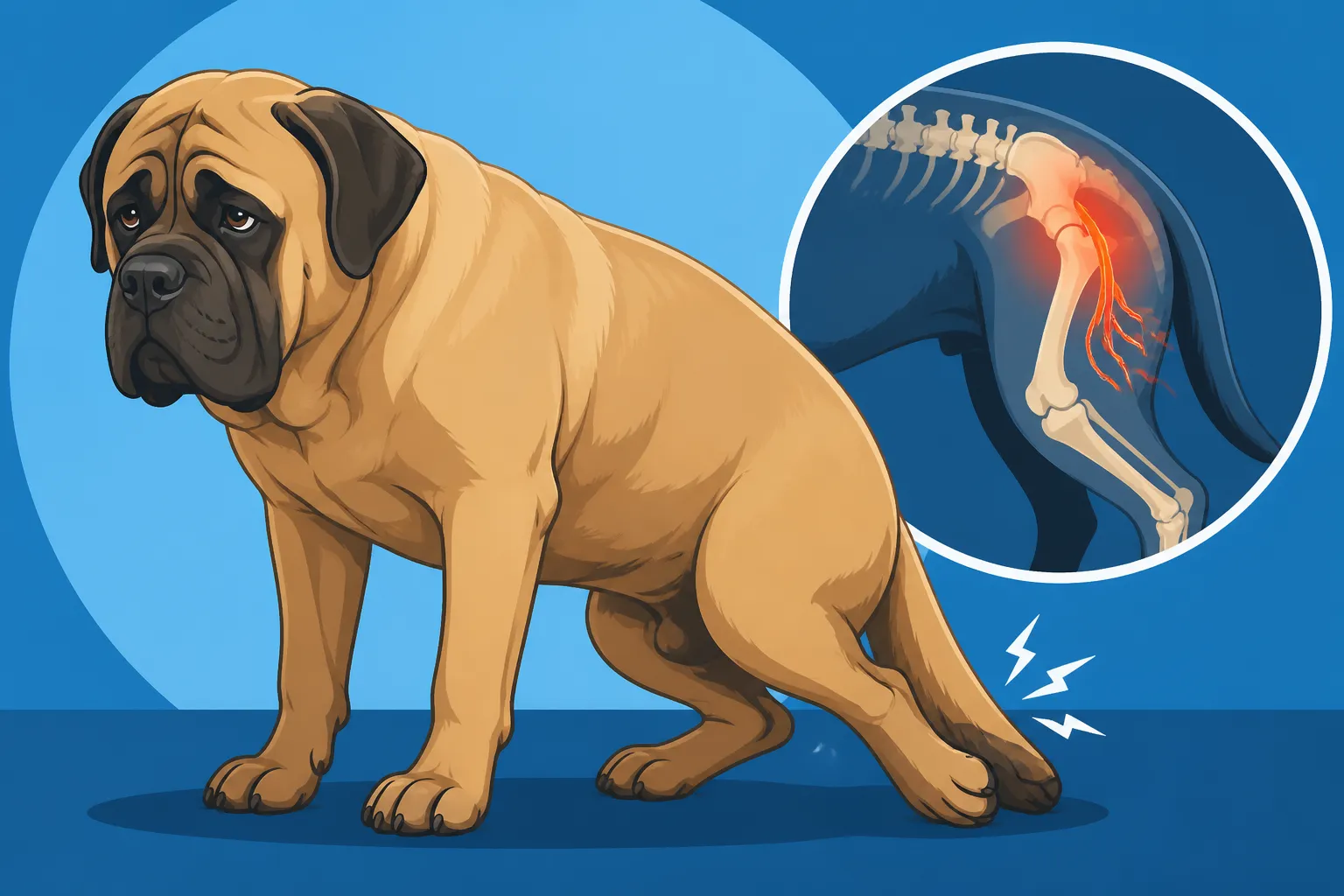
As the disease advances, the hind-end weakness becomes undeniable. Your Mastiff might start to sway or wobble noticeably when standing still, especially after getting up from a rest. They'll struggle with stairs, finding it increasingly difficult to navigate steps they once bounded up with ease. Getting into and out of the car, which was already a challenge for a dog of their size, becomes an impossible feat without significant assistance. The coordination loss, or ataxia, means their hind legs move independently, sometimes crossing over or stumbling into each other. You'll see their gait become wide-based, like they're trying to brace themselves against an invisible force. It's a struggle for balance that takes a tremendous toll on their physical and mental well-being. This gradual decline can begin at various ages, but is typically seen in middle to older Mastiffs. You can learn more about this in our piece, The Age Degenerative Myelopathy Starts in a Mastiff.
Eventually, as the degeneration continues, the muscles in their hind legs will begin to atrophy, becoming noticeably thinner. They may lose bladder and bowel control, not out of defiance, but because the nerves controlling these functions are also affected. The ultimate stage often involves complete paralysis of the hind limbs, where your Mastiff can no longer stand or walk on their own at all. This progression is profoundly difficult to witness, especially in a breed known for its stoic nature.
Managing the Daily Challenges of a Failing Hind End
Living with a Mastiff whose hind end is failing due to DM requires immense dedication, patience, and often, significant physical effort on your part. The sheer weight of a Mastiff makes every step of the disease progression more challenging for both dog and owner. But there are many ways to support your gentle giant and maintain their quality of life for as long as possible.
One of the first practical steps is investing in mobility aids. Rear-end support slings and harnesses become indispensable tools for assisting your Mastiff in standing, walking, and going to the bathroom. Brands like Help 'Em Up Harness or Ruffwear offer robust harnesses designed for large breeds that can make a real difference. For an older Mastiff struggling with mobility, a good harness is essential for Lifting an Old Mastiff That Cannot Get Up safely. As the disease progresses further, you might consider a dog wheelchair or cart. While the idea of a wheelchair for a Mastiff might seem daunting, it can offer them a surprising amount of independence and enjoyment, allowing them to continue moving and exploring. We’ve covered this topic in more detail in Whether a Mastiff With DM Can Be Fitted With a Cart.
Modifying your home environment is crucial. Lay down non-slip runners or rugs on hardwood, tile, or laminate floors to provide traction and prevent slips and falls, which can exacerbate injuries. Ramps can be a lifesaver for getting your Mastiff in and out of the house, up a step, or into a vehicle. Their powerful mass means they hit the ground with considerable force when they stumble, and preventing falls is paramount.
Physical therapy, even if it can't reverse the neurological damage, can often help slow the progression of muscle atrophy and maintain remaining muscle strength and flexibility. Hydrotherapy (swimming or underwater treadmill) is particularly beneficial because it allows your Mastiff to exercise without the full impact of gravity on their joints and weakening limbs. Specialized canine rehabilitation centers often offer these services. Our article, Whether Physical Therapy Slows a Mastiff's DM, explores these options further. Maintaining a healthy, lean body weight is also critical; extra pounds put even more strain on already compromised limbs. Regular, gentle exercise tailored to their decreasing abilities will help keep muscles from wasting too quickly. Pet insurance providers like Healthy Paws often cover costs associated with physical therapy and rehabilitation, which can quickly add up for a dog of this size and with a chronic condition.
Finally, managing continence issues becomes a part of daily life. This can involve frequent trips outside, absorbent male wraps or female diapers, and diligent cleaning to prevent skin irritation. It's a messy reality, but a necessary one to keep your Mastiff comfortable and hygienic. Throughout this journey, open communication with your veterinarian is paramount. They can help you assess your Mastiff's quality of life and guide you through the difficult decisions that may eventually arise. Remember that managing DM can be very costly, and services like Healthy Paws can provide crucial support for these ongoing medical expenses.
Differentiating DM from Other Hind-End Issues
The challenge with diagnosing Degenerative Myelopathy, especially in a large breed like the Mastiff, is that many of its initial symptoms can mimic those of other common hind-end ailments. Arthritis, hip dysplasia, and even certain spinal injuries or cancers can all present with hind-end weakness, difficulty rising, or an altered gait. This overlap makes accurate diagnosis absolutely critical.
A thorough veterinary examination is the first step. Your vet will perform a comprehensive neurological exam, assessing your Mastiff's reflexes, coordination, and proprioception. They might perform tests like "knuckling" your dog's paw over to see if they correct it quickly, or observe their gait and how they rise and sit. Imaging, such as X-rays, MRI, or CT scans, will be used to rule out other structural problems. X-rays can identify severe Why a Mastiff's Hips Fail Under Its Own Weight or spinal arthritis, while an MRI can visualize disc disease (IVDD) or tumors that might be pressing on the spinal cord. It's not uncommon for a Mastiff to have both DM and arthritis, complicating the clinical picture and management.
The definitive diagnosis for DM often relies on a DNA test for the SOD1 gene mutation. While a positive test, combined with characteristic clinical signs and the exclusion of other conditions, strongly suggests DM, the actual diagnosis is confirmed post-mortem through histopathological examination of spinal cord tissue. Nevertheless, knowing your Mastiff is genetically "at risk" combined with classic symptoms can guide management decisions. You can learn more about the predictive nature of this test in Whether a DNA Test Predicts Mastiff DM. This diagnostic process can involve multiple vet visits, specialist consultations, and various tests, all of which incur significant costs. Having pet insurance, such as through Healthy Paws, can greatly alleviate the financial burden of these essential diagnostic steps and subsequent treatments.
| Symptom Category | Degenerative Myelopathy (DM) | Hip Dysplasia/Arthritis |
|---|---|---|
| Pain | Generally not painful | Often painful |
| Onset | Insidious, progressive | Can be sudden or gradual |
| Symmetry | Usually asymmetrical at first | Often symmetrical |
| Proprioception | Significantly affected (knuckling) | Less common, or due to pain avoidance |
| Reflexes | Often diminished in late stages | Typically normal, unless severe nerve impingement |
| Muscle Atrophy | Progressive in hind limbs | Can occur due to disuse |
| Spinal Palpation | Typically no pain on palpation | May show pain over hips/spine |
This table provides a quick reference, but remember, every dog is an individual, and only a qualified veterinarian can make a definitive diagnosis. It's vital to work closely with them to get the clearest possible picture of your Mastiff's condition and to develop the most effective management plan. The emotional and financial toll of managing a condition like DM is substantial, and knowing your options, including how pet insurance can support you, is key to navigating this journey.
Disclaimer
The information provided in this article is for general informational purposes only and is not intended as a substitute for professional veterinary advice. Always consult with a qualified veterinarian for any health concerns or before making any decisions related to your pet's health and treatment.