How Fast a Mastiff Loses Its Sight
Watching your beloved Mastiff navigate their world is a joy, but the thought of them losing their sight can be incredibly unsettling. It's a profound fear for many giant breed owners, as these gentle giants rely so much on their senses to move their massive bodies with grace (or at least, their own unique version of it!). If you've started noticing your Mastiff hesitating in dimly lit rooms or bumping into familiar objects, you're likely grappling with worry and a host of questions. This guide will delve into how quickly a Mastiff can lose its sight, particularly when dealing with Progressive Retinal Atrophy (PRA), offering insights into its progression and how to best support your cherished companion.
Understanding Progressive Retinal Atrophy in Mastiffs
Progressive Retinal Atrophy (PRA) isn't a single disease but a group of inherited eye disorders that lead to the degeneration of the retina. For Mastiff owners, it's a diagnosis that carries a heavy emotional weight, as it points to an inevitable decline in their dog's vision. Unlike some sudden illnesses, PRA is a gradual process, but understanding its mechanisms helps us prepare and provide the best care for our dogs.
What is PRA and How It Affects Vision
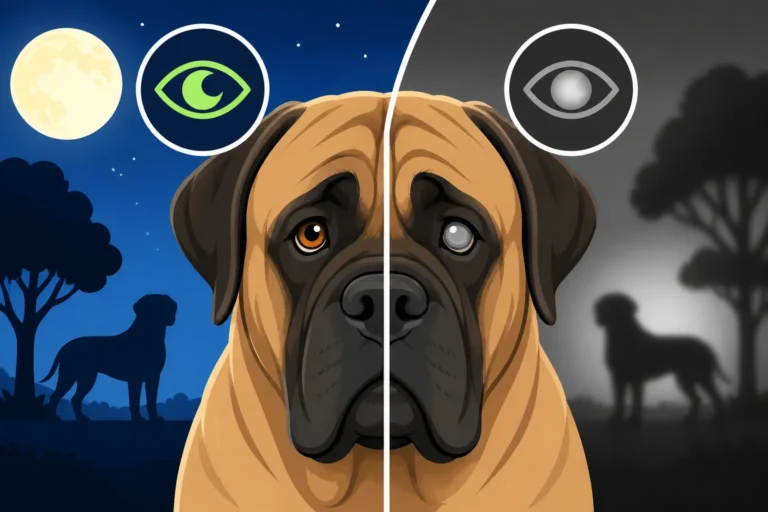
At its core, PRA in Mastiffs involves the slow, irreversible deterioration of the photoreceptor cells—the rods and cones—at the back of your dog's eye. Think of these cells as the film in a camera; they're responsible for capturing light and converting it into signals that the brain interprets as images. Rods handle vision in low light and detect motion, while cones are crucial for bright light vision and color perception. In Mastiffs affected by PRA, these cells progressively stop functioning, leading to vision impairment and, ultimately, blindness. This isn't an overnight switch to darkness; it's more like a slow dimming of the lights, a creeping fog that steadily obscures their world.
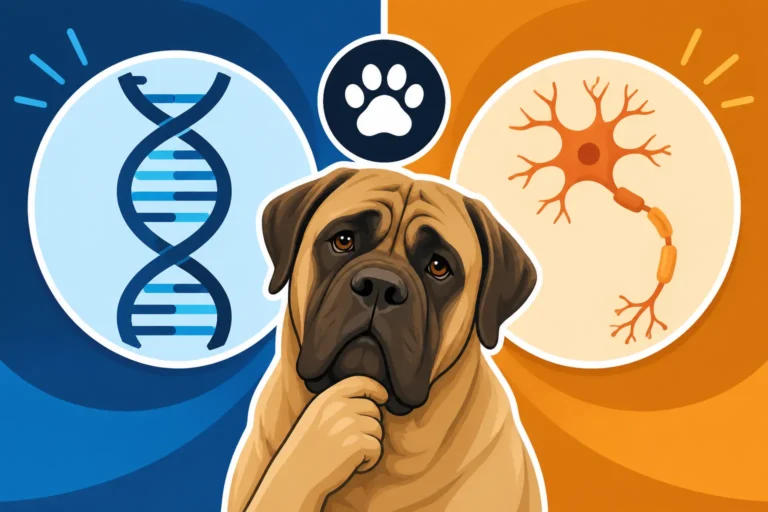
The specific form of PRA commonly seen in Mastiffs is a genetic condition, meaning it's passed down from parents. For a Mastiff, only one copy of the affected gene is needed for the disease to manifest, which is why it's so important for breeders to screen their dogs. You can learn more about this by reading our article on Why Mastiff Retinal Atrophy Needs Only One Copy of the Gene. The impact on vision begins subtly because the rods typically degenerate before the cones. This means night vision is usually the first to go, making those evening potty breaks or navigating a darkened hallway suddenly challenging for your otherwise confident Mastiff.
Early Signs and Subtle Changes
Recognizing the early signs of PRA in a Mastiff can be tricky because their calm, often deliberate nature can mask initial difficulties. They're not generally known for their athletic prowess or quick movements, so a little extra clumsiness might not immediately raise alarm bells. However, many owners first notice changes in their Mastiff's behavior in low-light conditions. Perhaps your Mastiff, who once bounded into the yard after dusk, now hesitates at the door, or seems disoriented in a dimly lit hallway they’ve walked a thousand times.
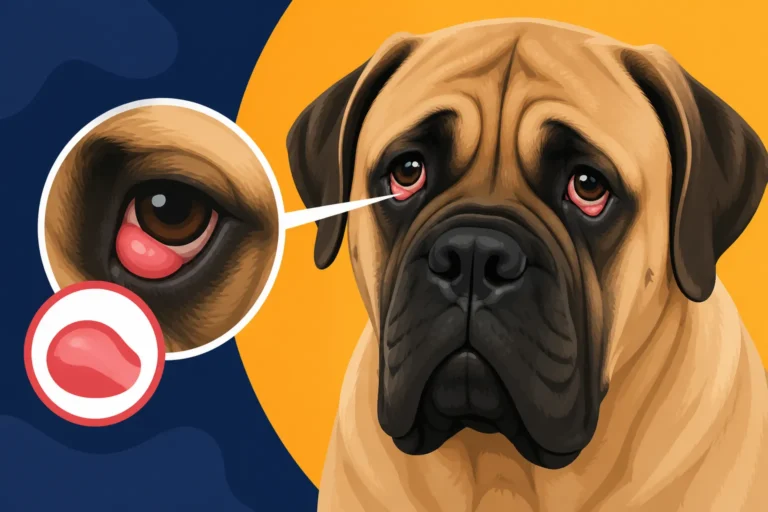
You might observe them bumping into furniture, especially if it's been moved, or finding it harder to locate dropped toys in the evening. Their pupils might also appear more dilated than usual, especially in normal lighting, as their eyes try to gather every speck of available light. As the disease progresses to affect cone function, you’ll start seeing similar issues during the daytime, such as misjudging distances or bumping into stationary objects. It’s a heartbreaking realization, but noticing these subtle shifts early allows you to start making adjustments that will greatly benefit your Mastiff. Don't dismiss these changes as just "getting old" without a vet check.
The Genetic Basis and Early Detection
The good news is that for many Mastiffs, the specific genetic mutation responsible for PRA has been identified. This means that reputable breeders can and should use DNA testing to screen their breeding stock. Knowing the genetic status of your Mastiff is invaluable, whether they are a puppy or an adult. If you're considering a Mastiff puppy, asking about the parents' PRA test results is crucial. Our guide on The DNA Test That Finds Mastiff PRA can provide more details on this.
A DNA test can identify if a Mastiff is clear, a carrier, or affected. An "affected" result means the dog will develop PRA, while a "carrier" has one copy of the gene and will not go blind themselves but can pass it on. This is why it's vital for breeders to be transparent. Early detection, through either genetic testing or a comprehensive veterinary eye exam, allows owners to prepare emotionally and practically for the eventual decline in vision. It opens the door to proactive care, creating a safe and adaptable environment for your Mastiff long before vision loss becomes profound.
The Timeline of Vision Loss: A Gradual, Unpredictable Descent
One of the most common questions from Mastiff owners facing a PRA diagnosis is, "How fast will it happen?" Unfortunately, there isn't a single, straightforward answer. The progression of vision loss in Mastiffs with PRA can be highly variable, making it a particularly challenging journey for both dog and owner.
Variability in Progression
While PRA is, by definition, progressive, the rate at which vision deteriorates can differ significantly from one Mastiff to another. Some Mastiffs might show very subtle signs for years before a noticeable decline, while for others, the progression might seem relatively swift, unfolding over a matter of months rather than years. Factors such as the specific genetic mutation involved, the individual dog's overall health, and even environmental stimuli might play a role, though research is ongoing.
For most Mastiffs with PRA, the initial signs of night blindness can appear anywhere from early adulthood (around 3-5 years old) to middle age. It’s not common for puppies to show signs of PRA, unlike some other eye conditions. Our article, The Age a Mastiff's Vision Starts to Go, delves deeper into the typical onset. This variability is why regular veterinary check-ups, including thorough eye exams, are so important, especially for a giant breed where subtle changes can easily be overlooked or attributed to other issues. A veterinary ophthalmologist can often provide a more precise prognosis based on the specific type of PRA and the observed retinal degeneration.
Night Blindness to Daytime Impairment
The journey of vision loss typically starts with nyctalopia, or night blindness. Your Mastiff's once confident strides in the twilight hours might turn into cautious shuffles. They might become reluctant to go out at night or seem overly startled by sudden noises because they can't rely on their vision to assess their surroundings. This phase can last for quite some time, often a year or more, before owners notice significant daytime difficulties.
As the disease progresses, the cone cells, responsible for daytime and detailed vision, also begin to degenerate. This is when functional vision loss becomes much more apparent. Your Mastiff might start bumping into objects even in bright light, struggle to find their food bowl, or have difficulty tracking a moving object like a thrown toy. Navigating stairs, which can already be a challenge for a large, heavy Mastiff, becomes a major obstacle. They might hesitate at doorways, appearing "stuck," or show increased anxiety in new environments. It's a gradual erosion of their ability to see, often described by owners as their dog becoming increasingly "confused" or "withdrawn" as their world blurs.
When Functional Blindness Might Occur
It's important to differentiate between partial vision loss and complete, functional blindness. While some Mastiffs may eventually lose all light perception, many will retain some residual vision, even if it's just the ability to detect light and shadow. The time frame from the first subtle signs of night blindness to significant functional blindness can range widely, often spanning 1 to 5 years. For some, it might be quicker; for others, a slow, drawn-out process over half a decade.
For instance, a Mastiff might start showing night blindness at age 4, significant daytime impairment by age 6, and be functionally blind by age 8. However, another Mastiff might develop night blindness at 6 and still have some navigating vision at 9 or 10. Each dog truly is an individual. This unpredictability means constant observation and adaptation are key. The goal shifts from trying to restore vision (which isn't possible with PRA) to maximizing their remaining senses and ensuring their safety and comfort. Our post Whether a Mastiff Goes Fully Blind From PRA offers more context on the extent of vision loss.
Here's a general table illustrating the common stages of PRA progression in Mastiffs and associated owner observations:
| Stage of Progression | Vision Impairment | Owner Observations | Estimated Timeframe |
|---|---|---|---|
| Early Onset | Night Vision first affected | Hesitation in dark, bumping into objects at night, dilated pupils in dim light, reluctance to go outside after dusk. | Typically 3-6 years of age, progresses over 1-2 years |
| Mid-Progression | Significant night vision loss, some daytime impairment | Increased clumsiness in familiar daytime settings, misjudging steps or curbs, difficulty finding dropped toys, increased reliance on scent and sound. Pupils often appear dilated even in normal light. | Progresses over 1-3 years following early onset |
| Late Stage | Functional blindness or complete light perception loss | Bumping into large objects, extreme hesitation in unfamiliar environments, disorientation even in familiar spaces, startled by sudden movements/sounds they cannot see, decreased confidence. | Within 1-2 years of mid-progression, leading to full functional blindness |
Note: These are general guidelines, and individual Mastiff progression can vary significantly.
Adapting and Caring for a Mastiff with Waning Sight
The thought of your gentle giant losing their sight is daunting, but Mastiffs are incredibly resilient and adaptable. With thoughtful adjustments and unwavering support, a blind Mastiff can continue to lead a full and happy life. It's an emotional journey, but one that strengthens the bond you share.
Creating a Safe and Predictable Environment
One of the most crucial steps you can take is to establish a safe and consistent environment. For a Mastiff that is losing its sight, familiarity becomes its greatest ally. Avoid rearranging furniture in your home. Every chair, table, and corner becomes a landmark in their mental map. If you absolutely must move something, do it gradually and guide your Mastiff around the new setup repeatedly until they're comfortable. Using dog gates to block off stairs or dangerous areas, especially early on, is also a smart move, preventing falls for a dog that already has considerable bulk to manage.
Consider placing different textured mats or rugs near doorways or at the top and bottom of stairs to give your Mastiff tactile cues about their location. For a dog of their size, even a minor stumble can lead to injury, so good traction on floors is essential. Our article on Traction: Why a Mastiff Cannot Live on Bare Hardwood offers more comprehensive advice on flooring. Outdoors, keep your yard free of obstacles like garden tools or hoses. A consistent potty spot, perhaps with a distinct scent marker, can also help them navigate their business independently.
Maintaining Quality of Life and Mental Stimulation
Losing vision doesn't mean losing joy, especially for a Mastiff who thrives on companionship and routine. Their other senses—smell, hearing, and touch—become incredibly heightened. Engage these senses! Scent games, where you hide treats around the house and encourage them to sniff them out, are fantastic for mental stimulation. Investing in audible toys, like those that squeak or crinkle, can make playtime fun again. Even a simple verbal game of "find the ball" can keep them engaged.
Verbal cues become paramount. Use clear, consistent commands for everything: "step up" for a curb, "watch out" for an obstacle, "this way" for a turn. Your voice becomes their guide. Maintain a consistent daily routine for feeding, walks, and playtime. This predictability reduces anxiety and builds confidence. While walks might become slower and more deliberate, they are still important for exercise and mental well-being. Always use a leash and be their eyes, describing the world as you go. Remember, your Mastiff might not be able to see you, but they can certainly feel your presence and love.
Veterinary Support and Financial Considerations
Regular veterinary check-ups are always important, but even more so for a Mastiff with PRA. While there's no cure for PRA itself, your vet can monitor for secondary issues that might arise, such as cataracts (though less common with PRA) or eye infections. They can also ensure your Mastiff is otherwise healthy and comfortable. Discuss any changes in behavior or comfort levels with your vet.
The financial aspect of caring for a giant breed, especially one with a chronic condition, can be significant. The cost of special equipment, vet visits, and potentially medication for age-related ailments in their later years can add up. This is where pet insurance can be a real lifesaver. Companies like Healthy Paws offer comprehensive coverage that can help offset unexpected veterinary bills, allowing you to focus on your Mastiff's care rather than the financial strain. Planning for your Mastiff's future, including their potential needs as they age and their vision declines, is a responsible part of giant breed ownership. You might find our article on Caring for a Mastiff Past Five helpful in planning for their senior years.
Disclaimer
Please remember that this article is intended for informational purposes only and should not be taken as professional veterinary advice. Always consult with a qualified veterinarian or a veterinary ophthalmologist for any concerns regarding your Mastiff's health, diagnosis, or treatment plan.