The Minutes a Mastiff Has in a Warm Car
It’s a situation every Mastiff owner dreads, even if they don't fully articulate it: that quick stop at the grocery store, the dry cleaners, or picking up a prescription, leaving your enormous, beloved companion in the car for "just a minute." What many don't realize is that "just a minute" in a car can rapidly become a life-threatening crisis for a Mastiff. This guide is here to walk you through the undeniable dangers of leaving your big dog in a warm vehicle, why Mastiffs are especially vulnerable, how to spot trouble, and most importantly, how to prevent a tragedy.
The Alarming Reality: How Fast Car Interiors Heat Up for a Mastiff
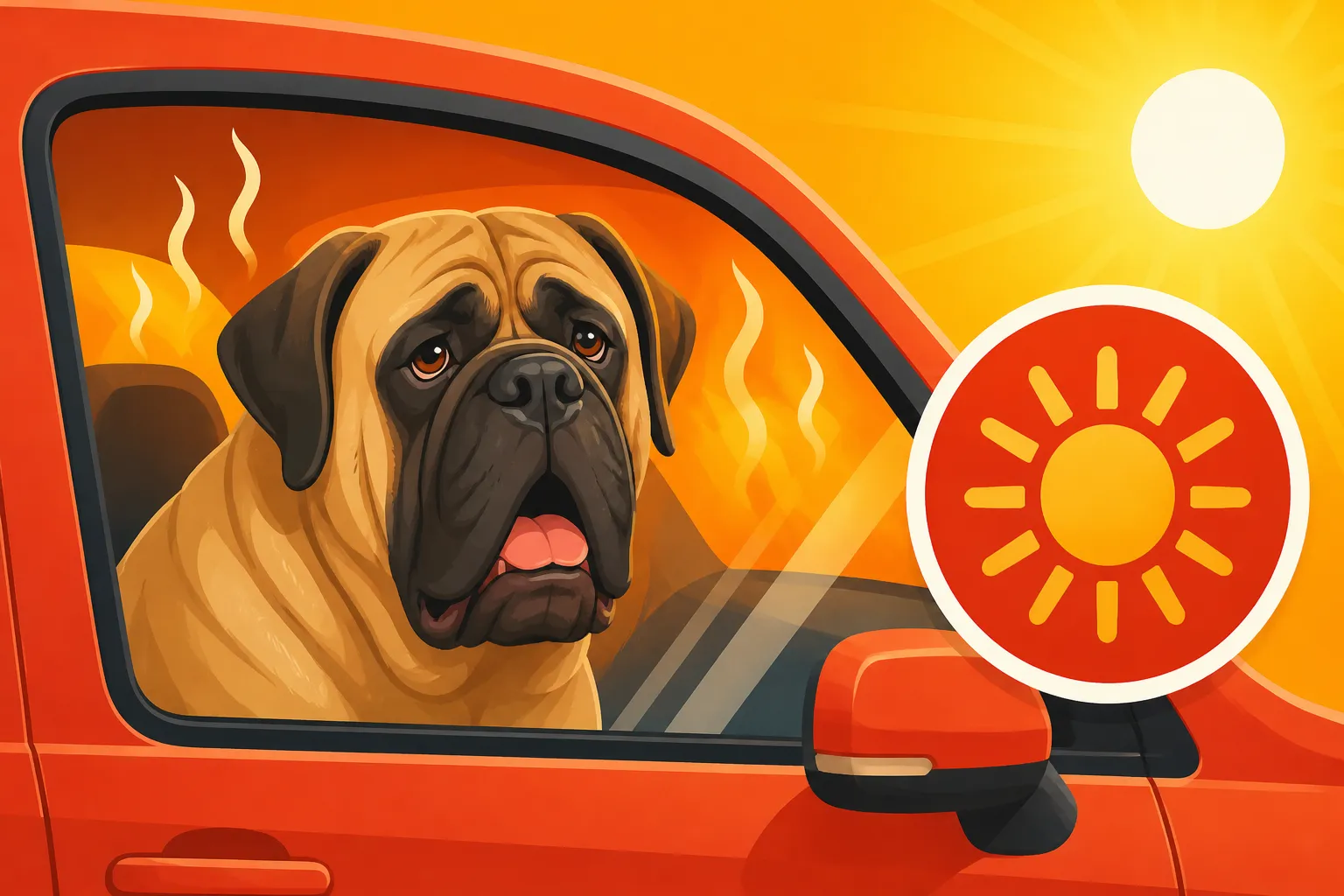
We’ve all seen the warnings, perhaps even scoffed a little, thinking, "My car isn't a sauna." But for a Mastiff, a vehicle can transform into a deadly oven with astonishing speed, even on days that feel relatively mild to us. It’s not just about the external temperature; it's about the physics of how a car's interior reacts to sunlight and ambient heat.
Imagine a pleasant 70°F day – windows cracked, maybe even parking in the shade. You might think your Mastiff is perfectly fine for a short errand. But here’s the stark truth: in just ten minutes, the temperature inside that car can easily climb to 89°F. Give it another ten, and you're well into the 99°F range. After half an hour, it's often over 100°F. And that's on a mild day. When the mercury outside hits 80°F, the internal temperature can shoot up to over 100°F in minutes, and exceed 120°F within half an hour. These aren't estimations; these are measured realities, and they are terrifying for any dog, let alone a giant breed like a Mastiff.
This rapid escalation is due to what's known as the "greenhouse effect." Sunlight, or solar radiation, passes through the car windows and is absorbed by the interior surfaces – the seats, dashboard, and floor. These surfaces then re-radiate the heat, but the glass traps it inside, preventing it from escaping. The car essentially becomes a super-efficient heat trap. Cracking the windows provides almost negligible relief; studies have shown it makes very little difference to the internal temperature rise. The air inside might circulate a tiny bit, but the radiant heat continues to build, creating a stifling, inescapable environment.
For a Mastiff, this isn't just uncomfortable; it's a critical danger. Their sheer body mass acts like a giant heat sink. They absorb heat from the environment and struggle immensely to dissipate their own metabolic heat. A small dog might have a fighting chance for a few more minutes, but a Mastiff's enormous bulk means they heat up faster and hold onto that heat longer, pushing them into a dangerous zone much more quickly. That casual five-minute stop can literally mean the difference between life and death for your gentle giant. It’s a harsh reality, but one we absolutely must face as responsible Mastiff owners.
To further illustrate just how quickly temperatures can soar inside a parked car, take a look at this table. These are approximate figures, and various factors like humidity, car color, and sun intensity can make them even worse.
| Outside Temperature | After 10 Minutes | After 20 Minutes | After 30 Minutes | After 60 Minutes |
|---|---|---|---|---|
| 70°F (21°C) | 89°F (32°C) | 99°F (37°C) | 104°F (40°C) | 113°F (45°C) |
| 80°F (27°C) | 102°F (39°C) | 113°F (45°C) | 118°F (48°C) | 123°F (51°C) |
| 90°F (32°C) | 109°F (43°C) | 124°F (51°C) | 129°F (54°C) | 133°F (56°C) |
As you can see, the situation escalates rapidly, hitting dangerous temperatures even when the outside air feels relatively cool.
Why Mastiffs Are Uniquely Vulnerable to Heatstroke
It's tempting to think all dogs are created equal when it comes to handling heat, but this couldn't be further from the truth. Mastiffs, with their incredible size and specific physiological characteristics, are disproportionately vulnerable to overheating and heatstroke. Understanding these unique challenges is key to protecting them.
First and foremost is their sheer, magnificent bulk. We adore their impressive stature, but this comes with a significant downside in warm weather. A Mastiff has a relatively small surface area compared to their massive volume. Think about it: a Chihuahua has a lot of skin for its little body, making it easier to radiate heat away. A two-hundred-pound Mastiff, however, has less "skin per pound" to dissipate heat. Their vast musculature and internal organs generate a tremendous amount of metabolic heat, and once that heat builds up, their body struggles to release it. This is why you'll often hear discussions around Why Bulk Makes a Mastiff Overheat. They simply don't have the biological architecture for efficient cooling in extreme conditions.
While Mastiffs don't have the extremely flattened faces of true brachycephalic breeds like Pugs or Bulldogs, their muzzle isn't as long and efficient as a sight hound's. Dogs primarily cool themselves through panting. This process involves evaporating moisture from the tongue and respiratory tract. A longer, more open airway allows for more efficient air exchange and evaporation. While Mastiffs are far from the worst off in this regard, their deep chest and substantial head size mean they aren't optimized for rapid, high-volume panting needed to cool such a huge body in a rapidly heating environment. They work harder to move air, which itself generates more heat.
Their coat, while short, is dense and can also act as an insulator once ambient temperatures rise. It's not like a double-coated breed, but it's certainly not built for desert living. Furthermore, some Mastiffs have issues like Hypothyroidism in a Mastiff, which can affect their metabolism and make them even more sensitive to temperature extremes. Older Mastiffs, too, are at higher risk. As discussed in Caring for a Mastiff Past Five, their internal systems are less robust, their circulation may be less efficient, and they may have underlying health conditions that make coping with heat much harder. A senior Mastiff's body simply doesn't have the same resilience it once did.
The misconception that "it's not that hot" or that cracking a window is sufficient is extremely dangerous for these giants. People sometimes think their Mastiff is just "lazy" or "sleepy" when they're actually succumbing to heat stress. It’s imperative to remember that their massive bodies, combined with their limited cooling mechanisms, create a perfect storm for heatstroke in conditions that might seem merely uncomfortable to a human or a smaller, leaner dog.
Recognizing the Danger Signs and Taking Immediate Action
When it comes to a Mastiff and heatstroke, every minute counts. This isn't a situation where you can afford to "wait and see." Knowing the signs and reacting immediately can be the difference between life and irreversible damage, or worse. As dedicated Mastiff owners, we need to be vigilant, especially during warmer months or when traveling.
The early warning signs of heat stress in a Mastiff are often subtle, but they escalate quickly. The very first thing you'll likely notice is excessive panting. This isn't just normal panting after a walk; it's usually heavier, faster, and more labored than usual, often accompanied by a distinct change in their breathing pattern. They might also begin to drool excessively, with thick, ropey saliva. Their gums might appear bright red, indicating increased blood flow as their body tries to cool itself, and their heart rate will be noticeably rapid. You might see them seeking out cooler spots, attempting to lie on a cold surface, or becoming restless.
As heatstroke progresses, the symptoms become more severe and obvious. Your Mastiff might start to stagger, showing signs of disorientation or weakness. Vomiting and diarrhea are common, sometimes with blood. Their gums might change from bright red to a dusky purple or blue color (cyanosis), indicating a lack of oxygen. Their eyes may appear glazed, and they can become mentally dull, unresponsive, or even collapse. In the most critical stages, seizures can occur, followed by a coma. These are the dire Signs a Mastiff Is Overheating, and at this point, you're in a full-blown emergency.
If you suspect your Mastiff is overheating, your response must be swift and decisive.
- Remove from Heat Source: Get your Mastiff out of the car or hot environment immediately. Move them to a cooler, shaded area or an air-conditioned space.
- Begin Cooling: This is critical. Apply cool (not ice-cold, which can cause shock or constrict blood vessels, trapping heat) water to their body. Focus on areas where blood vessels are close to the surface: the belly, armpits, paw pads, and groin. You can use soaked towels, a hose on a gentle setting, or simply pour water over them. If you have rubbing alcohol, a small amount on the paw pads can also aid cooling through evaporation.
- Encourage Drinking: Offer small amounts of cool water. Do not force them to drink if they are unresponsive or vomiting, as it could lead to aspiration.
- Circulate Air: If available, use a fan to increase evaporative cooling. Even flapping a piece of cardboard can help create airflow.
- Seek Veterinary Care IMMEDIATELY: This is not optional. Even if your Mastiff appears to be recovering, internal damage may have occurred to their organs. Call your vet or the nearest emergency clinic while you are en route to let them know you are coming. Time is of the essence, similar to how quickly you need to act for other Mastiff emergencies such as The First Sign a Mastiff Is Bloating or How Long a Bloating Mastiff Has Before Surgery. They need professional medical assessment and likely IV fluids to prevent kidney failure and other complications. Make sure the clinic is prepared for a dog of your Mastiff’s size, as not all facilities are equipped to handle a How a Clinic Moves a Collapsed Mastiff.
What you absolutely should not do: Do not immerse your Mastiff in ice water or cover them completely with ice packs. This can cause the blood vessels on the surface of the skin to constrict, actually preventing heat from escaping the core of their body, and can also lead to hypothermia or shock. Don't force water into a dog that isn't conscious, and never delay going to the vet because your dog seems a little better. The invisible internal damage can still be fatal hours later.
Preventing a Tragedy: Safe Car Travel and Alternatives for Your Mastiff
The best treatment for heatstroke is always prevention. For Mastiff owners, this means developing habits and routines that prioritize your dog's safety above all else, especially when it comes to car travel. Our giant companions depend entirely on us for their well-being, and understanding how to keep them safe in and around vehicles is a fundamental part of responsible ownership.
The golden rule, the absolute, non-negotiable principle, is simple: Never leave your Mastiff unattended in a car, even for a minute. Seriously, not one minute. No matter the weather, no matter the shade, no matter how many windows are cracked. The risk is too high, and the consequences are too dire. If you can't take your Mastiff with you inside where you're going, then they shouldn't be in the car in the first place. This means planning ahead.
When you do need to travel with your Mastiff, especially during warmer months, strategic planning is essential.
- Schedule Smart: Try to schedule car trips for the coolest parts of the day – early mornings or late evenings. Avoid midday sun entirely.
- Hydration is Key: Always, always, always have fresh, cool water readily available. A large spill-proof bowl or a water bottle designed for dogs is a must. A portable, collapsible bowl from a brand like Chewy is invaluable. This constant access to water is crucial for a Mastiff, just as it is for conditions like How Much Water a Cystinuric Mastiff Needs where ample hydration is a medical necessity.
- Cooling Gear: Consider using cooling vests or cooling mats. These can help regulate your Mastiff's body temperature, especially before entering or after exiting the car. You can find a variety of options, as discussed in Which Cooling Gear Works on a Mastiff, from retailers like Amazon.
- Ventilation is Vital (Even When Moving): When driving, ensure your air conditioning is fully functional and directed towards your Mastiff's area. If you don't have AC or it's not powerful enough for a Mastiff, reconsider travel on hot days. Roll down windows enough to create good airflow, but not so much that they can jump out or get injured.
Beyond just preventing heat, securing your Mastiff safely in the vehicle is also important. A car crate is ideal for preventing them from becoming a projectile in a sudden stop, and also helps to contain drool and shedding. Ensure the crate is well-ventilated and large enough for your Mastiff to stand, turn around, and lie down comfortably. If a crate isn't feasible, a safety-tested car harness designed for giant breeds can offer some protection. Remember that What a Mastiff Needs Every Day includes safety and comfort.
What about those times when you absolutely must run an errand, and taking your Mastiff is the only option? The answer, unequivocally, is that if they can't come inside with you, they must stay home. There are no acceptable shortcuts when it comes to heatstroke.
- Pet Sitters/Doggy Daycare: If you have appointments or commitments that prevent you from bringing your Mastiff along, arrange for a trusted pet sitter or a doggy daycare service. Just be sure to vet the daycare for experience with giant breeds, as their size can be a factor.
- Home is Safest: Truly, the safest alternative is to leave your Mastiff in the comfort and air conditioning of your home. They'll be much happier and safer there than risking even a few minutes in a hot car. It’s important to acknowledge that the optimal living environment for a Mastiff is indoors, controlled for temperature, a point often considered when people ask Whether a Mastiff Can Live in the South.
By adopting these preventative measures, you eliminate the risk of accidental heatstroke and ensure that your Mastiff remains healthy and happy, enjoying car rides as part of a safe adventure, not a dangerous gamble. Remember that your Mastiff’s massive body makes them prone to overheating, and their comfort is paramount. You also need to keep those wrinkles clean to avoid skin fold infections, and know How Often a Mastiff's Jowls Need Wiping to manage the drool that can be an early sign of distress.
Disclaimer
This article is for general informational purposes only and does not constitute professional advice. Laws, prices and regulations vary by location and change over time. Consult a qualified professional for guidance on your specific situation.